

We’ve discussed the importance of a strong small business brand extensively, but even the most solid and recognizable brands need tweaks every once in a while. In a competitive landscape where you’re fighting with your competitors for your audience’s attention, for most businesses, there’s a moment when you realize you can’t keep portraying the same image. There are other times when your business outgrows your existing brand, and there’s the need to adapt it.
However, pinpointing exactly when this happens is extremely important to avoid potential side effects like loss of brand equity, negative public perception or alienation that can translate into loss of revenue. On the other hand, a well-executed rebrand can signal growth, innovation, and a renewed commitment to quality and customer satisfaction. In this blog, we’re going to explore the intricacies of rebranding for small businesses, offering insights into when to consider a rebrand and some well-known case studies to put things into perspective.
Let’s begin by defining what a rebranding entails. By its most basic definition, rebranding is a marketing initiative in which a company revises and changes its brand identity to better reflect its current mission and goals, respond to current market conditions, and stay relevant to its target audience’s perception of the brand. A business can feel the need for a rebranding due to several factors, including changes in the competitive landscape, shifts in consumer preferences, negative brand associations, or a major corporate change such as an expansion, a merger or an acquisition.
As you can tell, you can’t (or you shouldn’t) just wake up one day and change your branding just because. Rebranding is a strategic decision that requires careful consideration of the potential benefits and downsides, a deep understanding of your market and your audience, and a clear vision of what you want to achieve with the changes. It also doesn’t require a full-blown makeover of your brand identity: it can be as minimal as changing the shades of the colours of your logo or as radical as presenting an entirely new visual identity to appeal to existing or new customers and markets.
If you’re considering the idea of rebranding but aren’t entirely sure, next, we’re going to break down the criteria to follow on when to rebrand and when NOT to rebrand.
Your market has evolved: Industries change as time passes, and new trends come and go. Hence, a brand that once resonated with customers may become outdated. If you think your brand is getting behind and it doesn’t align with your industry’s current market trends or consumer preferences, your brand may need modernization to make it more attractive to contemporary consumers.
You need to stand out: In crowded markets, standing out is crucial. Rebranding can help your business distinguish itself from competitors with a brand identity that highlights its unique values, services, or products.
Your brand has negative associations: If your brand has been associated with negative perceptions or is associated by proxy with a brand with controversies, rebranding offers an opportunity to start fresh and rebuild a positive image.
Your business is growing: If you’re introducing new products or entering new markets, a rebrand may be the best way to reflect these changes and appeal to a broader audience.
Mergers or acquisitions: Expanding your business through mergers or acquisitions often calls for a new brand identity that encompasses the strengths and values of the merged entities.
You need to clarify your messaging: Over time, your company’s mission or values might shift as a natural result of being in business. Rebranding ensures that the brand message accurately reflects its current vision and purpose.
You have strong brand equity: In branding, consistency is key. So, if your business has an established, recognizable and trusted brand that still aligns with your mission and vision, as well as with the current market trends and your audience’s preferences, rebranding may backfire causing the alienation of loyal customers and the dilution of your brand equity.
You don’t have enough time and/or resources: Rebranding is a process that requires careful planning and thought, and it implies a significant investment of time, money and effort to make it work. Small businesses often have limited resources, and in many cases, they might find more benefits in focusing on enhancing their existing brand strategy rather than undertaking a complete overhaul.
You have a stable position in your market: The good old saying “If ain’t broke, don’t fix it” summarizes it pretty well. If your branding is performing well, rebranding might introduce unnecessary risks.
There’s no clear justification: If your reasons for wanting to rebrand are not among the ones we stated above, it can lead to unnecessary expenses and confusion.
Now that we know how to discern if a rebrand is a good idea or not, let’s look into some case studies that can serve as inspiration or a cautionary tale.
A case of a good rebranding is Walmart’s recent new look presentation. The multinational retailer unveiled its refreshed visual identity that preserved its older elements that made it recognizable, and paid homage to its roots while embracing the modern times. In Walmart’s own words: “The refreshed look will embrace both evolution and legacy to better serve customers.”

This rebranding is the first one Walmart has introduced in 17 years, and it aims to support the company’s efforts to strengthen its position in the e-commerce retail space. The rebrand kept its traditional yellow and opted for a deeper blue than its predecessor, presented a bolder, more modern logo font and was heavily inspired by founder Sam Walton’s famous trucker hats.

The trucker hat Sam Walton wore on the cover of his autobiography inspired Walmart’s new brand look. (Source)
This brand renovation stayed true to its original look and feel while offering a makeover that will help Walmart to be perceived as a more modern and dynamic brand.
The Duchess of Sussex’s lifestyle business venture has faced several challenges in terms of its branding in less than a year of launching. Initially named “American Riviera Orchard” and launched in March 2024, this brand name was rejected by the US Patent and Trademark Office (USPTO) because the Santa Barbara area (where she lives) is also known as the American Riviera and geographical areas can’t be trademarked.
Meghan recently rebranded the business as “As Ever” to coincide with the premiere of her Netflix series “With Love, Meghan”, which will complement the brand’s lifestyle offering. However, this rebranding has already encountered some obstacles:
When her lawyers applied for the patent of “As Ever”, the claim got a partial rejection by the USPTO due to potential confusion with existing brands, including a Chinese fast-fashion company named ASEVER. This decision currently prohibits Meghan’s brand from selling clothing items under the “As Ever” name.
An independent clothing business operating in New York and New Jersey since 2017 is also called “As Ever.” The owners already publicly stated they are not affiliated with Meghan’s venture and that they plan to continue operating under the same name.
However, the branding issues don’t end here, she also has been dealing with backlash due to the logo. The “As Ever” logo, featuring a palm tree flanked by two hummingbirds, has been criticized for its resemblance to the historic coat of arms of Porreres, a town in Mallorca, Spain. The town’s emblem, used since the 13th century, also depicts a palm tree with two birds.

The As Ever logo is on the left, and Porreres’ coat of arms is on the right. You be the judge of the similarities.
The issues Meghan has been facing could’ve been solved by putting more thought into the branding process and doing some online research to verify the name is available, and the logo is unique enough. This case is a cautionary tale on how being careless about rebranding can cause serious harm to a business’s reputation and translate into potential liability.
In October 2010, American clothing brand Gap unveiled its new logo to replace the highly recognizable one they’ve been using since 1990, which featured the word “Gap” in white serif font centred within a dark blue square. The redesigned logo introduced a 360° change: the word “Gap” appeared in bold Helvetica font with a small blue gradient square positioned near the top right corner, as an attempt for a contemporary and minimalist aesthetic.
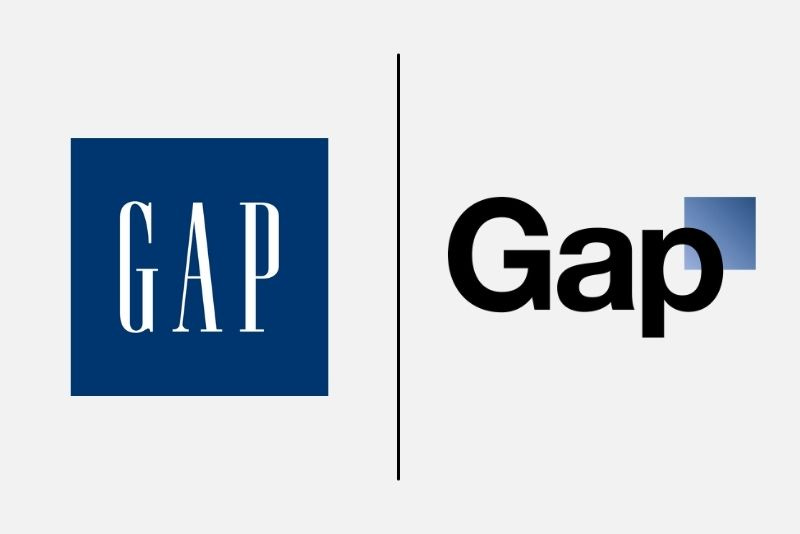
The new logo was received with intense public backlash. Customers and design critics alike dragged the redesign for its perceived generic and “low budget” appearance. The negative reception was so overwhelming that Gap reverted to its original logo within a week, acknowledging the misstep and the strong connection customers had with the classic design and never touched it again.
This incident is a clear example of “If ain’t broke, don’t fix it,” especially with well-established brand elements. It also underscores the risks associated with rebranding without market research and without taking into account potential inconsistencies with the previous brand identity.
If you’re 100% sure that your business needs a rebranding, here are some tips to help you make it right:
Do your (market) research: Ensuring that your new brand identity resonates with your target audience and gives you an edge in your competitive landscape is essential to make sure your rebranding efforts get rewarded. This involves two main components: Audience Analysis and Competitive Landscape Evaluation.
Audience analysis: Understanding your target audience’s preferences and perceptions is essential for creating a brand that aligns with their needs and expectations and to minimize the risks of facing negative backlash and rejection. To know what your audience may think of a potential rebrand, you can conduct surveys to gather data on customer preferences, behaviours, and possible reactions to a new brand identity. To get more personal insights, you can also do interviews or, if your budget allows it, you can organize focus groups to engage directly with your audience and get first-hand reactions.
Competitive Landscape Evaluation: Learn from your competitors’ successes or failures by reviewing their approaches to visual identity and messaging to understand what resonates with similar audiences. If your competitors haven’t rebranded, you can consult existing data like case studies that are relevant to your industry and audience demographics.
Use Your Existing Identity: As we stated at the beginning, a rebranding can be a subtle rejuvenation of your brand’s visual identity without introducing an entirely new one. This process is often called “retro branding”, and it’s similar to what Walmart did. This strategy involves the revival or relaunch of a product or service or the reintroduction of modernized visual elements from a prior brand’s historical period. This not only leverages elements of nostalgia that can appeal to current and past customers but also reduces the risk of alienation and brand dilution.
Introduce your rebrand gradually: Implementing the new brand elements gradually allows you to be more effective in making more adjustments and minimizes potential disruptions. A gradual brand introduction may involve the following:
Internal Launch: Begin by introducing the rebrand to your staff to make them familiar with the new look and feel, address any concerns they may have, and gather their feedback.
Soft Launch: Test the new branding with a select audience or specific market segment to gather feedback and make necessary adjustments before the full release.
Public Launch: Officially unveil the rebrand to the public through coordinated marketing campaigns and communications.
This approach allows for gradual adaptation, gives you opportunities to refine brand elements based on real-world feedback, and helps you manage your resources effectively.
Communicate the changes with a unified voice: Your staff plays a key role in the successful introduction of a new brand, so it’s important to make sure that they understand and identify with the new brand identity to avoid confusion.
Rebranding is more than just a new logo or fresh colour palette—it’s a strategic process with many nuances, and it shouldn’t be taken lightly. Successful rebranding requires careful thought, planning and staying true to your brand’s core values while embracing change to create a brand that not only stands out but also resonates with your customers for your small business’s next era.
If you’re considering a rebrand, take the time to assess your motives and goals, research your market, and craft a new brand experience that truly represents your business. The effort you put into this process can lead to a stronger brand that can help you make a deeper connection with your audience.
No posts
Comments
Nothing yet. Say the first thing.
Sign in to join the conversation.