

When you think of Kim Kardashian, being a marketing mastermind might not be what comes to mind to describe her. But whether you love her or hate her, you’ve got to admit our Kimmy knows marketing.
She has managed to leverage society’s obsession with women’s bodies to gain notoriety and money for herself. To prove my point, where are going to explore the deal between her loungewear brand Skims and the luxury brand Fendi, to launch a capsule collection in 2021.
For those unfamiliar, Fendi is an Italian fashion brand owned by the luxury goods powerhouse LVMH. LVMH owns the Louis Vuitton, Moet, Hennessy and Christian Dior brands, and many more. Fendi is known for its iconic Baguette and Peekaboo handbags, its fur and other leather goods, and its focus on exalting traditional Italian craftsmanship, while using modern techniques and materials.
Fendi’s earnings have been strong over the past few years, buoyed by general consumer enthusiasm for luxury goods. However, Fendi’s brand cachet took a hit when it dropped off the 15 most popular luxury brands online ranking for 2021. On the Forbes list of 100 most valuable brands, competing luxury labels saw 20-point jumps, while Fendi didn’t even make the list.
So while shoppers are still snapping up Fendi handbags today, what does the creeping decay of their brand image say about their future in fashion? That’s where Skims comes in. The Kim Kardashian partnership gave Fendi access to a brand new crop of (younger and willing to spend) shoppers. Regardless of the potential benefits, this partnership initially seemed like a gamble for the Roman fashion brand.
Luxury fashion brands typically do a good job of defining their image. They have to, because there is arguably little difference between what they produce and what non-luxury brands produce. Many luxury fashion houses specialize in a particular high-quality product, like Fendi and their fur and leather goods. They also create the exquisitely tailored art known as couture fashion. But what funds the craftsmanship in those areas, what actually pays the bills, are the so-called “luxury goods” that the house simply stamps with its logo and sells for a substantial markup. A Gucci t-shirt is still just a t-shirt. Brand recognition and marketing make some people willing to pay $700 for it.
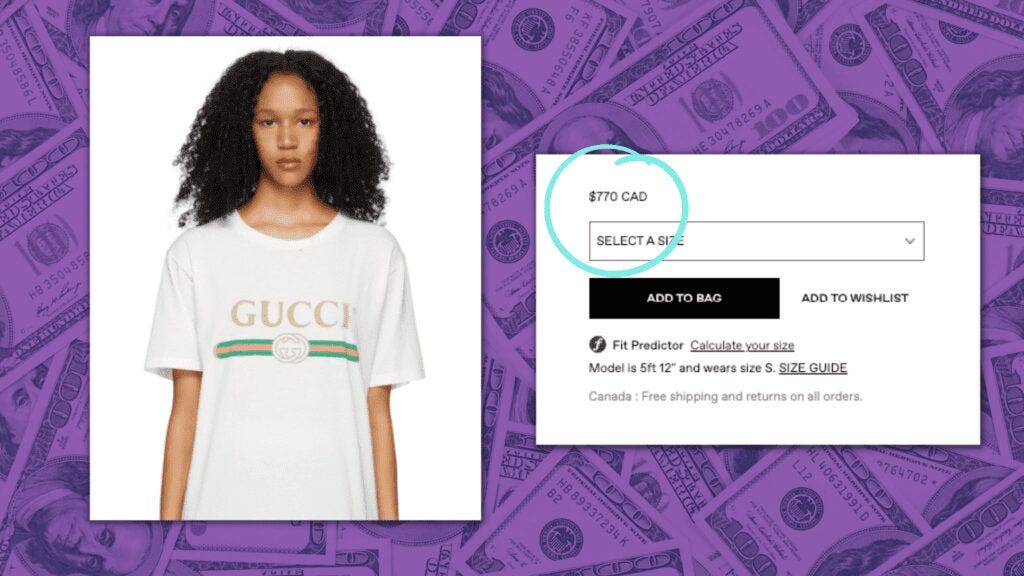
No matter how you feel about logos and $700 t-shirts, small business owners can learn a lot from luxury houses. They are masters of demand generation, using imagery and copy to cultivate their mystique and make their product feel exclusive. A big part of that is to disqualify some people through price deliberately. They appeal to their audience’s sense of exclusivity and status seeking by not trying to be everything for everyone.
Trying to be everything for everyone leads to adverse outcomes. Just take a look at Coach and Michael Kors. By establishing themselves as mall staples, they lost the luxury halo they once had. Michael Kors in particular should serve as a cautionary tale for Fendi and all business owners. After the largest IPO in fashion history in 2011, their sales in the short term went up, but in the long term, they suffered, as they became overexposed, and they’re still struggling to find their path back to growth.
I see small businesses make this same mistake. They say they’re trying to remain “open” by being willing to do anything for any customer. However, if you want to be the Chanel of your industry, you have to act like Chanel. You have poured all your energy into your market position, your elite status.
You cannot Chanel and the Gap at the same time, where people know they can get reliable basics at deep discounts. Being good at everything and accessible to everyone is not helpful if you want to be elite.
That’s why we saw Kim Kardashian marketing herself using Fendi. She has always been after that “elite brand” status, and is leveraging our desire for elite brand status to get there. By associating herself with high-end fashion names, she has an opportunity to elevate her mostly unremarkable shapewear to something aspirational. She goes from being Victoria’s Secret to being La Perla. All because the Fendi partnership gave her a bit of something she lacks: credibility.
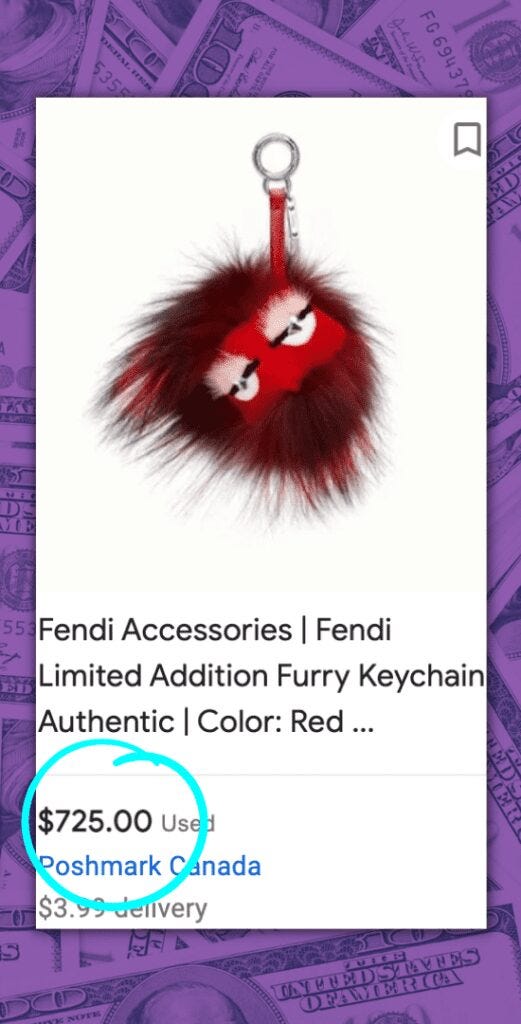
So what did partnering with Skims do for Fendi? As it stands, the part of their audience not enamoured with the Kardashians is willing to pay $700 for a Fendi keychain precisely because it comes from the venerable house of Fendi. It’s that sense of exclusivity again. If the House of Fendi associated with a reality TV star, it could’ve lost substantial exclusivity and, therefore, status among people who don’t relate to reality TV stars. This new audience they were acquiring may not have been enough to make up for the audience they could’ve risked losing.
Banality means death for luxury fashion brands. Analysts blamed “Gucci fatigue” for the 22.7% drop in that brand’s revenue in 2020. This was a real risk for Fendi. Young shoppers are already less enthusiastic about “label” brands than their predecessors. Analysts say Gen Z shoppers look first at price, and second at shared values with the brand, such as sustainability. They also covet the lifestyles they see influencers leading on social media, so it does stand to reason Fendi would want to partner with these influencers. Still, it’s a fickle audience that prioritizes price and following the new micro trends popping up on social media every week or so, which does not align well with their brand.
So, how did the Skims x Fendi collab perform? Let’s break it down.
With over 300,000 people signed up for the waitlist prior to the drop, the capsule collection launched on November 9, 2021, both online and in selected Fendi stores. It reportedly generated $1 million in sales in one minute (the prices ranging from $100 up to $4,200 helped), and it became Skims’ most successful launch day at that time.
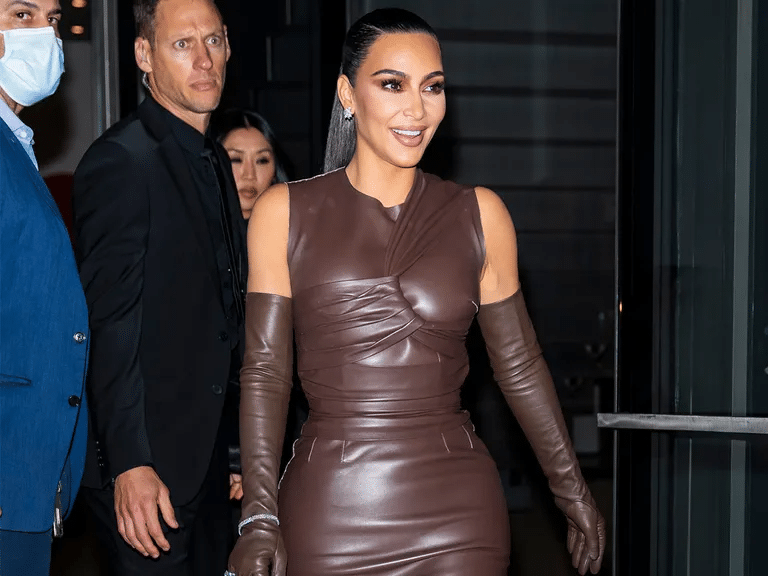
Kim wore the Fendi x Skims leather dress at the 2021 Wall Street Journal Innovator Awards.
What this collab did well was blend the luxury aspect Fendi brought to the table, and its legacy with the shapewear and loungewear Skims is known for, because it included items inspired by a Fendi collection Karl Lagerfeld designed in 1979. Hence, it included pieces like bras, bralettes, swimsuits, sculpting bodysuits, and more elevated (and at luxury prices) items like the velvet knit and leather dresses.
Due to the first launch’s success, a second (and final) drop of the last stock of the best-selling pieces was announced a month after the initial one and went live four days later. This time, we didn’t get headlines about impressive sales numbers, but we can assume it cleared.
Was this capsule collection a win for Fendi? Kind of. On the bright side, they managed to expose themselves to a broader audience without diluting their luxury status. How? The collaboration was scarce.
The Principle of Scarcity highlights the human brain’s tendency to perceive scarce, limited or rare items as more desirable and valuable. Scarcity is widely used in marketing because it triggers:
FOMO: Limited items awake a sense of urgency to purchase before it’s “gone forever”.
Reactance: A psychological phenomenon that triggers an urge to resist or do the opposite of what we’re being told if the brain signals it as a threat to one’s sense of control and freedom. In plain words, if we’re told we can’t have or do something, we’ll want it more.
Social Comparison: Owning a rare item gives us a sense of status. This is especially strong in high-end fashion, where products are visible to our peers and have the halo of exclusivity.
All these psychological processes are deeply rooted in our brains since early humans started to populate the Earth, and now they’re used for brands and marketers to motivate their audiences to be one of the “lucky ones” to get limited-edition products.
Fendi and Skims managed to create a fashion event that bridged luxury tradition with modern buying behaviours that benefited Kim K in her quest to enter the luxury sphere, and put Fendi on the map of Gen Z and Millennials. Did it work long-term for Fendi? Well… No.
Fendi still didn’t enter on the most popular brands online for 2022, signaling that all the clout that the brand got due to the collab wasn’t enough to make it relevant enough in the online conversation. What about 2023? Nope. 2024? Also no. They vanished from the Lyst index of hottest fashion brands online, too (Ironically, Skims is there).
So, what happened? After diving into the state of luxury in the digital space, it seems that Fendi is one that’s struggling to nail an omnichannel presence that appeals to Internet-native consumers who shop online more than they go to a luxury store. But they’ve made recent moves that might be in the right direction for the Roman house.
Fendi has been working with relevant figures in the Asian entertaiment market in recent years, like Chinese actors Xu Kai and Meng Ziyi, or Korean actor Lee Min Ho, but in 2025 they’re showing their interest in putting the brand in the Asian younger consumers more by naming K-pop idols like Stray Kids’ Bang Chan and Twice’s Mina as global ambassadors, Chinese idol Song Yuqi from the K-pop group I-DLE as ambassador for China, and Japanese actor and idol Ren Meguro as Japan first men’s ambassador.
Working with Asian ambassadors with that background is no coincidence. The Asia-Pacific region dominates the luxury goods market with a 39.8% global share in 2024, and China, Japan, India and South Korea. Gen Z buyers play a big part in luxury consumption: China alone has 233 million Gen Z consumers that are projected to constitute 13% of household luxury spending, and along with Millennials represent over 60% of the luxury ecommerce market in the region. The luxury space is also growing in Thailand and Southeast Asia, so don’t be surprised if Fendi and other luxury brands start naming ambassadors there soon.
Furthermore, Asian buyers now see buying luxury goods as an investment, and show a strong preference for brands known for craftsmanship, quality and more of a “quiet luxury” experience over brand name prestige and logos, which is the core of Fendi’s brand ethos and message.
It seems that Fendi is seeing the light at the end of the tunnel of luxury consumers’ preferences. Will it work? Only time will tell.
What does this mean for you? It means if you plan to stay in business for 10 years, 20 years or 100 years, you need to constantly be looking down the road to anticipate how your audience could and should shift.
This isn’t easy, in fact, none other than brand matriarch Silvia Venturini Fendi says, “In fashion, time is very short. I don’t think it’s possible to have a long view.”
Many of us feel like that. How can we know where our business will go in a decade? That’s why we need to be the ones to direct it, just like Fendi and Skims are trying to do. Staying on top of your customers’ needs as they go through life is hard, but it’s better than chasing trends to cater to a new audience that may not need or want what you offer.
No posts
Comments
Nothing yet. Say the first thing.
Sign in to join the conversation.