
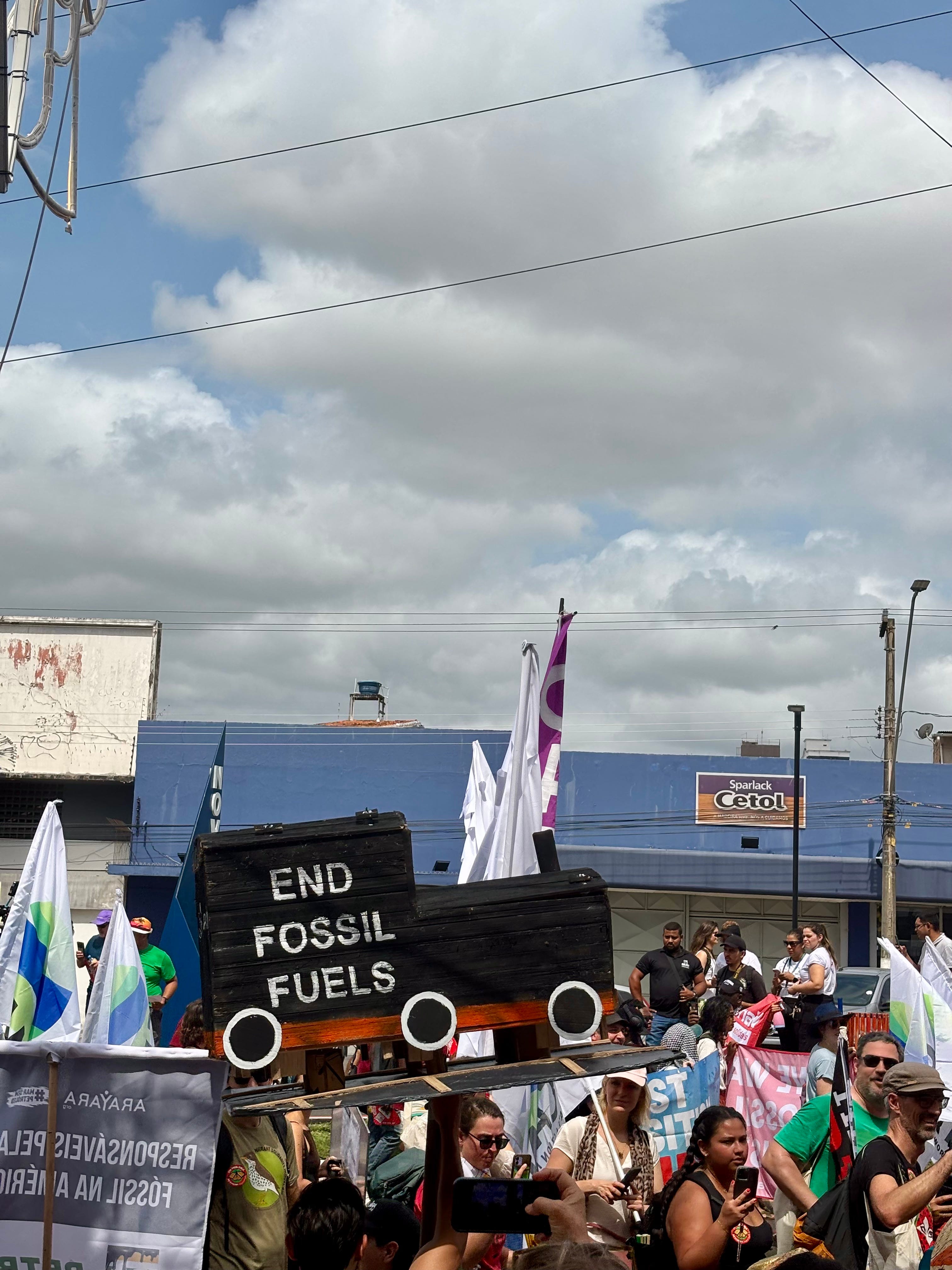
I like to describe the somatic experience of being at COP as similar to leaving a massive concert, a sea of bodies you’re constantly moving with and bumping into. At COP30, as I mentioned previously, that sea holds more than 50,000 people.
And 1 out of every 25? Fossil fuel lobbyists.
Last year at COP29, the dominance of fossil fuel interests was blatant. The Azerbaijani COP President opened with a speech praising oil as a “gift from God.” Fossil fuel lobbyists vastly outnumbered many country delegations. The Green Zone looked more like a glossy greenwashing expo than a climate conference.
At first, COP30 seemed to stand in stark contrast.
The very first signs I saw stepping off the plane, installed among the COP30 welcome banners, read:
“Dear Fossil Fuel Executives, you choose what our children will breathe.”
*I wish I had gotten a photo of it!
But that contrast, I’ve realized, is largely cosmetic. The fossil fuel presence at COP30 hasn’t vanished; it has simply disguised itself.
This COP actually marks a record number of accredited fossil fuel–industry members. The halls are filled with their obstructionist agendas, slowing down negotiations that were already under-ambitious.
More than 1,600 fossil fuel lobbyists were granted access to COP30 — outnumbering every country’s delegation except Brazil. To put it in perspective: fossil fuel representatives received 60% more badges than the 10 most climate-vulnerable nations combined.
And the industry’s influence extends far beyond physical presence.
While COP30’s Presidency didn’t praise oil and gas as “a gift from God,” they did choose a PR firm with deep fossil fuel ties to shape the public narrative: Edelman.
This is the part I’ve been researching most because it sits at the intersection of my passion for communications and the power of narrative.
Why is Edelman’s involvement controversial?
Because Edelman earns more revenue from fossil fuel clients than any PR company of its size. They represent major players like Shell and Exxon, and have crafted campaigns aimed at influencing policy and protecting drilling access on U.S. federal lands.
Who better to shape the narrative of “ending fossil fuels” than the experts who have spent decades perfecting greenwashing.
A group of leading climate communicators and creators recently published an open letter calling out the contradiction, urging the COP30 Presidency to protect information integrity and ensure unbiased public communication.
The decision to hire Edelman is one small detail, but it reveals a larger truth: fossil fuel influence, overt or subtle, continues to shape the narratives, priorities, and outcomes of these negotiations.
And the irony deepens: for the first time, “information integrity” is an official COP theme.
In his opening speech, the COP30 President declared this the “COP of Truth,” making the fight against disinformation a cornerstone of climate action.
More researchers and communicators than ever are pointing out the intertwined crises of climate change and disinformation.
Kate Cell of the Union of Concerned Scientists put it plainly when we spoke:“The two crises facing humanity are the climate crisis and the crisis of disinformation — and that is widely recognized.”
She pointed me to the World Economic Forum, which consistently ranks both among the world’s defining risks.
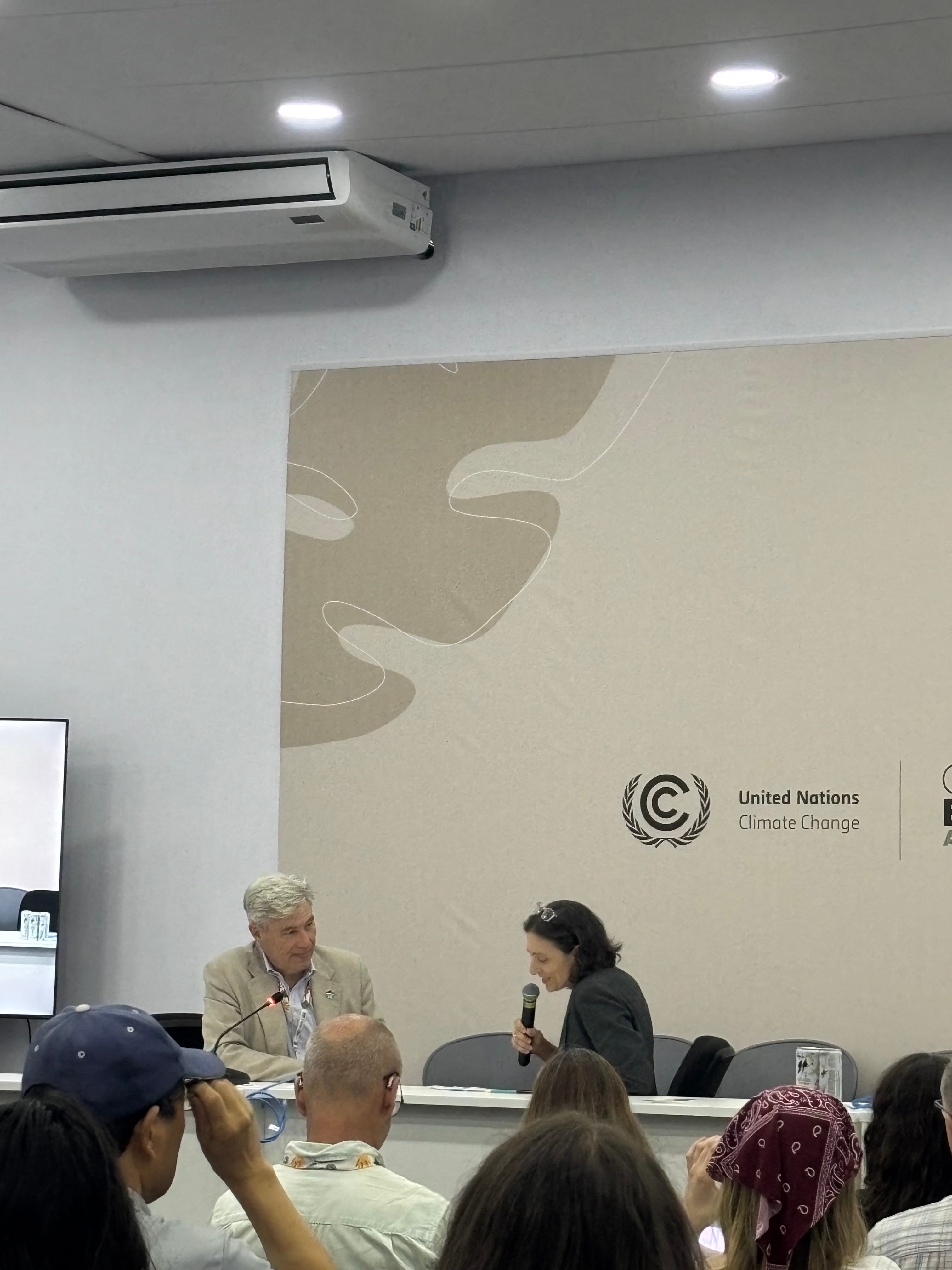
On Saturday, we heard from what was described as “the entire United States federal delegation to Brazil”: Senator Sheldon Whitehouse. He is the only U.S. federally elected representative at COP30.
He spoke with striking candor about the nexus between climate change, political disinformation, and what he called the “malevolent presence of the fossil fuel industry within U.S. government.”
According to him, the “polarization around the environment is fake.” Bipartisanship on climate “used to be, and is, natural.”
He traced the current dysfunction back to the Supreme Court’s 2010 Citizens United decision, which opened the door to unlimited corporate political spending. In his words, it enabled the entrenchment of the “dark-money climate denial fraud industry,” into shaping US government.
“At the heart,” he said, “is a failure of governance driven by corruption, disinformation, and insidious political influence by the fossil fuel industry. Here [at UN Climate Summits] they show up in smiling masks; in my sphere they are absolutely malevolent.”
He stated that “true face of the fossil fuel industry,” and its role behind the dismantling of democratic norms, is Trump.
What struck me most were his final remarks, which looped back to everything I’ve been observing at COP:
“We need to call this a story that has villains in it.”
Not only to restore the “natural state where Congress can solve problems without the fossil fuel industry blowing it all up,” as the Senator remarked, but to restore integrity here at COP as well.
Because weeds don’t die unless you kill the roots.
If we have any chance of decarbonizing, any chance of slowing warming, it will require dismantling the apparatus of the fossil fuel fraud industry within the very systems meant to deliver change. The root must be removed.
The villains must be named as villains, not allowed to hide behind “smiling masks” in the COP crowd, nor granted a seat at the table when frontline nations struggle to get one.
This is a story that has villains in it. And the narrative cannot be in their hands.
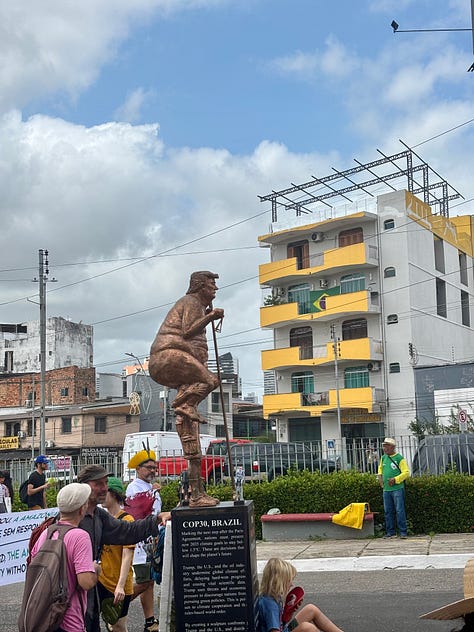
For the first time in three years, since the COPs have been hosted in authoritarian countries, there was a march outside the venue on Saturday.
Talk about a sea of people! Wow. It was just incredible to see the masses of people, the variety of groups advocating, the synergies between it all. It felt like a parade in ways- seeing the different sections of the protests and their distinct color, sound, and props.
And, in terms of some calling out of villains, there was defiantly some of that happening there, as you can see in some of the photos!

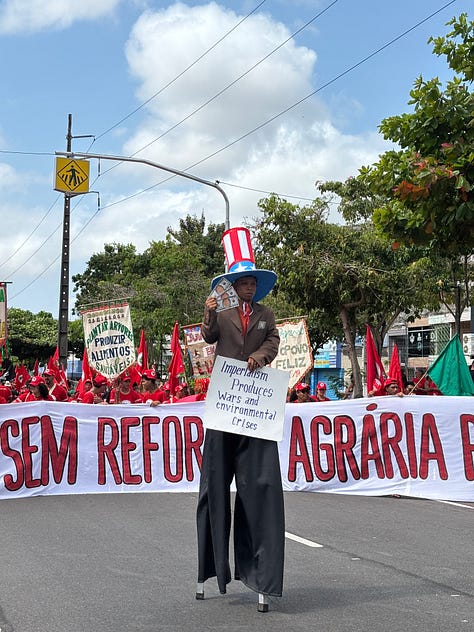
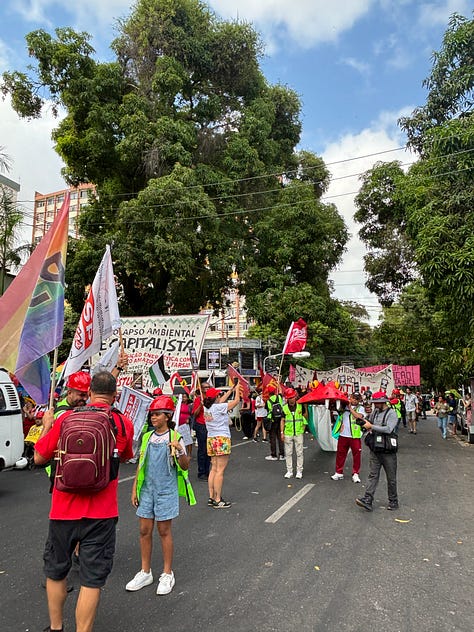
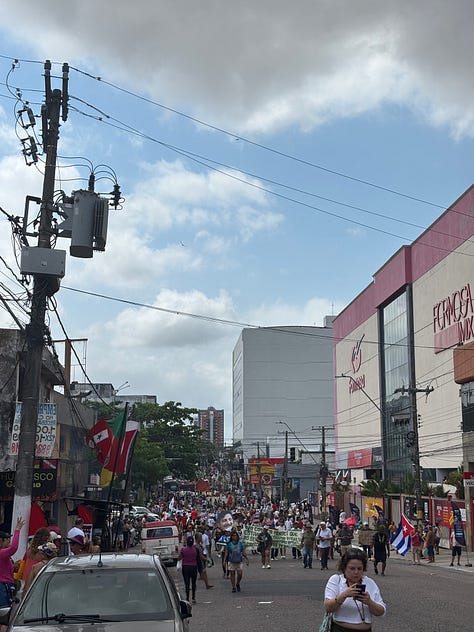
It was amazing to have a day off from the conference to recharge. And, specifically to recharge in the presence and beauty of nature, to tap into the very reason this conference is being held at the “gateway to the Amazon.”
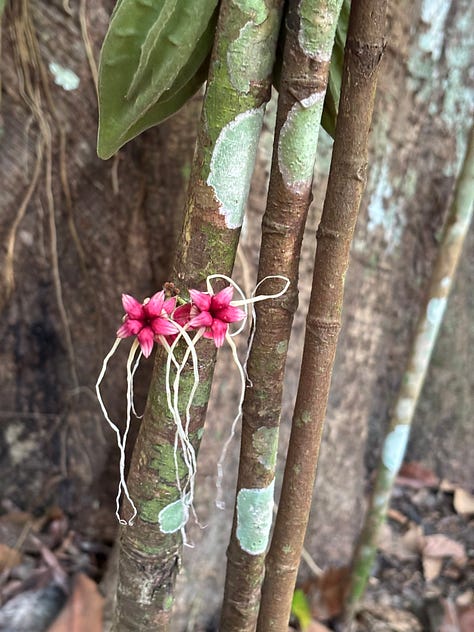
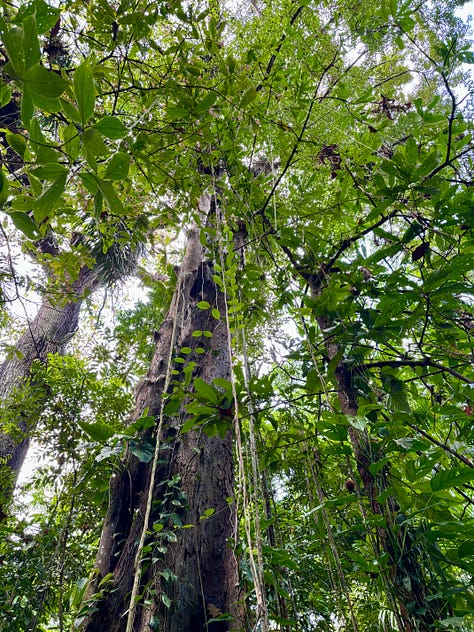
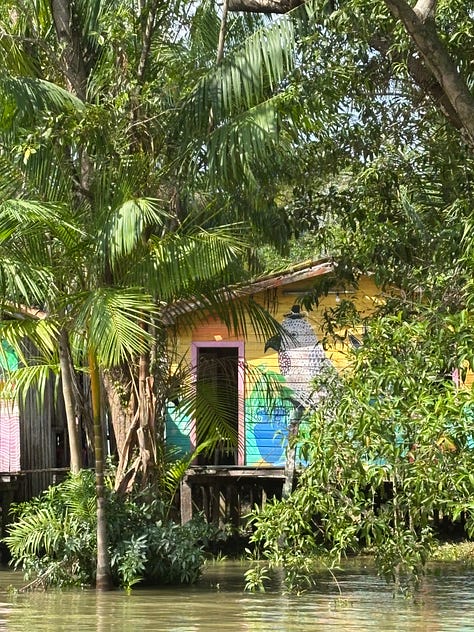
We took a boat across the extremely wide river that Belém borders, the Guamá River. We rode alongside an island within that very wide river, seeing the riverside communities and stopping for a hike within the thick forest.
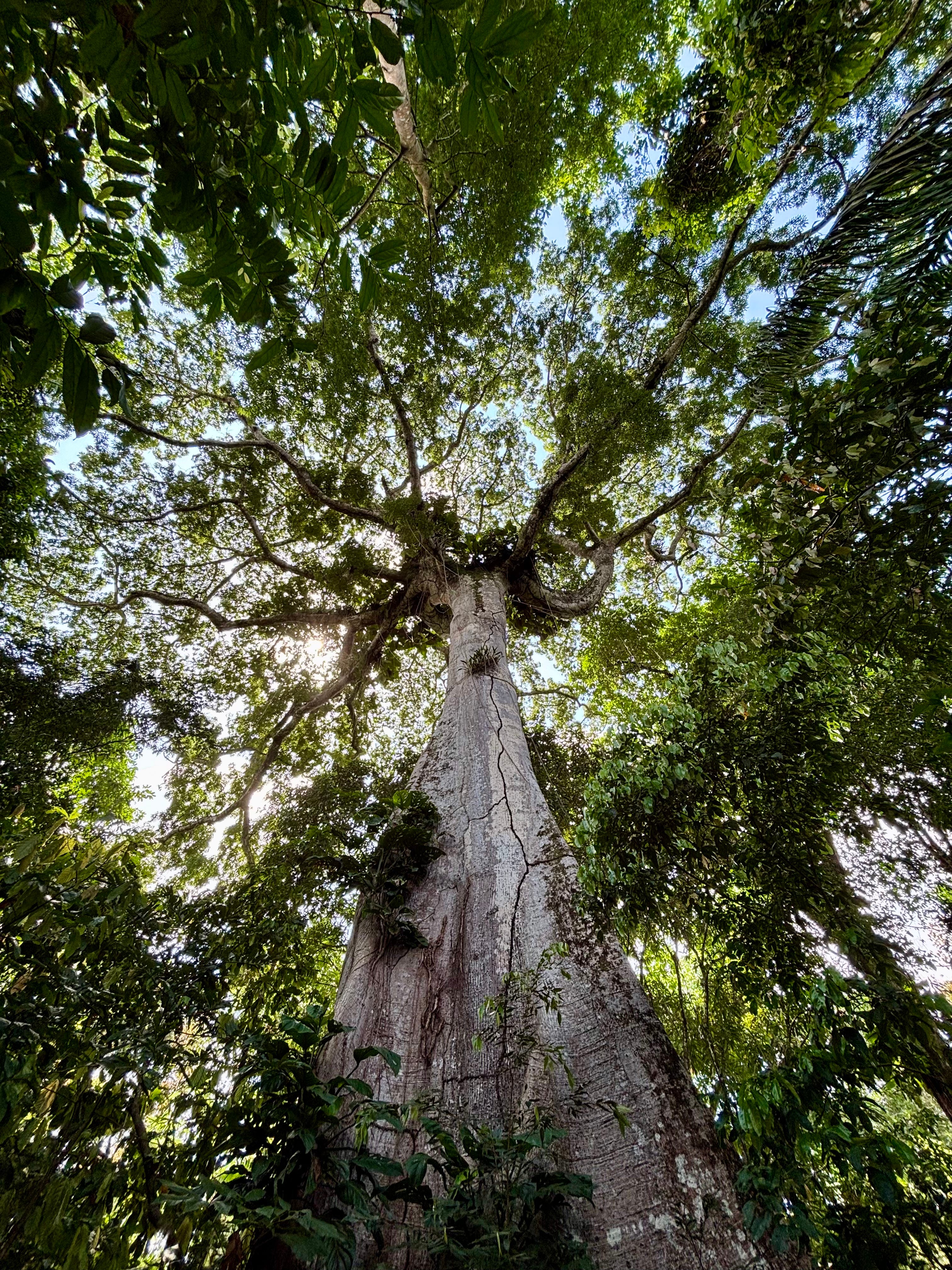
We got to see a Ceiba (Kapok) tree, the real-life inspiration for Avatar’s Tree of Life. Standing at its massive base, gazing up into the branches disappearing into the sky, I felt a swell of awe rise through me.
This was such a grounding moment I’ll take with me as I return to the conference this week and I hope others from the conference who visited do as well.
No posts
Comments
Nothing yet. Say the first thing.
Sign in to join the conversation.