
August 7th, 1963, saw a development that likely struck terror into the hearts of political leaders in Pretoria with the passage of United Nations Security Council Resolution 181. The resolution, building on what had at that point been a years-long global campaign of anti-apartheid organizing around South Africa, was the first successfully codified call within the organs of the United Nations for a boycott of military arms to the government:
Regretting the failure of the Government of South Africa to accept the invitation of the Security Council to delegate a representative to appear before it,
Being convinced that the situation in South Africa is seriously disturbing international peace and security,
l. Strongly deprecates the policies of South Africa in its perpetuation of racial discrimination as being inconsistent with the principles contained in the Charter of the United Nations and contrary to its obligations as a Member of the United Nations;
2. Calls upon the Government of South Africa to abandon the policies of apartheid and discrimination, as called for in Security Council resolution 134 (1960), and to liberate all persons imprisoned, interned or subjected to other restrictions for having opposed the policy of apartheid;
3. Solemnly calls upon all States to cease forthwith the sale and shipment of arms, ammunition of all types and military vehicles to South Africa…
Though voluntary, and certainly not followed by all UN member states at the time, it represented a first step of sorts that only helped to further isolate what was quickly becoming an increasingly unpopular regime on the international stage. The goal was clear: if one wanted to end apartheid in South Africa, efforts had to be undertaken to starve the project’s military forces of the supplies they needed to maintain the status quo and project power both internally and across the African continent.
On paper, the United States was more than happy to join these efforts. After all, the Kennedy administration, which cosigned the resolution, had informed the United Nations Security Council that the U.S. would voluntarily ban the transfer of combat equipment to South Africa days before the resolution was passed. For Kennedy, it seemed, Resolution 181 was simply a reaffirmation of budding U.S. policy as itself reevaluated its relationship with Pretoria.
The reality of U.S. compliance was much messier. Though compliant rhetorically, the United States never truly ceased support for the apartheid regime. Through a mixture of “gray-area sales” that took advantage of a seeming lack of distinction for aircraft and other equipment between what constituted civilian and military use, illegal corporate transfers that Washington was happy to ignore, and third-party weapons transfers, the U.S. was able to circumvent the embargo even after it became mandatory with the passage of United Nations Security Council Resolution 418. As Michael T. Klare concluded in his 1981 piece “Evading the Embargo: Illicit U.S. Arms Transfers to South Africa”:
It is obvious from all that has been presented here that U.S. arms companies—together with their overseas subsidiaries and partners—have provided South African authorities with substantial quantities of advanced military hardware. In addition, some U.S. firms have assisted in the development of an indigenous arms-making capability in South Africa by providing blueprints and “knowhow” for the manufacture of selected weapons and electronic systems.
The United States was not the only actor to skirt the international embargo effort. Apartheid South Africa and the restriction of arms to the regime proved to be a lifeline for a nascent Israeli arms industry that was more than happy to supply a close ally regardless of international sentiment. Beyond simple arms shipments, the Zionist colony also aided in the development of the apartheid regime’s nuclear weapons program, a decision that helped them secure the resources necessary to further develop their own program.
U.S. and Israeli intransigence notwithstanding, the embargo effort was one of many tactics deployed by those in the South African anti-apartheid struggle, and there is no doubt that the international embargo made the future considerably less assured for those in Pretoria. The culmination of these efforts, coupled with military blunders in the region and intensifying domestic pressure, led to the collapse of the apartheid regime by 1994. Undoubtedly, this collapse would have occurred sooner had the U.S. been as compliant as it claimed to be in the years prior.
Today, a similar opportunity is presenting itself with South Africa’s former close ally and weapons supplier as the Israelis continue their near three-year genocide in Gaza, the invasion of Lebanon and Syria, and continued efforts by Israeli leaders to continue the war with Iran with U.S. support. That opportunity is one of a comprehensive arms embargo against the colony, and with it the cessation of U.S. arms shipments to an occupational military force hellbent on the annihilation and subjugation of millions.
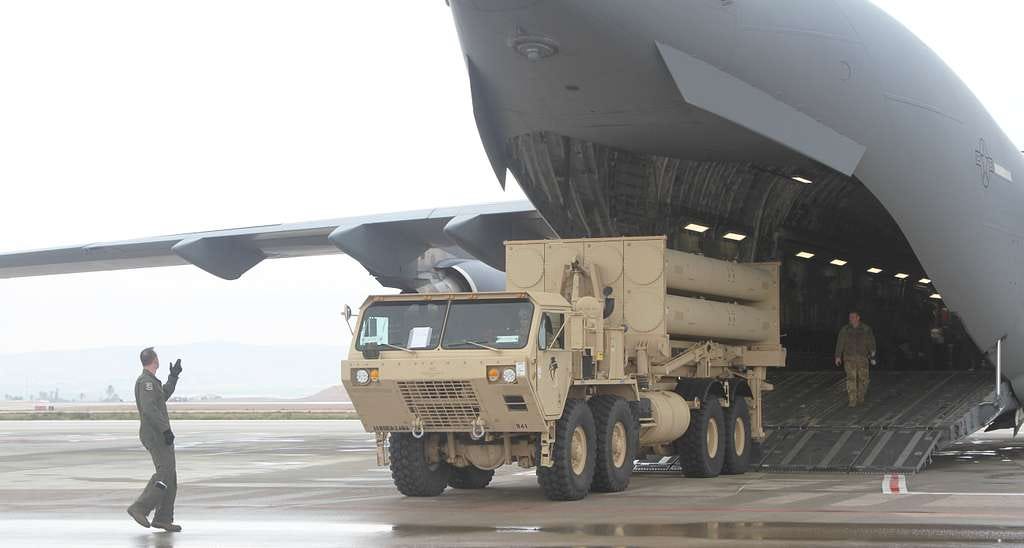
The United States is the largest source of military equipment to the Zionist entity by a wide margin. Though it is not the sole supplier, with nations like Germany, India, and others playing key reinforcing roles that help ensure the Israelis can diversify their import sources, it is nonetheless a source of weapons that the Israelis are utterly dependent on. Domestic Israeli arms production cannot meet the needs of its military, and the infusion of U.S. supplies is critical to its larger operational solvency.
We have seen the reality of that necessity in Gaza, where U.S. munitions have been regularly dropped on the captive population for years to horrific effect. Without U.S. arms, the Israeli military would likely have exhausted its munitions supply, forcing it to grind to a halt. Billions of dollars in arms shipments have instead enabled them to not only continue their genocide, but engage in a multi-front occupational effort that has seen an invasion of Lebanon, the expansion of occupied land in Syria, and military operations against Iran, Yemen, and elsewhere.
The horrors unfolding on these various fronts have led to international condemnation and an erosion of political support for the project, but not a slowdown of arms shipments. This curious reality has led to a headache for the movement, as political actors, particularly in the U.S., have begun shifting their rhetoric while seemingly doing little to shift their policy prescriptions. Countless “progressives” have come out to call Israeli actions deplorable, even genocidal, without committing to a comprehensive ban on weapons shipments to the very colony they are claiming to oppose.
This is, admittedly, partially resultant from the red lines initially drawn by the larger Palestine solidarity movement in reaction to the genocide in Gaza. In the months following the intensification of Israeli military activity in the open-air prison turned concentration camp, advocates and organizations quickly began attempting to identify positions that could garner popular support amongst a wide-ranging base of Americans who had to this point been largely oppositional to the idea of Palestinian liberation.
The calls that came shortly after October 7th were for a ceasefire, never mind the fact that there had been no true ceasefire even in the decades leading up to October 7th, 2023, decades that seemingly indicated that the colony would never abide by such an agreement in good faith. Mixed with this call were separate calls for political actors to call the Israeli actions a genocide, which, though correct, did not necessarily establish a standard that required politicians who fundamentally stood in support of the colony committing such a crime against humanity to truly reevaluate their broader positions around it.
The shortcomings of such calls very quickly began to materialize, with politicians such as Kamala Harris calling for a sort of ceasefire on the campaign trail during the 2024 presidential election that realistically was a call for the total Israeli domination of Gaza and Palestine made under the guise of creating a “lasting peace”. Other politicians have turned to criticizing Benjamin Netanyahu and his ruling coalition without broader critiques of what has always been a genocidal colony. Even today, political actors are making sure to toe an increasingly popular J-Street line of restricting aid while still allowing the Israelis to purchase their own weapons from U.S. suppliers.
All of these efforts are the result of a U.S. political establishment that is wrestling with a public relations headache while remaining fundamentally unwilling to abandon Zionism. These efforts are by no means insignificant, but they are at best mostly rhetorical shifts that have not truly led to a material change for those on the ground in Palestine, Lebanon, Syria, Iran, and elsewhere. As these actors increasingly try to mask their positions to appeal to an increasingly anti-Israel base of American voters, there exists a necessity to establish a red line that has a real material impact that they cannot negotiate around. That red line is an arms embargo.
Some organizations have been making this call for some time. The Palestinian Youth Movement (PYM) has been clear for years now that an arms embargo must be the standard to ensure the Zionist colony ceases its operations, with countless campaigns in Canada, the U.S., and elsewhere developing through and alongside them targeting arms manufacturers and other vital players in the larger logistics networks that enable arms shipments to reach the colony. In their words:
Amidst the ongoing genocide in Gaza, it is more urgent then ever before for people across the world to organize to stop the flow of weapons destined for Israel. An arms embargo is a concrete, enforceable and necessary step to end the flow of weapons and weapons components used in Israel’s genocide on Gaza.
Over the past year, our movement has turned the demand for an arms embargo into concrete, mass campaigns that are producing immense pressure on Western governments, and disrupting the supply chain of weapons and weapons components headed to Israel.
The Democratic Socialists of America (DSA) have also been increasingly shifting toward arms embargo efforts over the years. Building on BDs campaigns being actively undertaken by the organization, recently approved language around an arms embargo has seemingly shifted focus to their endorsed elected officials and candidates. Language being internally circulated by organizers advocating for tighter messaging by their “Socialists in Office” (SOIs) states:
Elected officials should vote against any proposal that gives direct or indirect funding to Israel or that violates any of the above obligations. They should work to prevent joint military research and co-development of weapons, technology, or other military industries in collaboration with Israel, and prevent public institutions from facilitating or investing in Israel’s military industry. They should also aim to hold corporations under their jurisdiction, which are involved in illegal military relations with Israel, accountable, including American subsidiaries of Israeli companies. As a minimum, this includes ensuring they don’t have access to public subsidies, spaces, and other support.
The goal is to end all US complicity in Israel’s violations of international law. A comprehensive military embargo is the most immediate and urgent step toward achieving that goal.
As American public support for Israel continues to sharply decline, the Israel lobby is attempting to rebrand US support for Israel. Efforts to deepen US-Israel military cooperation are increasingly being framed as technology “partnerships” and “innovation” or economic collaboration, rather than military “aid.” Elected officials should recognize this deceptive narrative and oppose any form of military collaboration, co-development, or trade that contributes to Israel’s military capacity.
The trend toward a call for a complete embargo is a reassuring development. Not only does it better ensure that bad-faith political actors cannot claim to be part of the movement while continuing to undermine it materially; if successful, it is a death blow to the colony itself. It is also simply the correct political and moral position to take regarding any entity engaged in the crime of genocide that any person wishing to end such horrors should reasonably support.
The importance of such a call is paramount as national election cycles unfold in the United States. Whether it be the midterms this year or the presidential elections in 2028, there will be no shortage of opportunists wishing to avoid Palestine or give the below the bare minimum concessions to attempt to stave off criticism. The movement must be prepared for this and be unified around a clear policy requirement that would force political actors to go further than just hollow statements of condemnation and Liberal Zionist “solutions” that do nothing to truly challenge the Zionist entity.
We must also keep in mind the failures of the embargo efforts against the apartheid regime in South Africa. Simple commitments from U.S. leaders cannot be the end-all, be-all solution to Israeli occupation. This represents a single policy demand that must be pushed alongside continued efforts to isolate the colony and bring about sustained economic and political pressure upon it. That will entail targeting complicit companies like Maersk and Chevron, working in our communities to boycott Israeli agricultural products, disrupting the flow of arms from companies such as Elbit, pushing local municipalities to divest from investments that benefit the colony, and more.
The culmination of these efforts within the imperial core constitutes a support front that gives Palestinians and others in the region a better chance to liberate themselves from the boot of Israeli settler colonialism. If we want a free Palestine, we have to disrupt the war machine. That means wide-ranging campaigns at the grassroots level and a comprehensive embargo on Israeli weapons shipments. Not a limited ban that allows for “defensive weapons” to continue going to the colony, or a restriction that allows the U.S. to replicate its South Africa anti-embargo strategy. A full ban.
Palestinians will liberate themselves, as will the countless other peoples currently occupied by the Zionist entity. It is our role, those of us outside of Palestine, to give them every possible material advantage through the disruption of international material support to the colony.
We have to block every bomb and block every bullet.
Comments
Nothing yet. Say the first thing.
Sign in to join the conversation.