
I woke up to the sound of my alarm in my home in the early morning and the notification that it was time to make a call abroad. The time zone difference, seven hours from where I sat in Philadelphia, meant that I was getting up earlier than usual, but it was worth it for the conversation I was expected to have in just over an hour. I rolled out of bed, threw a sweatshirt on, and put on a beanie to cover my bedhead before walking downstairs to start some coffee.
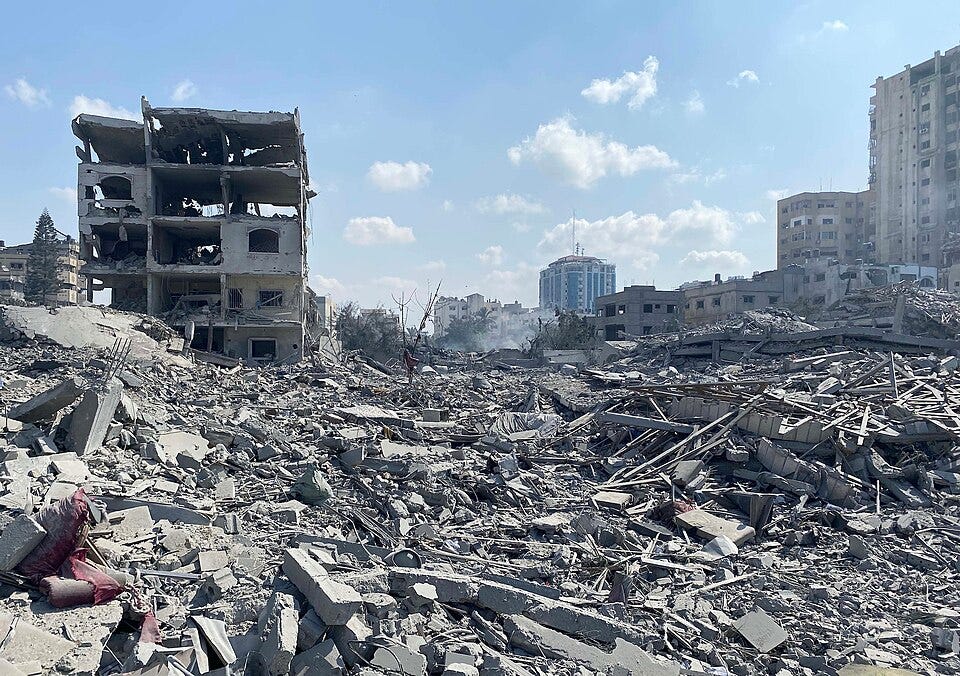
Only a few days before, I had been reached out to by a local organizer in Philadelphia who had spent the last two years actively fundraising for a slew of families across Gaza. Her efforts had kept rent payments flowing, put food on the table, and covered expenses for dozens of people who had been made refugees as a result of the ongoing genocide. Israeli forces had spent the time since October 7th systematically attempting to annihilate every soul in the embattled Gaza Strip, an open-air prison turned concentration camp that housed over two million people before the initiation of the Al-Aqsa Flood operation. She, like countless others across the world who have maintained fundraising networks over the past years, had spent that same time, with limited resources, trying to ensure that those facing the horrors of those occupational efforts had what they needed to survive another day.
She explained in a slew of messages that times were getting more difficult than ever to keep families supported with what they needed as the Israelis continued to restrict goods coming into Gaza. Despite the news of a “ceasefire”, no such cessation of hostilities had occurred. Israeli occupation forces have continued their bombardments and displacement campaigns, shifting their “yellow line” further and further into the territory as they squeeze the people of Gaza, many of whom were already internally displaced refugees before October 7th, into tighter and tighter spaces. Gangs outfitted and supported by the Israelis continue using this “yellow zone” as a security zone where they can organize before launching attacks against the people outside of Israeli control. Disease outbreaks and starvation continue to plague those who are dodging the bombs and bullets. Though much of this has fallen out of the headlines, the reality of it all nonetheless persists.
All of this was swirling around my mind as I sat down at the table in my living room and opened up my laptop to start the call. That was when I first met Shadi, a photojournalist who had spent the last months building an impressive following across social media as he documented the ongoing events in Gaza. Also on the call, though not directly with him, was another face, our translator for the call, Taleen.
Both of them were remarkably young, Taleen being under the age of 18, and was an artist in her free time who was connected with me through the same fundraising volunteer who was supporting Shadi and other families in the Strip, and Shadi being just over 20. This was not necessarily surprising, as even before October 7th, the median age of the entire Gaza Strip was around 18, the outcome of years of brutal military activity waged by the Israeli military as it tried to force the capitulation of a people who had carved out their own sovereign territory amid the encroachment of the settler colonial regime. Still, it was another reminder of the brutal reality on the ground, as both talked of their schooling and the hardships they endured as a result of the genocide itself. Taleen was still actively pursuing education and spoke briefly of the difficulties of doing so while under Israeli bombardment. Shadi had paused his studies at the time to put more effort into capturing what was going on in the community around him with his reporting and updates. Their stories resembled many children and young adults across the area, many of whom have seen their educational journeys entirely uprooted by colonial occupation and violence.
The reality of the genocide itself was also present in the settings in which both called in. Taleen called from what appeared to be a small room surrounded on all sides by concrete walls where the signal of the call itself routinely cut in and out. Shadi, by comparison, was taking his call from a small cafe that had set up wifi for him and others so that he could briefly communicate with the outside world. They explained that getting any signal at all had become increasingly difficult, with small cafes like the one Shadi was at playing a role in helping people connect to those outside of the concentration camp they found themselves in.
Shadi’s route to becoming a journalist was not something he envisioned as a career path, but the horrors inflicted in Gaza had convinced him to take up the profession to help countless others document what they were seeing to share with the world. His older cousins, whom he spent a considerable amount of time with growing up, were both journalists who took him under their wing. Both of his cousins have since been killed by Israeli forces, martyred in the Jabalia refugee camp as they tried to report on what their neighbors and family had been experiencing as a result of Israeli genocide. They had left the Indonesian Hospital where Shadi had joined them to interview those injured and displaced within.
Sadly, they are not the only journalists to meet that fate. Shadi noted many other journalists he knew who had themselves been murdered by the IOF during the last two years. Israeli forces have to date killed hundreds across Gaza in a deliberate effort to stop the flow of information from Palestinians to the world as the genocide continues. For the Israelis, every atrocity spread around the world only further damaged their reputation on the international stage, a particular worry as the colony has become more isolated than ever. Rather than stopping their genocide, they have turned to targeting those documenting it, a risk Shadi had said he is painfully aware of.
When I asked him about the dangers of the ongoing work he was undertaking, he responded as if the threat of murder was just a mundane occupational hazard, something he knew in the back of his mind was possible but not something that would stop him from going out and continually reporting on what was going on. His family, according to him, felt very differently. He spoke at length about his family wanting him to continue his education, maybe even setting aside the journalism given the threat of harm he was facing. He had told them no, and though he is pursuing his education now, he had no plans on putting the camera down. After his cousins were martyred, Shadi made a promise to himself to continue reporting even if it meant that he too would meet such a fate as a result of his efforts. There had been several moments since then that such an outcome had almost occurred. Shadi chalked it up to the hazards of reporting in Gaza. These were acceptable hazards to him so long as he could continue getting the word out.
Thanks for reading Commie Corner! This post is public so feel free to share it.
The threat of Israeli military violence was far from the only pressure he and Taleen felt as they attempted to survive the ongoing genocide, however. A central part of conversations I had with them and their fundraiser were the hurdles in maintaining housing as landlords in Gaza were still expecting tenants to pay up or be sent back to the streets to find housing amongst the rest of their displaced peers. Shadi noted that rent was several hundred dollars a month for his family, and that they had struggled month to month to keep up with paying what to me amounted to extortion.
The American running his fundraiser abroad, who joined us on the call, also noted that the payments had gotten harder to manage with time as Gaza fundraisers had seen fewer donations across the board as the genocide continued. The news of a ceasefire had meant that Gaza was largely pulled from the front pages of the news, and headlines had become less and less common even as the crisis continued. This meant that there were fewer eyes on Gaza than there had been, and by extension fewer donations. She noted too that she had spent the last months covering the difference when donations fell through, using her own money to ensure Shadi’s family and others she was helping did not end up without roofs over their heads. For her, every penny was worth it, even if it did stretch her household budget. For Taleen and Shadi, she was a lifeline, and she understood the responsibility that came with that.
The lack of funds also meant that Palestinians in Gaza were oftentimes trying to find creative ways to make money amid the destruction of their local economy. Taleen had taken up art, and was selling pieces on a website managed by the same person helping manage her fundraisers. Creating the various pieces helped her pass the time and find some brief reprieve amid the chaos, but were also a vital income stream that was helping her meet her family’s needs.
Talking to both of them, you would think you were just speaking to any other young people across the world. A lot of the conversation circled around their own personal hopes, with both of them noting the completion of their education as being a core goal. As you would imagine, both were also holding out on the hope that they might be able to see some semblance of lasting peace in the near future. Shadi said that until then, he was not going to stop going out and recording what lack of peace existed for his community. For him, it was the least he could do for them, and with the systematic assassination campaigns being waged against journalists that had killed so many, it was a role he felt was impossible to truly step away from.
As we ended our call, I asked him if there was anything those of us outside of Gaza could do to try to help. He and Taleen had plenty of suggestions, as did the American supporting their fundraisers. For those wanting to help, money is of course the primary means by which you can. Shadi’s fundraiser can be found here. The larger network of families being supported by his fundraiser’s manager can be found here as well, something worth checking out as there are plenty of people like Shadi and Taleen who need help in any way possible. Taleen is also still selling art, which you can buy here to help support her family all while getting a print for your home or office.
The importance of the material support we can provide Shadi, Taleen, and others cannot be understated. Between Israeli occupation soldiers and predatory landlords, they are facing truly desperate times. Shadi faces unique risk as someone cataloguing the atrocities and posting them on his social media for the world to see, and has repeatedly said to me that he is beginning to struggle to ensure that, on top of his basic needs, he needs support to ensure his phone, which he uses to report, is in working order.
This genocide has not ended, and until it does, it is our responsibility to support those enduring it in any way we can. They are counting on us to help them shoulder the weight of the ongoing crisis. Without us, an already nearly unlivable circumstance becomes untenable. They deserve to grow up and spend the rest of their lives at peace. Until they can, it is on all of us to get them through another day.
Thanks for reading Commie Corner! This post is public, so feel free to share it.
Comments
Nothing yet. Say the first thing.
Sign in to join the conversation.