
Where Crypto Capital Flows Meet Market Intelligence.
🗓️ Tuesday, July 7, 2026 | Est. read time: 7 minutes
Bitcoin rebounded to roughly $62,600-$63,000, up 4.5% on the week, after touching a 21-month low near $58,000 on Wednesday.
June nonfarm payrolls printed just +57,000 versus 115,000 expected, closing the door on a near-term rate hike and reviving cut odds.
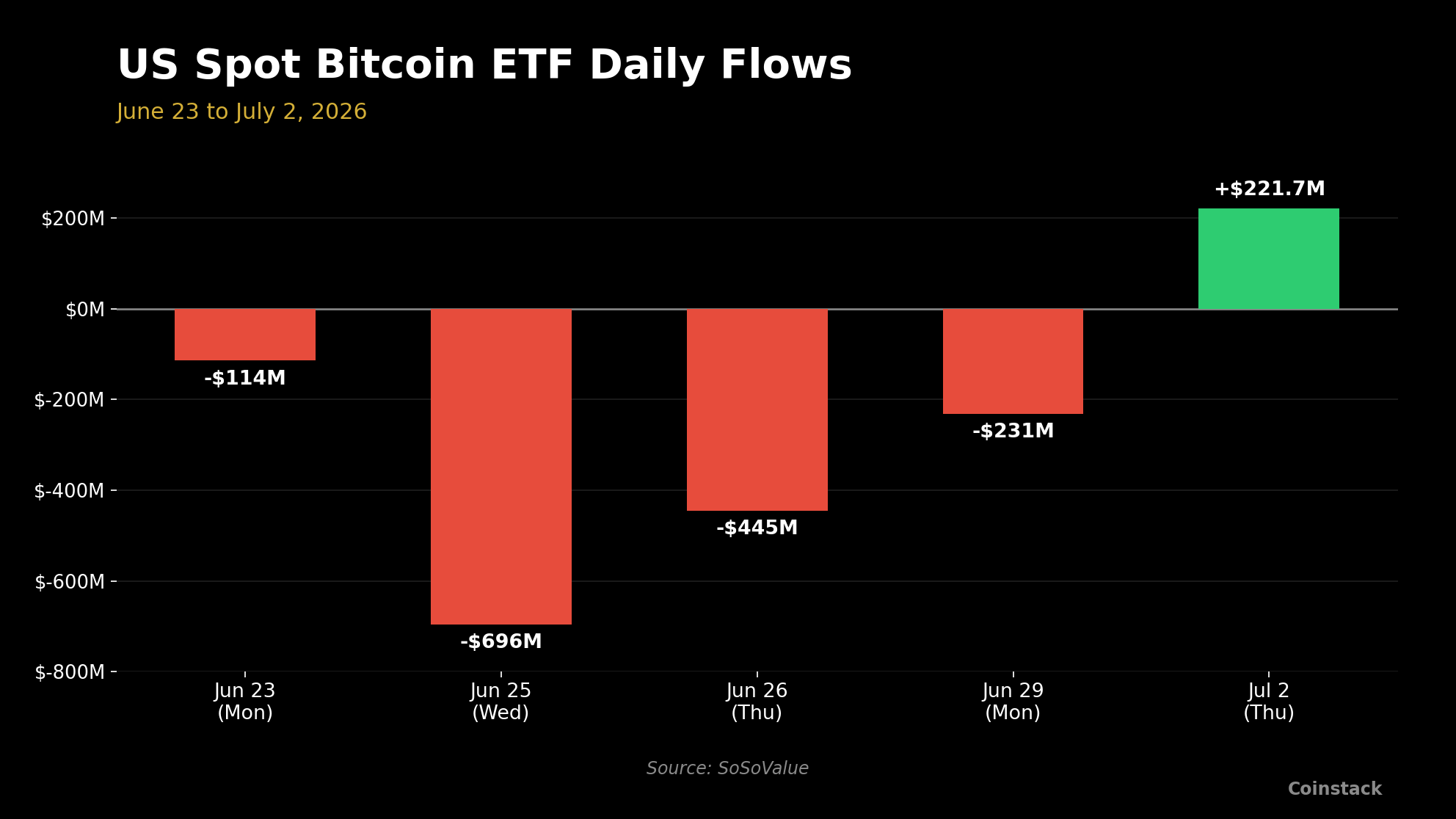
US spot Bitcoin ETFs snapped a 10-day, $2.73 billion outflow streak with a $221.7 million inflow, and Ethereum ETFs turned positive after nine straight outflows.
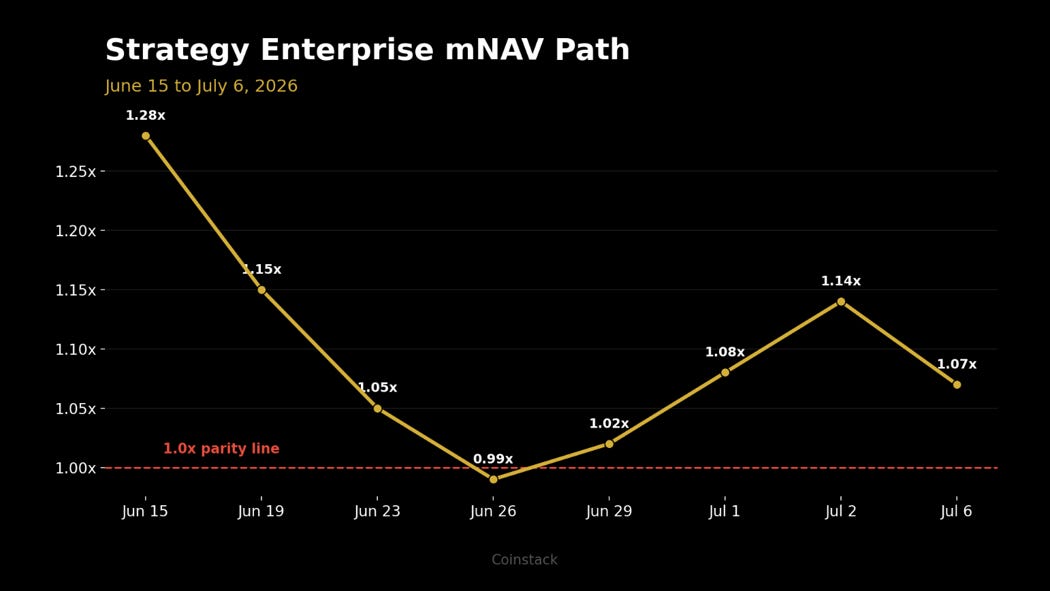
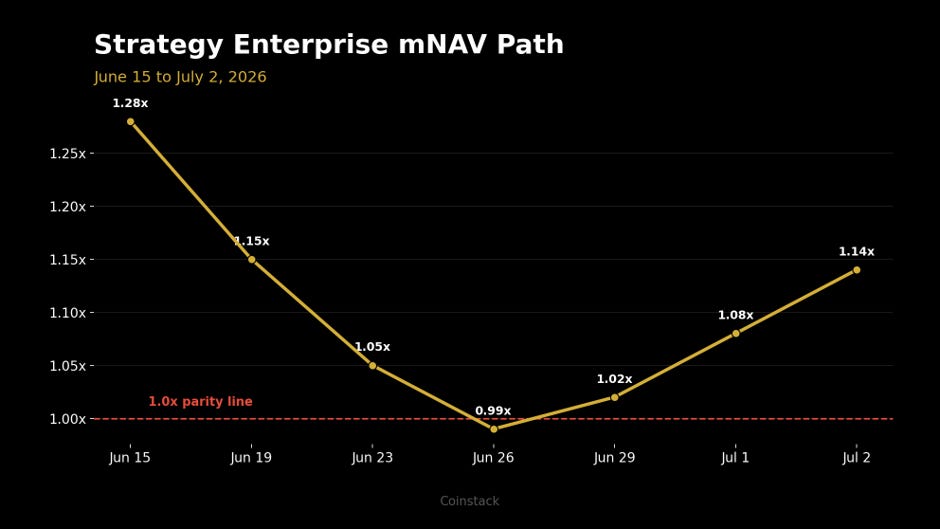
Strategy’s enterprise mNAV climbed back toward 1.0x as MSTR gained roughly 18% following a new $1.25 billion Bitcoin monetization and $2 billion buyback framework.
The CLARITY Act missed its July 4 target after an ethics fight over President Trump’s $1.4 billion crypto income disclosure blocked Senate cloture.
FHFA Director Bill Pulte directed Fannie Mae and Freddie Mac to prepare to recognize crypto holdings as a mortgage-qualifying asset.
Week ahead: FOMC minutes, June CPI, and a Senate that returns July 13 for another run at market structure legislation.
Crypto opened July still trading like a leveraged rate bet rather than a hedge against anything. Bitcoin cracked near $58,000 on Wednesday, its lowest level in 21 months, before a single soft jobs report flipped the tape by Friday. ETF flows reversed, shorts unwound, and Strategy’s broken premium began to repair, yet the Fear and Greed Index still read 24, extreme fear territory. One strong week after a brutal quarter is a data point, not a floor.
Here’s what crypto investors should understand about the week ahead…
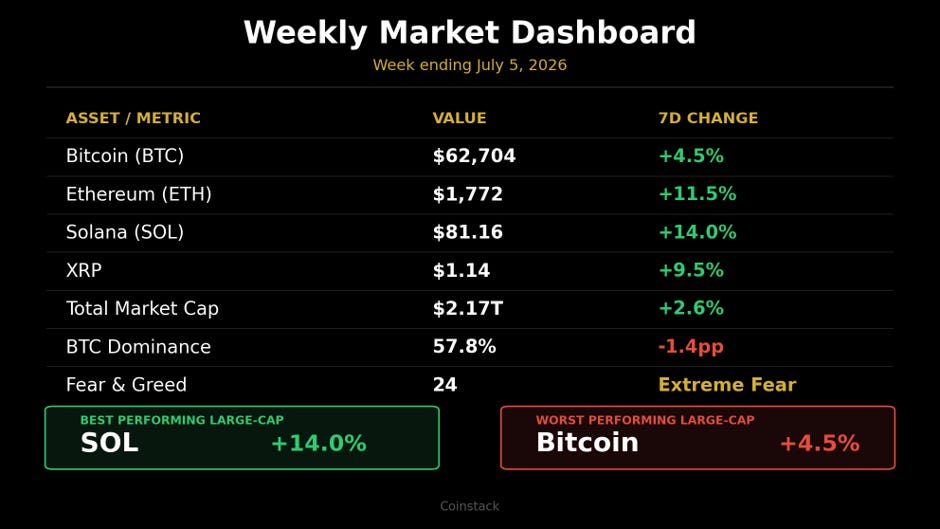
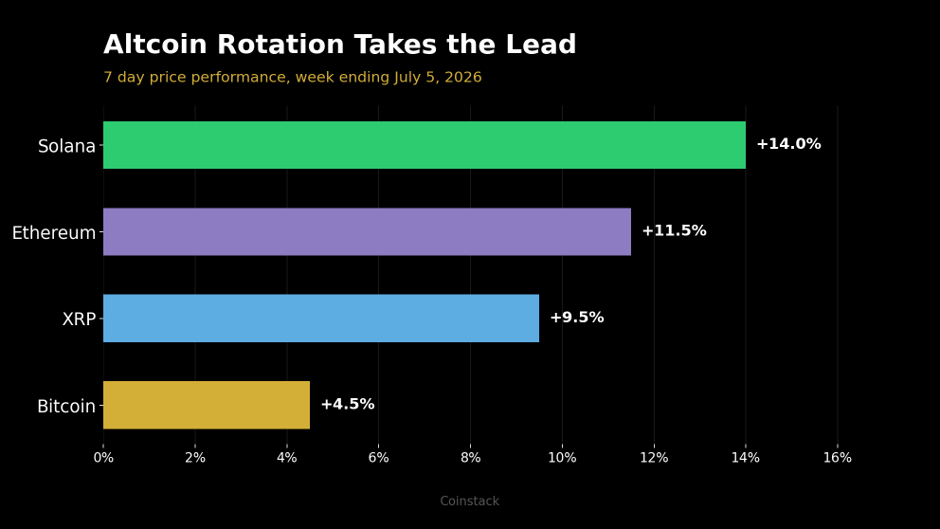
Solana led the majors as risk appetite returned, supported by continued Bitwise BSOL and Fidelity FSOL ETF demand and a rotation into higher beta majors once Bitcoin found a floor.
Bitcoin still gained on the week, but lagged every other major as it absorbed the bulk of ETF selling before the Friday reversal, leaving less room to run.
Three forces moved the tape. A weak June jobs report eliminated near-term hike risk and sparked broad short covering. Bitcoin and Ethereum ETFs both flipped to inflows after prolonged outflow streaks. Strategy’s new capital framework lifted the treasury cohort as its mNAV climbed back toward parity.
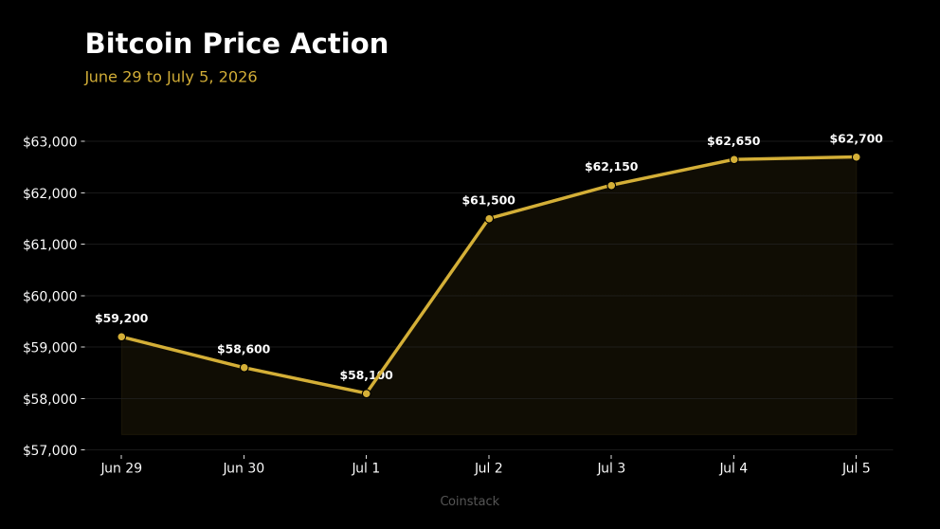
The Bureau of Labor Statistics reported June nonfarm payrolls at +57,000, far below the 115,000 consensus, with April and May revised down a combined 74,000. The unemployment rate ticked down to 4.2%, but the miss took a near-term Fed hike off the table. Bitcoin, which had fallen to $57,950 earlier in the week, its lowest print in 21 months, rallied more than 7% to reclaim $62,000 by Friday. According to SoSoValue, US spot Bitcoin ETFs recorded $221.72 million in inflows on July 2, their largest day in two months and the first positive print after a 10-day $2.73 billion outflow streak. Ethereum ETFs followed with back-to-back inflow days after nine straight outflows, led by BlackRock’s ETHA.
The reversal shows how tightly crypto now trades with rate expectations. Roughly $281 million of short positions were forced closed in the squeeze, nearly double the longs liquidated. Year to date, Bitcoin ETFs still sit at $5.4 billion of net outflows, so Thursday’s inflow is a signal, not a solved problem.
Watch whether ETF inflows extend into a second and third week rather than fading as a one-day squeeze. Bitwise and Glassnode both frame the move as cautious repositioning, not euphoric buying. FOMC minutes and June CPI will decide whether this was a bounce or a genuine inflection.
The Senate’s crypto market structure bill failed to reach a cloture vote before the July 4 recess. A Van Hollen ethics amendment tied to President Trump’s $1.4 billion 2025 crypto income disclosure failed 11 to 13 in committee but hardened Democratic opposition. Polymarket’s 2026 passage odds fell to 42-50%, down from 74% a month earlier.
Congress returns July 13 with three weeks of floor time before the August recess, and Galaxy Research still prices passage at 60% for the year.
Three unresolved fights: ethics, developer liability protections, and stablecoin yield. All need Democratic votes the bill does not currently have.
FHFA Director William J. Pulte (commonly known as Bill Pulte) issued a formal directive to Fannie Mae and Freddie Mac on June 24, 2025, to prepare systems to recognize cryptocurrency holdings as a qualifying asset for single-family mortgage applications, calling the housing finance system overdue for an upgrade. Progress on implementation continued into 2026.
👉 Read the FHFA June 24, 2025 Directive – Here.
It is the clearest signal yet that crypto is being treated as legitimate personal wealth by federal housing policy.
Implementation timelines for government-sponsored enterprises are typically slow, and volatility discounting on crypto collateral could limit the benefit.
Strategy’s June 29 Digital Credit Capital Framework added a $1.25 billion Bitcoin Monetization Program, $2 billion in buybacks, and a 12% increase in the STRC dividend. MSTR rallied from a 52-week low near $82 to close above $100 on July 2, pulling enterprise mNAV back from 0.99x to 1.07x as of Monday, July 6 (at the time of writing).
The buyback and reserve framework addresses the two investor anxieties, dilution and preferred coverage, that drove the mNAV break.
Ripple’s Brad Garlinghouse has publicly called the preferred stock funding model financial engineering, and a renewed Bitcoin slide would reopen the discount within weeks.
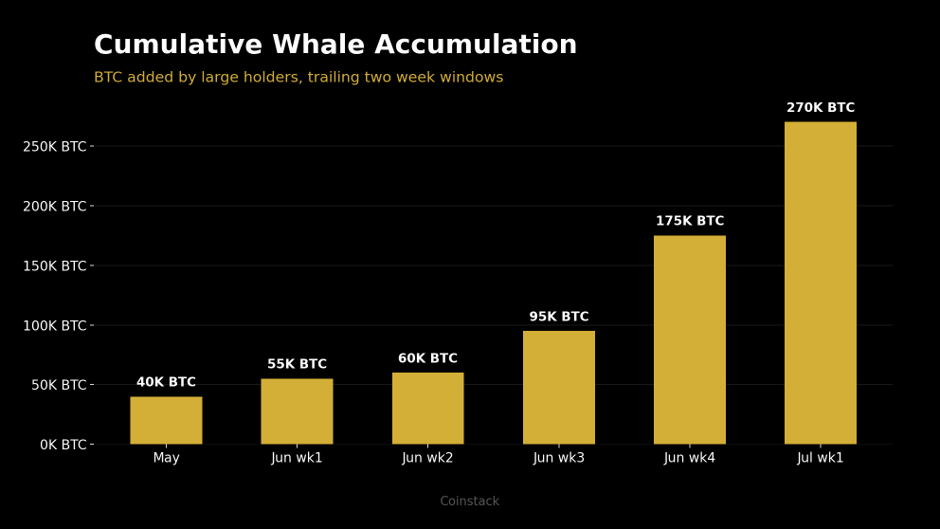
Large holder wallets accumulated more than 270,000 BTC over the past two weeks, according to CryptoQuant, extending a pattern of long-term holders buying into ETF selling. Binance also recorded its highest Ethereum withdrawal count in more than three years on July 3, over 166,000 transactions, which analysts read as accumulation, though some flows may reflect DeFi redeployment rather than pure holding. Together with the $281 million short squeeze, positioning had clearly grown one-sided into the June lows.
With a Fed hike effectively off the table, capital rotated into higher beta majors faster than into Bitcoin itself. Ethereum gained 11.5% on the week and Solana 14.0%, both outpacing Bitcoin’s 4.5% advance, while XRP added 9.5% on renewed altcoin ETF inflows.
Ethereum ETFs are compounding two straight days of inflows, and Solana’s upcoming Alpenglow upgrade plus growing spot ETF assets under management are giving both networks independent catalysts beyond the Bitcoin trade.
The move is macro-driven off a single jobs report and heavy short covering, and a hawkish reversal from Fed Chair Kevin Warsh could snap the rotation back toward Bitcoin just as quickly.
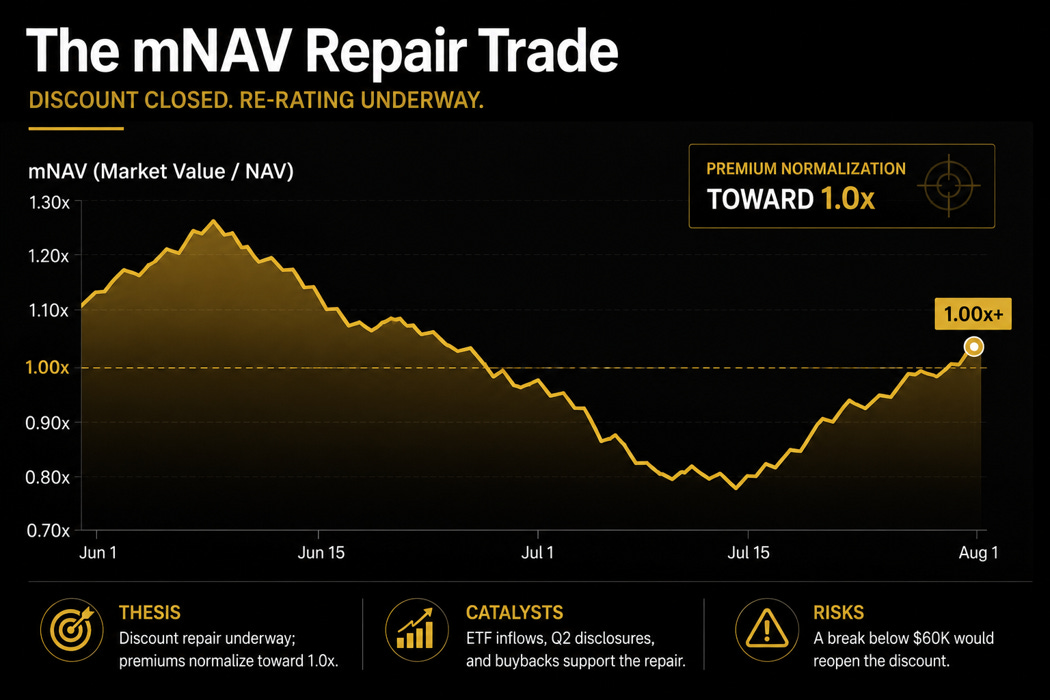
Strategy’s capital framework has begun repairing the treasury company discount that opened in late June, and the broader Bitcoin treasury cohort should reprice alongside it as premiums normalize toward 1.0x.
Continued Bitcoin ETF inflows through July, Q2 disclosures beginning mid-month, and further buyback execution from Strategy would each support the repair.
A renewed break below $60,000 would reopen the discount across the cohort just as quickly as it closed, since the trade depends on Bitcoin’s price path, not company fundamentals.
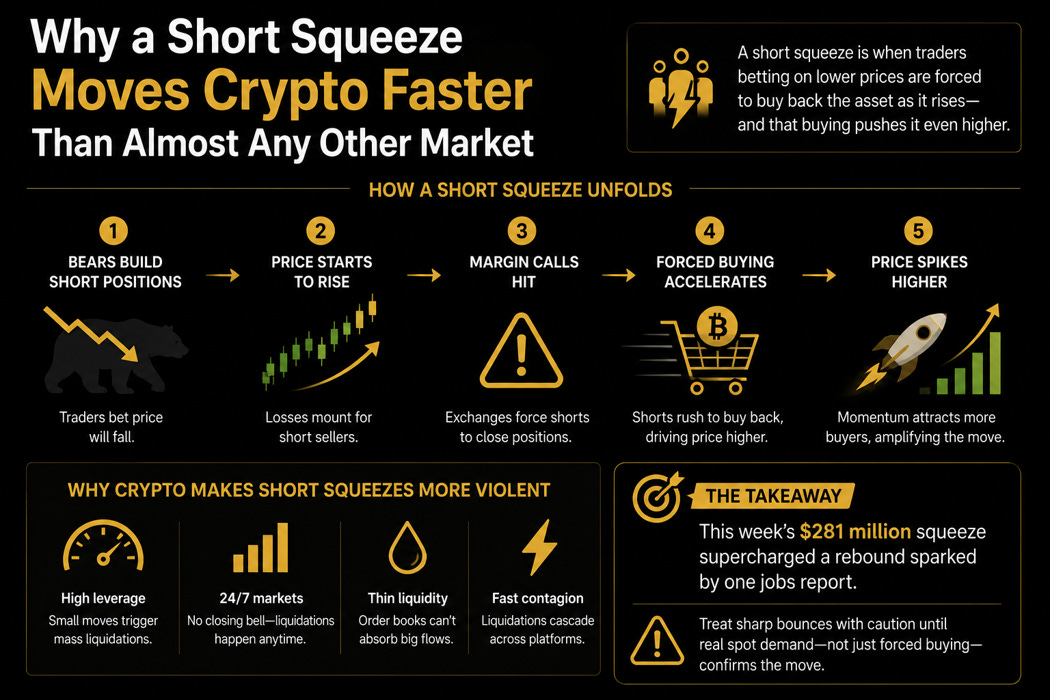
A short squeeze happens when traders betting on falling prices are forced to buy back the asset to close their position as prices rise, and that forced buying pushes the price up further. Crypto’s high-leverage derivatives market makes this especially violent, since one data surprise can force hundreds of millions in short covering within hours.
The takeaway: this week’s $281 million squeeze amplified a rebound that started with one job report, so traders should treat sharp bounces with caution until spot demand, not just forced buying, confirms the move.
The EU’s MiCA regulation reached full enforcement on July 1, with only about 244 of more than 1,200 previously registered firms securing full authorization ahead of the deadline.
Open USD, a stablecoin consortium backed by Visa, Mastercard, Stripe, BlackRock, Coinbase, and Ripple, launched on June 30 with more than 140 partners.
A new nonprofit called Ethereum Institutional launched with backing from Joe Lubin, BitMine, and SharpLink to coordinate bank and asset manager outreach.
Anchorage Digital unlocked Lido staking rewards for institutional custody clients holding wstETH without moving assets off the platform.
The SEC opened a 60-day public comment period on novel ETFs, including crypto, prediction market, single stock, and high-leverage products, with the request for comment published in the Federal Register on July 2.
A single soft jobs report did more for crypto sentiment this week than months of on-chain conviction had managed alone, a reminder that this market still trades on macro triggers first and fundamentals second. Strategy’s premium is repairing, ETFs are flowing back in, and altcoins are leading again, but none of it survives a hawkish surprise from the Fed or a stalled Senate calendar.
Whether early July marks a genuine inflection or another head fake depends on FOMC minutes, June CPI, and Congress moving the CLARITY Act before its August window closes.
Coinstack is published every Tuesday. Nothing in this newsletter constitutes financial or investment advice. All information is sourced from publicly available data and should be independently verified.
© 2026 Coinstack. All rights reserved.
Comments
Nothing yet. Say the first thing.
Sign in to join the conversation.