
Where Crypto Capital Flows Meet Market Intelligence.
🗓️ Tuesday, July 14, 2026 | Est. read time: 7 minutes
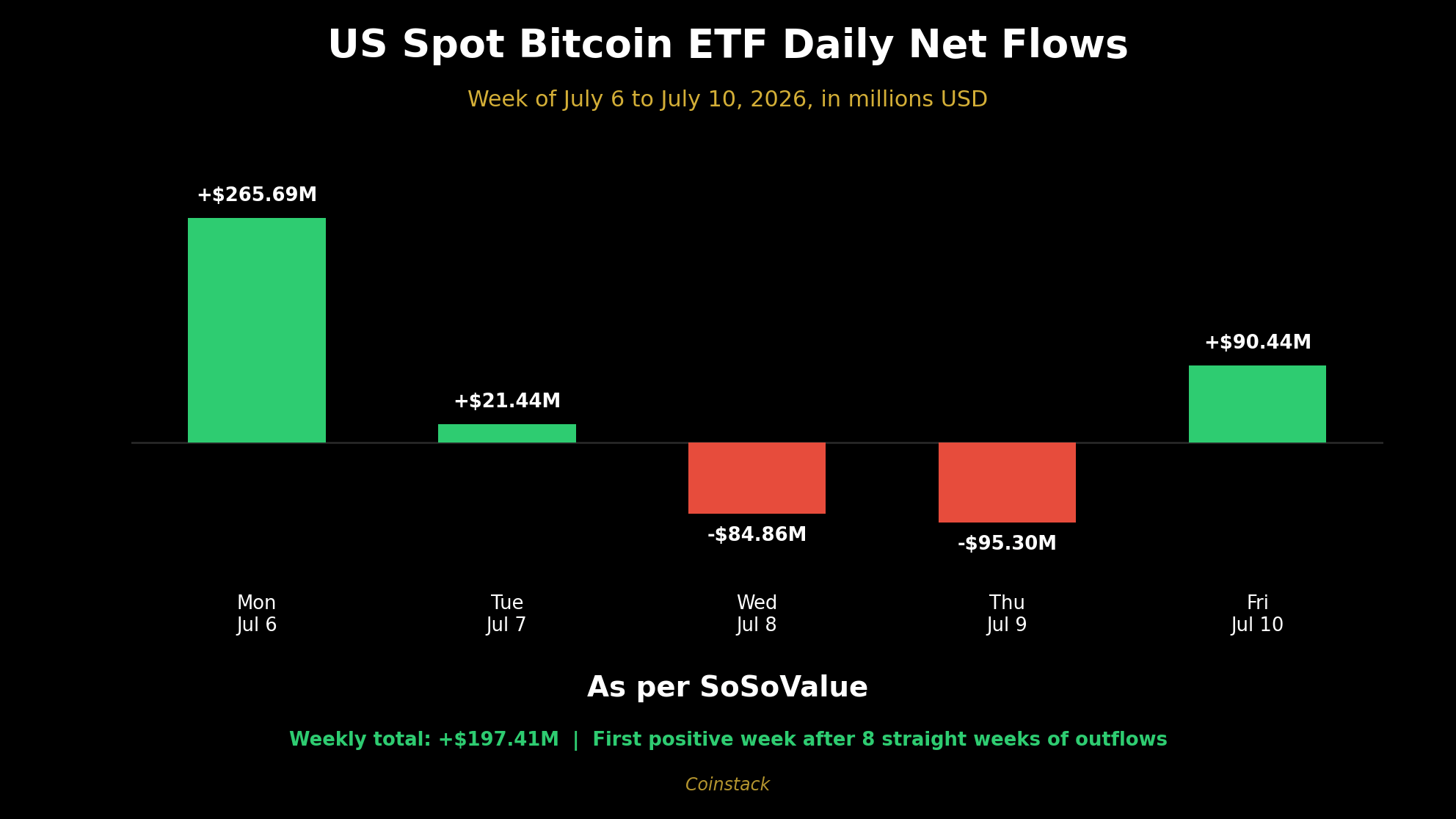
Bitcoin and Ethereum ETFs snapped their longest losing streak on record, pulling in a combined $281.8 million for the week after eight straight weeks (week ending July 12) that drained $8.26 billion.
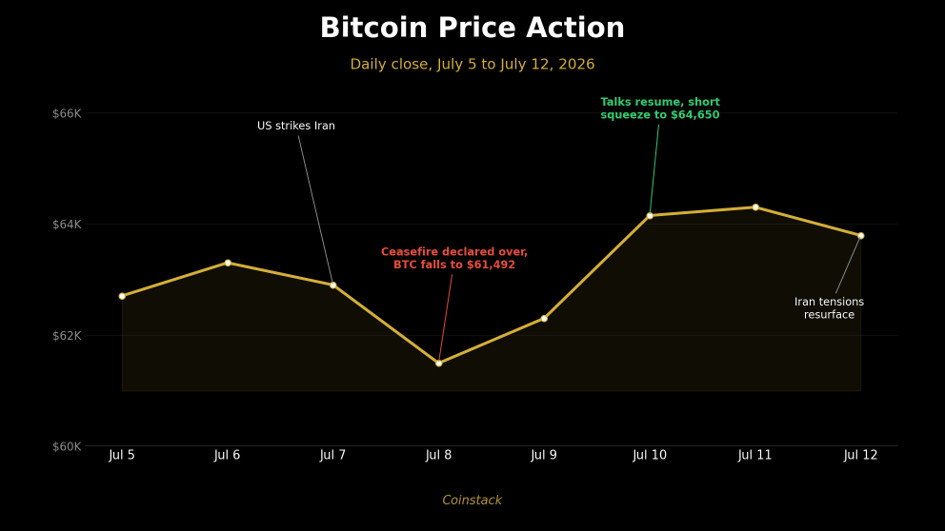
Renewed US-Iran hostilities rattled markets midweek, with Bitcoin sliding to roughly $61,492 on July 8 after Trump declared the ceasefire over, before recovering to $64,400 (intraday high of $64,658.97 on July 10) by Friday on a short squeeze.
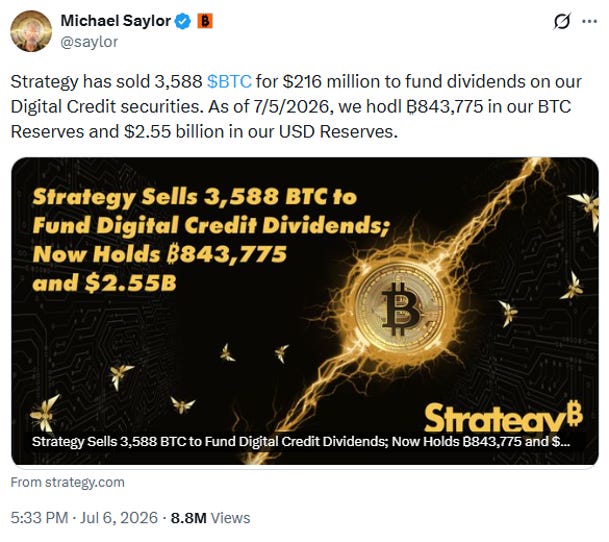
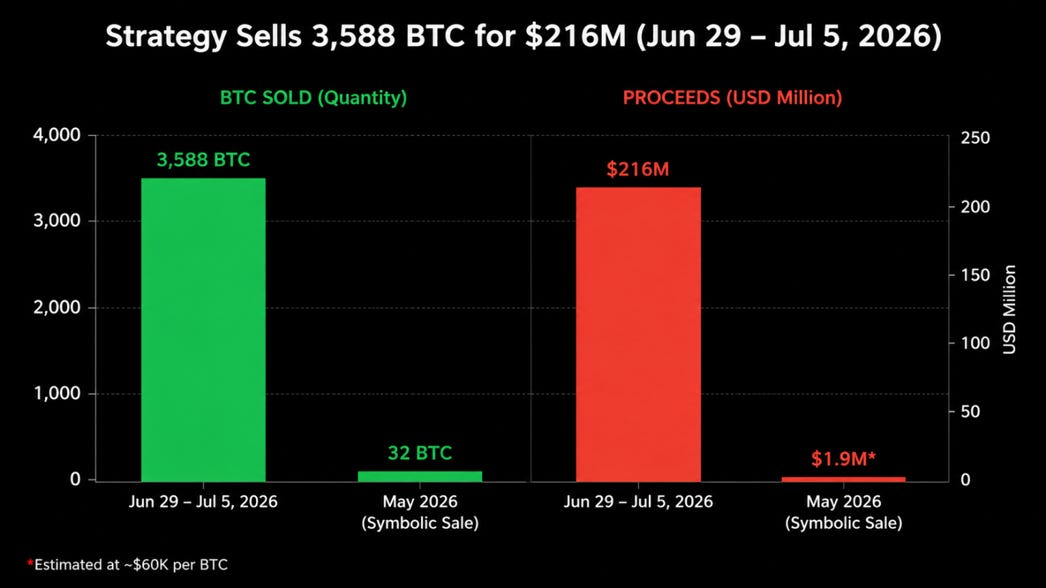
Strategy sold a record 3,588 BTC for $216 million, its largest disposal ever, to fund preferred stock dividends, a marked shift from years of never selling.
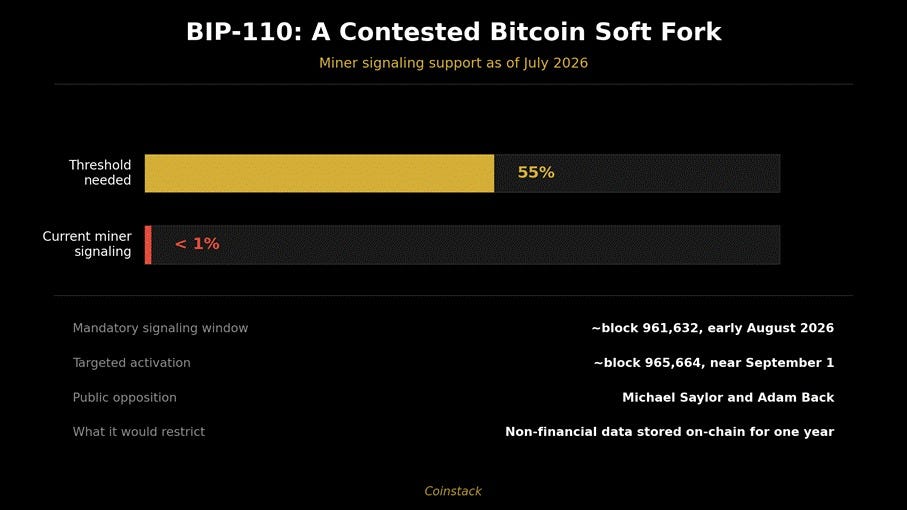
Bitcoin’s BIP-110 soft fork nears a contentious deadline, with miners signaling under 1% and Michael Saylor and Adam Back both publicly opposed ahead of early August activation.
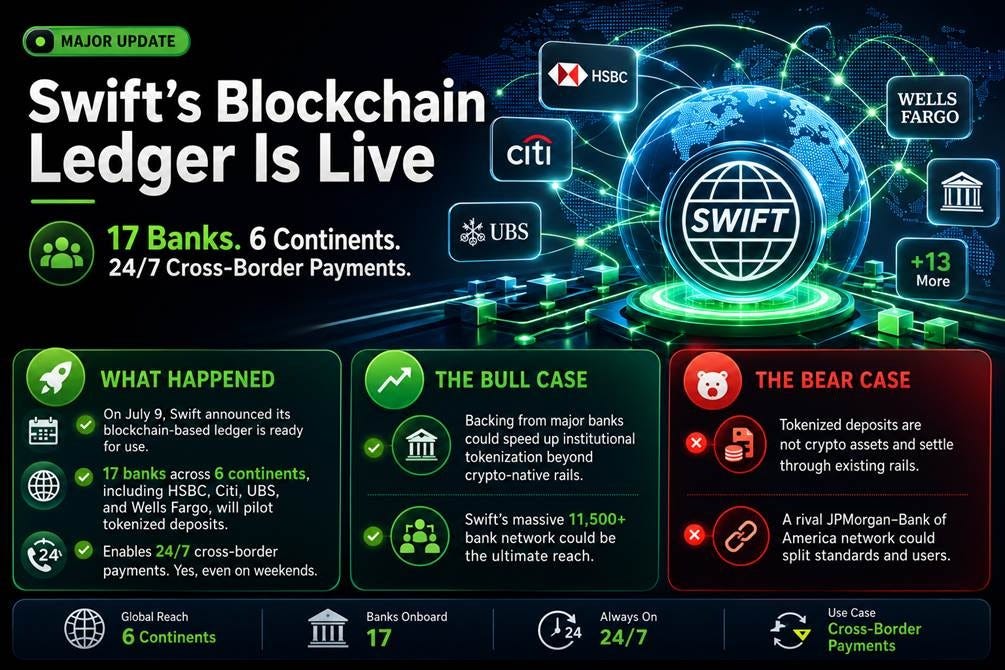
Swift went live with a blockchain ledger for tokenized bank deposits, onboarding 17 global banks including HSBC, Citi, UBS, and Wells Fargo for 24/7 cross-border settlement.
Bitcoin and Ether exchange reserves fell to multi-year lows, though analysts increasingly question whether the traditionally bullish signal still holds given ETFs and institutional custody.
Week ahead: June CPI Tuesday, the Senate returns July 13 for a CLARITY Act push, and the Fed meets July 28-29 under new Chair Kevin Warsh.
Crypto spent the week proving it never closes. ETFs broke their worst losing streak in history, only for renewed US-Iran hostilities to quickly erase the relief rally, before Bitcoin clawed back above $64,000 as talks resumed. Add a corporate seller breaking a four-year taboo, a live dispute over Bitcoin’s consensus rules, and Swift onboarding 17 major banks to a blockchain ledger, and you have a quiet week. Institutional flows are turning, but into a market still pricing geopolitical risk in real time, on weekends, unsupervised.
Here’s what crypto investors should understand about the week ahead…
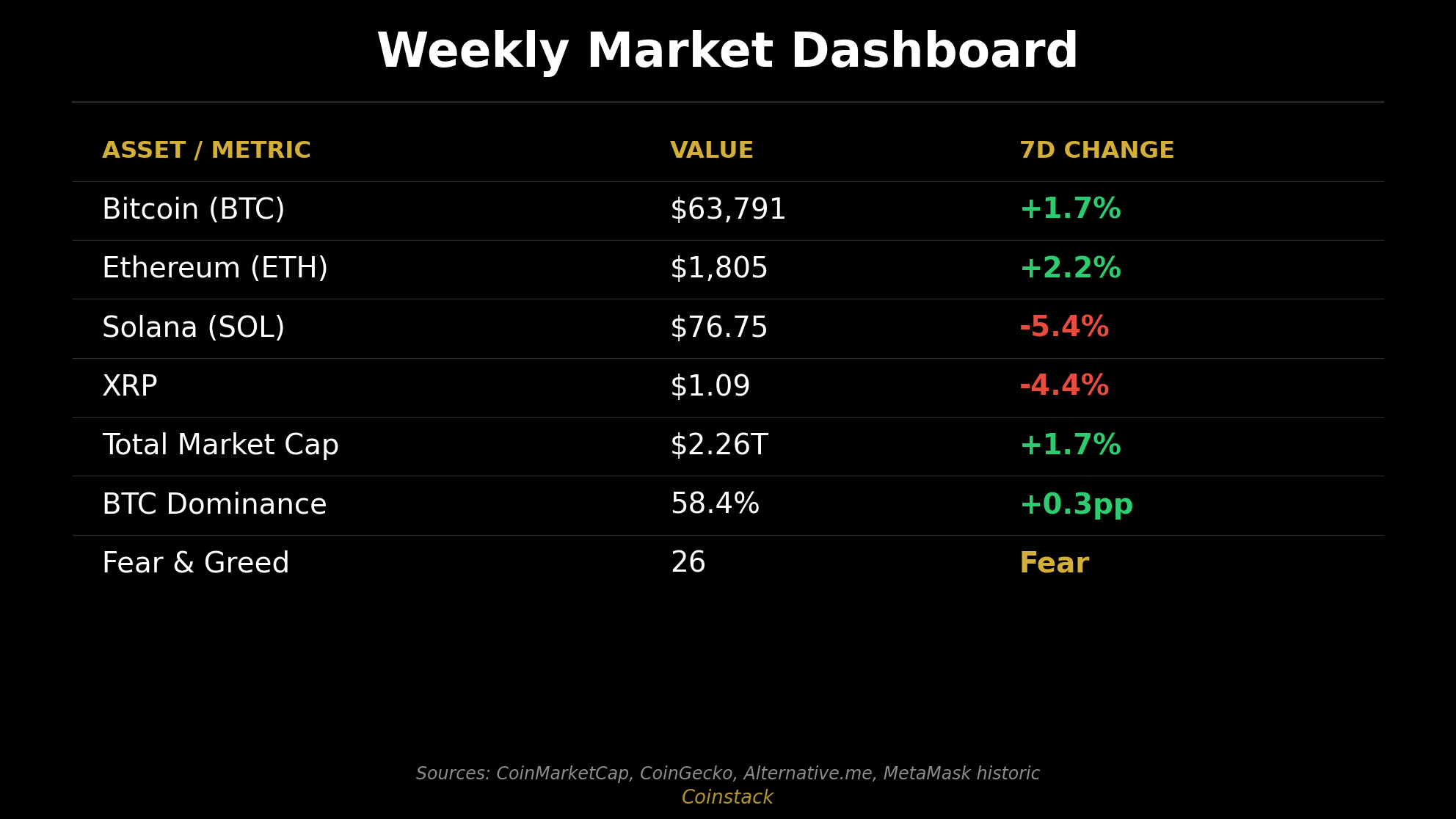
Ethereum led the majors as BitMine added another 40,000 ETH via FalconX and Kraken on July 8, ETH ETFs pulled in $84.42M for the week, and ETH reclaimed $1,800 by Sunday, a roughly 20% recovery from its 2026 low.
Solana lagged as the higher-beta asset absorbed the brunt of midweek de-risking around the Iran ceasefire collapse.
Two forces pulled opposite ways. Institutional flows turned positive for the first time since May, while a two-day US-Iran military exchange forced around $450 million in liquidations before talks and a short squeeze pushed Bitcoin back toward $65,000 resistance.
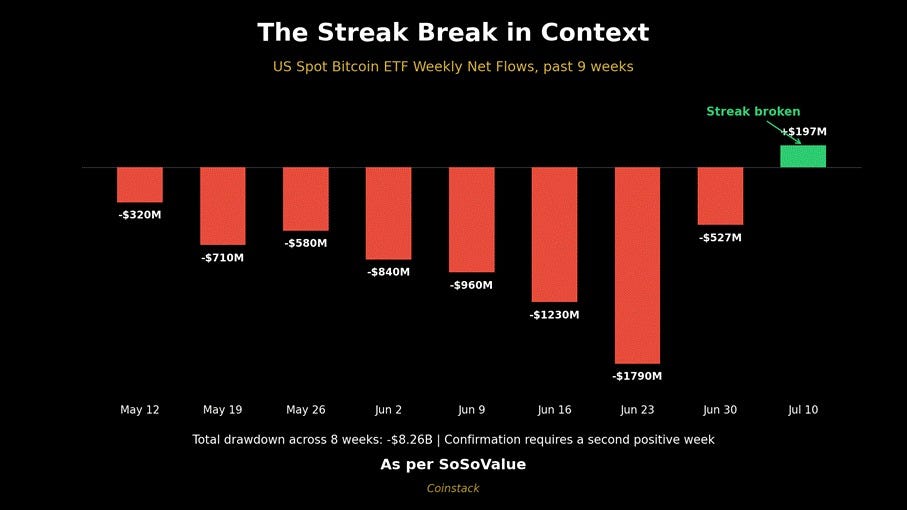
US spot Bitcoin and Ethereum ETFs pulled in $281.8 million combined for the week ending Friday, per SoSoValue data, ending an eight-week run that drained $8.26 billion, the longest losing streak since launch in January 2024. Bitcoin funds added $197.4 million; Ethereum funds added $84.42 million. The week opened with $265.69 million Monday, dipped red as Iran flared, and closed with $90.44 million Friday (July 6-10) as Bitcoin reclaimed $64,000.
ETF flows explain roughly 45% of weekly Bitcoin price moves, so eight weeks of programmatic selling was a real structural headwind. Weekly Bitcoin ETF volume hit its lowest full week since October 2024, so the reversal came on thin conviction, not a flood of new capital.
One week does not confirm a trend after $5.4 billion in year-to-date outflows. Watch whether inflows extend into a second week, and whether Tuesday’s CPI and the July FOMC support or reverse the move.
Strategy disclosed in a July 6 Form 8-K that it sold 3,588 BTC for $216 million between June 29 and July 5, its largest sale ever and roughly 100 times May’s symbolic 32-BTC sale. Proceeds funded dividends across five preferred instruments, leaving 843,775 BTC and $2.55 billion in cash.
This is not forced selling. Strategy holds over 17.4 months of dividend coverage and kept buying while selling. Saylor framed it as disciplined capital management.
The decade-old never-sell doctrine is dead, and the company booked $8.31 billion in unrealized losses in Q2, plus $0.9 million in realized losses, as Bitcoin fell from April’s $68,000 to the $60,000 range in June. Rising reliance on sales to fund dividends raises sustainability questions.
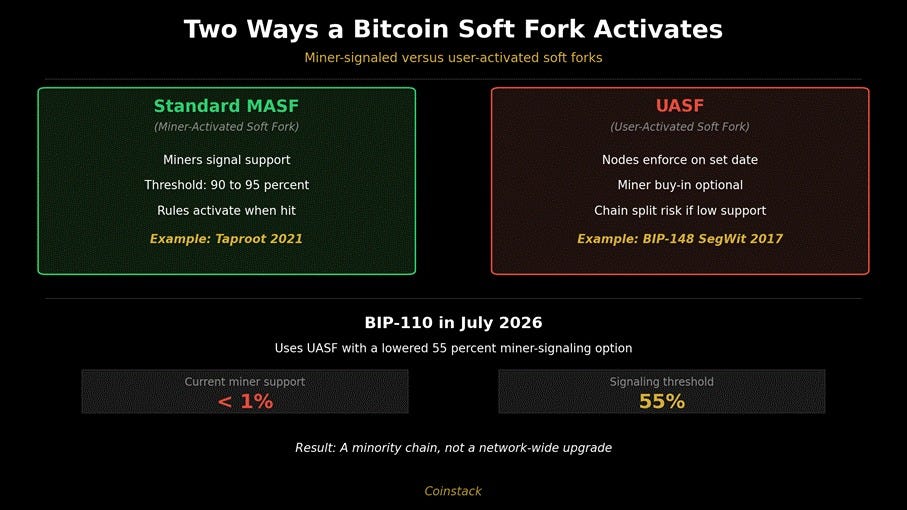
BIP-110, a proposal to restrict non-financial data on the Bitcoin blockchain, faces a mandatory signaling window near block 961,632 in early August, with activation targeted around September 1. Miner support sits under 1 percent, well short of the lowered 55 percent threshold, and Michael Saylor and Adam Back both publicly opposed the plan this week.
Overwhelming rejection shows Bitcoin’s governance still resists forced changes without broad consensus, preserving its credibility as a neutral settlement layer.
Supporters do not need miner agreement to enforce a soft fork, so a determined minority could still fork away, creating chain-split uncertainty in a fragile macro backdrop.
Swift announced on July 9 that its blockchain-based ledger is ready for use, with 17 banks across six continents, including HSBC, Citi, UBS, and Wells Fargo, preparing to pilot tokenized deposits for 24/7 cross-border payments, including weekends.
Validation from banks this systemically important could accelerate institutional tokenization faster than crypto-native rails alone, with Swift’s 11,500-bank network as eventual reach.
Tokenized deposits are not crypto assets and settle through existing rails. A rival JPMorgan and Bank of America consortium is building a competing network, risking fragmented standards.
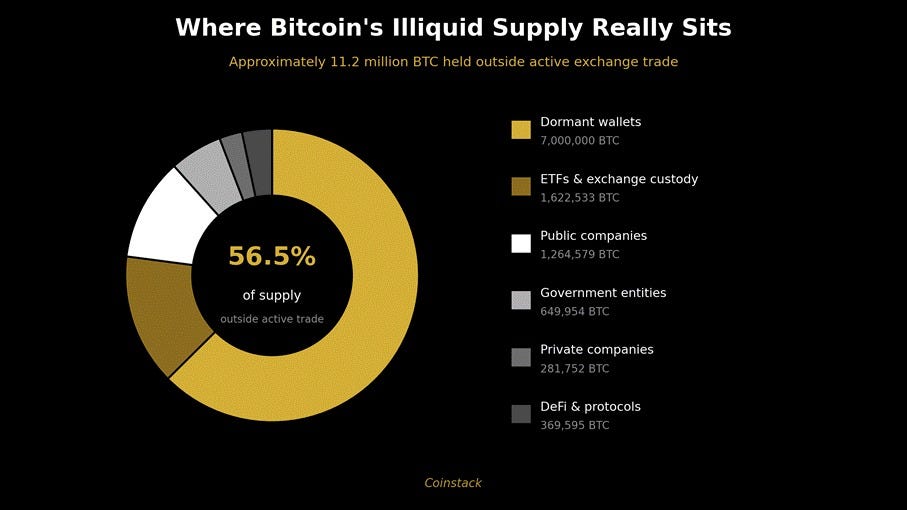
Bitcoin and Ether balances on centralized exchanges have fallen to multi-year lows, according to Santiment data cited by CoinDesk on July 9. Roughly 11.2 million BTC, about 56.5% of supply, sits in treasuries, government holdings, DeFi protocols, ETF custody, or dormant wallets rather than on exchanges.
Falling exchange balances have historically preceded rallies by shrinking sellable supply. The signal is weaker now: coins leaving exchanges increasingly move into ETF custody or wrapped DeFi rather than cold storage, so the same exposure can stay liquid without touching an exchange balance again.
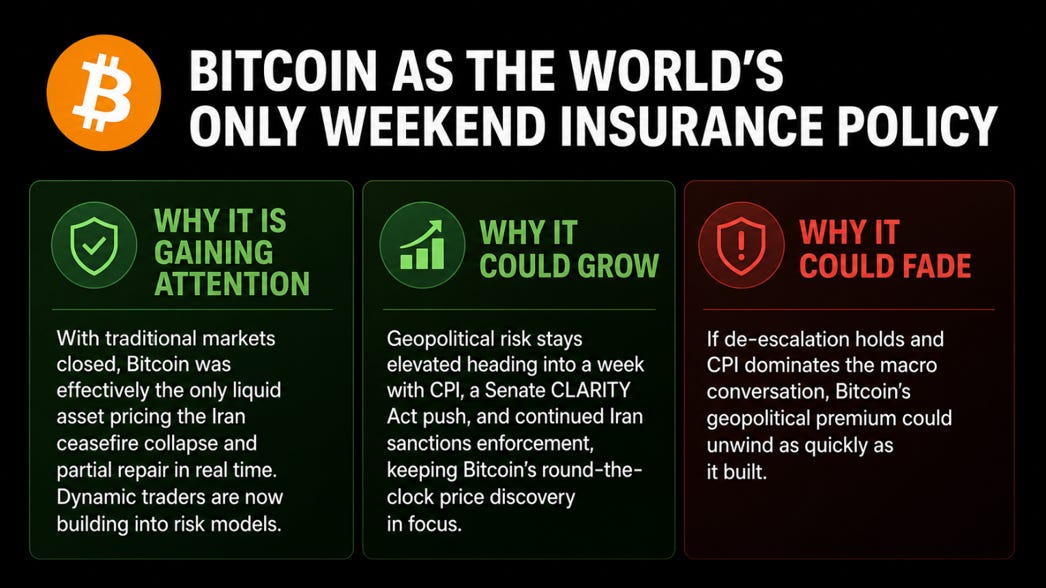
With traditional markets closed, Bitcoin was effectively the only liquid asset pricing the Iran ceasefire collapse and partial repair in real time. Dynamic traders are now building into risk models.
Geopolitical risk stays elevated heading into a week with CPI, a Senate CLARITY Act push, and continued Iran sanctions enforcement, keeping Bitcoin’s round-the-clock price discovery in focus.
If de-escalation holds and CPI dominates the macro conversation, Bitcoin’s geopolitical premium could unwind as quickly as it built.
The eight-week outflow streak just broke on thin volume. A second straight positive week, especially with a soft CPI print, would be the strongest institutional re-entry signal since the ETF launch.
June CPI on July 14, continued weekly ETF flow prints, and the Fed’s first meeting under Chair Warsh on July 28 to 29.
Thin volume means this could be a dead-cat bounce, not a trend. A hot CPI, renewed Iran escalation, or a hawkish Warsh debut could flip flows negative again fast.
Most Bitcoin upgrades activate when miners signal overwhelming support, typically 90-95%, since miners produce the blocks that enforce new rules. A user-activated soft fork, or UASF, flips that logic: node operators agree to enforce new rules on a set date regardless of miner backing. BIP-110 uses a lowered 55% signaling option, but backers argue nodes can enforce the rules unilaterally even if that threshold is missed.
The 2017 SegWit UASF is the closest precedent, and it succeeded on overwhelming economic and developer support. Critics argue miner signaling under 1 percent and thin node adoption mean forcing BIP-110 now would produce a minority chain, the exact outcome Bitcoin’s governance exists to avoid.
Circle secured US trust bank approval, joining a growing list of crypto firms pursuing federal banking licenses.
Ethereum’s client teams patched a validator-crashing bug that AI-assisted red-teaming discovered in the network’s consensus software.
Metaplanet raised roughly $137 million through a third-party share allotment to continue funding its Bitcoin treasury.
Empery Digital sold about half its Bitcoin stack, pivoting toward AI data center infrastructure instead.
The Senate returns July 13 with roughly three working weeks to advance the CLARITY Act before the August recess.
This week captured crypto’s split personality. Institutional plumbing is healing: the longest ETF outflow streak on record broke, and 17 of the world’s largest banks just validated blockchain settlement at systemic scale.
Bitcoin also spent its weekend doing the job traditional markets could not: pricing a live geopolitical shock in real time, with no circuit breaker and no closing bell. Both are true.
Flows are improving, and the market is still one Iran headline away from giving it all back before Tuesday’s CPI print lands.
Coinstack is published every Tuesday. Nothing in this newsletter constitutes financial or investment advice. All information is sourced from publicly available data and should be independently verified.
© 2026 Coinstack. All rights reserved.
Comments
Nothing yet. Say the first thing.
Sign in to join the conversation.