
Operation Spider Web, Ukraine’s audacious attack on Russia’s long-range bomber fleet, has significantly altered the course of modern warfare. It struck at the heart of Russia’s Air Force, damaging or destroying many aircraft far behind the front lines in areas previously thought to be out of range for Ukraine.
“Before our very eyes, Ukraine is changing the way war is waged,” observed Jean-Dominique Merchet in an editorial in L’Opinion.
The operation relied on a clever blend of common components, open-source software, and computational power, all woven together with human ingenuity and careful planning. It demonstrates how a country with fewer resources can still deliver a powerful blow to a larger enemy.
I have been working with Ukrainian IT engineers since 2019, including as the Vice President of Data & AI at one of Ukraine’s leading outsourcing companies. I am therefore not surprised at the ingenuity and skill shown to pull off this operation.
However, the focus here is not on the operation itself, but rather the technology that underpinned the well-executed attack.
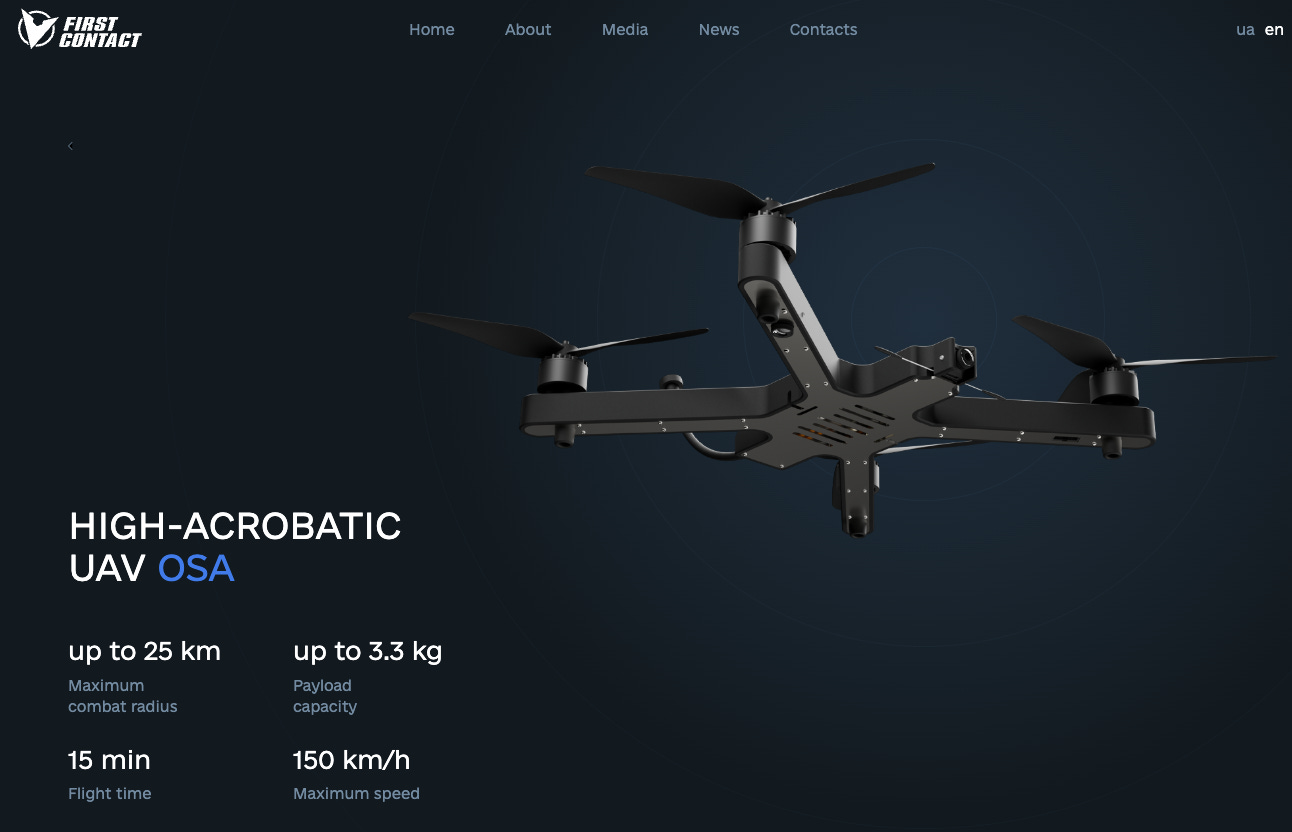
At the core of the attack were small, inexpensive first-person view, or FPV, drones. These Ukrainian-made ‘Osa’, or ‘Wasp’, quadcopters cost little, some priced between US$600 and US$1,000 each and capable of carrying up to 3.3 kg of combat load, staying in the air for up to 15 minutes, and accelerating to 42 m/s (about 150 km/h).
A key part of the plan involved covert launch platforms and logistical ingenuity. Ukrainian operatives smuggled drones into Russia, often in parts, and assembled them on-site. Launch systems were hidden inside wooden modular cabins, which were then loaded onto standard cargo trucks. These trucks were disguised as civilian vehicles, making them difficult to detect.
At the designated moment, remotely triggered mechanisms retracted the roofs of these cargo-mounted cabins, releasing the drones. Reports suggest the trucks also had self-destruction mechanisms to prevent forensic analysis, ensuring operational secrecy. This intricate process involved unwitting Russian truck drivers, who delivered the disguised mobile drone launchers to designated locations near Russian air bases.
Douglas Barrie, a senior fellow for military aerospace at the International Institute of Strategic Studies, commented in How Covert Drone Bases and Denied-Area Launch Sites Are Reshaping Modern Warfare that, “The way in which the Ukrainians brought this together is creative and obviously caught the Russians completely off guard.”
The operation made wide use of software and autopilot systems. Central to this was ArduPilot, a widely adopted open-source autopilot software for unmanned aerial vehicles. ArduPilot offers advanced flight stabilisation, waypoint navigation, failsafe routines and programmable mission profiles. Its flexibility made it suitable for missions operating over unstable or high-latency links, independently managing drone orientation, heading, and altitude.
Chris Anderson, identified as one of the creators of ArduPilot, said “that’s ArduPilot, launched from my basement 18 years ago. Crazy.” Jason Short, a co-creator, added, “Not in a million years would I have predicted this outcome. I just wanted to make flying robots.”
Communication networks were vital to control drones over vast distances. Ukraine remotely controlled drones through Russia’s domestic 4G/LTE mobile telecommunications networks, using pre-installed SIM cards. This provided real-time video transmission and command inputs; control signals embedded within civilian data traffic made them difficult to detect and disrupt. Each drone had a compact onboard computer, such as a Raspberry Pi, connected to a webcam for visual navigation and an LTE modem via Ethernet for communication.
Although not fully autonomous, the operation demonstrated a hybrid approach, combining remote human control with elements of autonomy and AI-assisted functionality. The Security Service of Ukraine (SBU) teams studied the construction and visual profiles of targeted aircraft, including those from Ukrainian aviation museums like the Poltava Museum of Long-Range and Strategic Aviation, to train computer vision models embedded in the drones’ onboard computers.
When I was Vice President of Data & AI, I was responsible for the team of AI engineers who specialised in developing solutions using computer vision. One of our projects in 2020 was similar to this: use autonomous drones to fly over car parks and roads to identify and estimate the cost to repair defects in the asphalt and concrete pavements.
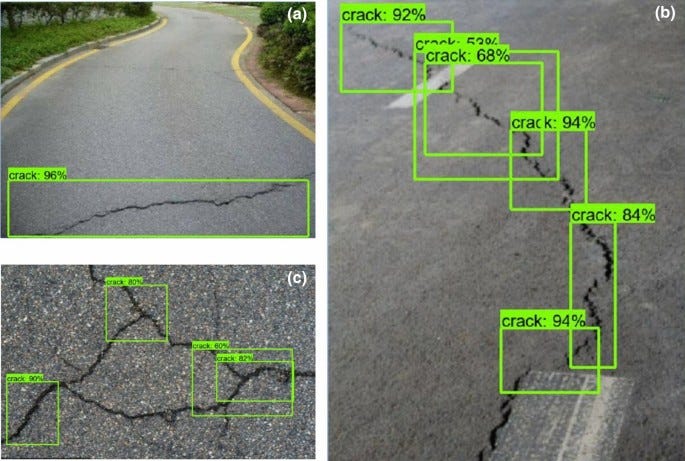
The solution involved a multi-class segmentation for object detection, most likely using a modified U-Net architecture with a MobileNet encoder deployed at the edge and a regression submodel for defining the aircraft.
The U-Net architecture is a convolutional neural network (CNN) primarily used for image segmentation tasks, particularly in biomedical image analysis. Its unique “U” shape allows it to capture both contextual information and precise localisation. If you want to learn more about this method, check out Sebastian Buzdugan’s article here.
Utilising this approach to AI-assisted targeting, the human operators were able to identify and strike precise weak points on high-value aircraft. The SBU even stated in media interviews that, during the flight, some drones lost signal and switched to performing a mission using artificial intelligence along a preplanned route. After approaching and contacting a specifically designated target, the warhead was automatically activated.
“The operation’s success hinged not on cutting-edge hardware, but on planning, creativity, and deception—reaffirming the centrality of the human element working with technology”— Federico Borsari, in Ukraine Attack: The Spider’s Web Still Needs Humans.
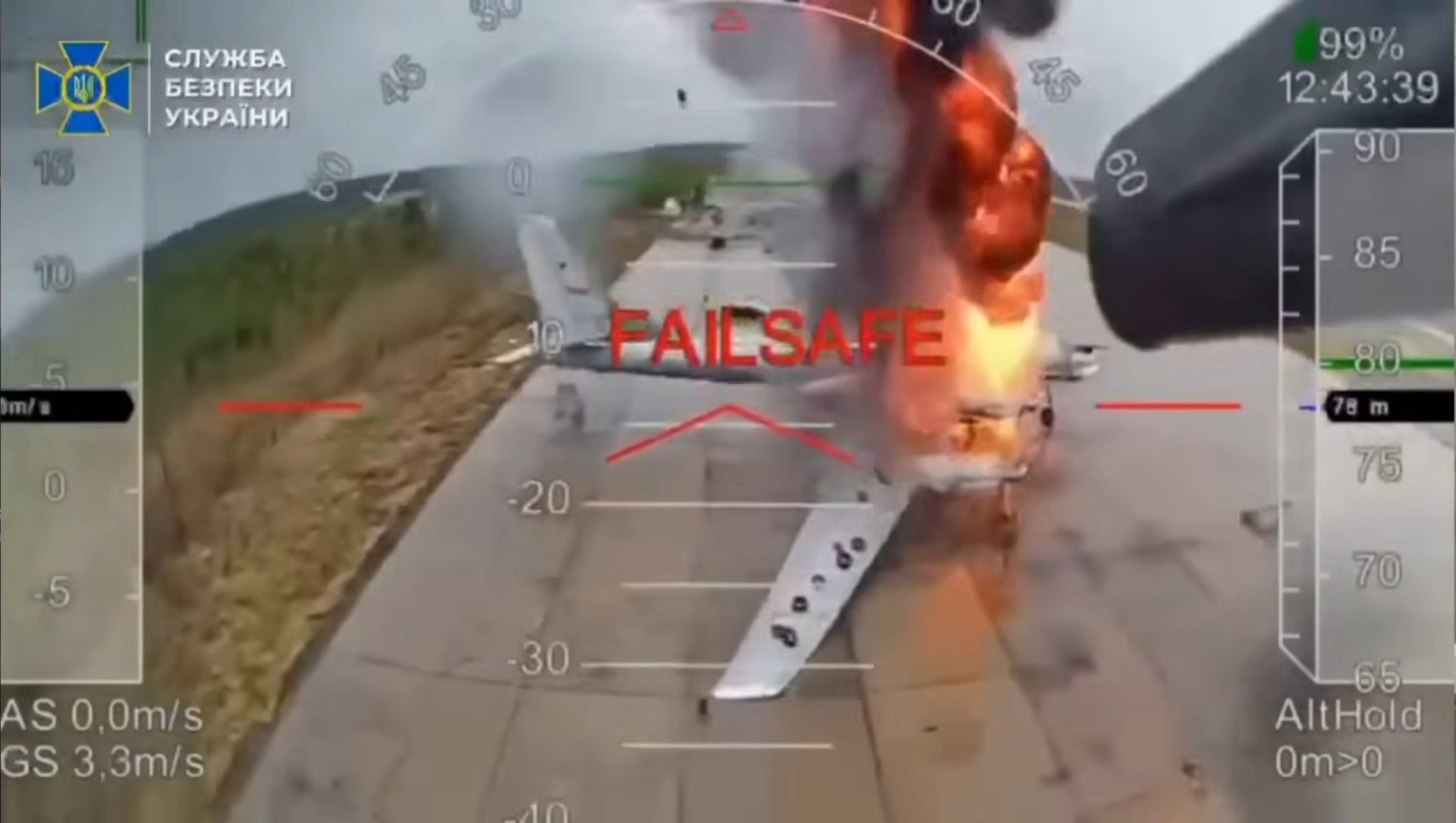
The success of the operation did not rely on cutting-edge, novel technology alone. Instead, it showed how clever thinking, meticulous reconnaissance, and sound supply lines could turn everyday tools into potent weapons. Kateryna Bondar, a fellow at the Center for Strategic and International Studies, said in How Ukraine’s Operation “Spider’s Web” Redefines Asymmetric Warfare, that low-cost, open-source drone systems “can effectively destroy high-value military platforms” and the attack serves as a lesson for nations globally.
“The spectrum of threats they are going to have to take into consideration only gets broader following the attack,” said Douglas Barrie, senior fellow for military aerospace at the International Institute of Strategic Studies in London.
The attack also highlights a growing vulnerability of strategic infrastructure to denied-area launch platforms. It implies a need for layered defence, including hangar fortification and electronic warfare, as conventional air defence systems often prove insufficient against low-flying drones. The true advantage in modern conflict may come from quick thinking and simple technology, not just large budgets and big weapons.
References:
Bondar, K. (2025) ‘How Ukraine’s Operation “Spider’s Web” Redefines Asymmetric Warfare’, Center for Strategic and International Studies. Available at: https://www.csis.org/analysis/how-ukraines-operation-spiders-web-redefines-asymmetric-warfare (Accessed: 18 June 2024).
Borsari, F. (2025) ‘Ukraine Attack: The Spider’s Web Still Needs Humans’, CEPA. Available at: https://cepa.org/article/ukraine-attack-the-spiders-web-still-needs-humans/ (Accessed: 18 June 2024).
Burrows, E. (2025) ‘Ukraine’s drone attack on Russian air bases is a lesson for the West on its vulnerabilities’, AP News. Available at: https://apnews.com/article/ukraine-russia-drones-airbases-spider-web-military-91a566f101117dd55877478051a8060f (Accessed: 18 June 2024).
Dumont, J.-F. (2025) ‘Operation Spider Web: Strategic Analysis’, European Security. Available at: https://european-security.com/2025/06/03/operation-spider-web-strategic-analysis/ (Accessed: 18 June 2024).
McMillan, T. (2025) ‘How Covert Drone Bases and Denied-Area Launch Sites Are Reshaping Modern Warfare’, The Debrief. Available at: https://debrief.org/how-covert-drone-bases-and-denied-area-launch-sites-are-reshaping-modern-warfare/ (Accessed: 18 June 2024).
Melkozerova, V. (2025) ‘Ukraine releases new footage of daring AI strikes that crippled Putin’s bomber fleet’, POLITICO. Available at: https://www.politico.eu/article/ukraine-releases-new-footage-of-daring-ai-strikes-that-crippled-putins-bomber-fleet/ (Accessed: 18 June 2024).
404 Media (2025) ‘Ukraine used open-source ArduPilot in 'Operation Spider Web' drone attack’, 404 Media. Available at: https://www.404media.co/ukraine-used-open-source-ardupilot-in-operation-spider-web-drone-attack/ (Accessed: 18 June 2024).
Comments
Nothing yet. Say the first thing.
Sign in to join the conversation.