
The most recent issue of The Economist has an article titled “America’s new plan to fight a war with China.” Their reporter travelled to Tinian to share the military’s story on reconstruction, but also the challenges of a western Pacific conflict.
The work on Tinian, a speck in the Pacific Ocean, has exposed the four runways of North Field. Glass protects the cement pits where Little Boy and Fat Man, the first and only atom bombs used in war, were loaded onto American B-29s.
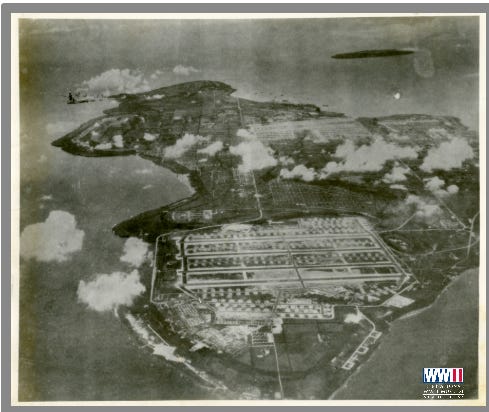
The US seems to have made an effort the past year at inviting media to Tinian to show the history, value, and reconstruction such as The Wall Street Journal and Task and Purpose, as well as the Economist’s reporter. Unlike World War 2,
the air force can no longer mass its planes in big bases close to the action.
General David Allvin, the chief of staff was interviewed and sounded the clarion call to be “lethal and agile,” an overused, imprecise, and simplistic phrase that has to go the way of “Where’s the Beef?” an ad line that jumped the shark once Ted Mondale used it in a presidential debate against Reagan.
Gone is the era of overwhelming force for the US - it may work against secondary or tertiary militaries but not against a 21st century peer competitor. Picking and choosing fights based on force is not new. Although some historians suggest that President Andrew Jackson was willing to fight anyone, he was far more judicious, selecting opponents he knew he could defeat. He did not, for example, take on France when some warmongers were clamoring for it. That was from a naval perspective. Though at the end of his administration he began the Second Seminole War which would last nearly seven years in one of America’s costliest wars per capita.
The Economist is right to point out the many disadvantages the US has in Pacific basing and infrastructure and combat radius of US fighter jets. Though the article was focused on the Air Force, if the Economist follows up with a naval perspective, they can just as easily turn to Jerry Hendrix’s “Retreat from Range” which he published when at CNAS.
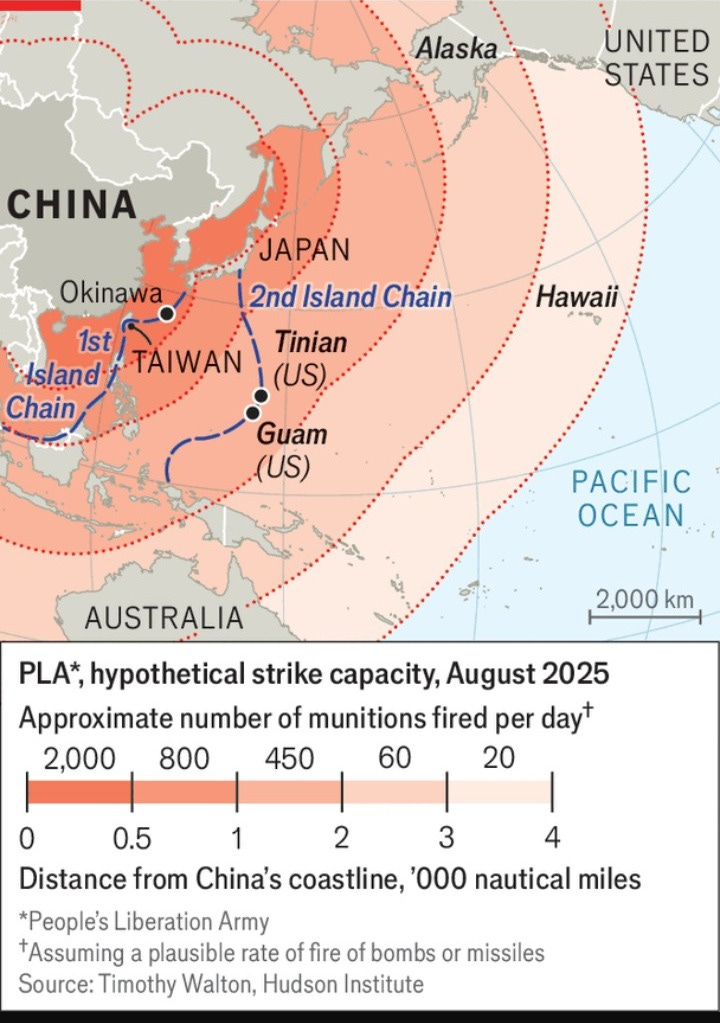
Tim Walton of the Hudson Institute was interviewed, providing some of the numerical challenges the US will face should a conflict erupt in the western Pacific and providing sourcing for the Economist’s map showing one of the problems:
If the Economist does turn next to the Navy, a start would be a status on the various sections of the President’s April 9 Executive Order on Maritime Dominance since we’ve already passed those reports and actions due within 30- and 90- days:
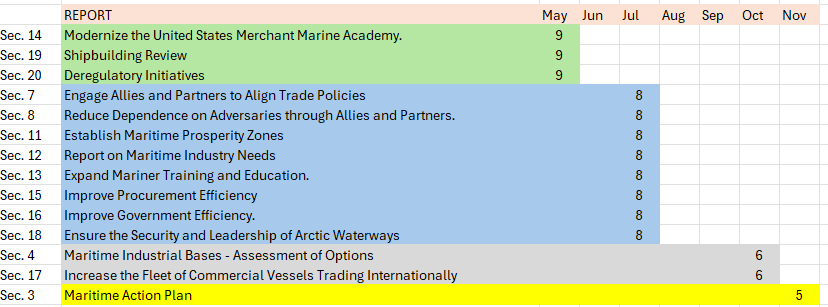
At least Section 14 appears complete on Merchant Marine Academy report on campus modernization. It reported on their website that,
Details of the plan that will be provided to Secretary Duffy in May and the White House immediately afterward cannot be shared until they are approved.
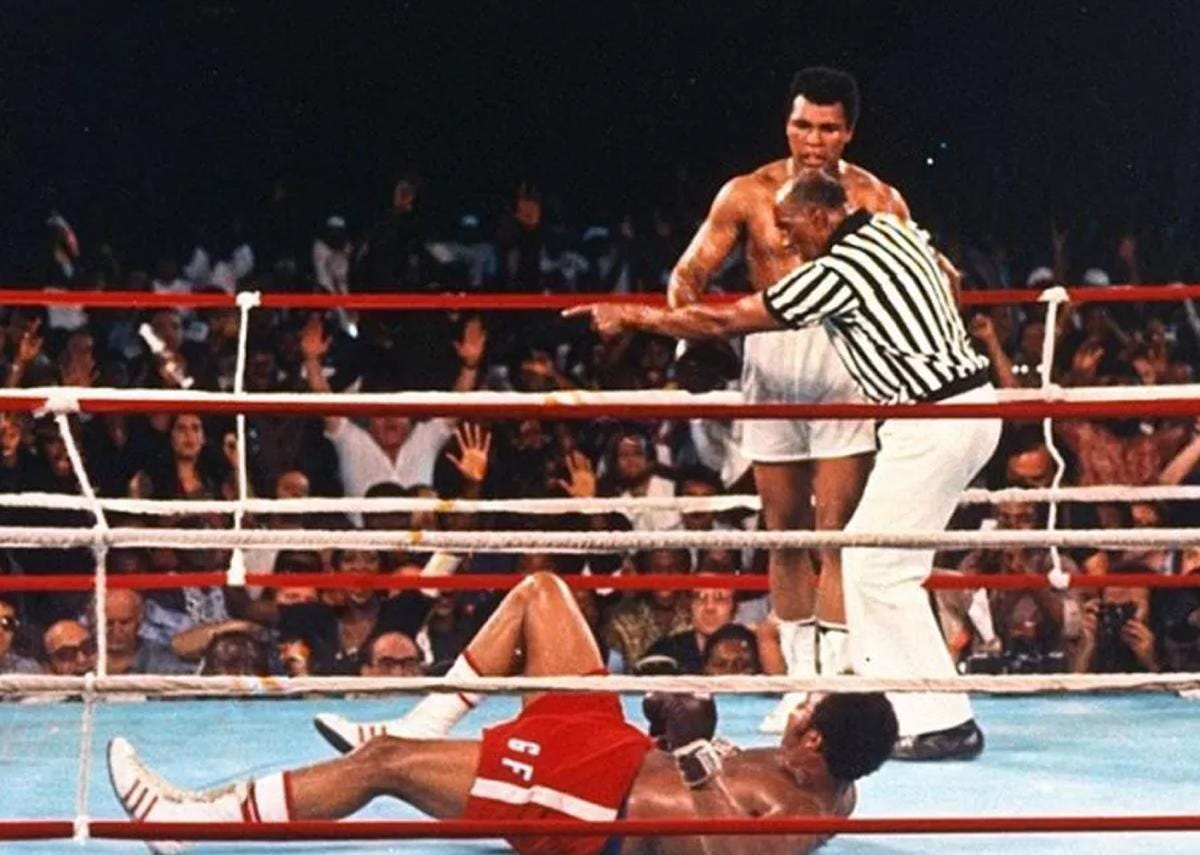
One final note - the Economist subtitled the piece “Reading for a rumble in the jungle,” noting the jungles of Tinian but a reference to the 1974 Muhammad Ali-George Foreman fight in Zaire (now Democratic Republic of Congo.) But that famed boxing match had an underlying psy-ops going. When he arrived before the fight, Ali had local residents chant in their Bantu dialect, “Ali, bomaye!” This continued in the right. If I recall the story, Foreman asked what it meant as everyone was screaming this phrase. It meant, “Ali, Kill him!”
No posts
Comments
Nothing yet. Say the first thing.
Sign in to join the conversation.