
I promised a chapter from Pastoral Gardens this week as I’m going away, but I just had to tell you about my delphinium day instead, while it’s fresh in my mind, so the London garden chapter will be with you at some point soon.
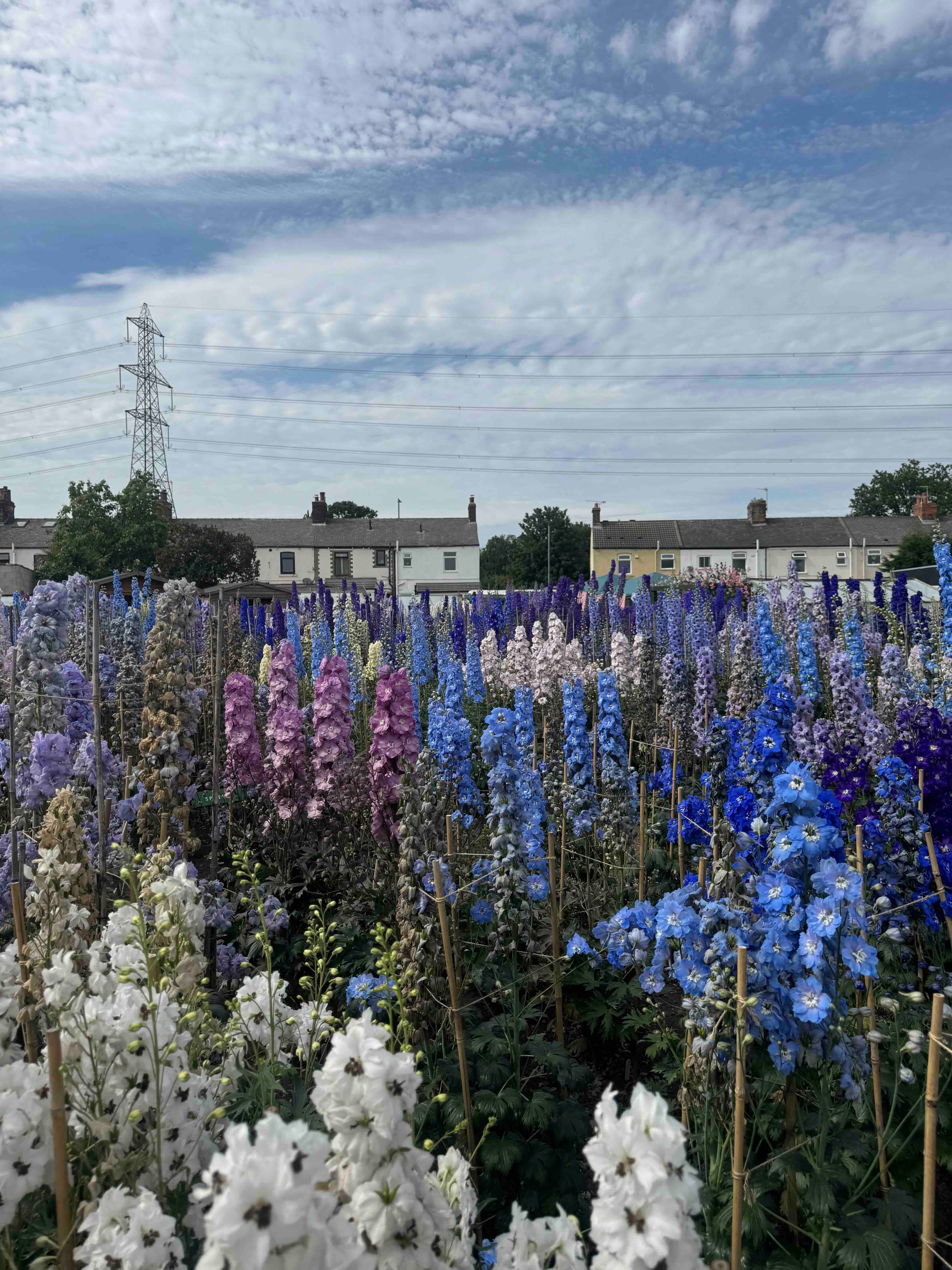
I’m travelling up north today to meet 70 year old Colin Parton who has been growing delphiniums all his life, and now has a National Collection on a small plot behind his house in a suburb of Leeds. His children and grandchildren call him Delphinium Dad and he is the most delightful man who spends all his waking hours growing, tending, taking cuttings, saving seed and improving soil in order to keep his collection of 180 Delphinium elatum cultivars going.
We pull up to a row of white semi-detached houses and knock on the door of Delph Cottage. No one is around, so we walk round the back, over a track and through a gate next to a garage, to emerge into a completely different world. It’s like stepping into a colour-enhanced photograph - rows of incredible delphiniums dwarf us as we walk through. ‘Hello?’ I call, and as we get to the far end of the garden we see Colin with his barrow. He grins and comes over. ‘You’ve got here in the nick of time,’ he says in a broad Yorkshire accent. ‘Everything flowered so early and now they’re going over quickly in this heat’.
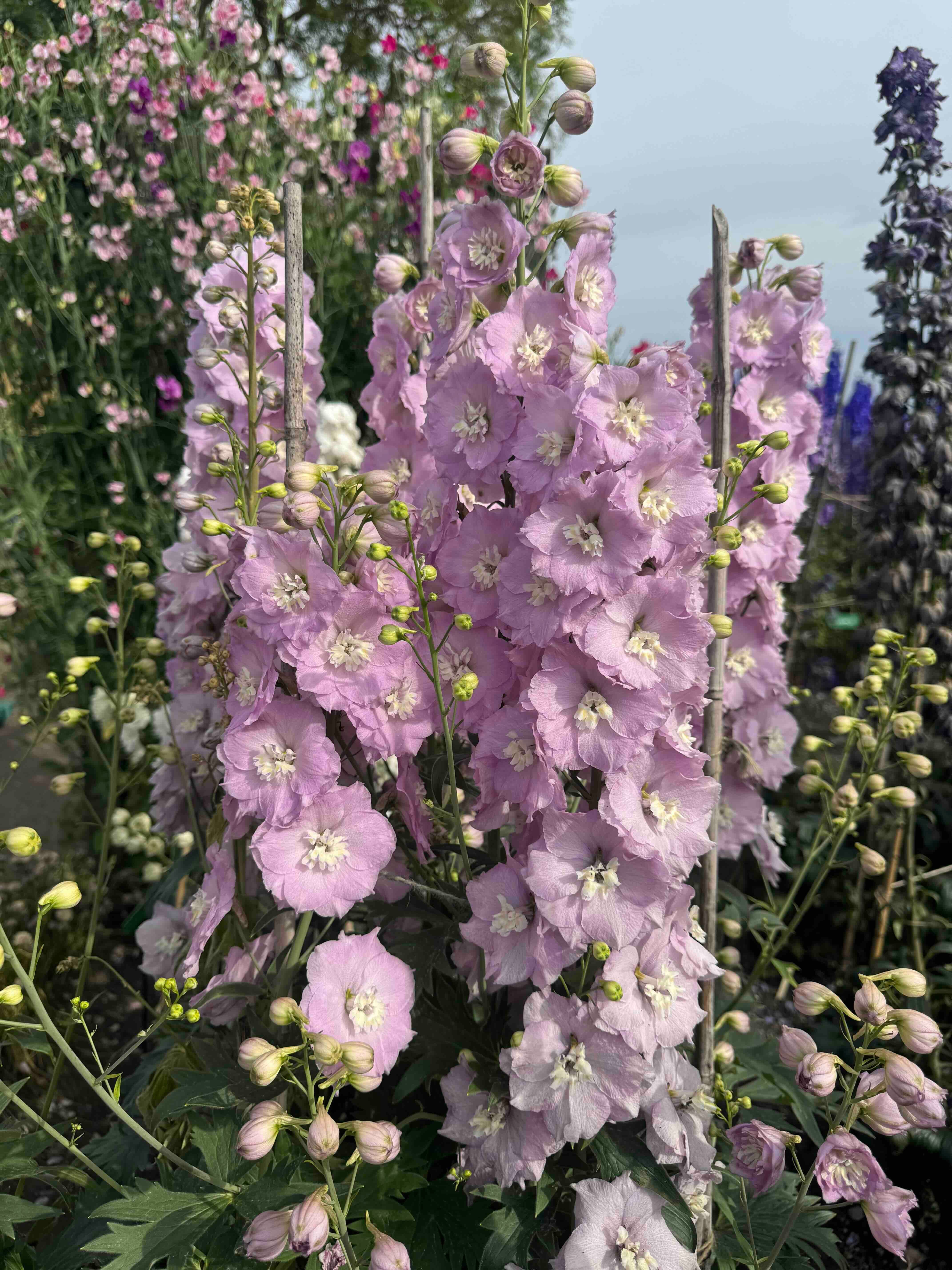
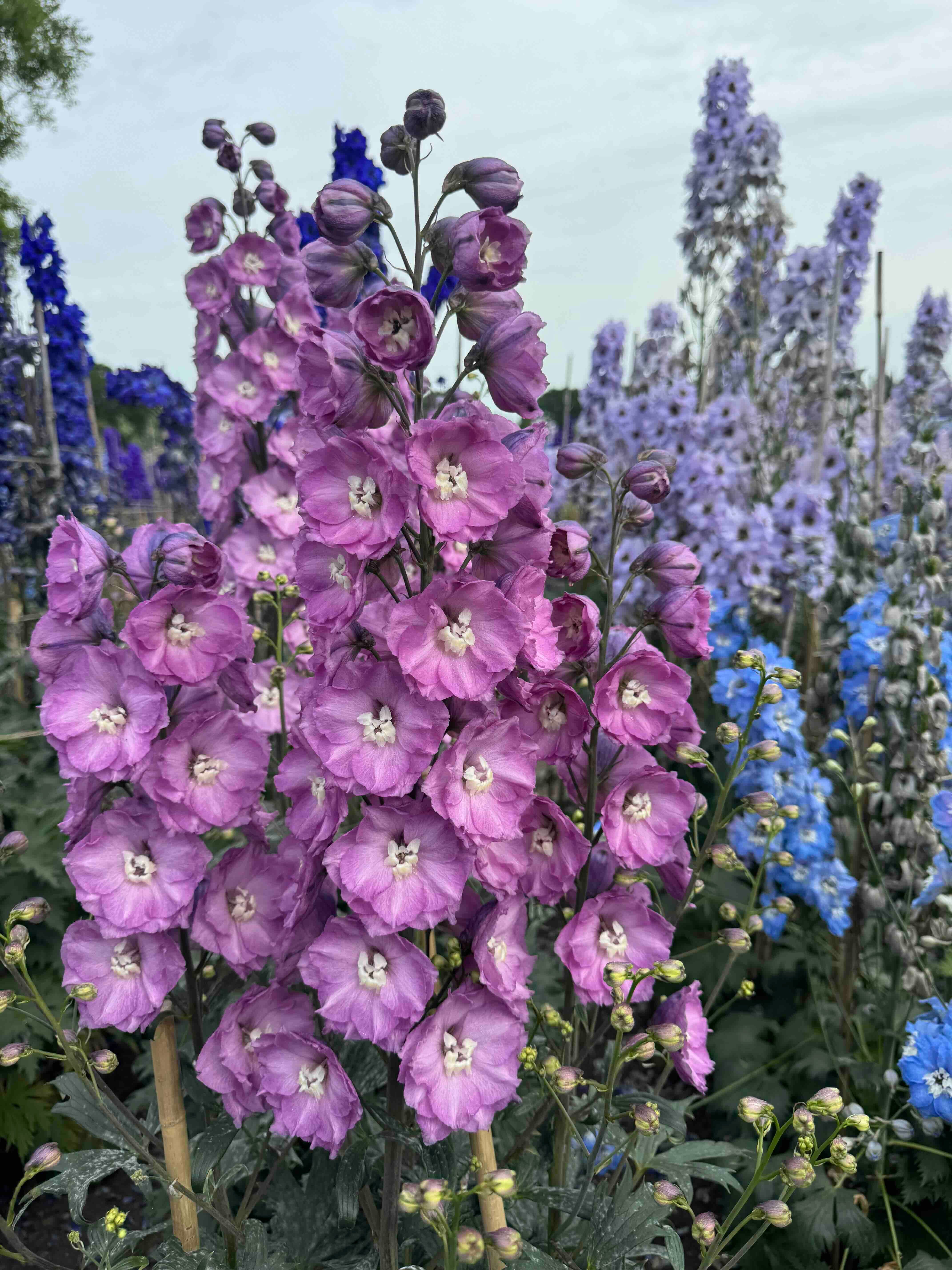
To me, they all look pretty good. Plumes of white, pink and many shades of purple and blue cluster together to form an impressionist swathe. ‘I haven’t watered them at all,’ he says proudly, which is all down to the many tonnes of farmyard manure he digs into his soil each time he replants. Replenishing old stock, he tells me, is crucial for the existence of the collection as delphiniums aren’t long lived plants, losing vigour after four or five years. He is constantly taking cuttings to grow new stock plants, and with 180 varieties to keep going, he generates over 1000 new plants every year.
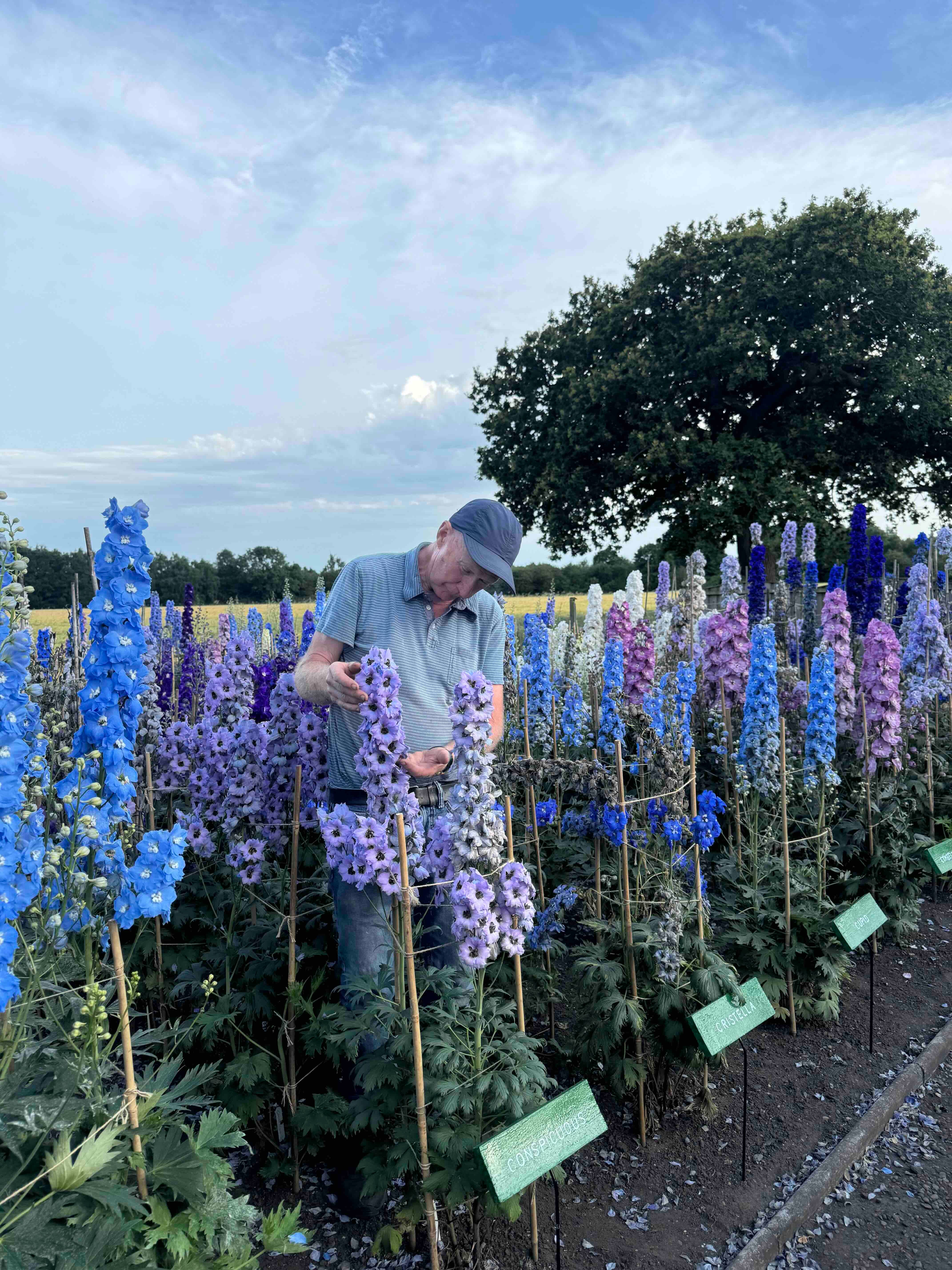
He still grows ‘Conspicuous’, the first delphinium cultivar he fell in love with at the Harrogate Flower Show when he was 15, and has been rescuing other old cultivars from extinction. ‘I drove 500 miles and back to Scotland the other day to get a plant from a lady who’d got in touch about a historic variety,’ he says. There are so many different delphiniums here it is difficult to choose which ones to photograph.
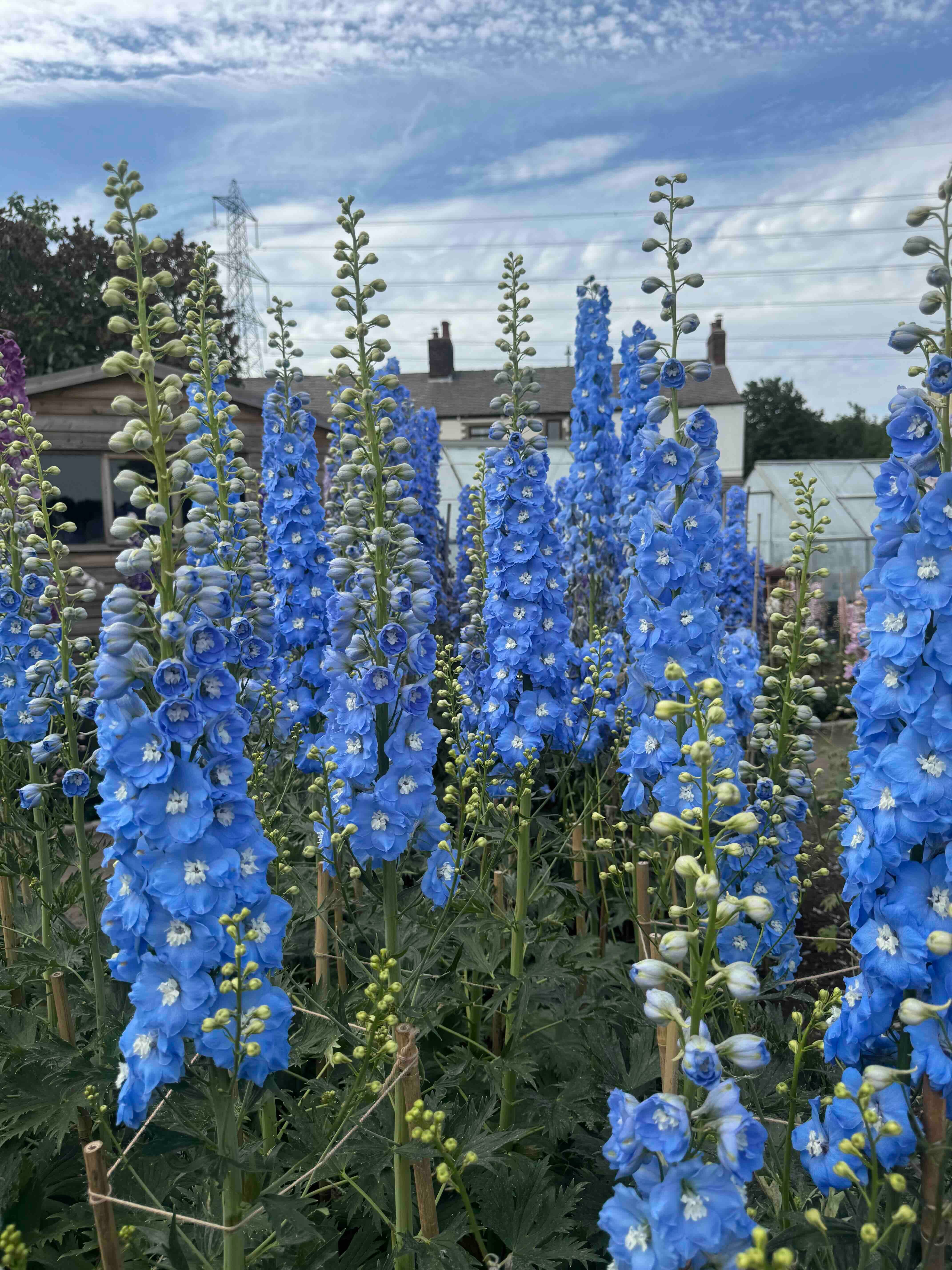
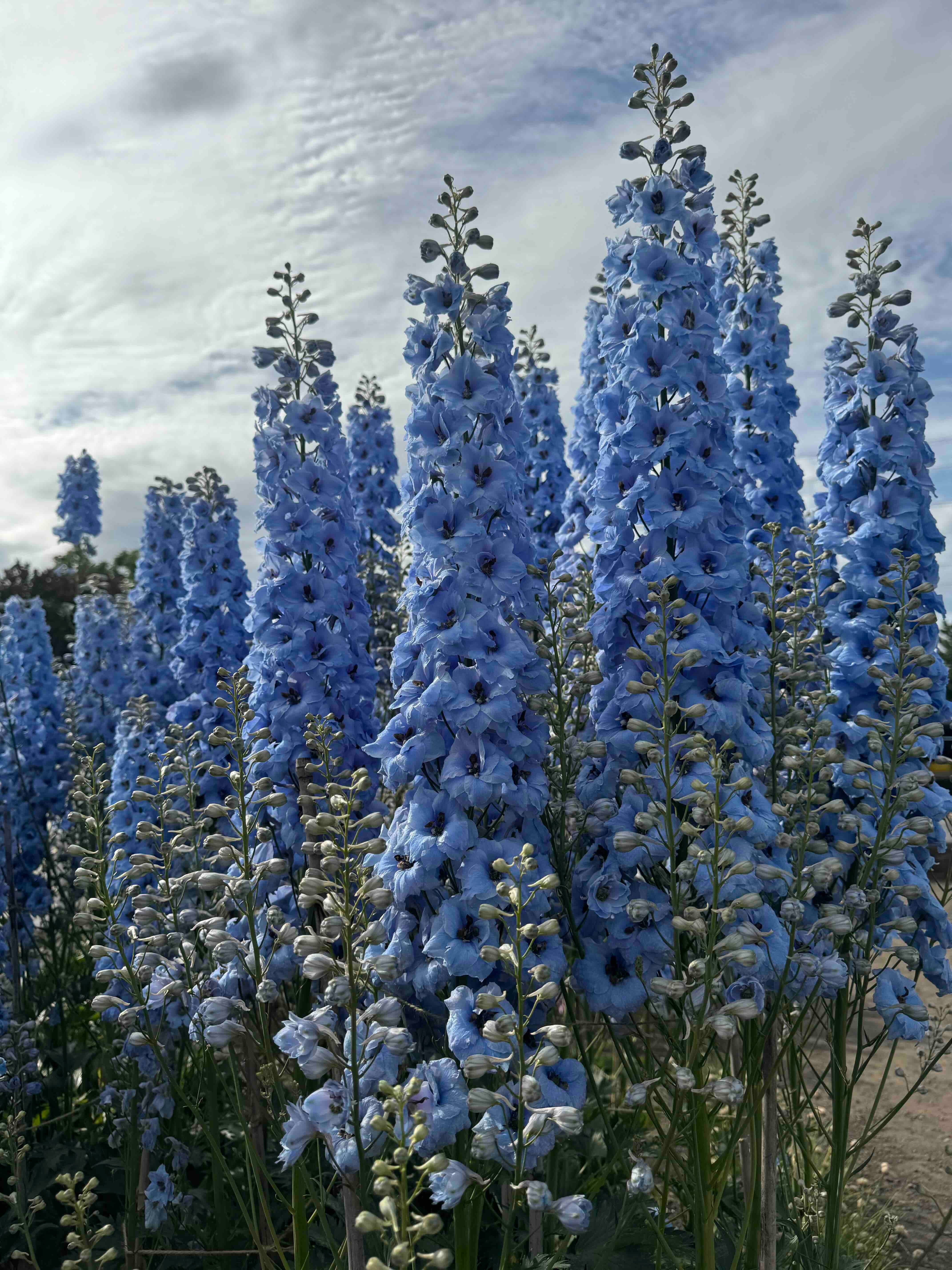
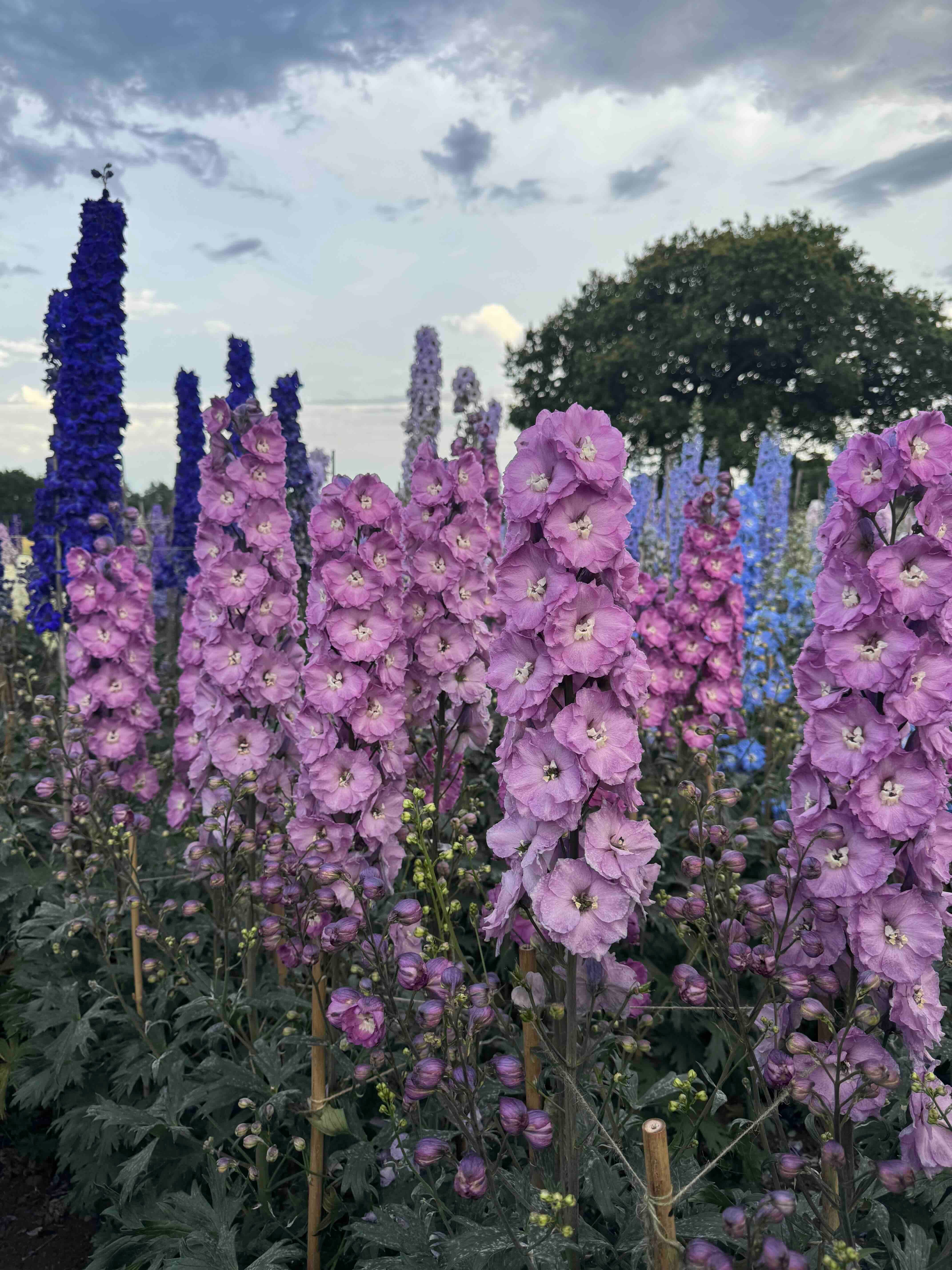
As I tune my eye in, I start picking out favourites - I prefer the sky blue varieties with a white eye (Clifford Sky) rather than the ones with a darker eye (Blue Jade), and for some reason I’m not so fond of true purples like ‘Bob Geldof’. I like the pure colours rather than the two tone blue and pnk confections such as ‘Blue Dawn’ or ‘Orpheus’.
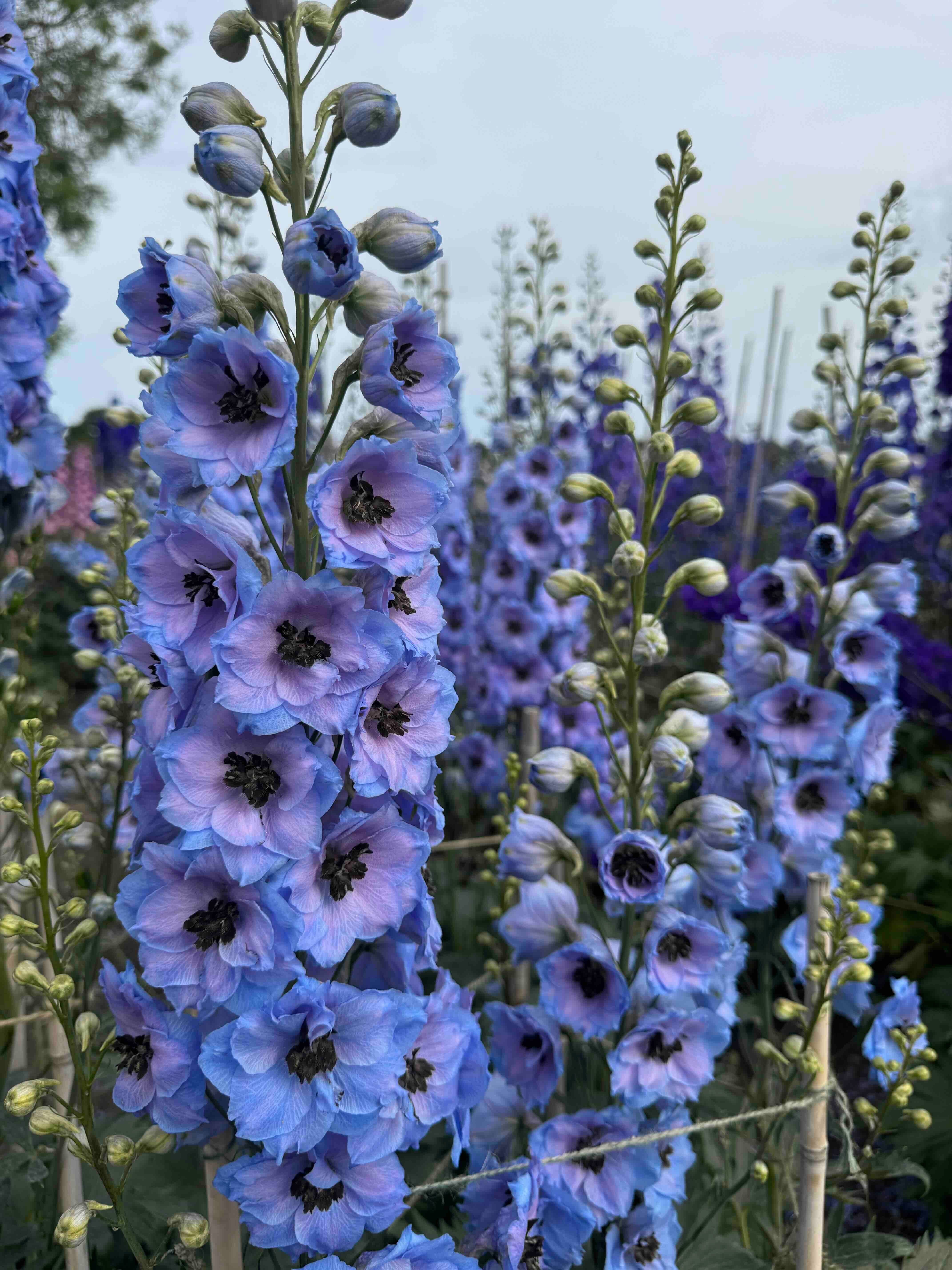
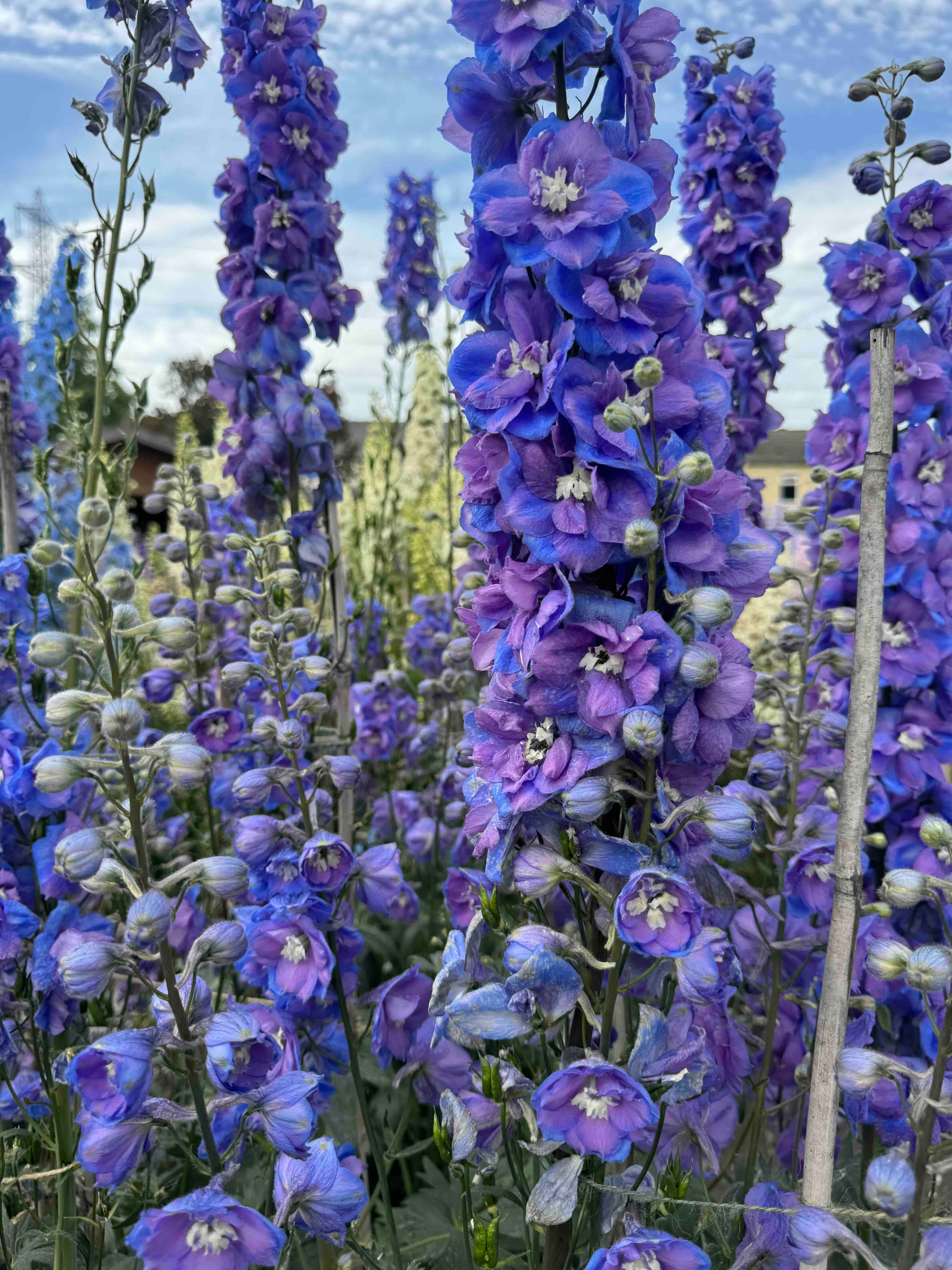
I like some of the pinks, but prefer the dusky light pink of ‘Titania’ to the darker, more vibrant mauve-pink of ‘Cymbeline’.
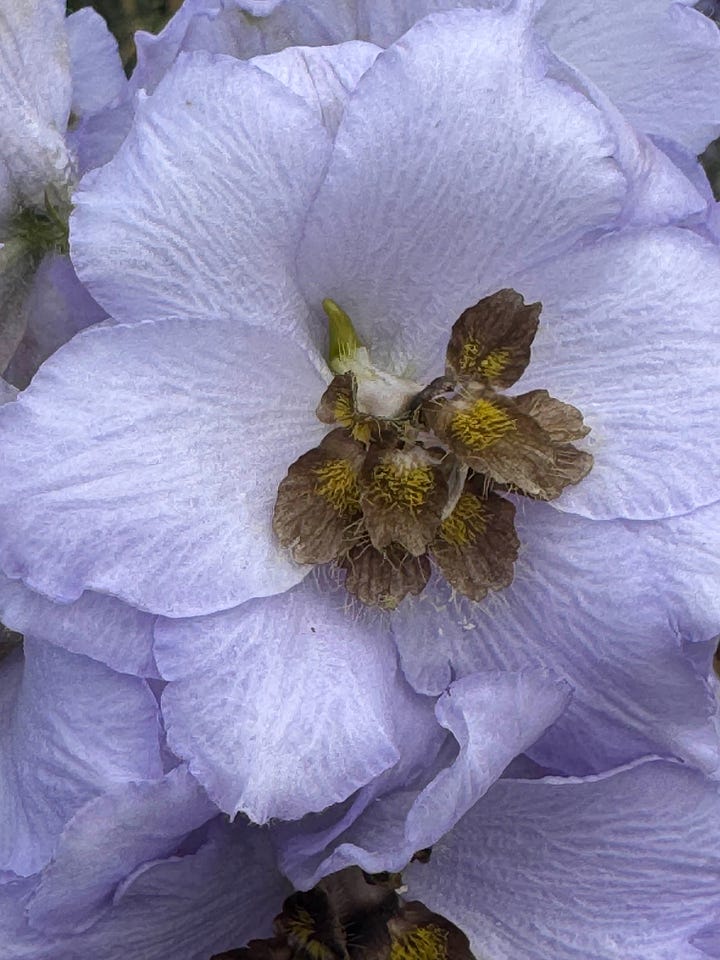
I start getting obsessed with the central frilly disk known as the eye of the flower. I even get my glasses on to have a closer look. ‘Walton Benjamin’ has a blue and white stripy eye like a pair of old fashioned bloomers, while ‘Tiger Eye’ has a brown centre with curious yellow hairs, set against its lilac flowers.
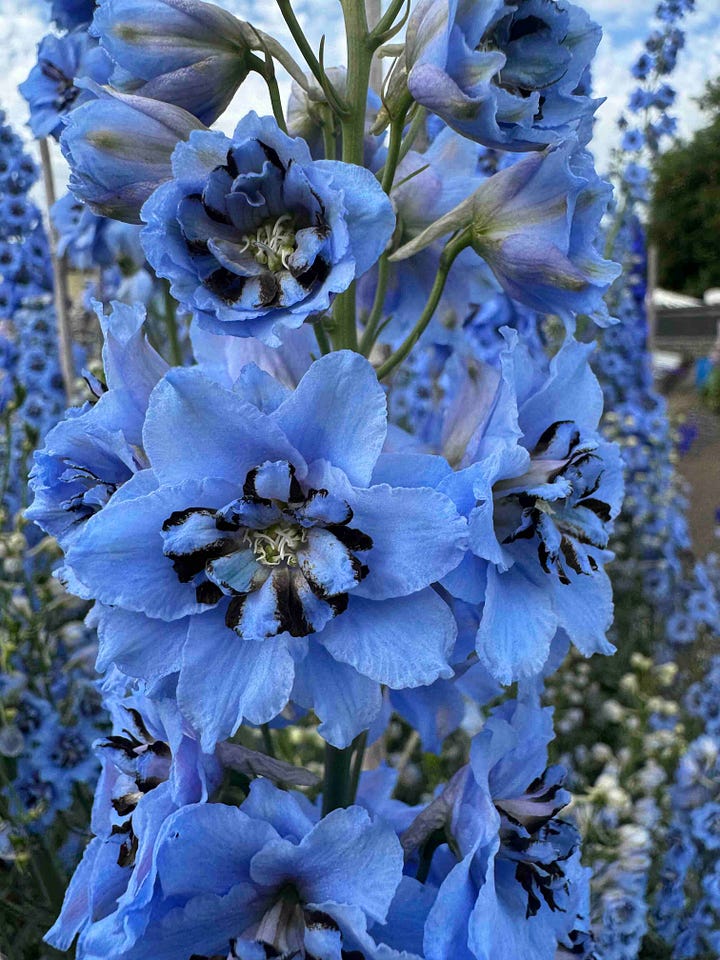
They all have their different looks and personalities. ‘Constance Rivett’ is elegant and demure, while ‘Cassius’ is a playboy, electric blue edged in pink.
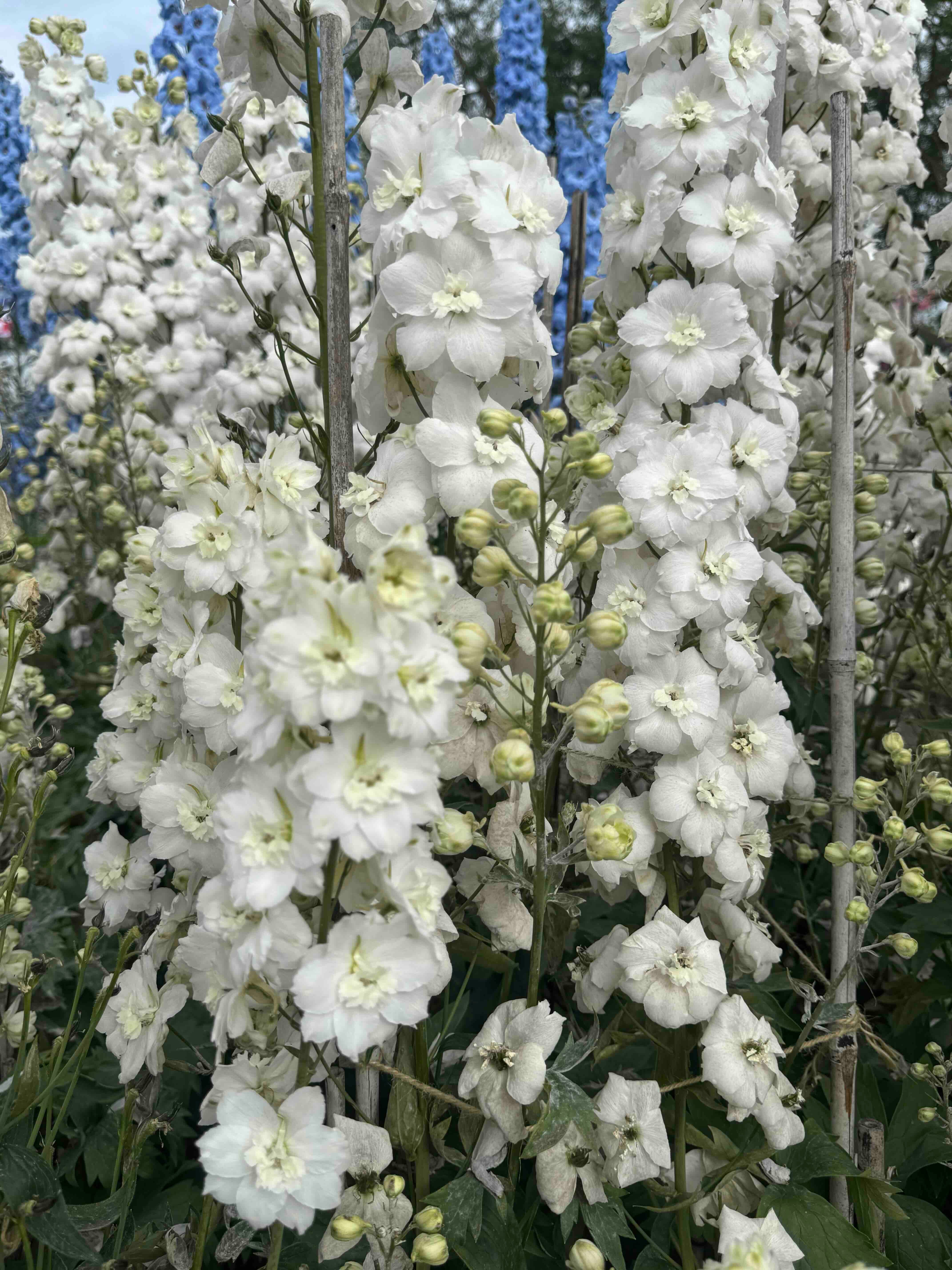
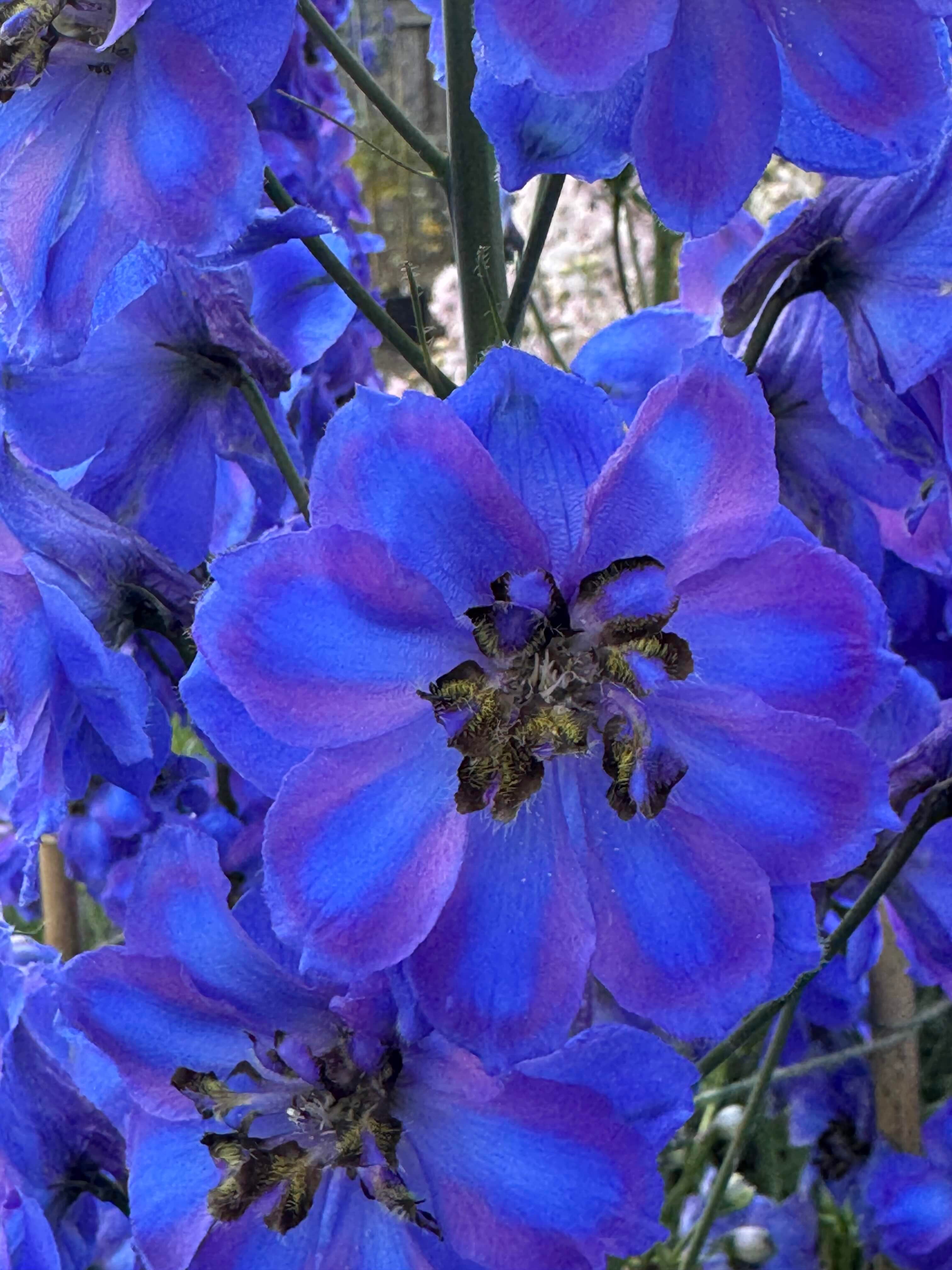
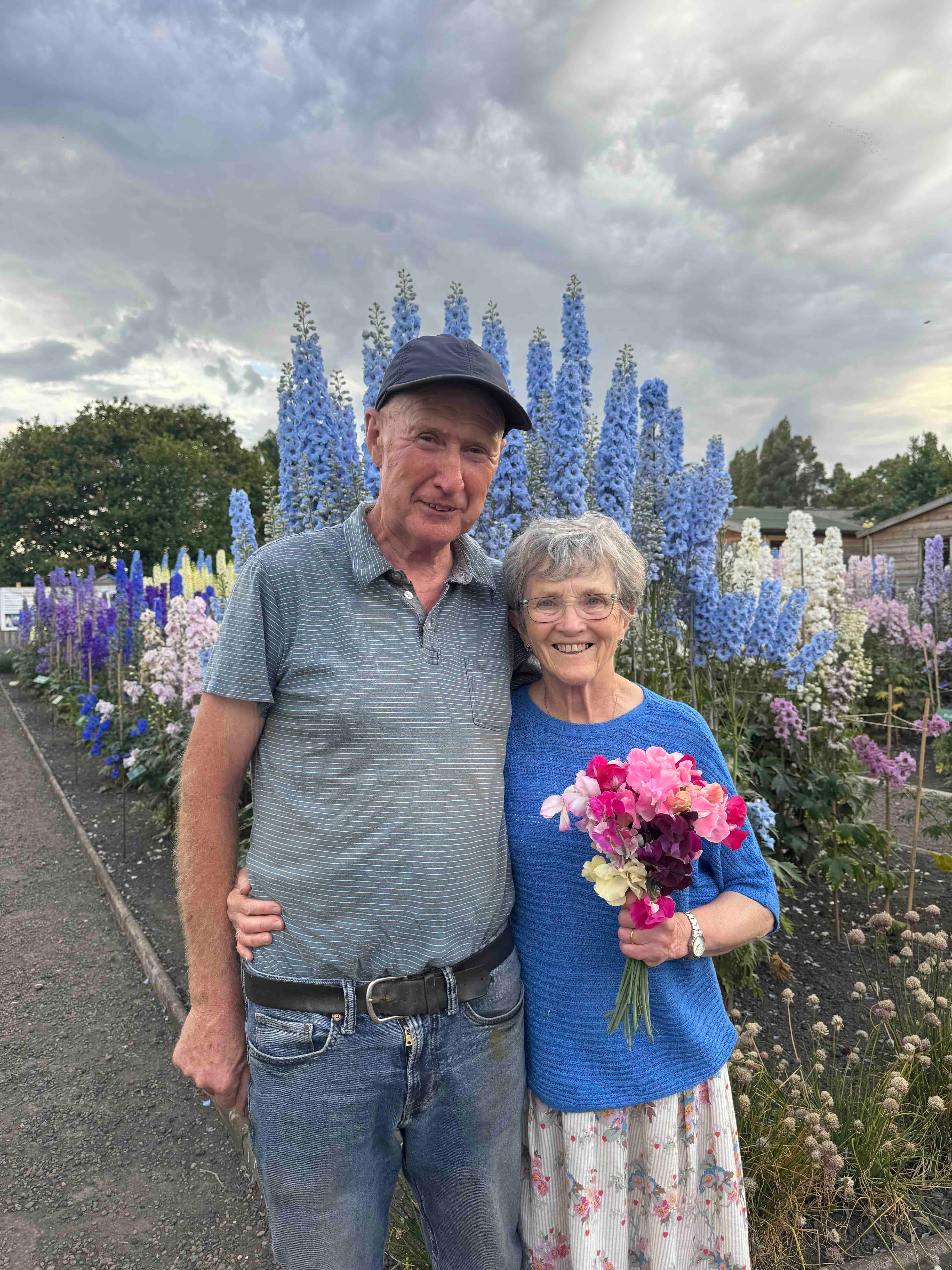
We photograph until the sun goes down, accompanied by the sound of Colin’s canaries chirping away in cages next to the delphinium field, distracting us us from the noise of the motorway just a field away. Colin’s partner Alison comes down to pick sweet peas, which are the only other flowers on the patch, grown to make up for the fact that delphiniums have no scent. She starts telling me how she met Colin in lockdown, and how she fell for him after he told her the story of his ‘Blue Bird’ delphinium.
Back with Colin, I learn more about how he grows his plants. He propagates his collection by taking basal stem cuttings in early spring, and he is happy to share his tips on taking successful cuttings, having put them up on a big banner for his open days.
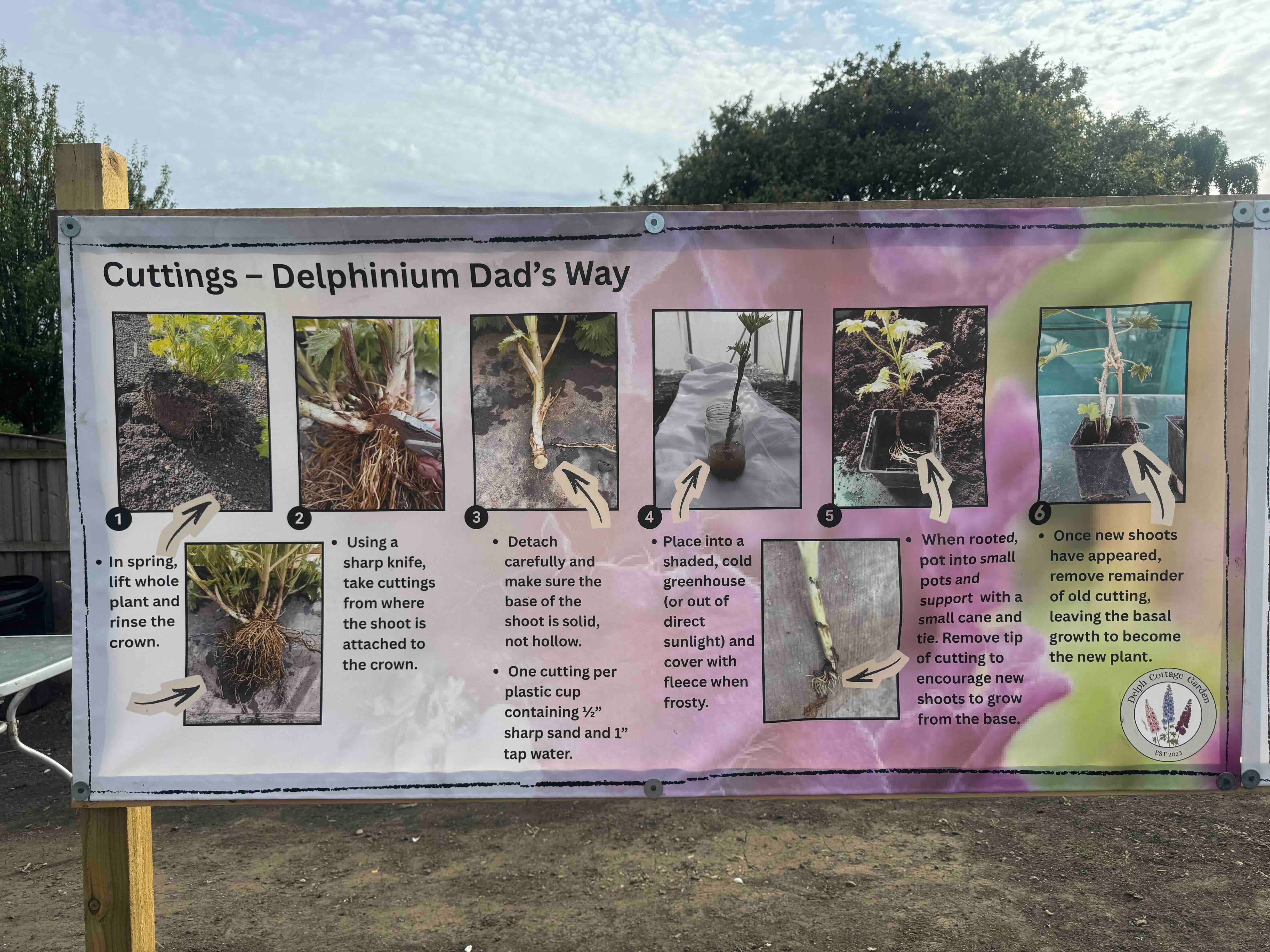
The named cultivars that Colin grows are good strong growers and are likely to return for five or six years or even longer, but the seed strains offered in the garden centres have less longevity, unlikely to last longer than a couple of years. More fool me then, as I recently paid a fortune for a garden centre grab of three delphiniums that I meant to go to Home Farm for, but ran out of time. (I wrote about the Home Farm delphiniums in February and had my eye on some specific varieties).
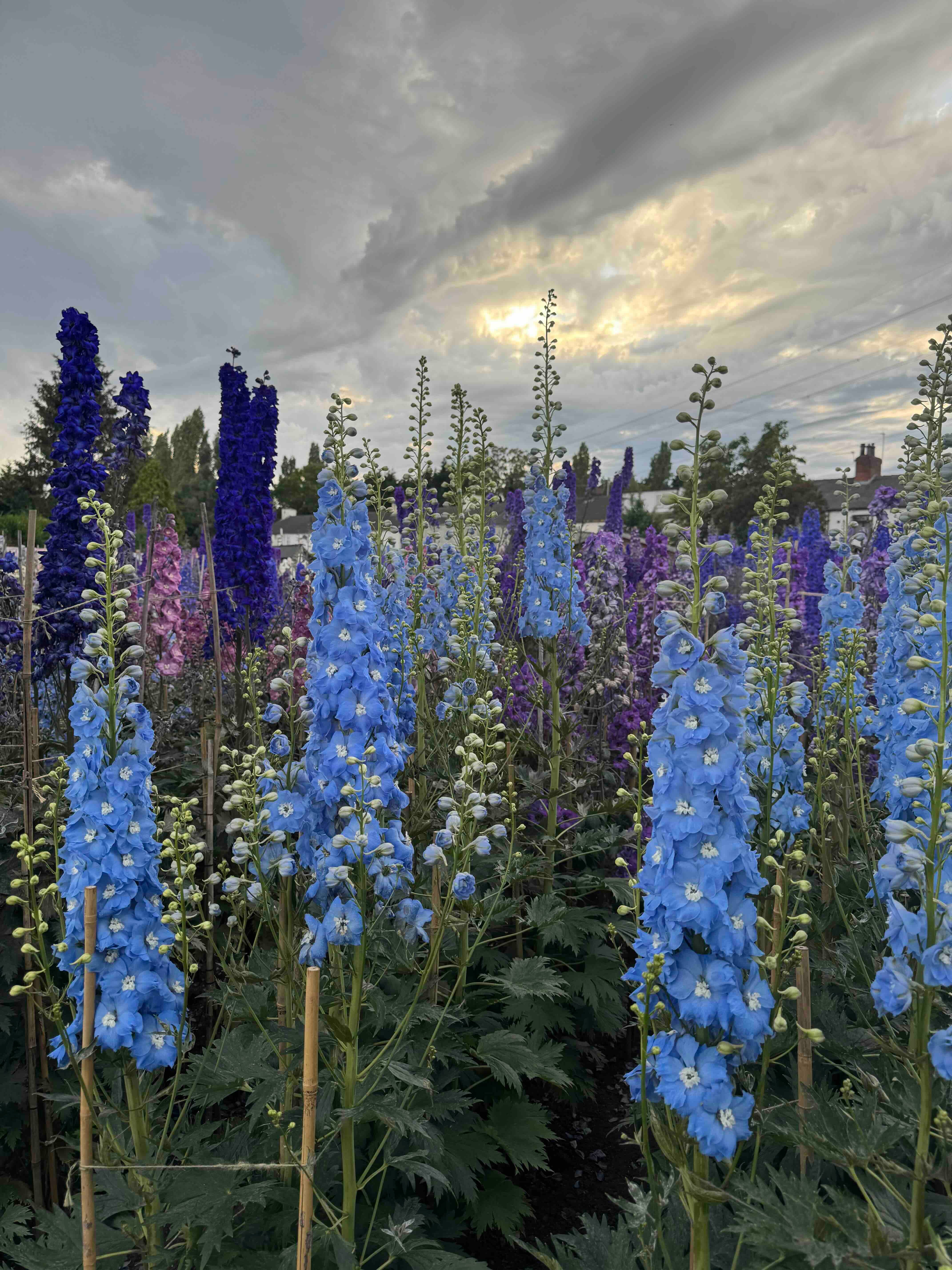
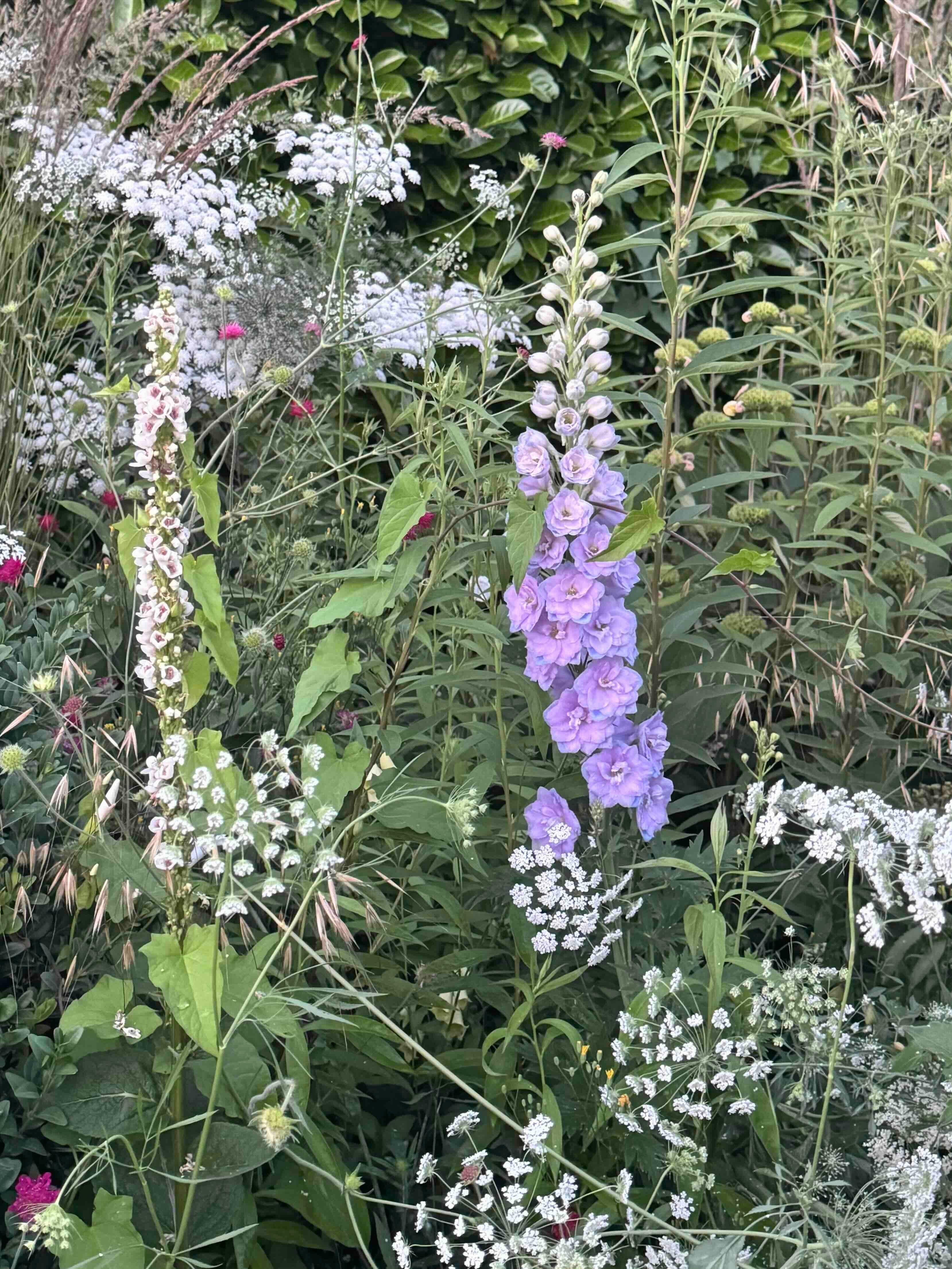
I’m looking at my garden centre purchases right now though as I write (outside in this heat) and they do look very handsome in the border, their spires a pleasing contrast to hydrangea ‘Annabelle’ and a froth of ammi and knautia. However, I now have three new ‘proper’ delphiniums to add to them, a parting gift from Colin, so I will take cuttings from these next spring and hopefully start perpetuating my own little collection. I’m a complete delphinium convert.
I hope you’re not sweltering in the heat too much - it’s been extraordinarily intense, hasn’t it, and not good for gardens in the slightest. The only things that seem completely impervious to the heat are my hollyhocks, which are suddenly all flowering at once, just as I’m about to go away. Enjoy your weekend.
Clare x
No posts
Comments
Nothing yet. Say the first thing.
Sign in to join the conversation.