
Welcome to my monthly post for all subscribers. With the heatwave continuing, it feels like we are reinventing everything that we know in the British garden. It’s challenge just to keep some things alive, which is especially disappointing if like me you have grown masses from seed. This month I’ll be taking notes on the plants that revel in the sunshine and those that don’t - and thinking hard about whether to remove the ones that are struggling to make the garden more drought resilient in years to come.
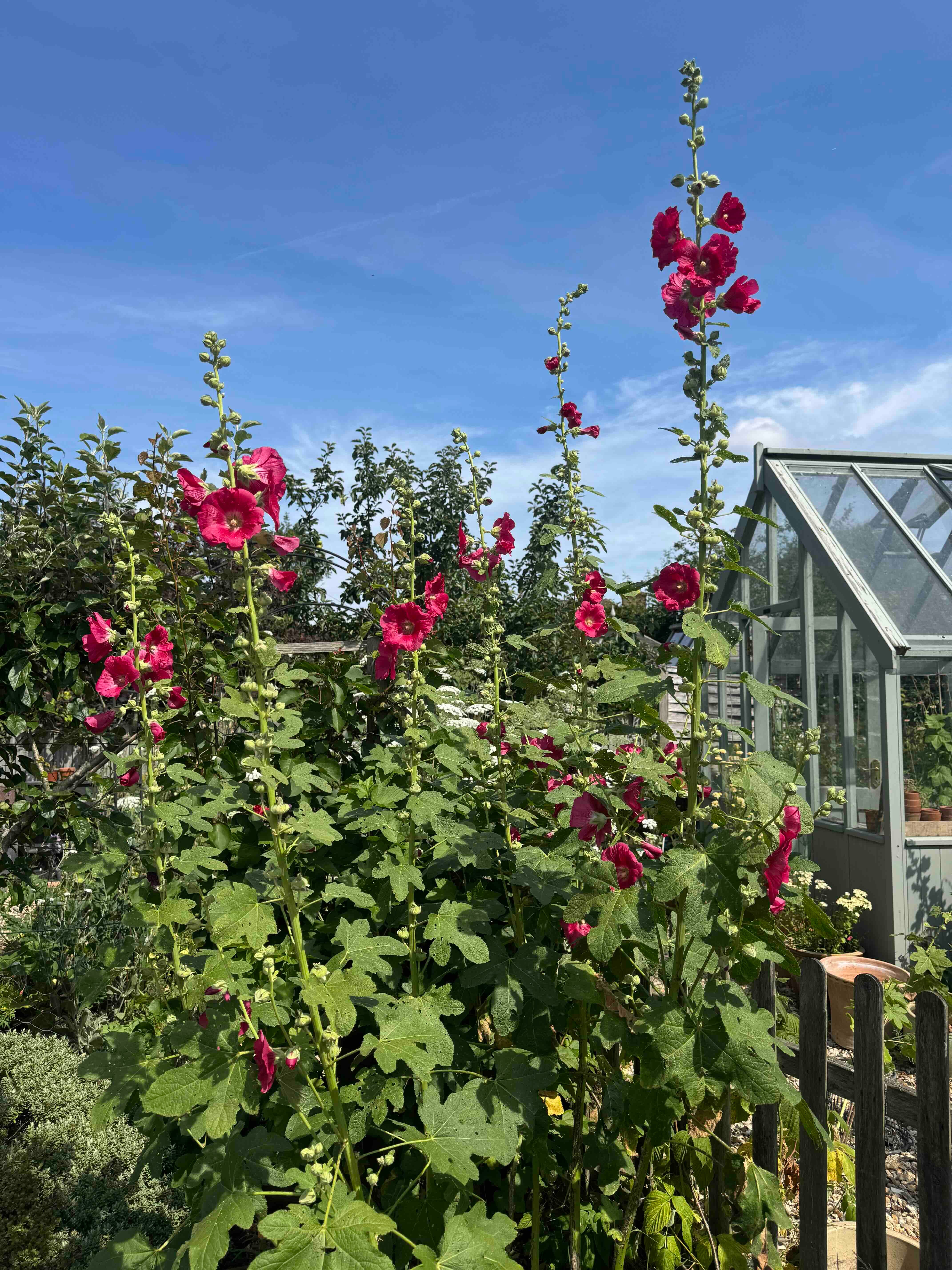
I came back from a week’s holiday yesterday to find the garden looking weary and parched. The grass is yellow and crispy, and plants that I would expect to be flowering at this time are already over. But there is still plenty of drama from the hollyhocks and ammi, and much-needed colour from nepeta, salvias and penstemons. It feels like it’s time to reassess this garden and sort the sheep from the goats. I need to really look at the plants that are fading in the heat and work out whether it’s time for them to go.
The poor ‘Annabelle’ hydrangeas in full sun are showing their displeasure, leaves wilting and flowers downturned. To be fair, all they need is a bucket or two of water and they rally, but the question I need to ask myself is do I want plants that are needy in this weather? Wouldn’t it be better to have a garden that keeps going without watering in 30C temperatures? The astrantias are looking sickly too, even the ones in the shadier border, and the Digitalis grandiflora, usually so happy at this time of year, barely flowered before its flower spikes bowed down again and turned brown, defeated in the starter blocks. I’m going to cut it right back to see if it might flower again, but if the heat continues I’m almost certain it won’t.
I’m regretting planting three Angelica archangelica, which I have nurtured from seed. They are biennials, so haven’t flowered this year, but they are looking so unhappy, and no wonder. They are Norwegian natives of riverbanks and shady woodland edges, and need constant moisture. Do I keep watering them to coax them into flower next year or do I just give up? Sometimes it’s easy to get carried away with wanting a plant so badly you don’t check what it really needs.
Sadly a huge viburnum in a large bathtub pot has turned up its toes in the time I’ve been away. My son has been watering for me, but for a 21-year-old with better things to do, watering means holding a sprinkling hose over a pot for a cursory few seconds, and this pot needed ten minutes or more of soaking. Pots are particularly hard work in times of drought. Thankfully I resolved to have fewer pots this year and those I did plant up have salvias, erigeron, knautia and scabious, all of which are much more resilient than annuals like cosmos.
What follows is my list of the most drought tolerant plants in my garden - plus a few more on my wish-list for next year. It’s worth pointing out that even the most drought tolerant plants need watering in their first year after planting, to establish their root systems (unless they have self seeded, in which case they are adapted to the dry conditions and will find their own equilibrium). Also, all the plants in this list are surviving the heat but have also survived an incredibly wet winter, so perhaps we should call them weather-extreme tolerant, or just plain resilient.
Hollyhocks: I have just returned from Cap Ferret on the Atlantic coast of France, where it was 40C last week. Here and all along that coast hollyhocks thrive. They were just about over when we were there, but some still had flowers despite the fierce temperatures, showing just how resilient they are. The origins of Alcea rosea are in southwest China and they have naturalised in parts of the Mediterranean and Central Asia so they are well adapted to the heat, and in my garden they are revelling in it, multiplying faster than I can keep up with by self seeding in the gravel outside my house. They aren’t as tall as they were last year, and some are flowering at just knee-height which is really quite lovely among the fronds of Stipa tenuissima.
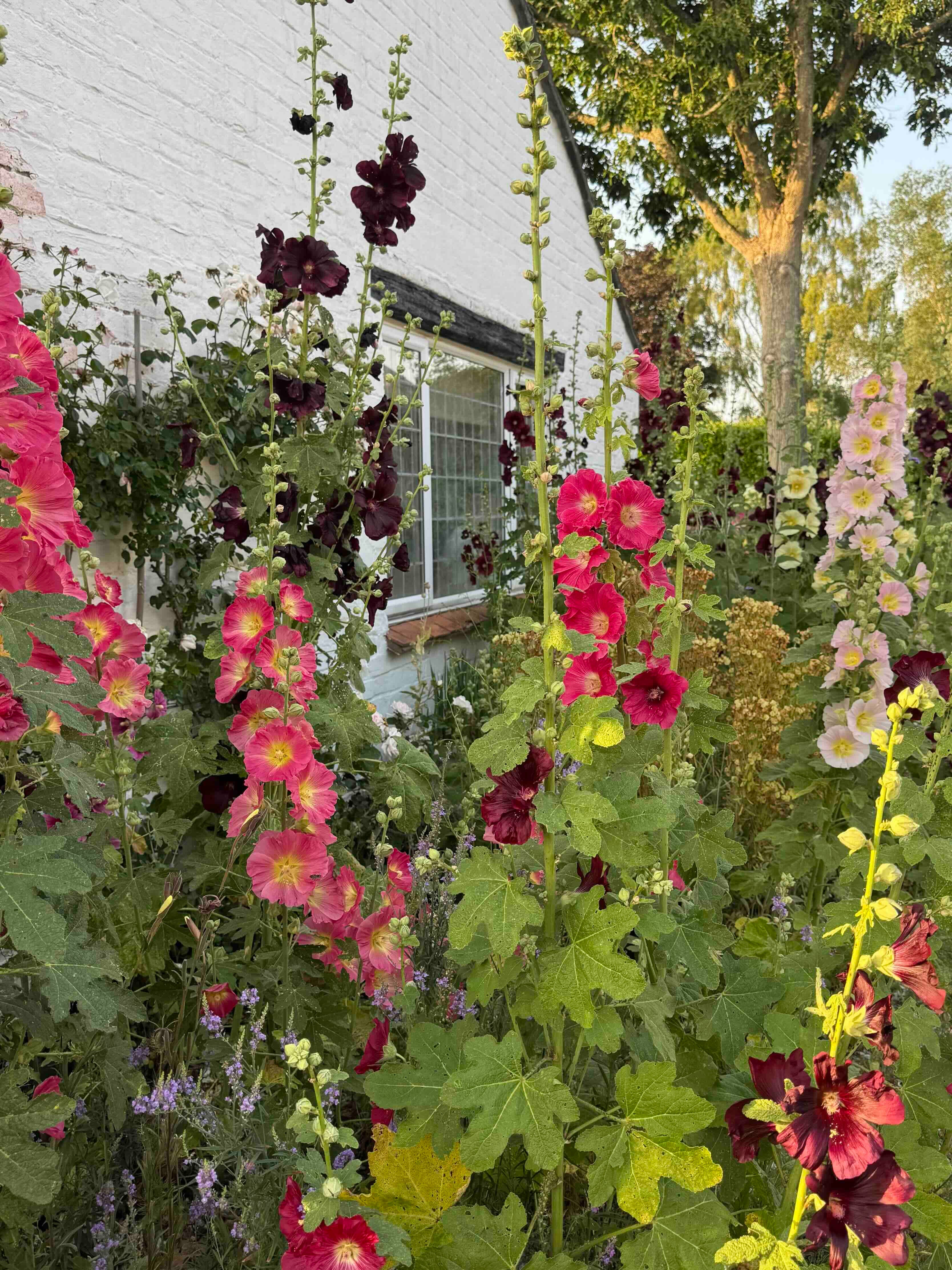
I look at them, so pretty with their trumpet flowers in shades of deep purple, pale yellow and every shade of pink, but their looks belie a steely nature. They are tough as nails and stubborn as heck - if they don’t want to be somewhere, they refuse to grow. I’m looking right now at the long border at the back of the garden which needs more flowers and thinking I must scatter some hollyhock seed among the existing perennials. They may or may not grow there - they have minds of their own. You can read more about hollyhocks in a previous post, including my tips on growing them from seed.
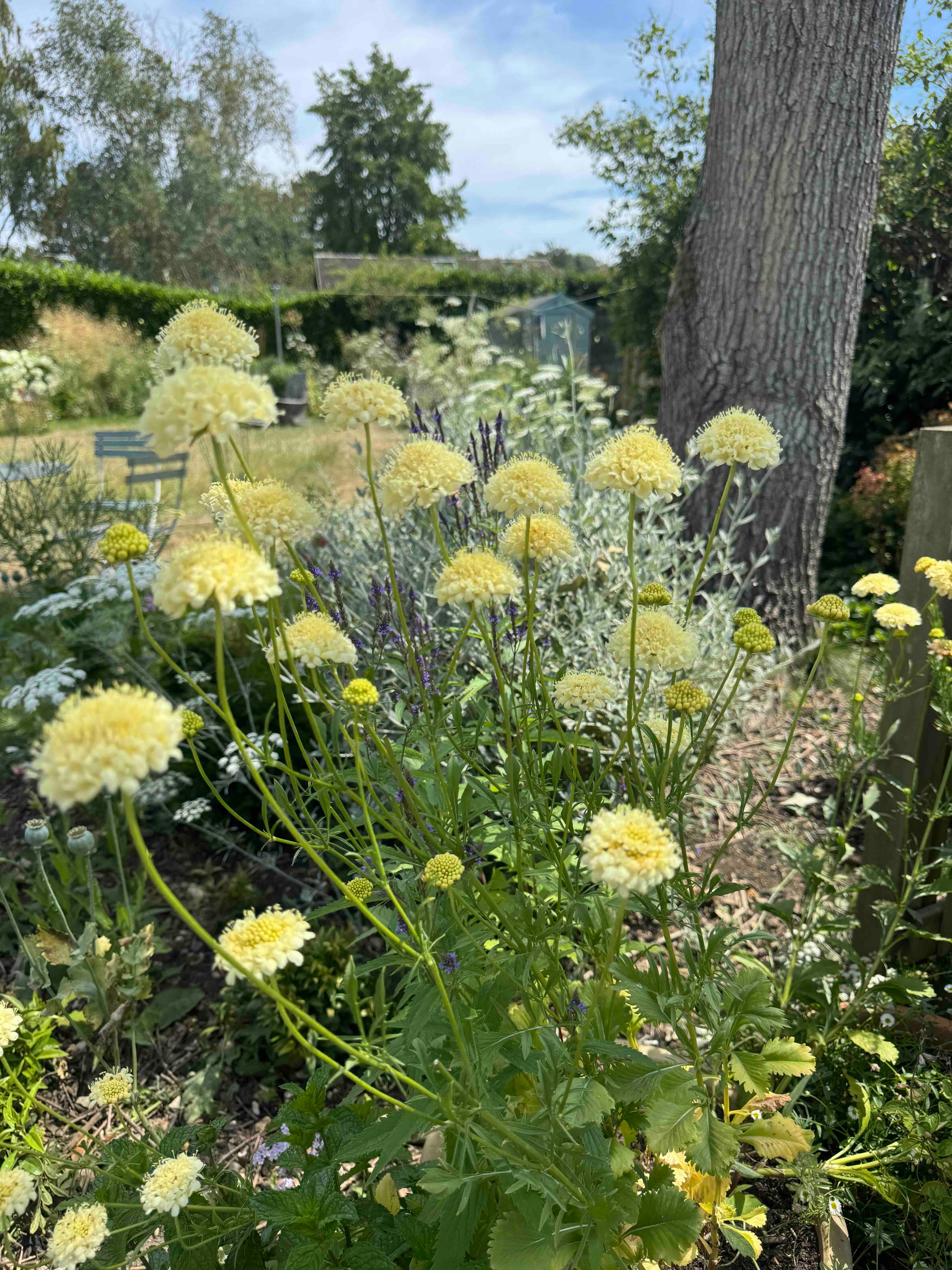
Scabiosa atropurpurea ‘Fata Morgana’: A tall, willowy perennial with pale creamy yellow flowers that turn apricot with age, this is a star plant in my garden this year. I grew it from seed last year, and it has come back in the large terracotta pots I grew it in last year. I collected seed from those plants and sowed it in spring, and those seedlings are growing where I have planted them in the borders this year - although they are still needing to be watered as they establish. Once their roots are down and they are returning for a second year, they need very little water - perhaps more in pots to stop the lower leaves going yellowy brown. I also have another scabious, S. ochroleuca, dotted around in the borders. With smaller, dottier flowers in a lighter cream, it is an understated but very resilient plant that will self seed in paving cracks or gravel. Another, larger plant in the same family and colour-theme is the giant scabious, Cephalaria gigantea, which I also have. It’s very drought tolerant but it can be a complete thug, self seeding liberally and popping up in places you don’t necessarily want it.
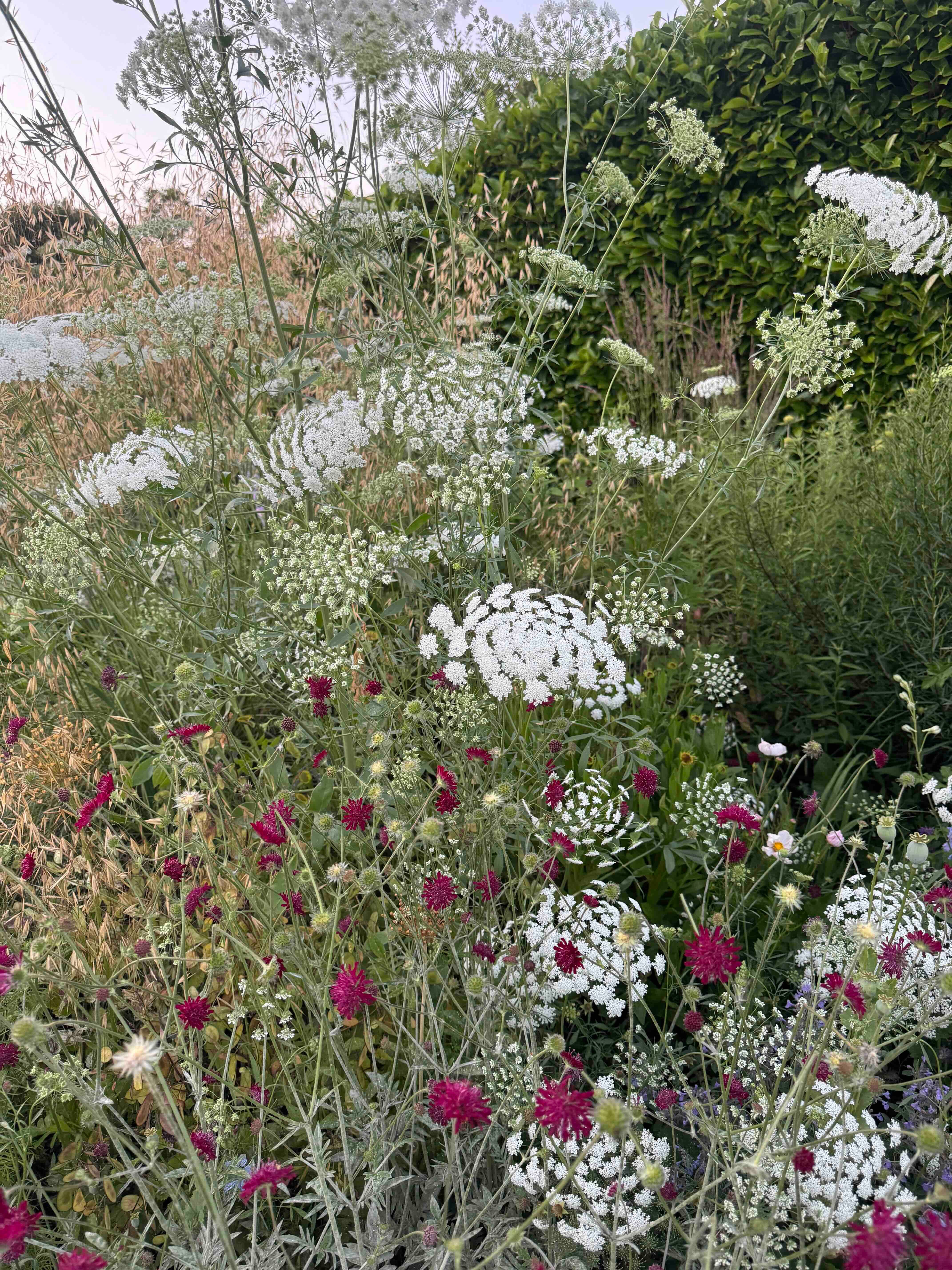
Knautia macedonica: This self seeds all over my borders, both the dark cherry-red species and the paler ‘Melton Pastels’ which has flowers in various shades of pink. It needs nothing done to it apart from deadheading or cutting back to encourage it to flower again, which can be done two or three times over the summer.
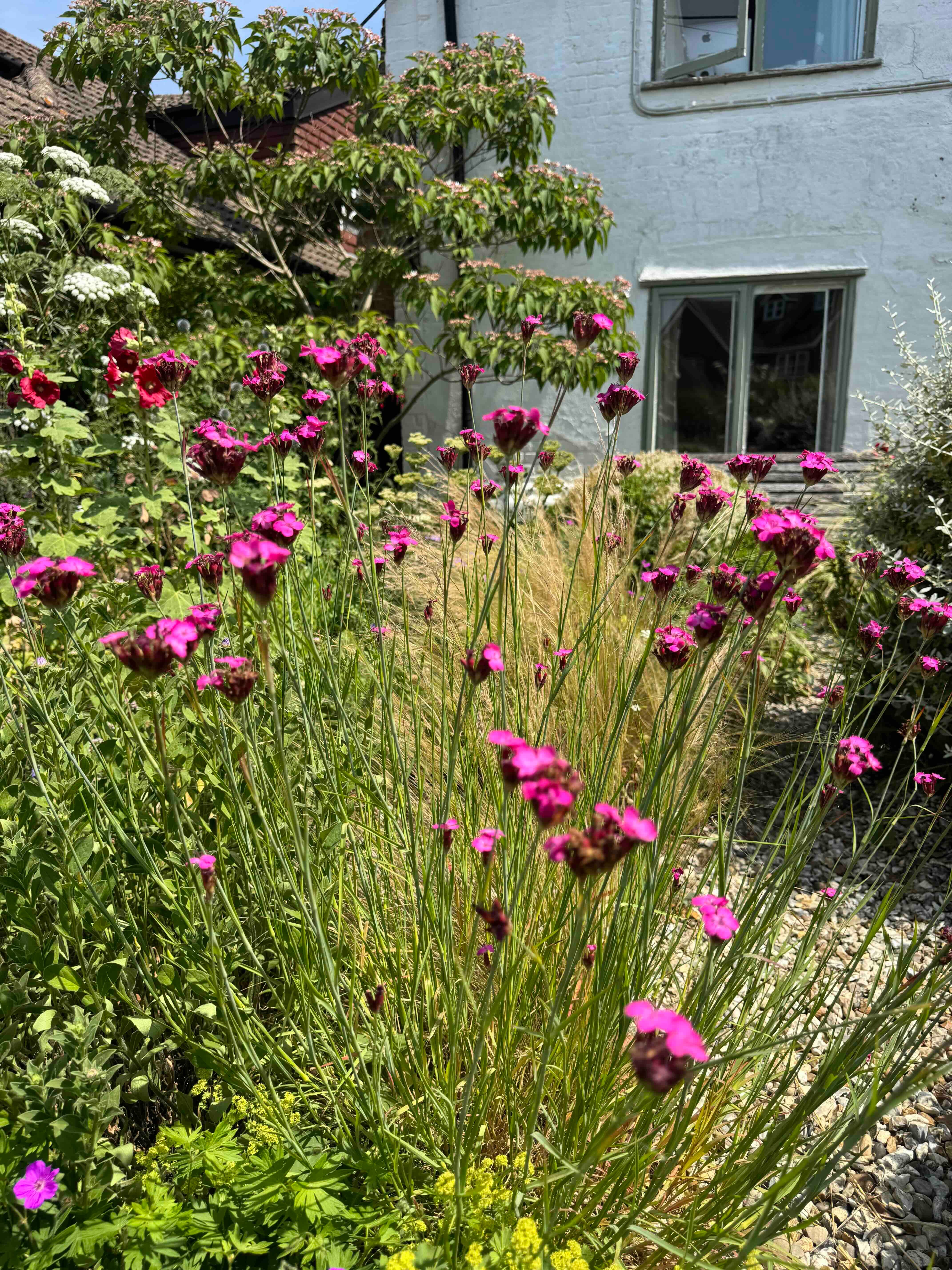
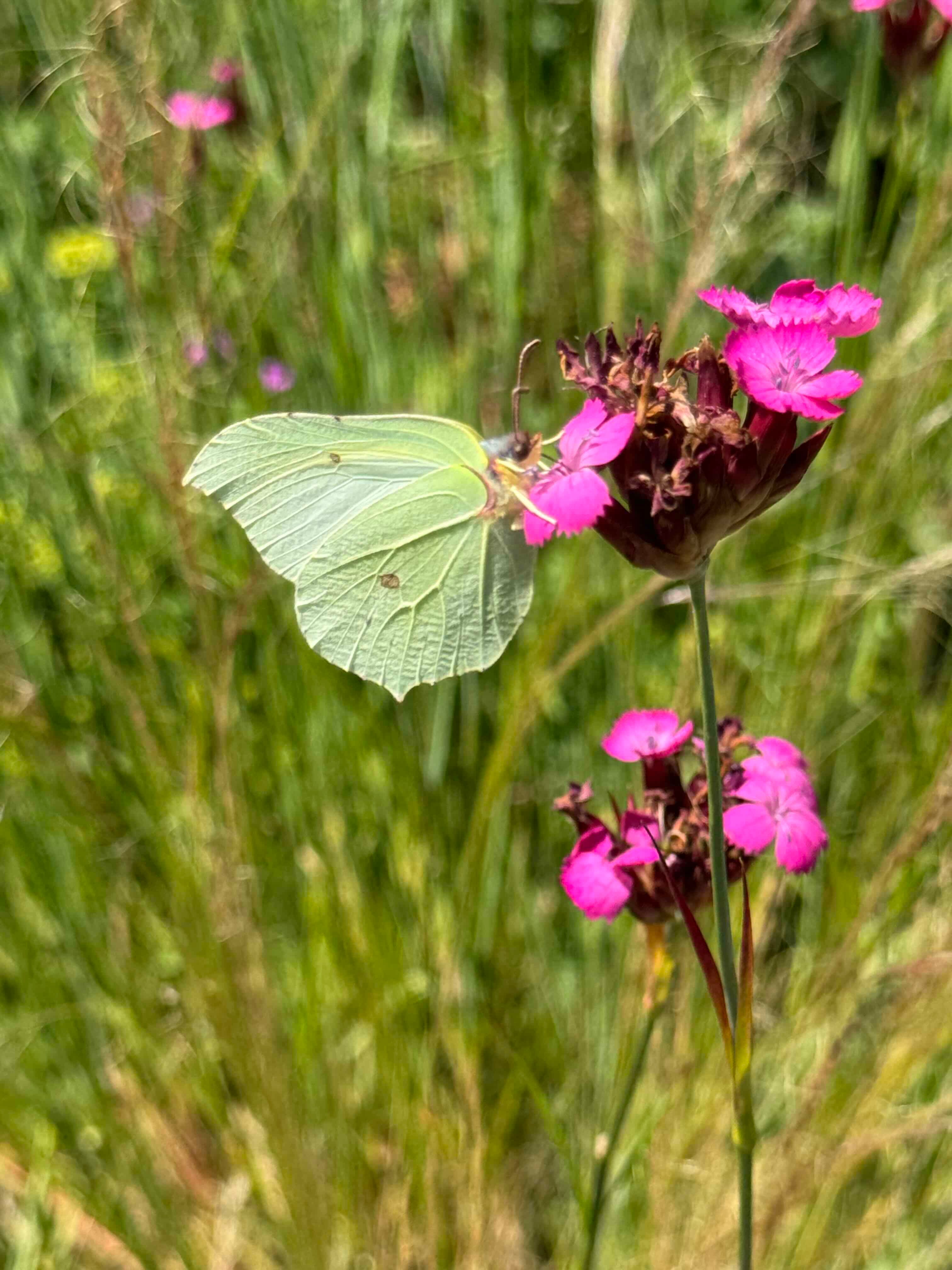
Dianthus carthusianorum: this tall, magenta pink dianthus is a beauty, with small flower clusters on willowy stems that sway in the breeze. Once established, it makes large clumps of spiky leaves with the airy flowers dancing above. In my garden they weave in and out of the white umbels of Baltic parsley (Cenolophium denudatum) and Stipa tenuissima, two other drought-tolerant stalwarts. I also sowed a few sun-loving sweet Williams, Dianthus barbatus, which I’m hoping will come back next year.
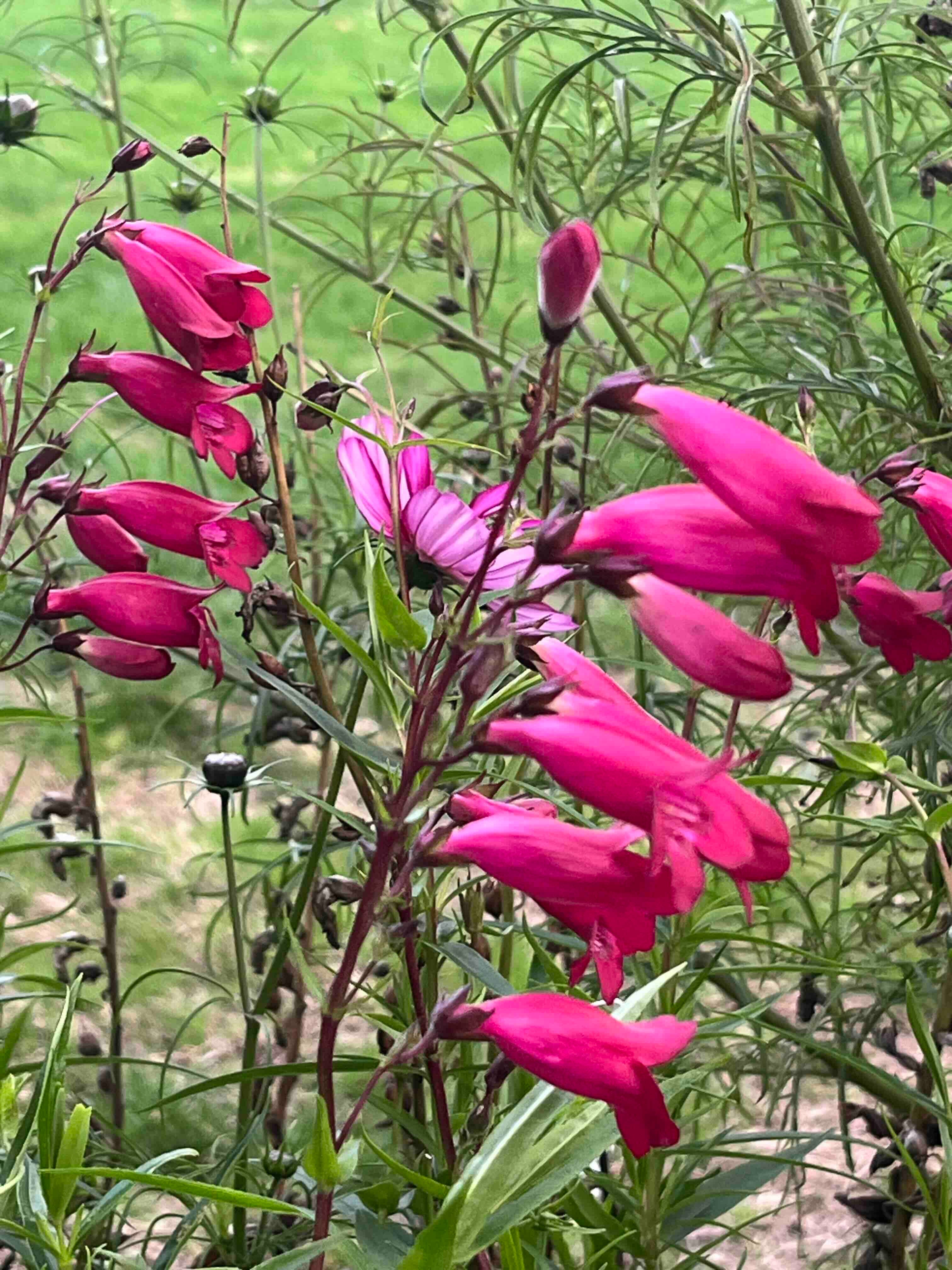
Penstemon ‘Garnet’ and ‘Blackbird’: Penstemons are fantastic value, flowering for many months over the summer and into autumn if you keep deadheading them. Once a plant is established, it is tolerant of very dry soils and the flowers can withstand heat, although they tend to last for a shorter period. I have magenta pink ‘Garnet’ and ‘Blackbird’ dotted all around the garden. ‘Garnet’, also known as ‘Andenken an Friedrich Kahn’, is one of the oldest of the so called European hybrids, introduced by a Swiss nurseryman in 1918. These hybrids are hardy forms of penstemon, which grow in warmer parts of North America and Mexico, and there has recently been a resurgence of interest in penstemons with lots of new varieties being introduced. This Gardens Illustrated article shows some of the best. While they are tough and drought-tolerant, they can also be short-lived and are susceptible to very low temperatures or prolonged periods of rain. They are very easy to take cuttings from, however, which I routinely do every year so that I have new plants waiting in the wings to replace the old. Here’s a rather younger looking Monty Don showing you how.
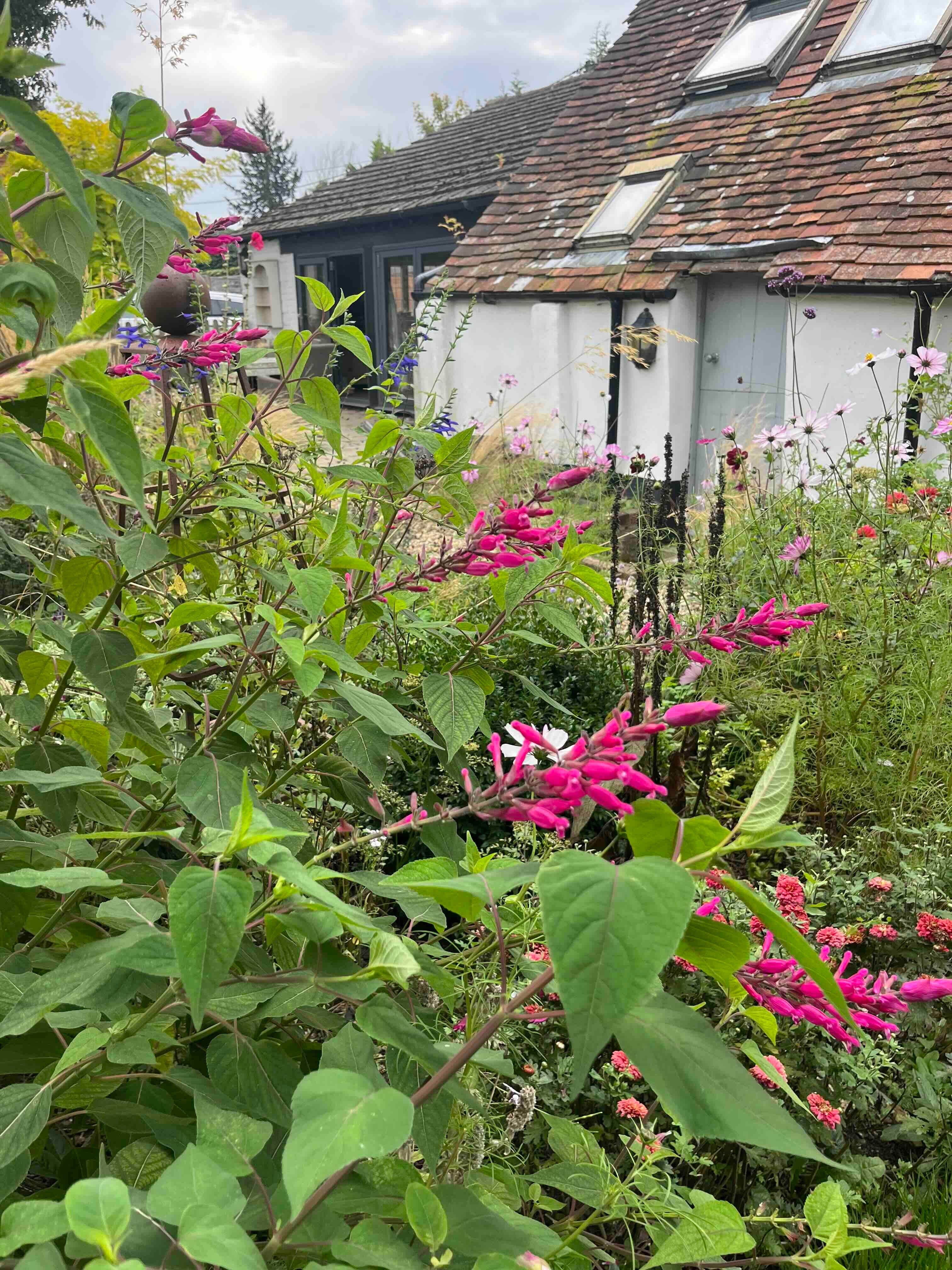
Salvias: Both the European salvias that include species like S. nemorosa, and the later flowering ones from South and Central America, are valuable plants for the hot, dry garden, but it is the later flowering ones that stand up particularly well to the heat, producing miracle blooms without a drop of water. I am building a good collection of them, which like penstemons, can be increased easily by taking cuttings every year. Salvia is a vast genus with over 1000 species, and the hardiest of those from South America have been adopted and hybridised for growing in European gardens.
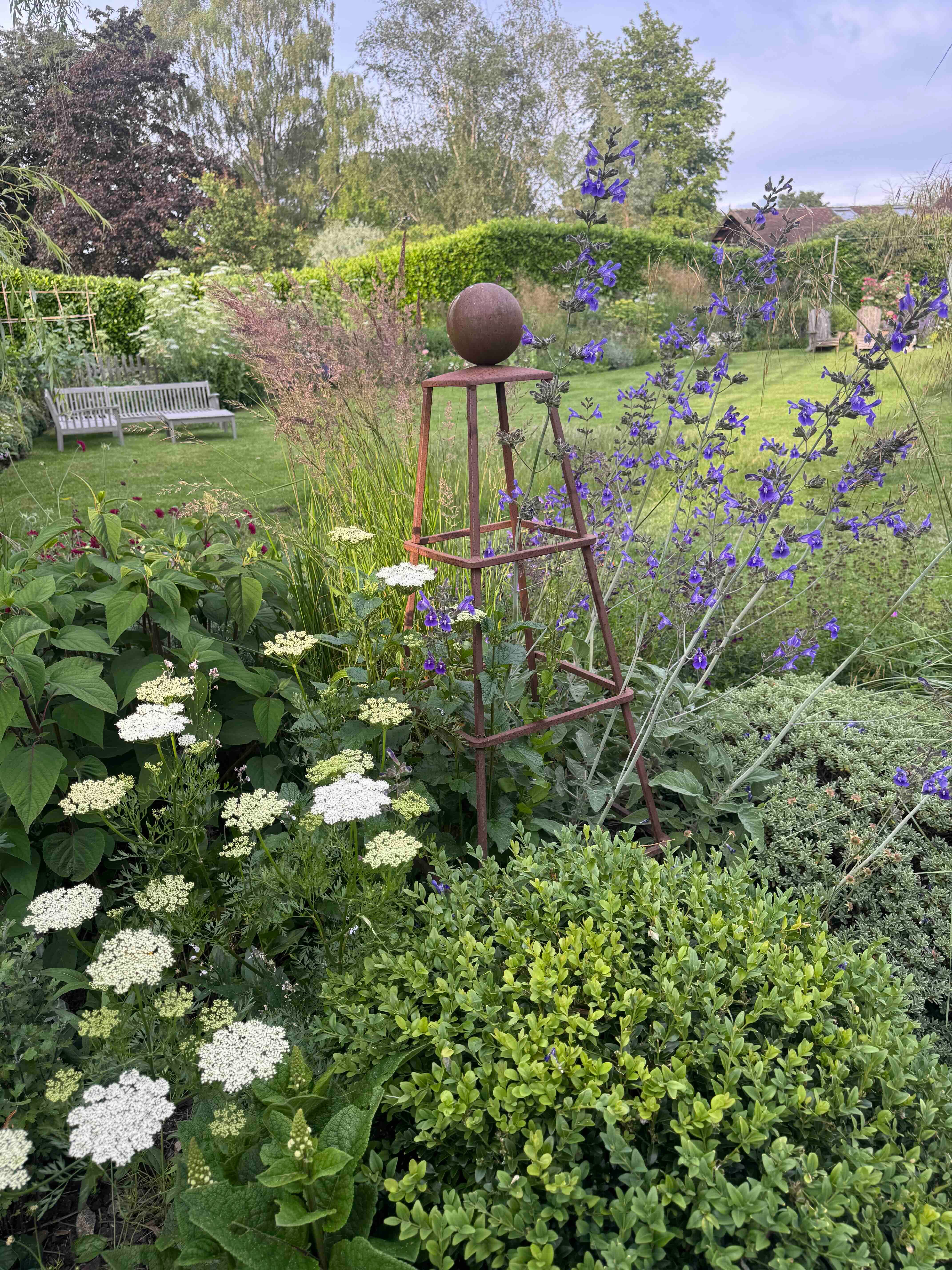
We are also finding we can grow an increasing number of species in our warming climate, and I always find it fascinating to discover where these species grow in the wild. My fabulous pink Salvia involucrata, for example, which is just starting to flower now and will continue into the autumn, grows in Mexico on woodland edges where the climate is very hot and dry most of the year, but with very intense periods of rain in the summer. (Intense wet and intense heat sounds familiar here in Britain this year). There are various named forms available, including ‘Bethellii’ and ‘Mulberry Jam’. I also have the azure-flowered S. guaranitica which comes from Brazil. A new one for me this year is S. interrupta x candelabrum, a cross between two species, one from the Atlas mountains and one from the hills of southern Spain. It’s a beauty, with felty silvery-grey leaves and sprays of deep blue flowers, growing to about 1.5m. I took a cutting from it last year and it was pounced upon at my recent Maggie’s plant sale, but I can’t find any suppliers, so I think I need to take multiple cuttings this year so I can spread it around to friends. You can find both S. interrupta and S. candelabrum for sale individually. I also have an increasing collection of small-flowered salvia cultivars such as deep purple ‘Violette de Loire’, ‘La Mancha’, ‘Cerro Potosi’ and others that have come from random friends as cuttings.
Best of the rest: other plants in my garden that love sun-bathing are, in no particular order:
Teucrium fruticans, a blue-grey shrub from the Mediterranean that can be clipped or left to grow shaggy.
Oenothera lindheimeri: formerly called gaura, this filler plant produces sprays of long, arching stems topped with butterfly-like pale pink or white flowers.
Achillea sibirica subsp. camctschatica ‘Love Parade’: I grew this achillea from seed a few years ago and it is persisting in my garden. From Siberia, you wouldn’t think it would survive a great heat, but like other achilleas it is doing very well in the drought. It has narrow, saw-tooth leaves and domes of palest pink flowers.
Hylotelephium ‘Autumn Joy’: all sedums are remarkably drought tolerant. Mine are smaller-growing and smaller-flowered than normal this year, but their succulent leaves store every scrap of moisture.
Umbellifers. Four drought tolerant umbellifers are doing well in my garden: the annual Ammi majus, which is towering in my borders this year having self seeded; the shorter Orlaya grandiflora, a meadow plant in parts of the Mediterranean; Cenolophium denudatum, the perennial Baltic parsley and one of the toughest plants I know; and Ligusticum lucidum, a short-lived perennial that takes two or three years to flower, currently in just the leaf stage for me.
Pseudodictamnus mediterraneus: I admired this plant on Joe and Laura Carey’s garden at Chelsea this year, with its mounds of felty minty-grey leaves and whorls of yellowish flowers.
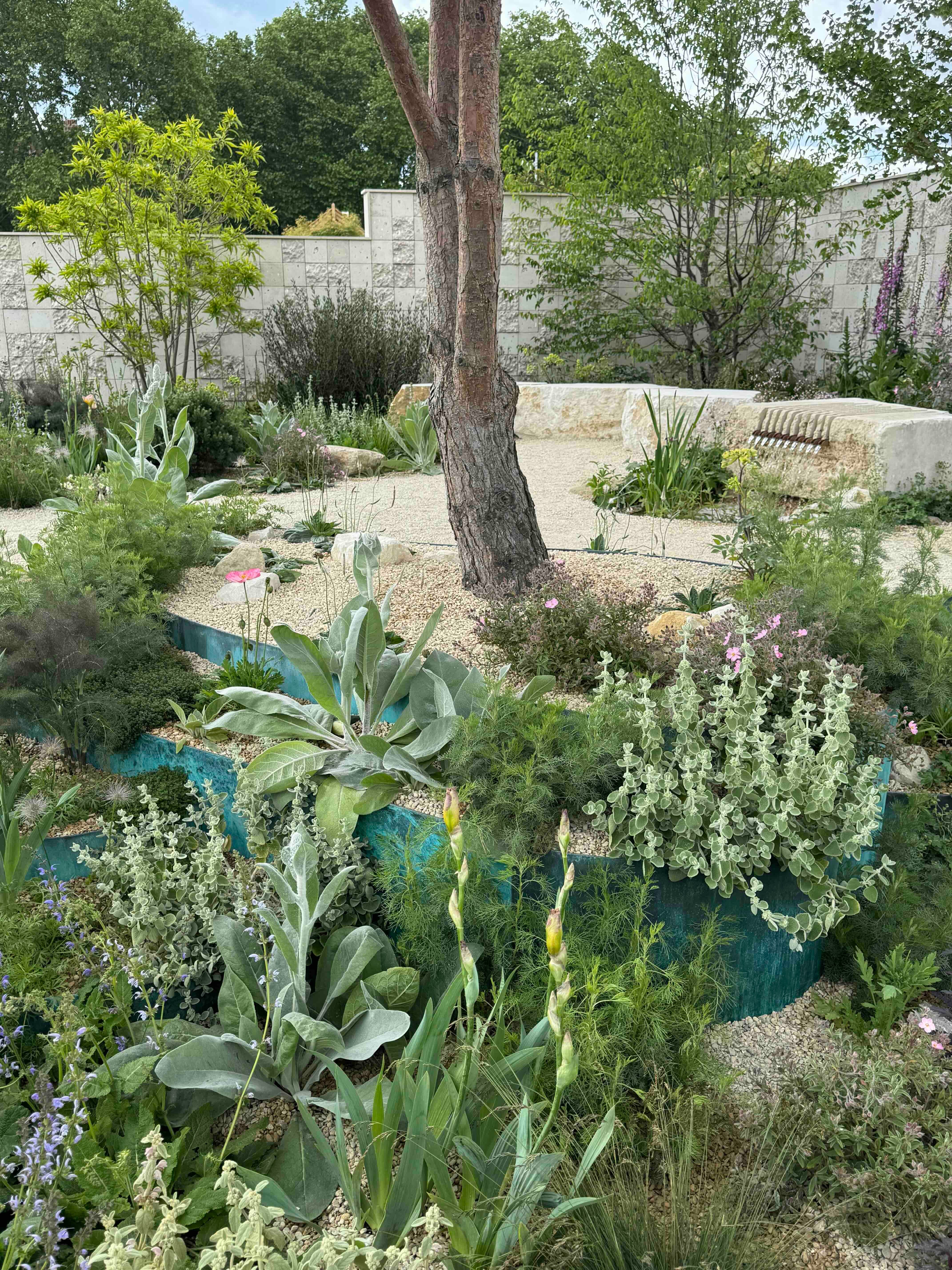
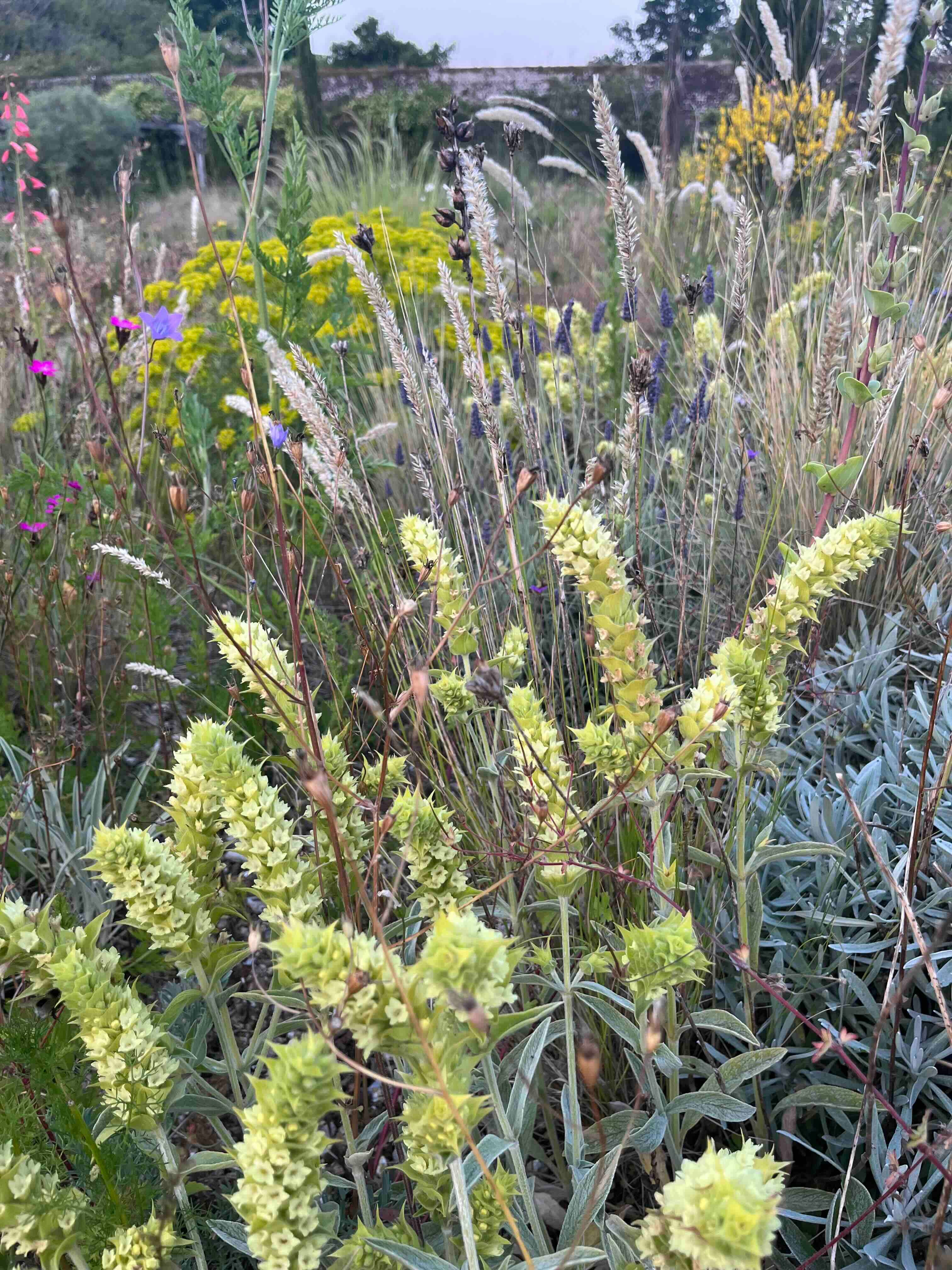
Verbascum creticum and V. roripifolium: I have Verbascum chaixii ‘Album’ in my garden already, which is very resilient, along with the tall, yellow V. olympicum. I spotted the lovely V. creticum growing with foxgloves in Jim Marshall and Sarah Cook’s garden in Suffolk and immediately wanted it. And then I spotted an instagram post from Dan Pearson with V. ropripifolium and wanted that too. You can get seed of both from Special Plants Nursery, so I’ll be giving both a go next year.
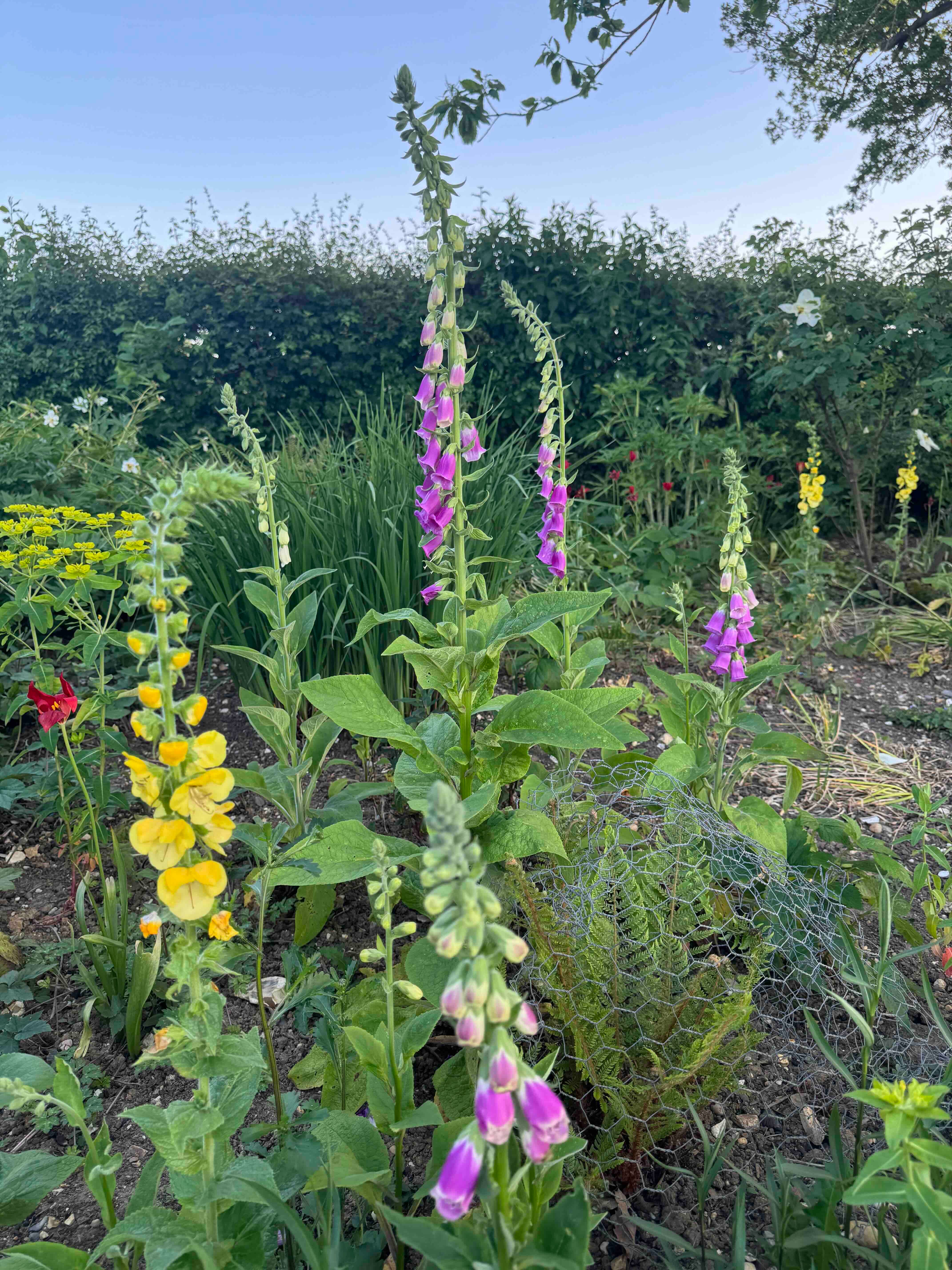
Sideritis scardica: I came across this plant at Knepp last year. Also known as Greek mountain tea, it has silvery grey leaves below spikes of yellow-green flowers. I think it would make a good counterpart to Pseudodictamnus, dotted around in the gravel in the front garden. You can read a previous post about drought tolerant planting ideas from Knepp here.
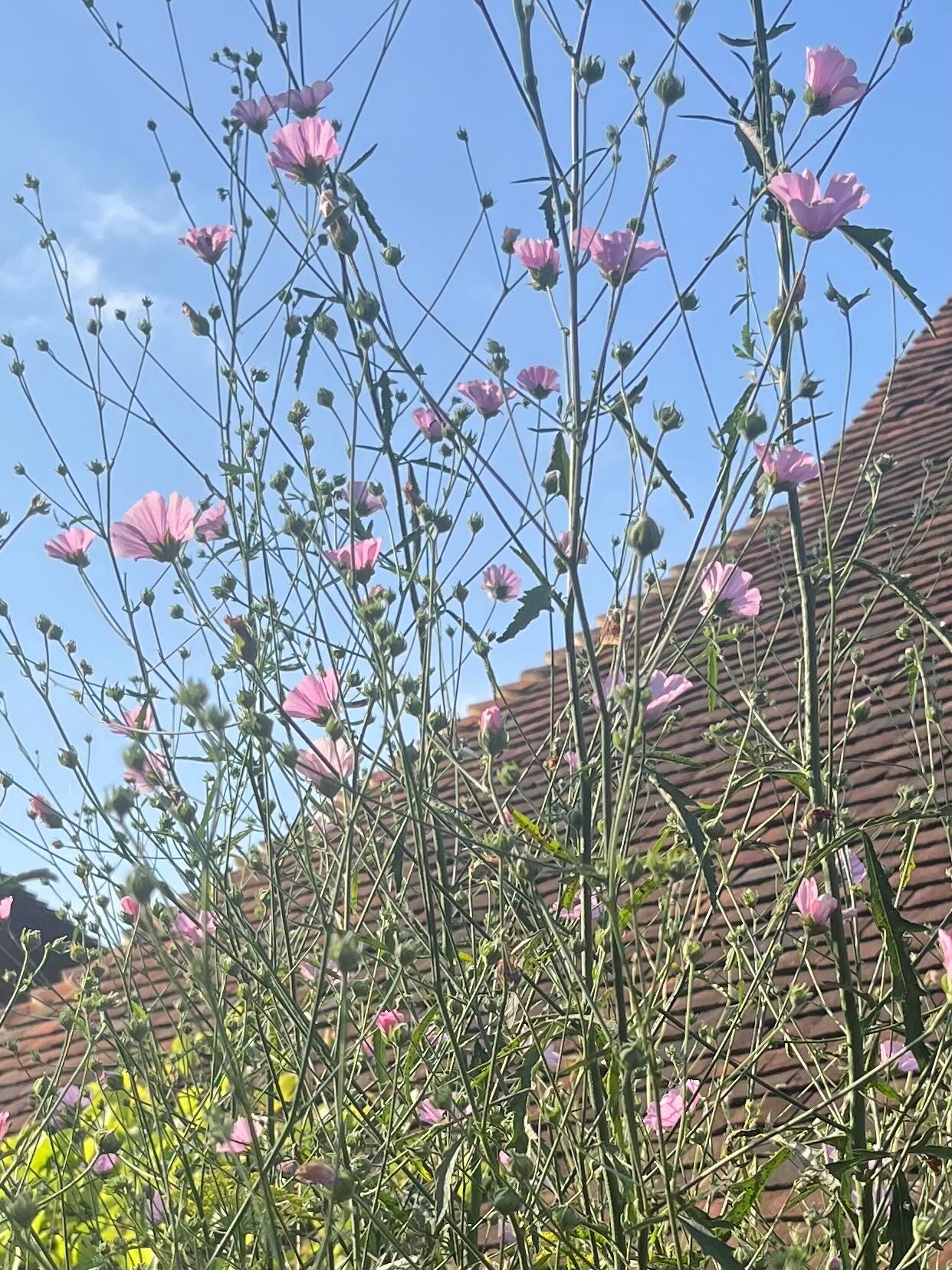
Althaea cannabina: I have tried and failed to grow this hollyhock relative from seed, so I need to try again - or cheat and track it down to buy as a plant. It makes a tall, branching plant with a cherry blossom covering of small pale pink flowers. It was one of the plants Chris Brown chose for my Resilient Plants series in House & Garden, which you can read here.
I hope you’ve found this useful. I’d love to hear from you if you have other suggestions for plants that are doing well in the summer heat.
Have a lovely weekend.
Clare x
No posts
Comments
Nothing yet. Say the first thing.
Sign in to join the conversation.