
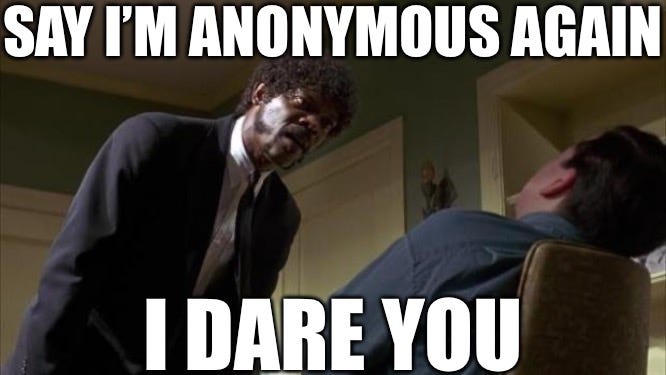
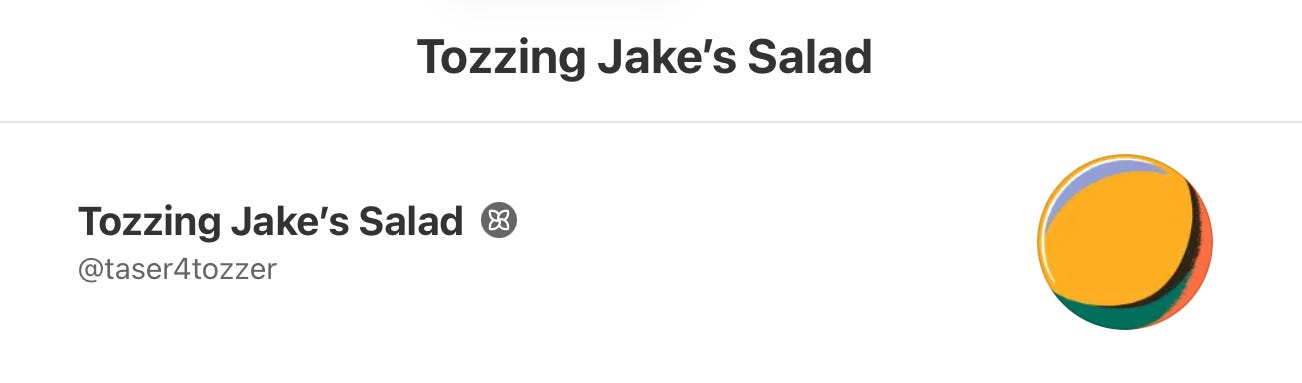
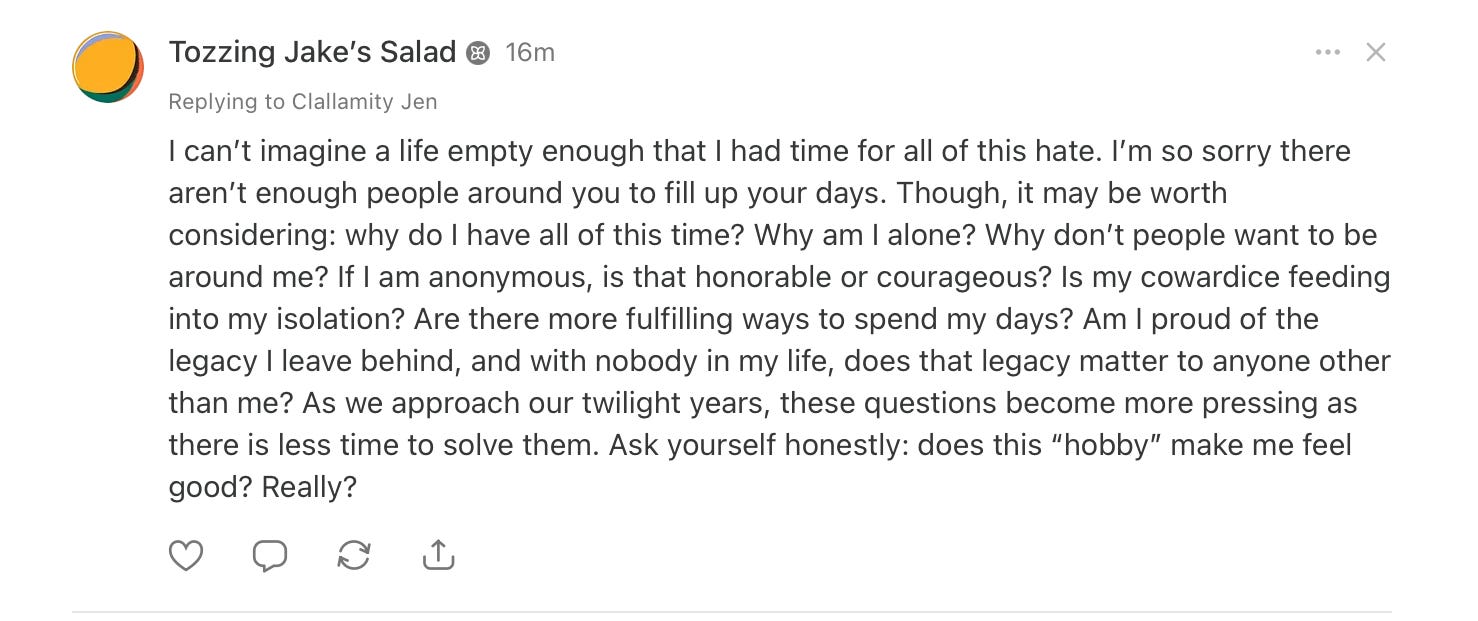
Recently, my content was hit with a multi-platform, copy-and-pasted “hate message” from an anonymous account using the handle Tozzing Jake’s Salad (@taser4tozzer). I have blocked them and won’t be linking to their account.
In the world of independent digital watchdoggers, memers, and bloggers, dealing with ambient noise is part of the job. But when I look closely at the rhetoric used by these anonymous critics, it’s easy to see that they aren’t actually talking about their targets.
They are holding up a mirror to their own isolation, instability, and fractured mental ‘wellness.’
To transparently show the kind of digital debris local creators navigate — and the fascinating psychology driving it — this article includes the full statement they pasted across my accounts, paired with my complete retorts, a breakdown of the underlying pathology, and the real-world evidence they are trying to deny.
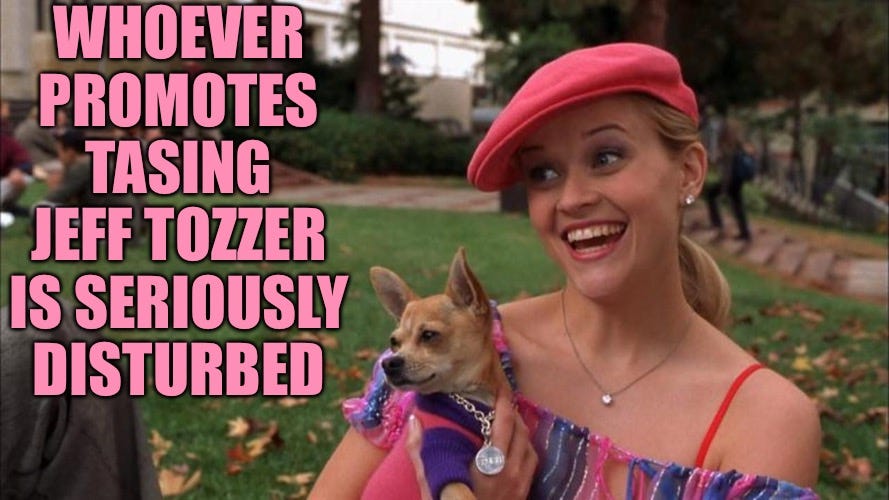
Before we look into the mirror, let’s clear up a basic concept that local critics consistently fail to comprehend: the difference between being anonymous and being pseudonymous.
The anonymous burner accounts crawling through my comment sections claim I am hiding. Let’s look at the actual reality:
The Profile Tells the Story: My profile states exactly who I am, what I do, and how I live. Conversely, a troll’s profile can only state who they currently hate.
The Output Speaks Volumes: I operate a structured, branded platform. I have a podcast, a dedicated following, and I consistently produce more verified content in a single week than a hater could scramble together in a month. I am known by many in this community. Just because someone doesn’t know me face-to-face in the grocery aisle does not make me anonymous. [1]
The “Jen” Factor: My branded pen name explicitly includes my real name, Jen. There is no mystery here. Historically, some of the most influential watchdogs and literary figures in history — like Mark Twain — utilized pseudonyms to publish their work safely and effectively. [1, 2, 3]
So why the obsession with demanding my legal last name?
I recognize this tactic for exactly what it is: a bad-faith attempt to bully me into revealing more personal information than I choose to share. It is my absolute right to protect my identity, my property, and my peace of mind. Local critics feel entitled to my full legal name for one reason, and one reason only — so they can expand their vector of personal attacks. Thank you for proving my point.
When I use a pen name, I am protecting my household while standing firmly behind my work. When a troll uses a burner account, they are protecting their cowardice because they are terrified to attach their real face to the toxic garbage they post.
Hate Claim: “I can’t imagine a life empty enough that I had time for all of this hate.”
My Retort: Example of ‘all this hate,’ please. The source of this statement comes from
@taser4tozzer, an account that promotes violence against an individual while ‘Tozzing Jake’s Salad’ infers an act of sexual encounters common in prisons. (Dear readers, if you don’t like knowing what boofing is, I don’t recommend learning about ‘tossing a salad’ since it has nothing to do with food, cooking, or salads.)Psychological Observation (Psychological Projection): This is a textbook example of defensive projection. The troll attributes their own internal emptiness and hateful behavior onto their target to shield their own ego. The account owner is actively engaging in digital harassment while accusing the creator of hate — an unconscious attempt to shift their personal moral failure onto someone else.
Hate Claim: “I’m so sorry there aren’t enough people around you to fill up your days.”
My Retort: No need to be sorry. I’m comfortable with myself, I like myself, and I am a semi-stoic introverted individual. Most days my chickens make better sense than humans, like you for instance.
Psychological Observation (The “Solipsistic Introjection” Illusion): Without real-world, face-to-face cues, an online troll relies on “solipsistic introjection” — filling in the blanks about a stranger by assigning imaginary traits to them. Because they require a constant crowd to escape their own thoughts, they project a desperate need for external validation onto a self-sufficient creator.
Hate Claim: “Why do I have all of this time?”
My Retort: Well, as I’ve pointed out many times and it’s in my profile, I am a rural housewife. I understand this concept of ‘housewife’ can confuse many people, so I’ll clarify. I am not employed. As a housewife, I do not have a job. While many people do housework, that does not make them a housewife in my book. I am unemployed, happily, and my full time occupation is staying home, taking care of my home, my husband, and our animals. It also gives me time for creating content. I don’t live in an urban jungle with endless opportunities to go out and do things. That’s what ‘rural’ means.
Psychological Observation (Status-Enhancing Entrapment): Trolls experience a distorted urge to micromanage how others spend their time. This behavior is frequently driven by a lack of personal autonomy or fulfillment in their own daily lives. Forcing a creator to explain their lifestyle is a way for the troll to feel important and center themselves in a narrative they didn’t build.
Hate Claim: “Why am I alone? Why don’t people want to be around me?”
My Retort: My husband, cat, chickens, and rabbits would argue differently. My growing list of contacts on my phone would argue differently. My social engagements would argue differently. As well, I am an introvert and enjoy my alone time. I can handle my thoughts, I can handle time by myself, I am not scared of myself. So, while it may appear to the uninitiated that I am alone, what I am not is lonely.
Psychological Observation (Fear of Introspection): The troll asks “Why am I alone?” because the concept of solitude terrifies them. In psychology, people who cannot tolerate their own inner thoughts assume that anyone who chooses quiet, rural privacy must be suffering from forced isolation. They confuse a deliberate, peaceful introverted lifestyle with their own painful, unchosen loneliness.
Hate Claim: “If I am anonymous, is that honorable or courageous? Is my cowardice feeding into my isolation?”
My Retort: Well, it worked for Mark Twain. LOL. Again, in case you’re slow to catch on, my name is Jen. Okay, it’s short for Jennifer. How is that anonymous…Tozzing Jake’s Salad
@taser4tozzer? Is your name Tozzer? Is your name Jake? What’s in your profile? I understand ignorance is your best attribute, and it shows.Psychological Observation (Toxic Disinhibition Effect): This is where the troll’s mental masking becomes clear. Under the “toxic disinhibition effect,” the anonymity of a burner account allows an individual to bypass normal social morals, releasing impulses (like aggressive, repetitive pasting) they would be too cowardly to express in public. They project the word “cowardice” because they are fully aware that their anonymous digital persona is built entirely on it.
Hate Claim: “Is my cowardice feeding into my isolation?”
My Retort: Well, if being isolated means I don’t have you as a neighbor, I can’t complain. I didn’t know isolation was bad. In fact, isolation was mandated during COVID. Is isolation only bad if government doesn’t mandate it? Maybe you can clear that up for me.
Psychological Observation (The Mandated Connection Fallacy): The troll treats isolation as an objective psychological failure, completely ignoring that modern societal structures frequently enforce or reward physical boundaries. Triggers involving forced lockdowns versus personal autonomy highlight the troll’s rigid, black-and-white cognitive framework.
Hate Claim: “Are there more fulfilling ways to spend my days?”
My Retort: Like standing on a street corner with a sign throwing a tantrum about Trump? Like making up anonymous accounts called ‘Tozzing Jake’s Salad
@taser4tozzer’? Like copying and pasting the same comment in multiple locations to the same person? Do tell, what would be more fulfilling ways to spend my days?Psychological Observation (Everyday Sadism & Fixation): The act of copying and pasting the exact same block of text across multiple platforms signals obsessive, repetitive fixation. Psychological studies reveal that online trolling strongly correlates with traits of everyday sadism — where an individual derives actual, dopamine-driven pleasure from trying to disrupt, provoke, or hurt others online.
Hate Claim: “Am I proud of the legacy I leave behind, and with nobody in my life, does that legacy matter to anyone other than me?”
My Retort: This doesn’t even make sense, since I have somebody in my life and multiple animals who rely on me. Maybe you’re unaware of what ‘housewife’ means, even though the word is in the title. ‘Wife’ means I am married; it’s not some cosplaying LARPing thing. I understand English comprehension isn’t everyone’s strongest skill, and you prove it.
🧠 Psychological Observation (Devaluation Tactics): When a troll is faced with a target whose life is grounded and structured, they resort to aggressive devaluation. Attempting to reduce a real marriage and real-world responsibilities down to “cosplaying” or “LARPing” is a psychological defense mechanism used to make the troll’s own lack of stable, meaningful relationships feel less painful by comparison.
Hate Claim: “As we approach our twilight years, these questions become more pressing as there is less time to solve them.”
My Retort: We? Do you have a mouse in your pocket, or a tapeworm? Twilight years? Since when is under 50 considered the twilight years? Less time? The way Sequim living seems to work on people, I’ve got half a century to go.
Psychological Observation (Existential Anxiety Transfer): The troll uses the collective pronoun “we” in a desperate psychological maneuver to force the creator into sharing their own existential dread. The anxiety regarding aging, fading legacies, and “less time” is clearly a heavy burden weighing on the troll’s mind. Stamping that specific timeline onto a creator under 50 is an attempt to diffuse their own mid-life or late-life panic.
Hate Claim: “Ask yourself honestly: does this “hobby” make me feel good? Really?”
My Retort: Oh, you’re so right. You’ve convinced me. That’s it. I’m done with Clallamity Jen, Clallam County Letters, Sequim Monitor — everything. You have helped me see the error of my ways. You are so wise. Your argument won me over. I’m going to Michael’s tomorrow, buy some sign supplies, and stand at the corner in Sequim looking miserable with all the rest of the crabs. They all look so happy, that must be the best hobby ever!
Psychological Observation (The Sarcastic Boundary Armor): Using sharp, transactional sarcasm is an effective behavioral shield. It signals to the troll that their attempt to induce shame or existential guilt has completely failed, rendering their emotional manipulation completely useless.
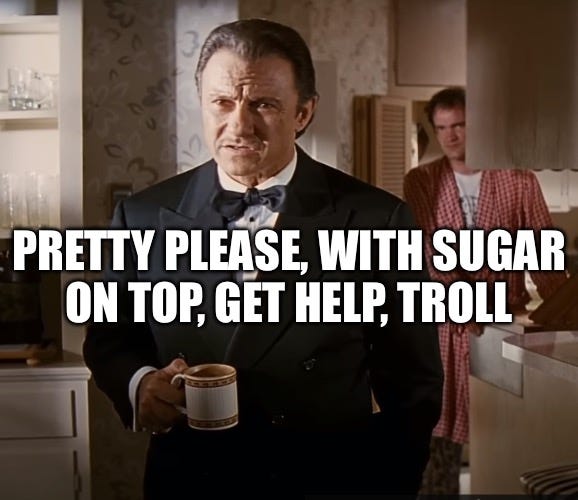
The anonymous comments try to paint local observation as a hollow “hobby” or an act of “hate.” But independent watchdoggers and bloggers don’t invent narratives — they document what is actively happening on local streets.
To see exactly what kind of volatile community environment these trolls are trying to minimize or ignore, look at this clip sent in by local community members and published by Clallam County Watchdog:
This video captures a raw, intense public encounter involving an unstable individual shouting, smiling erratically with a bloody face, and yelling for emergency services. This isn’t “cosplaying.” This is the highly unpredictable, street-level friction that visiting tourists and local families, retirees, and homeowners drive past every single day.
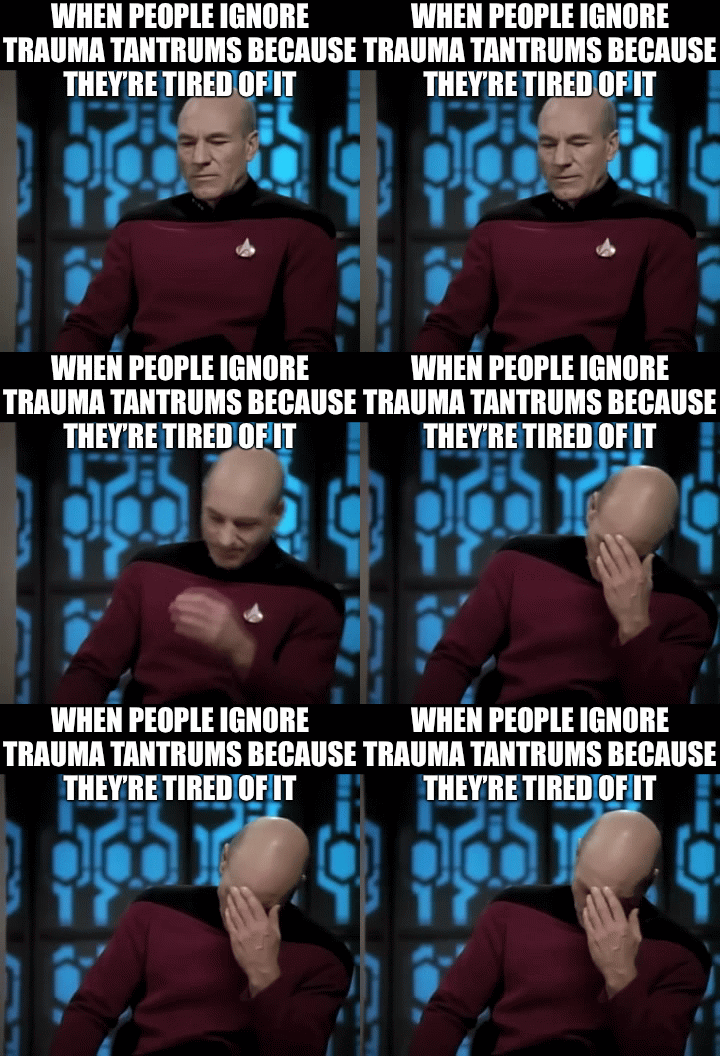
This interaction, and the video captured above, do not happen in a vacuum. They are happening right here in Clallam County, a region currently buckling under an intense behavioral health crisis.
When I learned the hard data recently shared by Peninsula Behavioral Health (PBH) CEO Wendy Sisk in a Coffee with Colleen video presentation, the volatile mental ‘wellness’ observed in local comment sections, in the middle of roadways, and on street corners suddenly makes perfect sense.
In fact, the relationship between visible public crisis and community trauma is direct:
Embedded Trauma: PBH revealed that PTSD is the number one diagnosis they treat. The Clallam community is saturated with deeply embedded trauma.
The Shared Impact of Witnessing Crisis (The Trauma Engine): A leading diagnosis of PTSD across thousands of local cases indicates that trauma is actively spreading.
Clinical research shows that witnessing public crises — such as severe psychosis, erratic public behavior, and graphic overdoses — is not a passive experience. It induces Secondary Traumatic Stress (STS) or vicarious trauma in bystanders.
Every single day that individuals are left openly in the throes of severe addiction and mental health crises on our streets, it chips away at the public’s psychological baseline. The community itself becomes traumatized by proximity, generating a cycle where ambient street crises actively breed more PTSD among the local residents who must live, work, and commute alongside it.
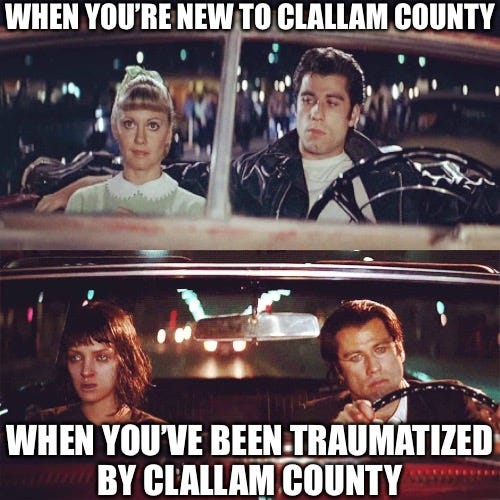
Ambient Aggression: Local emergency infrastructure handles 7,500 crisis field services a year and provided almost 95,000 total services across their footprint in the last fiscal year— averaging 20 active mental health meltdowns every single day.
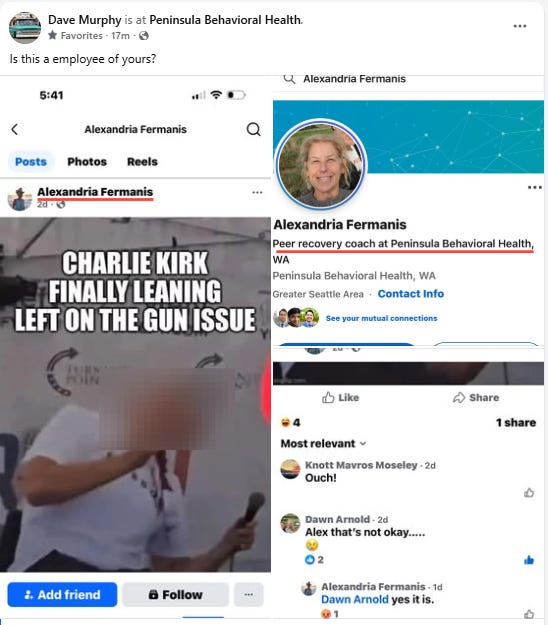
The highly erratic behavior captured in that video of the man in the roadway is the exact same volatile energy driving anonymous accounts to throw digital tantrums behind a keyboard. (And sometimes not-so-anonymous accounts of not-so-professional PBH workers who express unhealthy views of public killings of human beings. Pro tip: Leave dark humor to the comedians.)
The Loneliness Epidemic: Sisk highlighted a quiet, hidden wave of mental distress stretching across the county’s older population. When individuals lack real-world connection, family structures, or a supportive network, they frequently turn to internet trolling as a maladaptive defense mechanism to get attention, feel a warped sense of control, or offload their despair onto others. (Or they parade around Sequim having ’Tantrumps’ in profane clothing with incorrect spellings on their signs.)
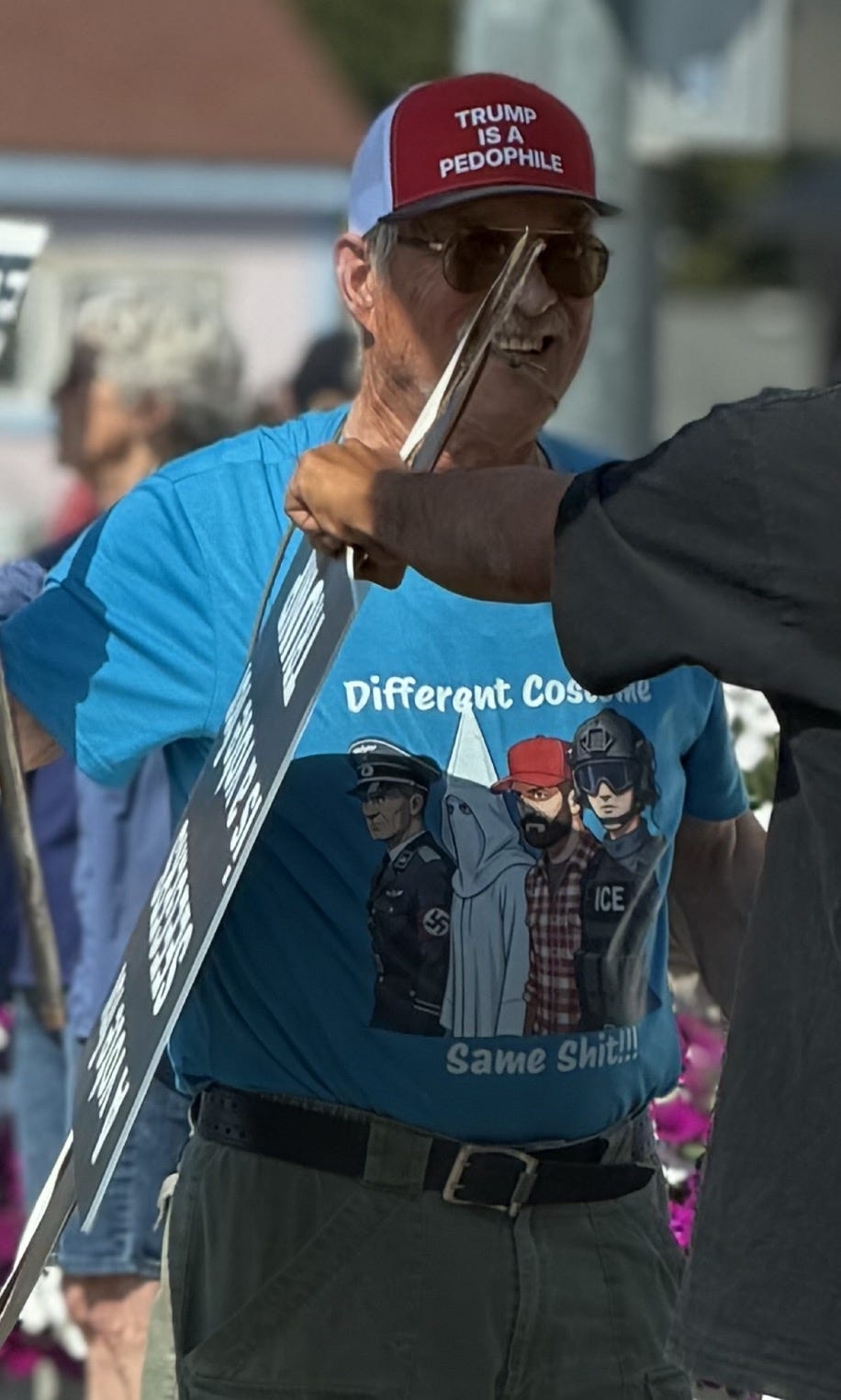
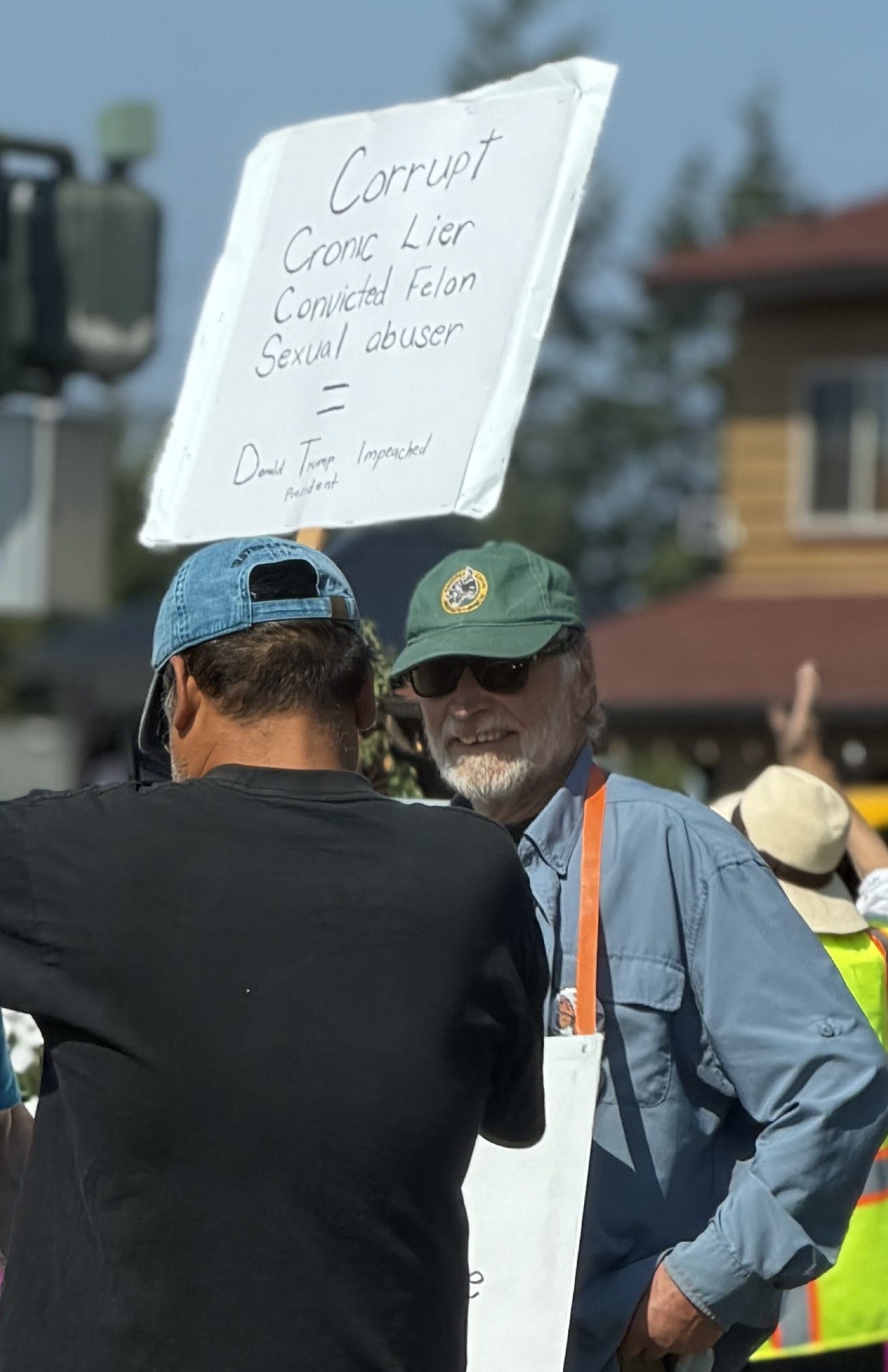
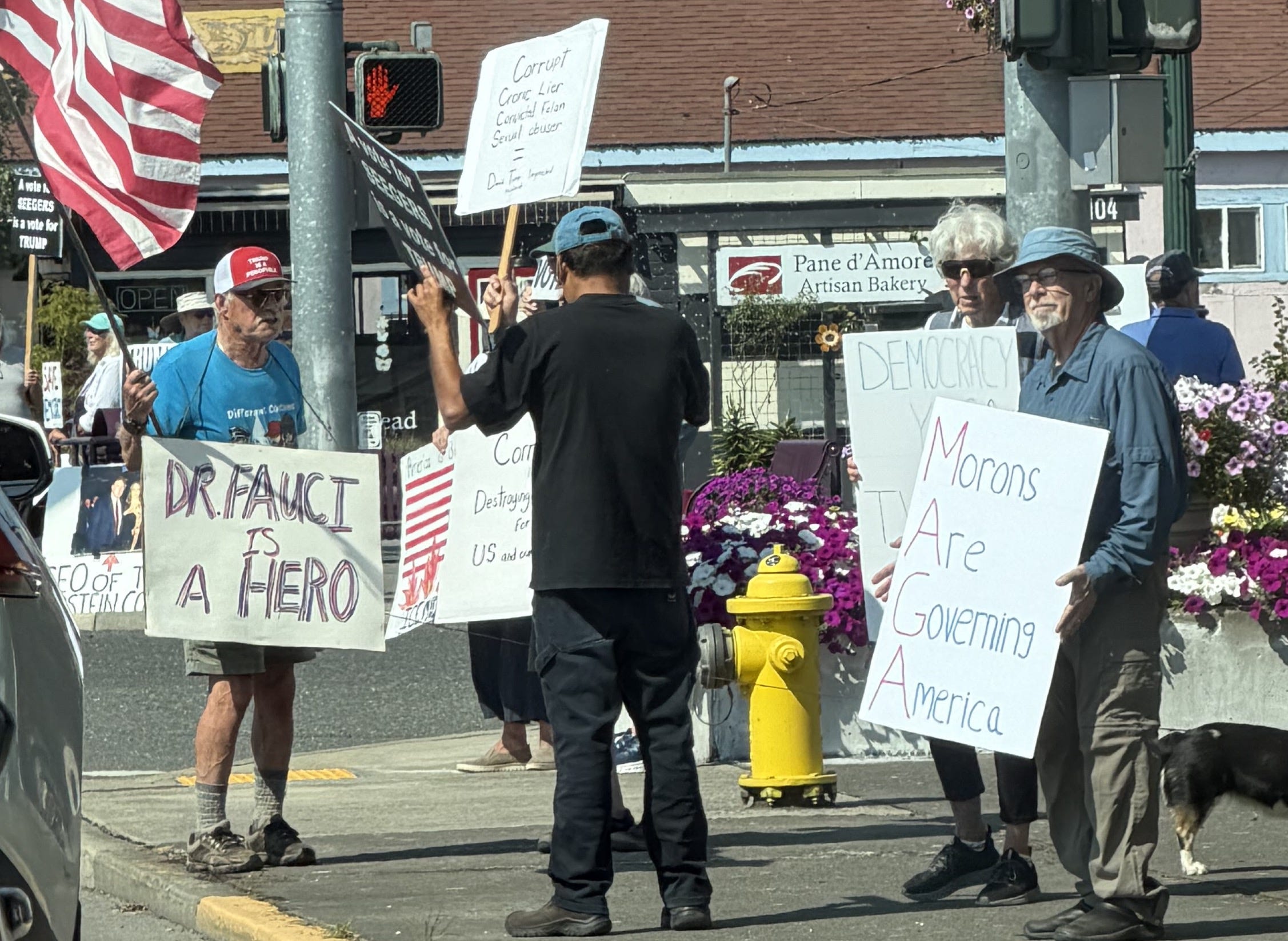
Independent watchdoggers uncover facts, track metrics, and spur community discussion. Anonymous burner accounts, on the other hand, exist purely to project personal misery outward. If your daily hobby consists of masking your identity, stewing in existential dread about your twilight years, and obsessing over local creators, you aren’t winning an argument. You are crying for help and it’s obvious.
Instead of demonstrating and spreading misery in the comments, pick up a phone and dial 988 for the suicide and crisis lifeline.
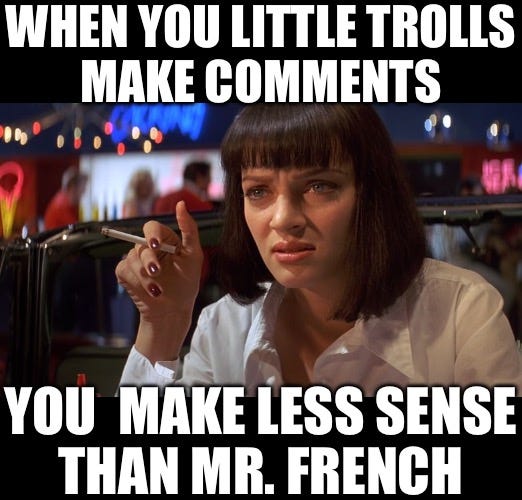
I appreciate the confrontational attempt to cut me down, albeit from an anonymous account that can’t exist without having Jeff Tozzer and Jake Seegers to hate. However, the whole statement made almost as much sense as Mr. French’s issue paper on economic development, but not quite.
If you are interested in researching the specific psychological defense mechanisms and online behaviors discussed in this article, explore the authoritative resources below:
Witnessing Community Trauma: Review the data from the National Institutes of Health (NIH) Study on Witnessing Community Violence to see how regular exposure to street-level crises and severe public distress directly correlates with trauma, anxiety, and PTSD in local footprints.
Secondary Traumatic Stress from Witnessing Crisis: Learn how exposure to community trauma and severe public behavioral crises induces real psychological distress in bystanders via the National Child Traumatic Stress Network (NCTSN) Secondary Trauma Overview.
The CDC Guidelines on Community Violence: Understand how public health infrastructures trace the invisible impact of trauma and economic instability on a community footprint through the CDC Community Violence Resource Index.
Psychological Projection: Read Sigmund Freud’s foundational theory on how the ego externalizes unacceptable thoughts onto others via the Psychology Today Projection Guide.
The Toxic Disinhibition Effect: Understand how online anonymity strips away social guardrails and feeds hostility via the WellDoing Analysis on Online Personalities.
The Dark Tetrad of Internet Trolling: Read the peer-reviewed research linking repetitive, disruptive online behavior to sub-clinical sadism and empathy deficits on ScienceDirect: Trolls Just Want to Have Fun.
Let’s be entirely transparent: AI tools were used to compile data, format text, and assist with the structural layout of this article. But make no mistake — while I used the machine, the machine never used me. Every ounce of snark, every specific line of my retorts, and the underlying perspective belong entirely to me. Nothing here was published without rigorous, 100% human oversight.
It’s a strict standard of absolute accountability — though, unfortunately, the same can’t always be said for our local governing boards.
Clallam County Election Result Updates
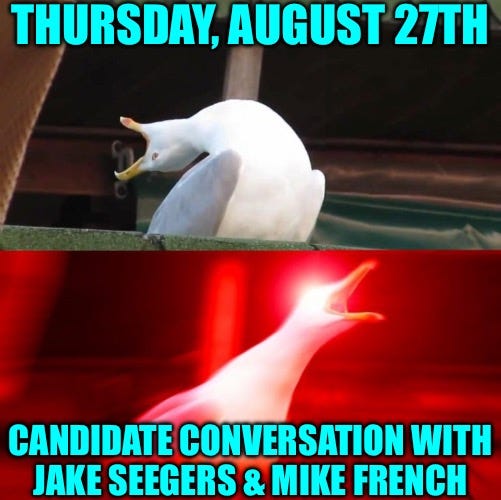
Thursday, August 27th, a candidate conversation with Jake Seegers & Mike French, candidates for Clallam County Commissioner District 3, at the Sequim Grange; hosted by the Calico Cat Club. The event is free and open to all. Information available online here and in the Google Event Invite.
Help get the petition to 600 signatures! You can sign the petition without displaying your name; the signature still counts, but if you want your name not to be seen by others, uncheck the box about displaying your name before clicking the submit button. Thanks to Terri D. for starting the petition!
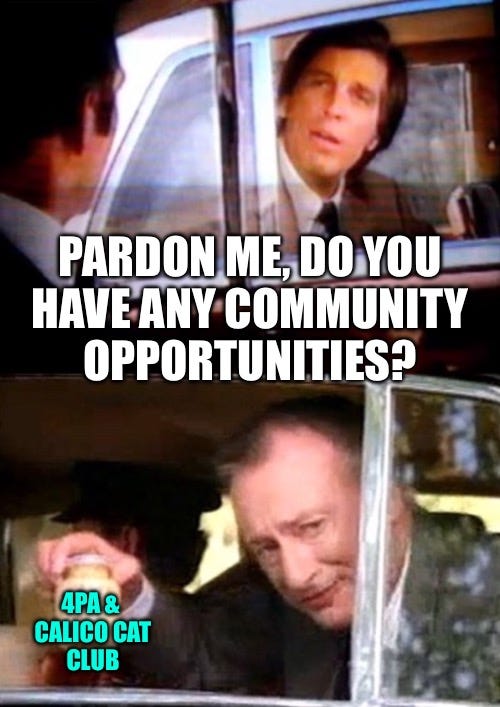
4PA: A Clean & Safe Community for All
Monday Meetings Google Event Invite

New issues published at 6am every Monday and Thursday.
Senator Mike Chapman: (360) 786-7646, email form
Representative Adam Bernbaum: (360) 786-7916, email form
Representative Steve Tharinger: (360) 786-7904, email form
Mark Ozias: Mark.Ozias@clallamcountywa.gov
Randy Johnson: Randy.Johnson@clallamcountywa.gov
Mike French: Mike.French@clallamcountywa.gov
Loni Gores, Clerk: Loni.Gores@clallamcountywa.gov
Find all other Clallam County officials, offices, and employees in the staff directory.

No posts
Comments
Nothing yet. Say the first thing.
Sign in to join the conversation.