
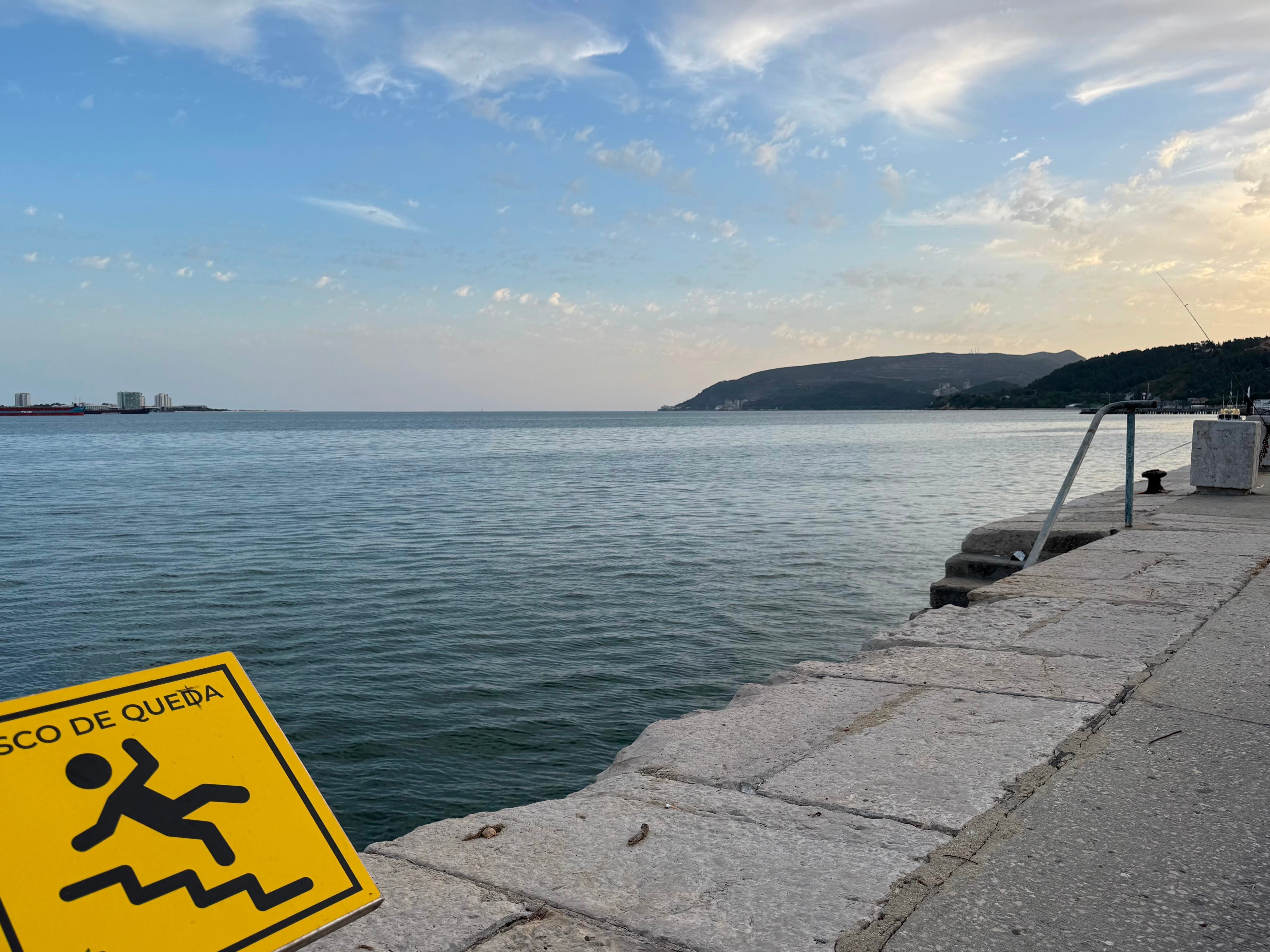
When you tell people you’re doing something dramatic like leaving your country and moving to Portugal, some of them will say, “What an adventure!” You agree, even though seeking peace from a political situation feels like the opposite of adventurousness. For confronting the great unknown, some folks will offer encouragements such as, “Say yes to everything!” While there are things you will definitely not say yes to, this idea sounds good in theory. A generally decent strategy for discovery.
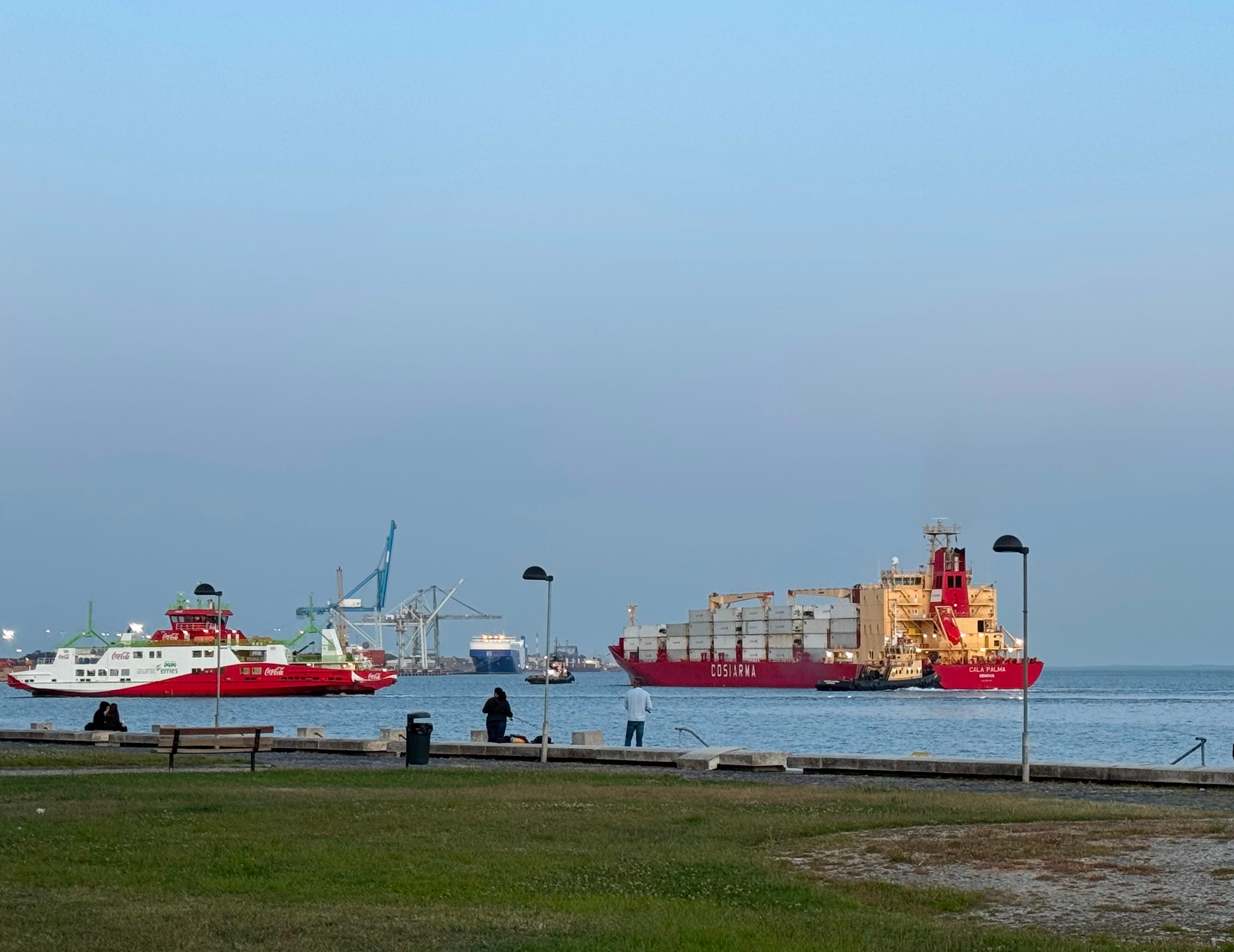
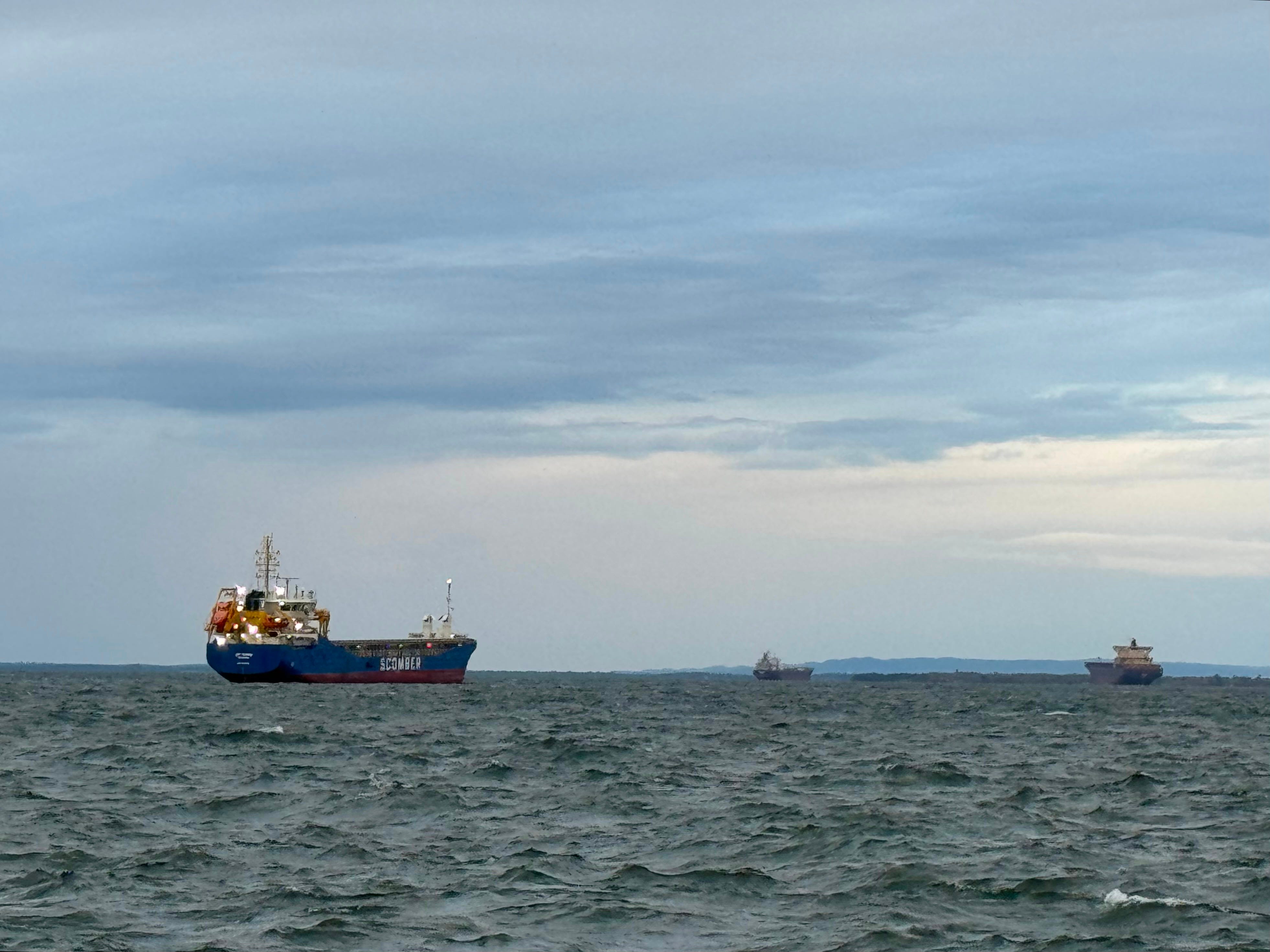
You move to a river town at the edge of the ocean, so one of the things you do is watch boats. Enormous cargo ships, ferries delivering beachgoers across to the sandy peninsula, small fishing vessels, motorboats, kayakers, rowers. There’s a sailing school in town, so you see tiny fleets of Sunfishes bobbing awkwardly as instructors navigate around them. You sailed a Sunfish on Missouri’s Smithville Lake for 23 summers, but you have no desire to sail here. Don’t spend too much time thinking about why, or the fact that your sailboat was one of the first things to go when you sold everything to move here.
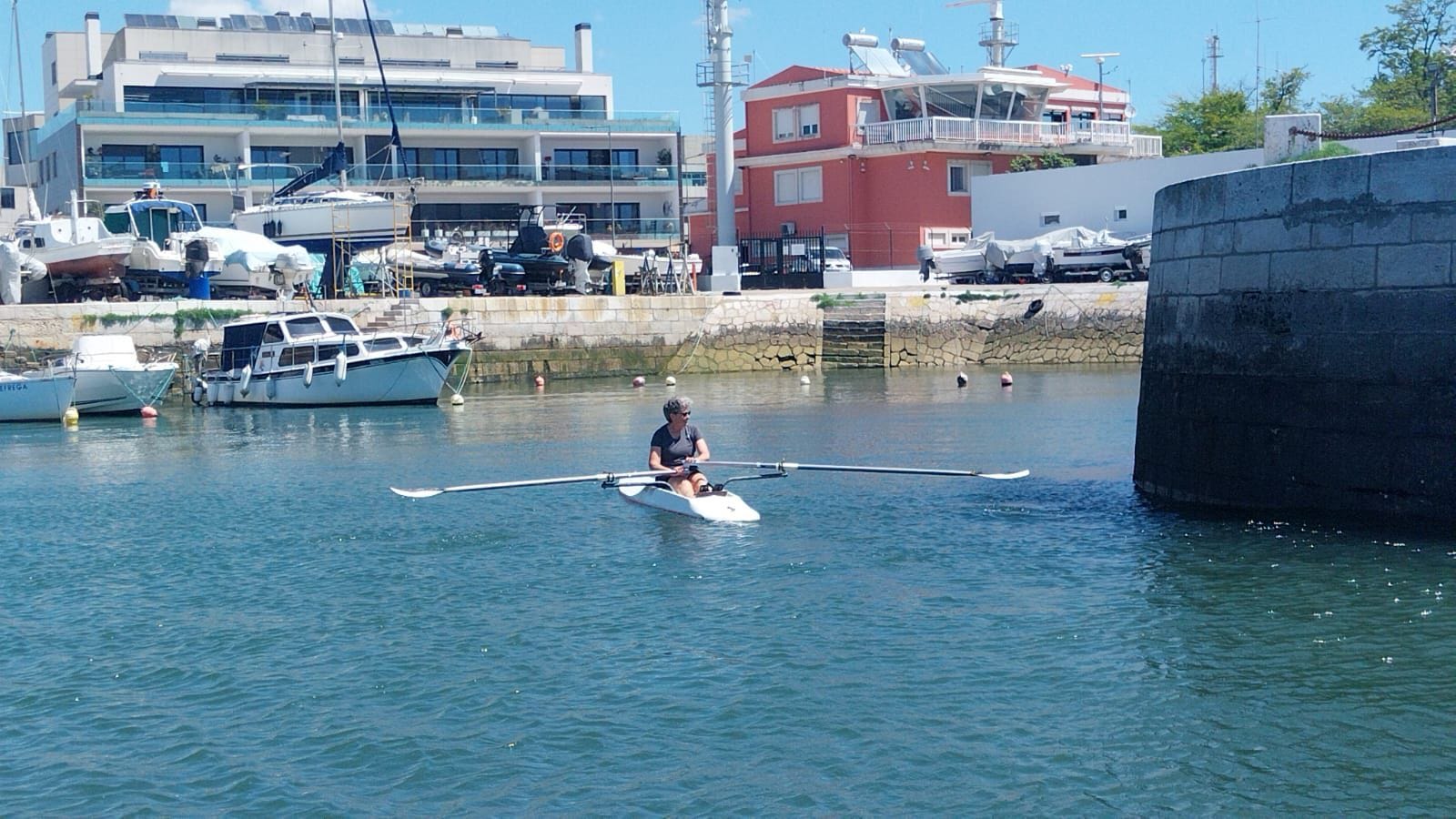
Kayaking and rowing, meanwhile, look like something you might want to try. When someone posts on the community Facebook group about an open house at one of the town’s rowing clubs, head to the marina. Walk past the chain link fence and the guardhouse protecting the dry docks, the restaurant, the hangars. Cautiously approach the mossy concrete ramp where extremely athletic people are lowering sculls into the water. A man in tight shorts, a windbreaker and flip-flops seems to be in charge and speaks English.
Listen carefully as he helps you climb into a presumably uncapsizable training boat, gives you an overview of what to do with your feet (place them on the footrests), legs (push back), hands (keep them on the oars and pull both toward your chest at a very specific point while you’re pushing back with your legs), arms (pull with only the right to turn left, only the left to turn right) and head (look behind you, because that’s the direction you’re actually moving). Keep trying to follow his instructions as he shoves you off into the calm water behind the sea wall and yells from the dock: “Only with the right! Only with the left!”
Confront, once again, your lack of coordination and general athleticism. Focus. Pull and push at the same time. Move the little training boat slowly back and forth in the marina while trying to avoid the buoys and ropes of big boats. Do this long enough to feel as if you’ve made it worth the coach’s time. Back at the bottom of the mossy boat ramp, when he holds out his hand to help you out of the boat, accept it.
When he tells you to come back the next morning, go back the next morning. Repeat everything from the previous day. Open rowing times are Monday, Wednesday and Friday evenings and Saturday and Sunday mornings, he tells you, so you show up as often as possible. Almost everyone you meet here is Portuguese, and everyone is warm and friendly. Some are elite athletes, others seem to be there for more recreational weekend rows.
When you’re brave enough, steer your training boat out of the marina and into the river — but not too far out. When you hear a lot of angry yelling, discover that you’re heading into the lines of men you always see fishing from atop the sea wall. Turn around as quickly you can, hoping they understand your effort as an apology.
On days when it’s too windy and the waves are too choppy, some folks work out in an ancient gym lined with trophies and championship posters. Among the regulars are several teenage boys who appear to be in serious team training. When one winks at you, try not to be certain this is how he treats his grandmother. Instead, consider yourself part of the clube.
Impress your friends and family members with the fact that you’re doing this. Everyone thinks it’s so cool and wants updates on your progress. Regale them with stories. You haven’t graduated from the training boat, but you are patient about this. You begin to feel stronger and more coordinated.
It’s thrilling, out there in the river. Just you and your thoughts — OK you and your thoughts along with the ships, ferries, motorboaters and other river recreators, but they’re far away. Consider the metaphors. The easy and obvious ones: water as emotion; the idea that a person never steps into the same river twice; the feeling of always rocking. The most interesting metaphor is specific to rowing: because your back is turned to the direction you’re going, you must look over your shoulder to move ahead.
Pay respects to the woman on the college rowing team you dated briefly and lost touch with 40 years ago; you heard from a mutual friend that she died just before you left the United States last summer. Pay heed to life’s fragility. Pay attention to what you’re doing in this industrial shipping route.
One day in the sunshine, stop the workout. Sit for a moment in the universal flow. Cry. For the loss of everything you left to come here. For what’s happened to your home country. For the difficulty of starting over, and the future’s crushing uncertainty. Be glad no one can see you out here. If grief comes in unexpected waves, the Sado River has forced a breakdown of ridiculous proportions. It goes on for a while. Keep your hands on the oars. This is not a metaphor, this is instructions from the coach. At some point, start breathing and pulling again.
Keep showing up, but decide not to attend weekend-long training camps on predictably smooth lake water inland. You have other things to do, after all. You’ve made friends in this new town, and dinners out sometimes interfere with weeknight open-rowing times. When competition season begins, all hands are away at regattas, so no one might be around on Saturday or Sunday morning to help put the little training boat in the water.
Consider that there are easier ways to exercise.
Finally the coach decides it’s time to put you in a regular scull, possibly because another newcomer needs the training boat. This boat is faster and more fun, he tells you as he shoves you out into the marina.
Even in the gentle water behind the sea wall, without the training boat’s buoyant foam hull and side stabilizers, it feels as if you’ll capsize at the slightest wave. Instinctively you flail for balance while the coach yells from the dock: Never let go of the oars! Grab the oars before they get away from you. Breathe, focus. Carefully pull and push at the same time back and forth in the marina. The teenage boy who is using the trainer boat does the same, under the supervision of another teenage boy, who you recognize as a more experienced rower, in another nearby boat. Eventually all three of you head out into the channel. The water is relatively calm and you manage to keep hold of the oars even as you constantly feel as if you’ll tip over. This is terrifying.
The three of you are points in a wide triangle moving slowly downstream and then back up. Begin to think that, even though the kid in the trainer boat is technically the newcomer, the coach has told the more experienced rower to stay close to you as well. If that’s really the case, you’re grateful if also a little embarrassed.
Give this all more thought. It’s been a cool experience. But you already have a strong relationship with the river, just by looking at it every day. You take frequent walks along the promenade. You go to the beach regularly, living your dream life near the ocean. Meanwhile there’s a big modern gym a few blocks from your apartment, with tons of equipment, two lap pools and all sorts of classes.
Decide that this move has been hard enough as it is. Not everything needs to be an adventure. Not everything needs to be a metaphor.
Just go join the gym.
Comments
Nothing yet. Say the first thing.
Sign in to join the conversation.