
Preparing young people to navigate the political world and become engaged in their communities is a complex journey. Civic education should do more than just teach students how the government works. It should help young people understand the places they live, build connections within their neighborhoods, and find meaningful opportunities to participate.
This past week, the Civic Education Research Lab (CERL) at Georgetown University partnered with the Peace Ambassador Leadership Summit (PALS), an initiative under National Voices for Equality, Education, and Enlightenment (NVEE), for an immersive lesson and workshop on youth-led political and civic changemaking. Surrounding the core theme of Voice, Advocacy, and Civic Leadership, PALS high school students, ages 14 to 18, practiced civic skills, focusing closely on civic engagement and action planning alongside the CERL research team.
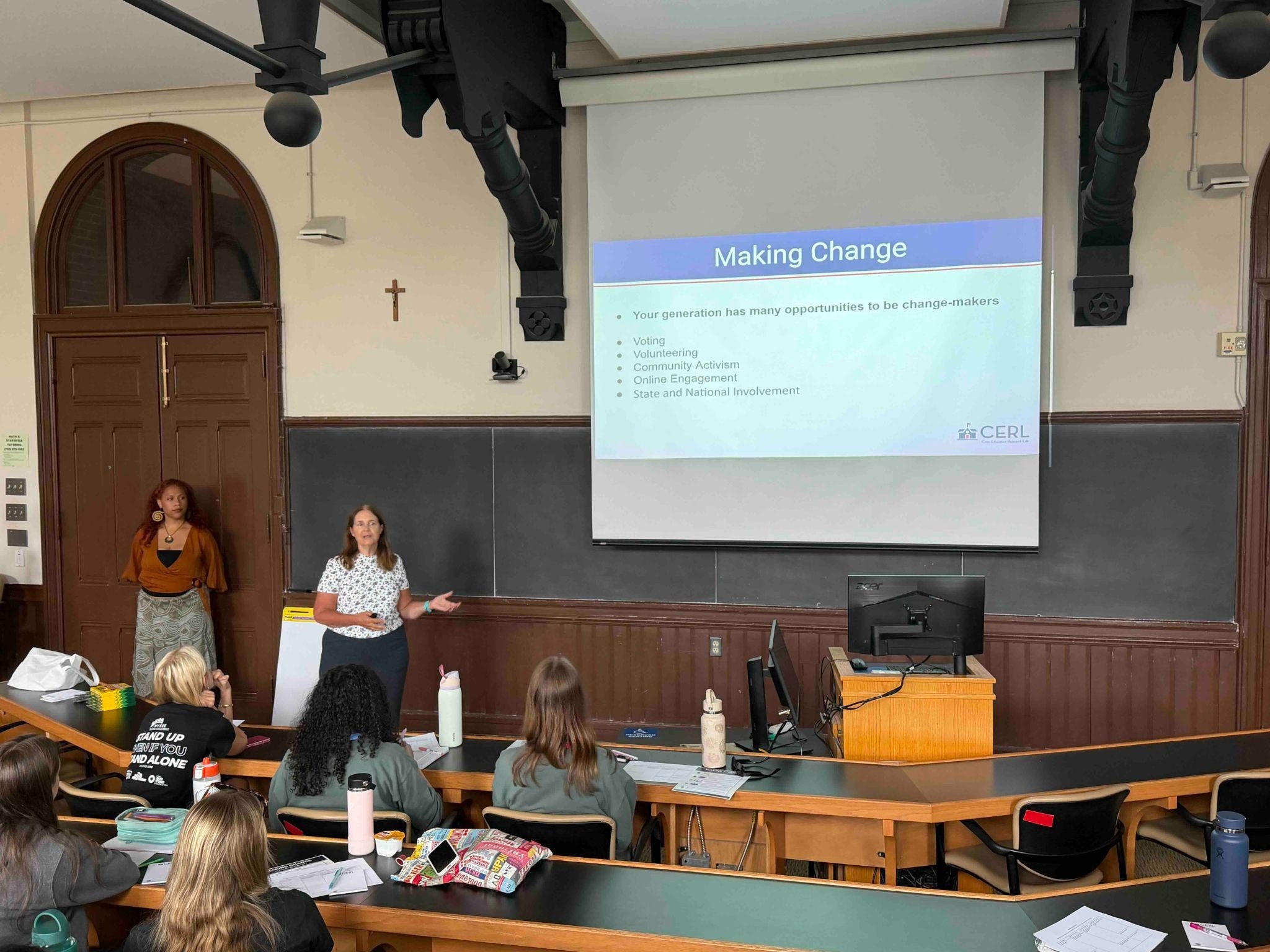
Students from this generation have many opportunities to create change (i.e. volunteering, voting, community activism, and online engagement). While today’s young people are deeply passionate about social issues, many are not as civically engaged in their communities due to factors like physical moves for family, education or work, which may make them feel disconnected from their communities. In addition, traditional politics can feel inaccessible, especially for those not yet able to vote. Voting participation is also low; one study found that voter turnout among 18- and 34-year-olds in mayoral elections in the largest cities averaged just 9%.
CERL introduced the students to an inspiring legacy of young changemakers who refused to let their age limit their impact. Examples included the U.S. abolitionists Frederick Douglass, William Lloyd Garrison, and Abraham Lincoln; the Student Nonviolent Coordinating Committee (SNCC); volunteer founders of the Scope It Out 5K Run/Walk for Colon Cancer Awareness; Mari Copeny (also known as “Little Miss Flint”); and students who recently lobbied for the Green New Deal DC.
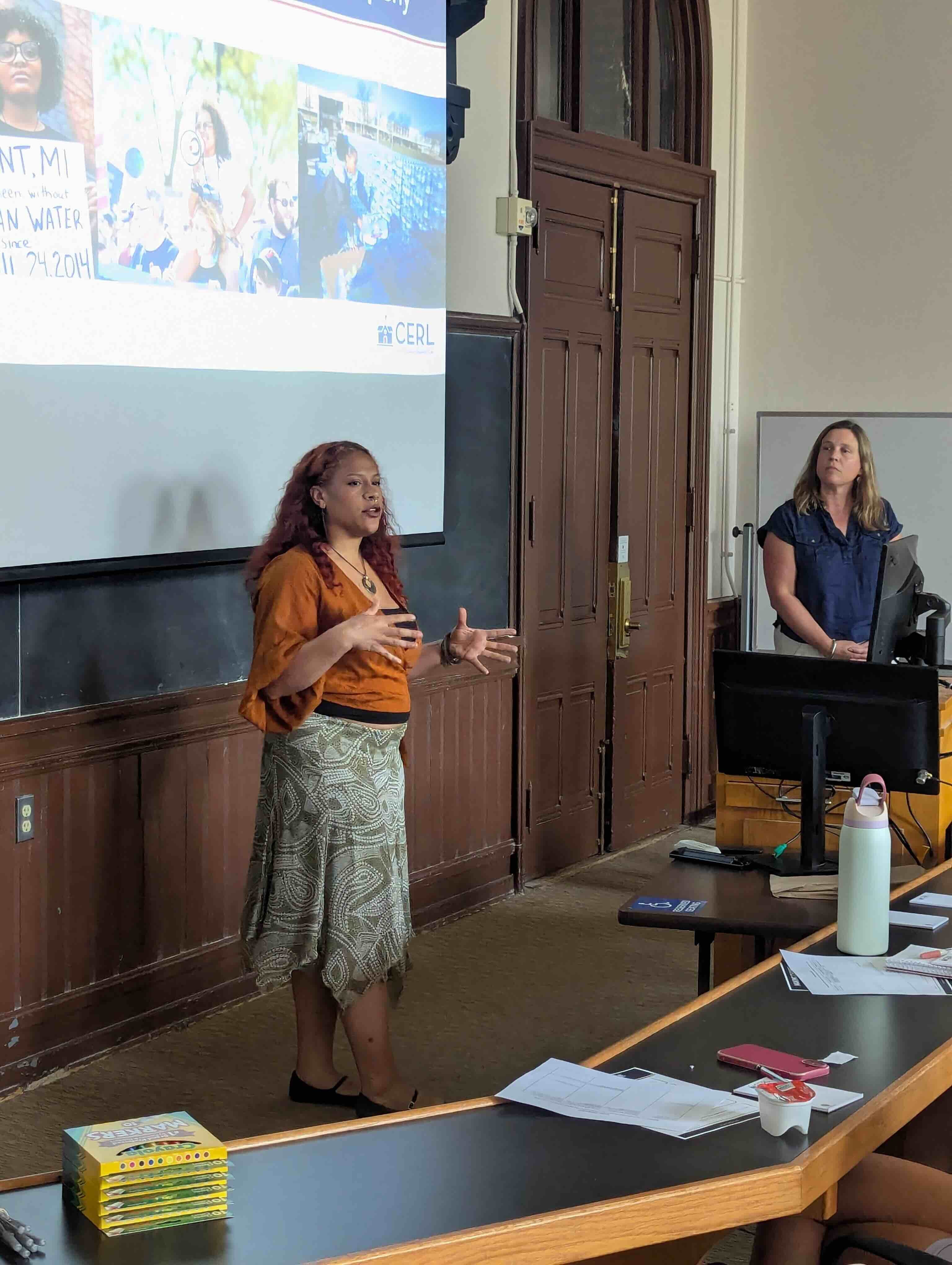
During the workshop, the CERL team asked the PALS students to focus on a public policy in their local communities that impacts their daily lives. To help the students structure their own community blueprints, we provided a problem-solving framework inspired by the Center for Civic Education’s Project Citizen. CERL’s research has long shown that Project Citizen significantly boosts student civic knowledge and efficacy. Our adapted framework breaks change-making down into four manageable steps:
Identify a Problem in Your Community: Students were asked to look closely at their everyday lives and ask: What could be done better right where I live? They wrote down immediate issues they witness daily, ranging from local food insecurity to prominent educational inequities in their school districts.
Research the Problem: Students are encouraged to investigate the evidence. What data exists to prove this is a systemic issue? Finding the gaps in current efforts naturally bridges into the next step.
Propose a Better Policy: This is where students designed the alternative solution. They mapped out the best approaches, analyzed exactly who these new alternative policies would impact, and determined which level of government (local, state, or federal) holds the power to enact it.
Develop an Action Plan: Finally, students mapped out the concrete steps required to turn their policy into reality. This meant thinking strategically about the political landscape: Who would support this policy? Who would oppose it? How do we build coalitions to overcome those barriers? What can we do to tackle this problem together?
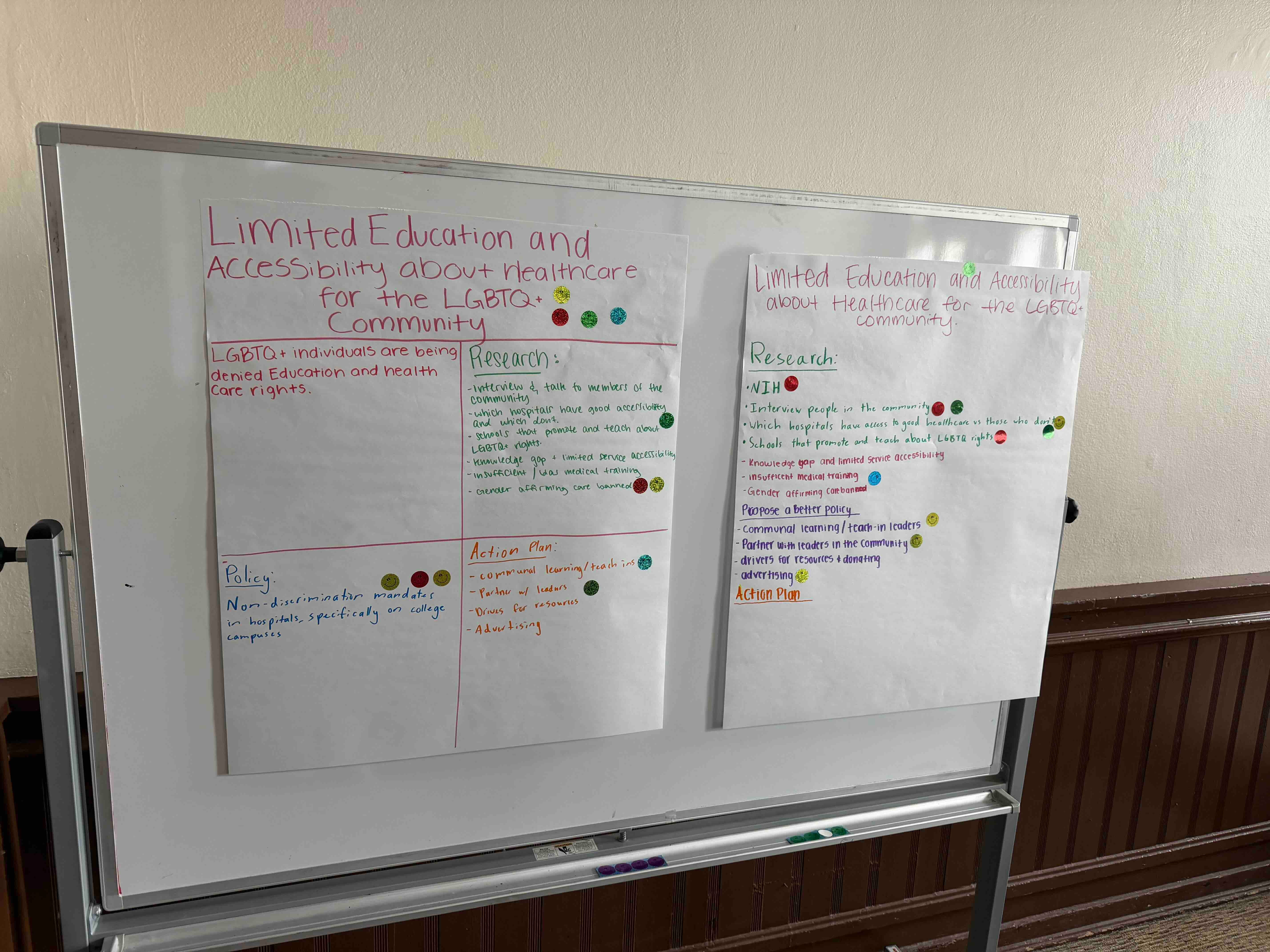
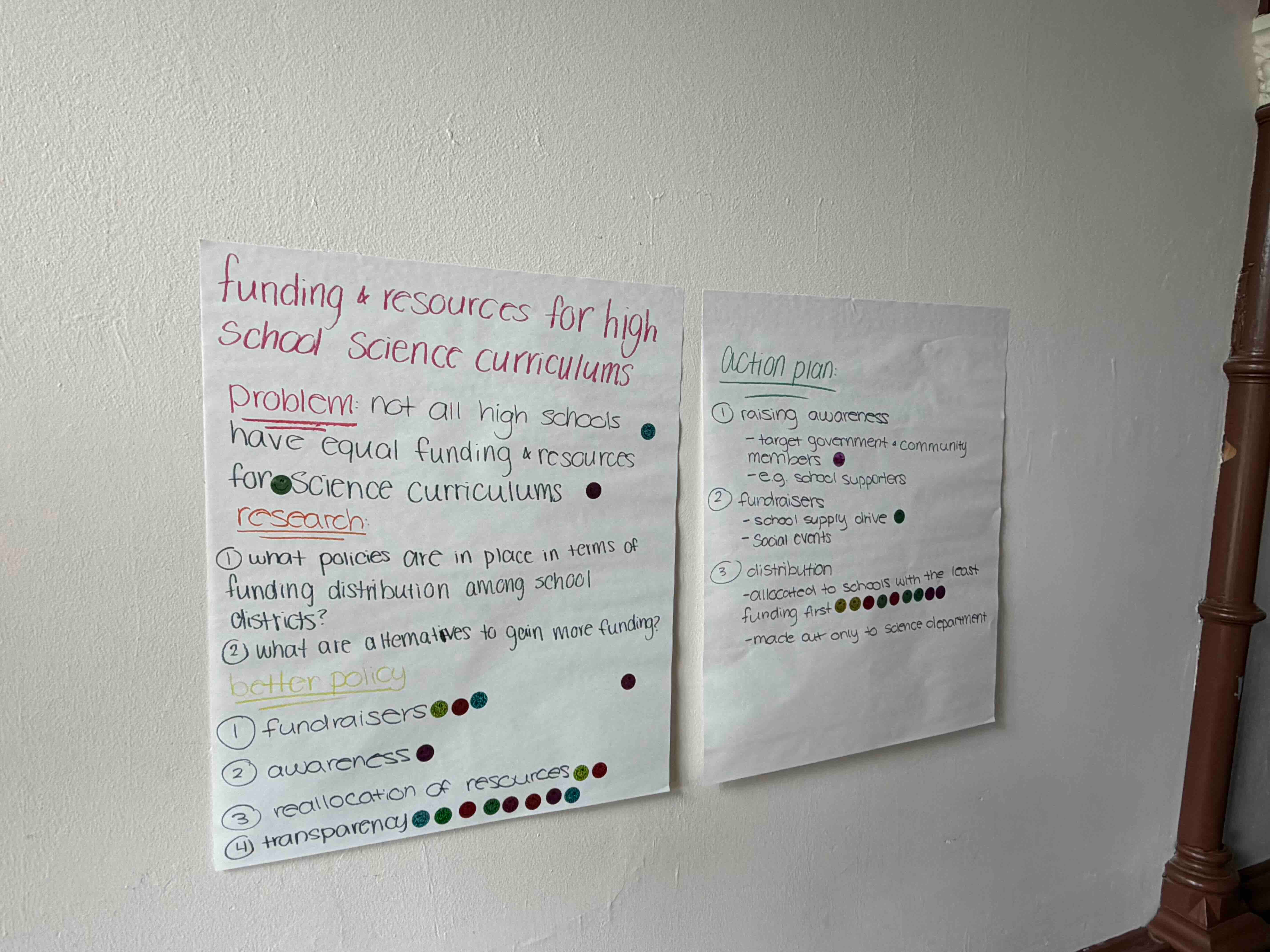
PALS students split into small groups to collaborate on the problems they felt most passionate about. The students chose to tackle problems like limited education and accessibility to healthcare for the LGBTQ+ community, lack of funding for science in schools, insufficient teachers in schools, and insufficient counselors in schools.
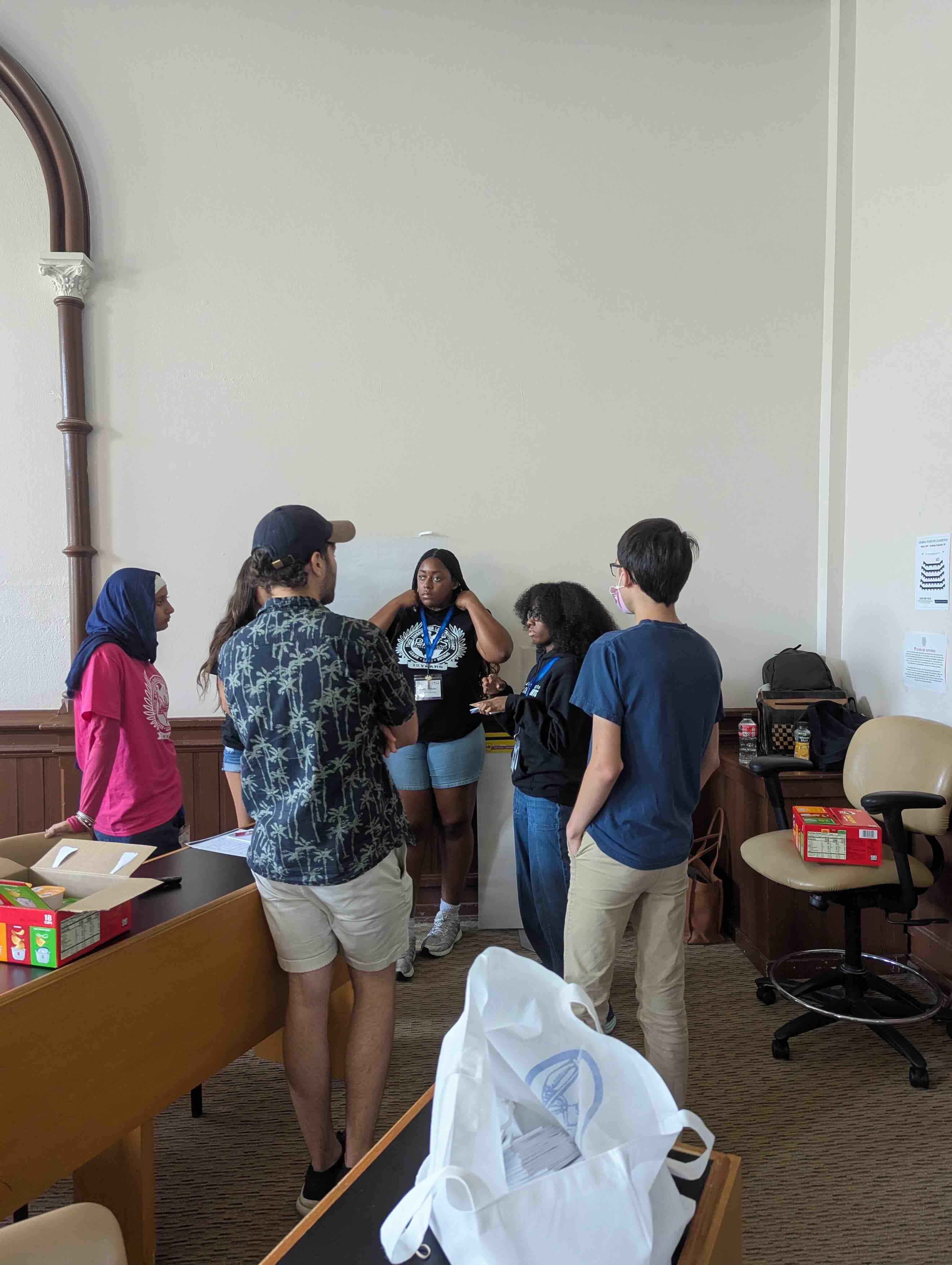
The workshop culminated in a gallery walk, where students posted their completed action plans around the room and reviewed each other’s work. We asked the students to reflect on the process. Students discussed how they recognized the importance of data and research in addressing their problems and creating persuasive narratives, particularly for presenting their arguments to school boards and legislators. One student shared that the workshop strengthened his dream of creating an organization that will address food insecurity and health care in South American communities. Another shared her efforts to date to address food insecurity in her hometown and the roadblocks she’s encountered and continues to work to overcome.
Encouraging young people to brainstorm big ideas is crucial to building a just and democratic society. Local community issues directly shape their daily lives, making them tangible, urgent, and manageable entry points for action. Thinking critically about community gaps builds youth autonomy, validates their voices, and transforms them into lifelong, active change-makers in their communities. When a young person realizes their voice can shift a local policy, they are motivated to act.. They are no longer just spectators; they are becoming the leaders prepared to shape a more fair, sustainable, and compassionate world.
— Alyssia Thomas - CERL Research Associate
No posts
Comments
Nothing yet. Say the first thing.
Sign in to join the conversation.