
Two Indian startups reached out to us this week, pointing to a fast-growing corner of India’s climate economy. SustainRepo is an AI-powered platform that focuses on MSMEs in India, enabling them to measure, manage and report their environmental impact. CarbonSketch.in does the same for the built environment, while GreenStitch does this for textiles. Three trends are noticeable here.
Regulation is creating a market. SEBI’s Business Responsibility and Sustainability Reporting (BRSR) requirements have made ESG disclosure mandatory for India’s largest listed companies. At the same time, BRSR Core assurance, the EU’s Carbon Border Adjustment Mechanism (CBAM), buyer requirements from global brands and pressure from investors mean thousands of suppliers now need to collect emissions and sustainability data, not just the companies at the top of the value chain.
AI has dramatically lowered the cost of compliance software. Platforms like SustainRepo promise automated carbon accounting and audit-ready GHG inventories, while GreenStitch uses AI to map one dataset across multiple reporting frameworks and automate disclosures.
The bottleneck has shifted from calculating emissions to collecting trustworthy data. Practitioners consistently say the hardest part is gathering, validating and standardising information from suppliers, invoices, spreadsheets and ERP systems.
If you run a business, expect carbon and sustainability reporting to become as routine as financial reporting over the next few years. The earlier you start measuring your emissions and organising your data, the easier it will be to meet customer, investor and regulatory expectations.
Demand is also growing for software, consultants, auditors and data specialists who can simplify the process. Plus, for those who can offer foundational ESG and data collection training.
✳️ We have an excellent module for this; reach out if you can use it.
Last Friday, Climate Action Live brought its monthly climate learning event to Christ University, Bengaluru, for an afternoon that mixed strategy, competition and career conversations. Students played Decisions and Destiny, a board game created by environmental economist Aravindh Panikkaveettil, where six countries must navigate the tricky balance between economic growth, environmental protection and social progress.
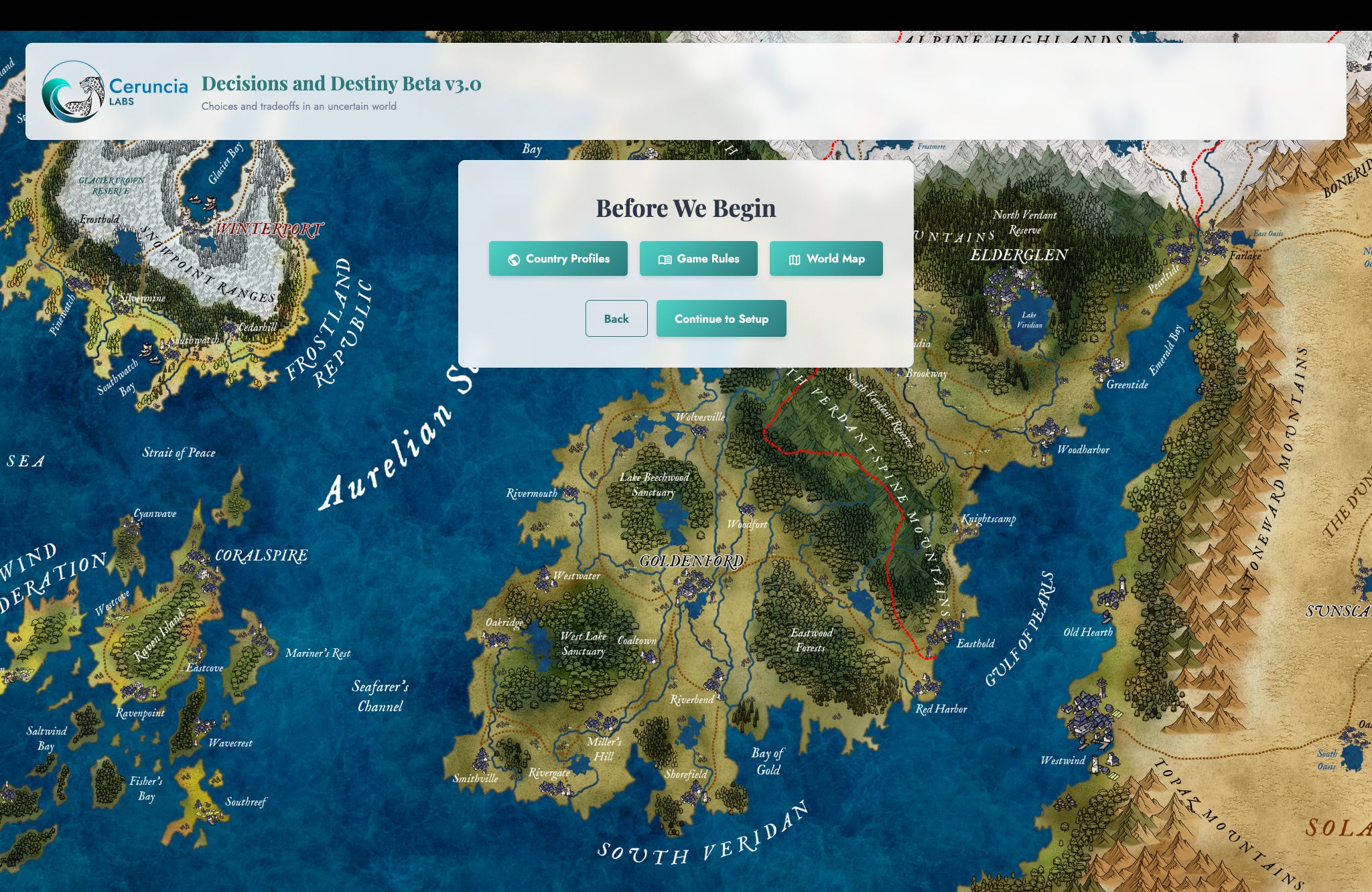
The game quickly turned the room into a whirlwind of negotiations, alliances, tough trade-offs and unexpected twists, as students realised that one country’s decisions could reshape everyone else’s future. It was equal parts strategy, friendly rivalry and a crash course in how the real world works.
We then switched gears to explore the booming world of climate careers, discussing how students from environmental economics, finance and almost any discipline can find exciting opportunities to solve some of the biggest challenges of our time.
If you’re part of a university, college or research institute, we’d love to bring this monthly event to your campus and help more students discover the opportunities and challenges of the climate transition.
If you’ve started carrying a water bottle everywhere, avoiding afternoon trips outside of home or leaving home earlier to beat the heat, you’re not alone.
A new study by a Bengaluru-based design research organisation Mudito finds thousands of young Indians quietly changing their daily routines to cope with a changing climate. They interviewed 3,014 people across 60 neighbourhoods, and discovered that people are adapting faster than the institutions around them.
They’re not only suffering higher temperatures, but also expending extra time, money and mental effort simply to get through the day.
As citizens and individuals, we need to push for redesigning the systems we rely on: from earlier work times and cooler campuses and workplaces to better public transport, drinking water access, shaded streets and climate-responsive buildings. And for those of us who’re looking to align our work with climate, you can explore urban planning, architecture, mobility, public health, product design, education, policy and technology.
WE HAVE NEWS!
India's climate economy needs talent. Talented people need a clearer path into climate careers. And so, Climate Action Live and KlimateNet are partnering to build Career Catalysts into a platform that helps students, professionals and career changers discover opportunities, gain real-world experience and build trusted evidence of their work.
We'll begin in Bengaluru with
Campus chapters across three universities
Climate career bootcamps
Live water missions with organisations tackling the city's water challenges
Opportunities to build verified portfolios that employers can trust
If you're a student looking to enter the climate sector, a professional considering a transition, or an organisation looking to engage emerging talent, we'd love to hear from you. More details here.
If you missed this week’s stories on Climate Action Live, here are three you must catch up on.
Buying furniture is one of the biggest climate decisions you’ll make for your home. This practical guide explains how to choose pieces that last, avoid wasteful fast furniture, and reduce your environmental footprint without compromising on style or budget. It may even help you buy less, and buy better.
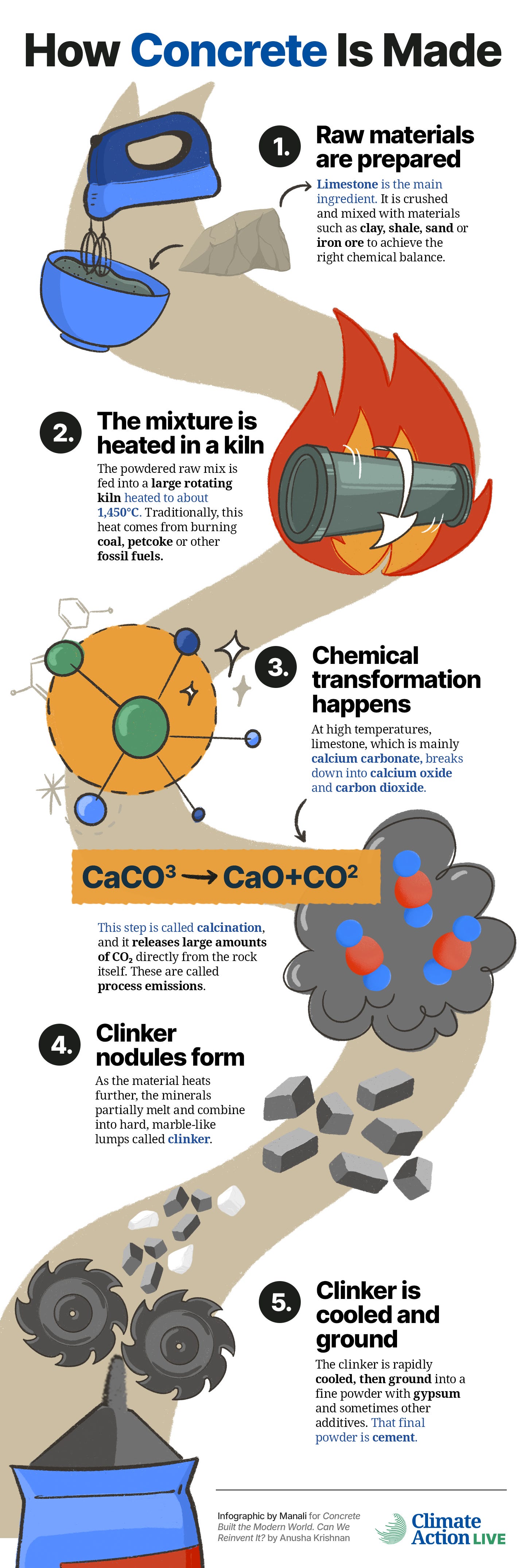
Concrete is everywhere, but its key ingredient, cement, is responsible for about 8 per cent of global CO2 emissions. This explainer by science journalist Anusha Krishnan looks at why decarbonising concrete is so difficult, the innovations that could make it cleaner, and what India's construction boom means for the future of low-carbon buildings. Oh, and if you’ve ever wondered how concrete is made, here’s an infographic by Manali!
Across the Indian Himalayas, springs that sustain millions are drying up. This story explores how restoring forests, reviving local ecosystems, and involving communities could help recharge these vital water sources in a warming climate, while also examining the limits of relying on trees alone.
Water In The City is a networking event connecting stakeholders working on Bengaluru’s water challenges, and is the first joint event by KlimateNet and Climate Action Live. We are partnering to build Career Catalysts into a platform that helps students, professionals and career changers discover opportunities, gain real-world experience and build trusted evidence of their work. Find details here and register for it here!
Zero Prize is a contest for startups, companies, institutions and innovators working to fight air, water and land pollution with a proven, scalable solution. Prizes worth Rs 5 crore. By School Of Policy & Governance with Climate Action Live as media partner. Deadline to apply: 31 August. For details and registration, head over to:
GREEN Olympiad, nationwide, by The Energy and Resources Institute.
Registration deadline: 10 August. Exams on 8 October & 18 November.
Youth Solutions Sprint by WHO Youth Council, where youth organisations collaborate online to develop and present innovations for advancing the 2030 global health goals to WHO leadership. Application deadline: 8 August. Event on 12 August.
Using Archives to Strengthen Science and Environmental Journalism, a webinar introducing journalists and science communicators to archival research techniques for producing richer, evidence-based stories, by the Science Journalists Association of India and the Milli Archives Foundation, 13 August.
Plus, for those in Bengaluru:
8 Aug: Battery Recycling Tour for Critical Minerals by The Climate Party®,
8-14 Aug: Stormwater and the City. A conference and exhibition showcasing research, citizen action and collaborative approaches to improving Bengaluru's stormwater systems, by Mod Foundation (in collaboration with Oorvani Foundation and OpenCity)
9 Aug: Thinking Ecologically about Our Common Future, talk by ecologist Harini Nagendra in Bengaluru 9 August.
As well as this exciting trail in Mumbai on 9 Aug: Salim Ali Point Trail by Bombay Natural History Society
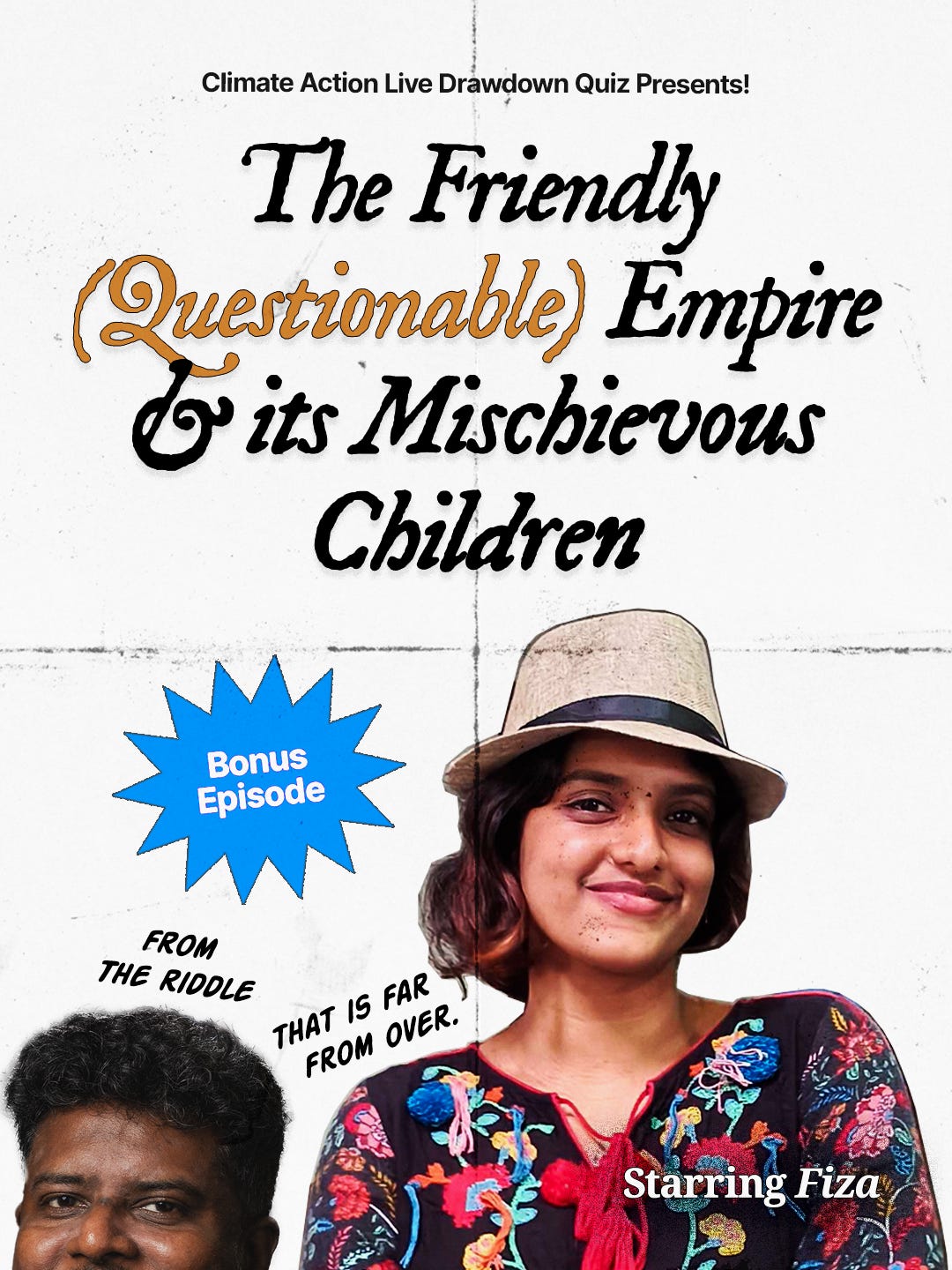
Just when we had concluded our first season of the Sunday Drawdown Quiz, and the crown had only just taken a ten-minute breather, something absolutely unfamiliar happened! How unusual, that, for neither rhyme nor any reason, the emperors chose to make amends with Mischievous Children in this monsoon-less season?
Rising to the occasion, our puzzle-loving intern Fiza decided to offer up a bonus 11th edition of the quiz! So here it goes. Comment with your answers; we’ll drop the keys on Sunday!
Tell us what you think! You can leave a comment below and give us feedback if you don’t like something, or think we could do better!
That’s all for this week, folks. See you next Friday!
Madhur Singh, Gulal Salil
Team Climate Action Live
No posts
Comments
Nothing yet. Say the first thing.
Sign in to join the conversation.