
Hello Fellow Climate Actioner!
Please meet Rameshwar and Geetabai Aher.
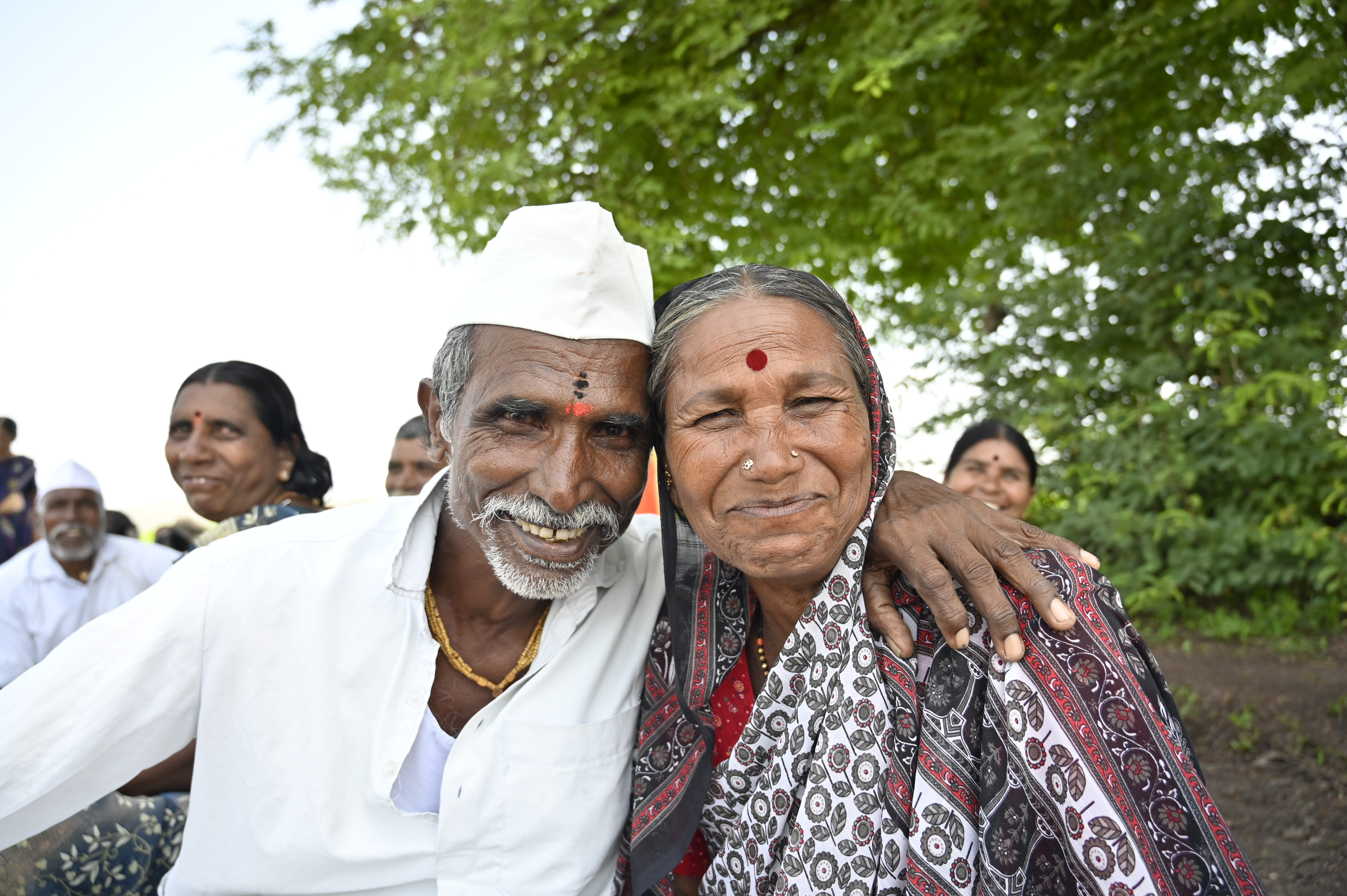
Every year, lakhs of Warkaris, a devotional movement centred in Maharashtra, walk hundreds of kilometres carrying palkis of their saints towards Pandharpur in Solapur district. Having grown out of the Bhakti movement, the Warkaris reject caste and gender discrimination, and worship Lord Vitthal, an avatar of Krishna. The Ahers have undertaken the pilgrimage for 30 years. You can’t help but smile at this picture of marital companionship, and the palpable joy of a shared walk.
The pilgrimage, undertaken in the Hindu month of Ashadha (June-July), has continued for centuries. But the path they walk has become harder, hotter and drier. Trees that once lined the route and offered respite from the sun are disappearing, replaced by tents and makeshift shelters. The heat is sharper, the shade scarcer, and the journey harder on aging bodies that have undertaken this spiritual odyssey for decades.
The wonderful team at Asar brought us this photo essay by Sanjana Khandare. It documents not just devotion and community, but also the quiet, everyday ways in which a warming climate is reshaping one of India’s largest annual pilgrimages. You can’t help asking: as the climate changes, what happens to the traditions that depend on the land and the seasons?
Amid the brouhaha about ethanol blending, we decided to cut through the weeds and get to the root of the issue: the Indian taxpayer is paying much more than just the fuel-station price for ethanol.
CEEW researchers wrote on Climate Action Live that adding the subsidies on feedstock, fertiliser and electricity for feedstock growers and ethanol production, plus foregone GST revenue, the taxpayer has paid Rs 24,824 crore over and above the Rs 62,566 crore that oil marketing companies (OMCs) paid for ethanol in the 2024-25 ethanol supply year (which runs from November to October).
In the current scenario, they write, ethanol demand could rise sharply in the near term, potentially reaching 1,600 crore litres by 2028. But petrol demand is projected to peak around 2032 – that’s six years from now – and then fall substantially as EV adoption grows. Since ethanol plants can operate for 20 to 30 years, building significant new capacity now could leave India with expensive plants serving a shrinking market post 2032.
Further, the food, water and crop-diversification problem is real. India’s move towards higher blending is increasingly dependent on edible crops rather than agriwaste, the analysis finds. Rice, sugarcane and maize are also water-intensive. So, the country might be heading towards allocating scarce food-producing land and water to fuel.
The analysis ends with pointing out that India’s ethanol programme must be aligned with its transport electrification programme.
India generates an estimated 350-500 million tonnes of agricultural residue every year, with around 92 million tonnes still burned. Bengaluru-based altM is betting that some of this waste can become something far more valuable: the raw material for cosmetics, paints, adhesives and other everyday products. Its biorefinery breaks crop residue into cellulose, hemicellulose and lignin, essentially attempting to do with biomass what petrochemical refineries do with crude oil, Aisiri Amin reports in Climate Action Live.

altM says its process uses lower temperatures, local feedstock and is designed to recycle 80-85% of its water, but a full life-cycle assessment has not yet been completed. The bigger challenge is building a viable supply chain that can collect residue affordably while giving farmers an alternative to burning it. With its first commercial plant expected in 2027, altM is an early test of whether agricultural waste can become not just a waste-management solution, but the feedstock for a new materials industry.
The Zero Prize offers a Rs 5 crore prize pool for solutions that can demonstrably reduce air, water or land pollution. Convened by the School of Policy and Governance, the national challenge takes a simple but important approach: reward measurable outcomes rather than intentions or projections. Winning solutions must demonstrate real-world impact that is independently verified, with the prize designed to help proven innovations move beyond pilots and scale across India.
Climate Action Live is a media partner for the Zero Prize, supporting its mission to bring greater attention to solutions that can deliver measurable environmental improvements. We believe this focus on evidence, accountability and scale is exactly the kind of climate and environmental innovation that deserves scrutiny and visibility. If you are building, backing or working on a solution that can measurably make India’s air, water or land cleaner, the Zero Prize is now accepting applications until August 31, 2026. Find out more and apply here.
AI’s climate problem is much bigger than the energy guzzled by data centres, a paper just published in Nature says. The study finds that AI-driven productivity gains could increase global emissions by 0.47 to 1.8 gigatonnes of CO₂ a year, equivalent to 1.2 to 4.8% of 2024 global energy-related emissions. The culprit: “enabled emissions”. AI makes fossil fuel extraction, refining and power generation faster, cheaper and more productive. In isolation, these gains could generate 3.3 to 13.3 times more emissions than today’s data centres, and up to eight times more than projected data centre emissions in 2035.
The findings are important because they challenge current climate, ESG and AI governance frameworks that assess technology companies on their own operational emissions, not on how their products are used. A company can reduce its own emissions while its AI products help expand global fossil fuel production. AI is widely promoted as a tool for decarbonisation, but this study says it will reinforce fossil fuel incumbency rather than displacing it, and today's infrastructure and contracting decisions are locking in that capacity for decades.
Further, even if AI makes renewables more productive and improves grid efficiency, those benefits are nowhere near enough to offset its fossil fuel effects. Renewable energy gains would have to be four to five times larger than fossil fuel productivity gains for the balance to turn positive, while efficiency improvements cut only about 0.1 gigatonnes of CO₂ annually in the most optimistic scenario.
What this means: We must question policymakers, investors and companies not just about how efficiently AI runs, but what economic activity it enables.
Global sea surface temperatures outside the polar regions hit a record 20.96°C in July, while global surface air temperature made the month the joint-second warmest July on record. Even as it’s unusually dry in parts of Asia, Africa, North America and South America, El Niño conditions are rapidly strengthening – so we can expect out-of-whack rainfall, storms and extreme temperatures.
For us in India, of course, the question is of the monsoon. The WMO expects El Niño to strengthen through October. India’s latest 2026 monsoon update shows a 12% deficit over the long-period average as of early August, with 47% of districts facing deficient or large-deficient rainfall. Strengthening El Niño conditions are contributing to suppressed monsoon circulation, increasing the risks of dry spells, crop and soil-moisture stress and lower reservoir levels.
Brace up, folks.

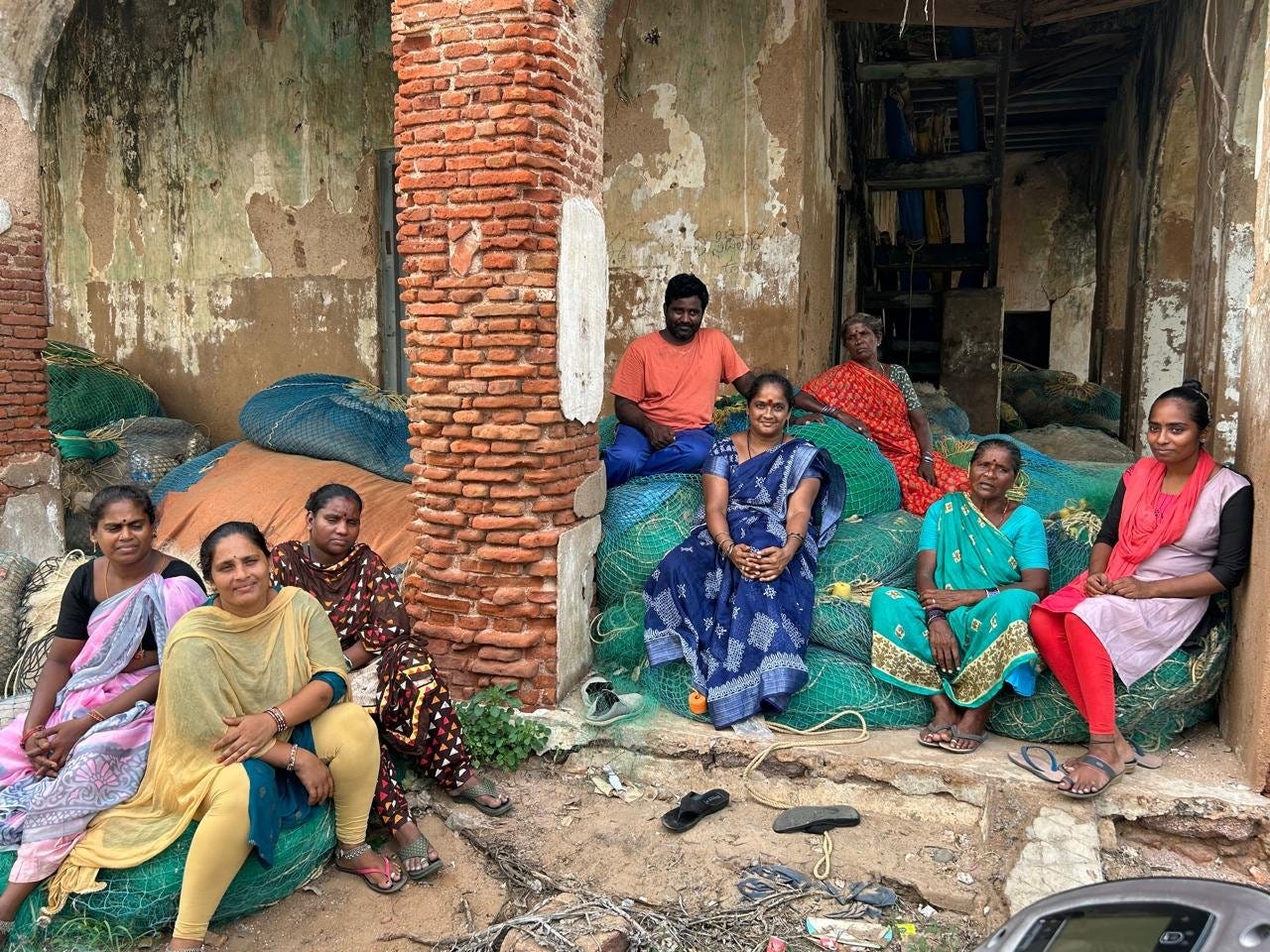
Our field reporting this week includes a report by Aishwarya Bajpai from Bheemunipatnam, Andhra Pradesh. Fishing communities along the coast are facing a polycrisis: declining fish stocks, groundwater salinity linked to industrial aquaculture, coastal erosion and growing climate uncertainty. As young men leave for work in Goa, Karnataka, Kerala, Chennai and Mumbai, women are increasingly shouldering the responsibility of keeping households and local fishing economies afloat.
These fisherwomen are doing far more than filling a gap. In villages such as Postapatraika, they have helped build local fish markets, created affordable credit systems through federations, organised fish vending and processing, and led campaigns against industries they believe threaten their water, land and livelihoods.
This is climate resilience too. Not just seawalls and government schemes, but communities organising themselves to survive a changing economy and environment. And the larger policy lesson here is: India’s fisheries programmes still tend to recognise the registered male fisher, even though women make up a huge part of the post-harvest workforce, particularly in marketing, processing and trade. If women are already doing the work of keeping fishing communities alive, climate and fisheries policy needs to recognise, fund and strengthen that work.
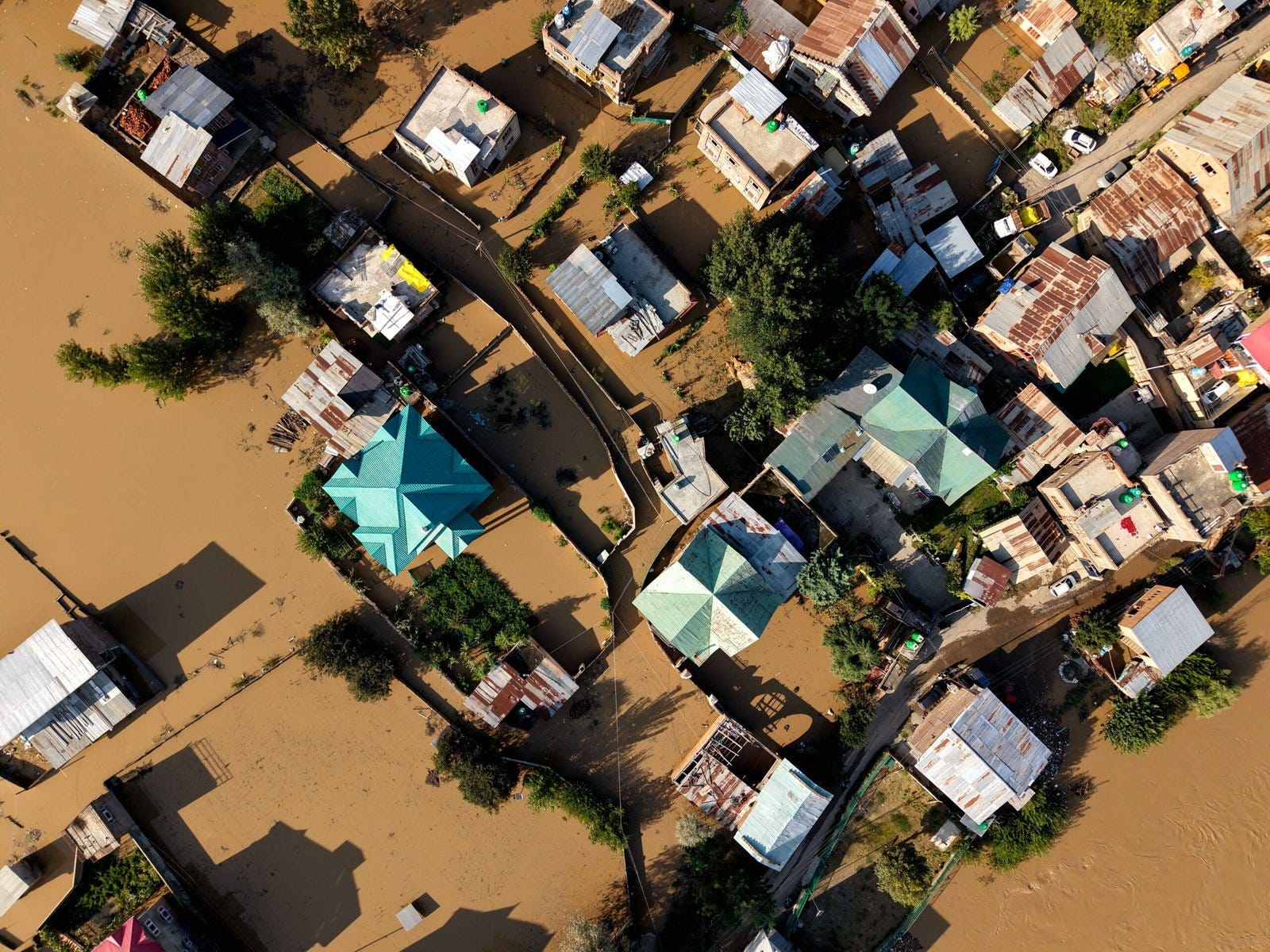
People don't need a climate report to know the climate is changing.
In Kashmir, one of the regions at the forefront of the climate crisis, apple farmers are seeing warmer winters, saffron growers are watching untimely rains, tourism workers are coping with shrinking snow seasons... But many don't understand why these changes are happening. And this gap matters.
Recognising climate change is not the same as understanding it. Without climate literacy, communities are less likely to adopt resilient farming practices, prepare for extreme weather, or demand better policies. This story by Mir Zeeshan explores the role climate literacy plays in helping people adapt.
The listing below is a sample of what we have at Career Catalysts. Good luck with your search!
There are openings for a health, safety and environmental specialist at Hitachi; an assistant area manager, solar sales, at JVS Solutions; a sustainability coordinator at IHG Hotels & Resorts, and many training and internship/externship opportunities too. Search on Career Catalysts.
Until next week, folks!
Madhur Singh
Gulal Salil
Team Climate Action Live
No posts
Comments
Nothing yet. Say the first thing.
Sign in to join the conversation.