
If your child has autism,
Welcome.
Welcome has a very positive connotation; the diagnosis your child received doesn’t usually carry that same positivity.
In fact, it probably rocked your world. And will continue to rock your world. The autism grief cycle is real.
And yet, I say “welcome.”
Am I being sarcastic? Facetious? No, in fact I’m being totally serious.
Welcome to your new life.
Welcome to understanding your child in a whole new light.
Welcome to an accelerated parenting experience.
Welcome to being pushed to — and even beyond — your limits to a place where you will have no choice but to grow.
I’m sure you remember where you were when you found out. The exact room and time of day. The tender emotions. The circumstances leading up to diagnosis. We all have a story and those stories belong to our children as much as they belong to us.
It is their autism story.
It is your autism story.
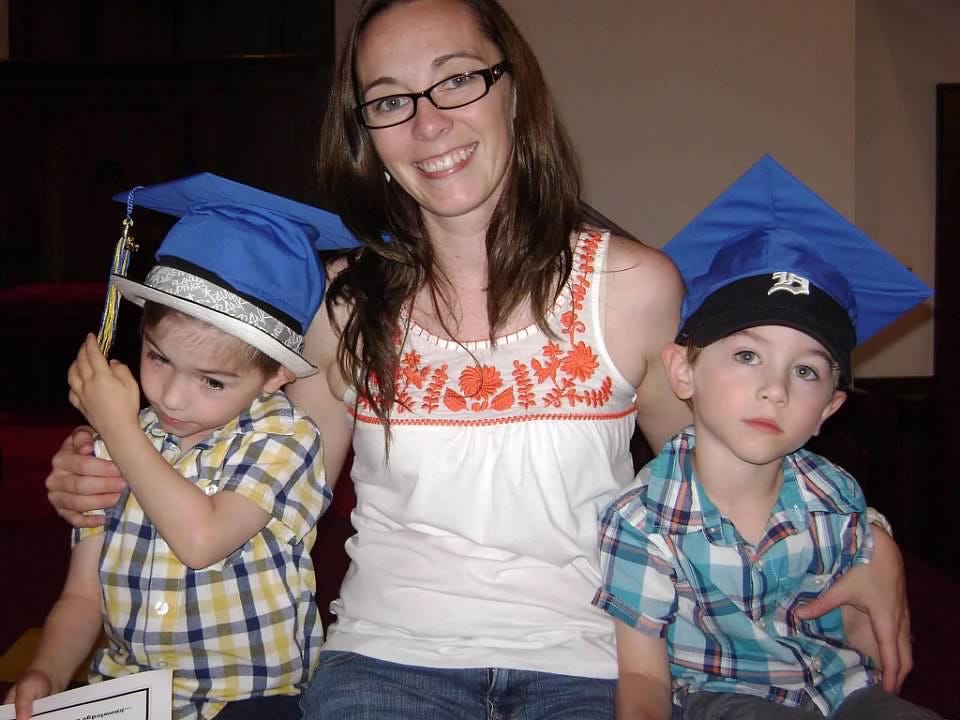
And a story it is, with a plot, a setting, major and minor characters, point of view (maybe multiple, maybe differing), conflict, and resolution.
As the chapters progress, you will be met with new challenges and joys. Autism at age 15 looks very different than autism at age 5. This journey will require endurance, faith, and a sense of humor. Your resolution must be the superhuman ability to roll with the punches. To be firm in your convictions while being open to many possibilities. To be weak in your dependency1 with a will like Teflon.
I don’t know where you’re at in your story arc.
It doesn’t really matter.
What matters is that you’ve been chosen; you’re in the club. Maybe a club you never wanted to be in to begin with, but here you are. And you’re not alone.
In the year 2000, the prevalence for autism was 1 in 150, according to the CDC. It is now 1 in 31.
When our twin boys were diagnosed 16 and 14 years ago, the rate was 1 in 68.
We were told that we had until around age seven to make any big improvements and then their brains would be much less malleable. We were told that ABA therapy was the only effective therapy.
We were told that food had nothing to do with autism and that changing their diet was unnecessary. We were told supplements were a waste of money. We were told that vaccines had nothing to do with autism and that opting out of some or delaying some, and spreading out the rest over time, and boosting their immune system beforehand was a waste of time.
We were told there was no connection between the gut, the brain, and the immune system and that autism was a behavior disorder and we had to condition our boys to different behaviors, “extinguishing” the undesirable ones and giving them reinforcement (ie. rewards of candy, toys, and treats) when they performed a desirable behavior.
Maybe things have changed. Maybe not. Or maybe not enough.
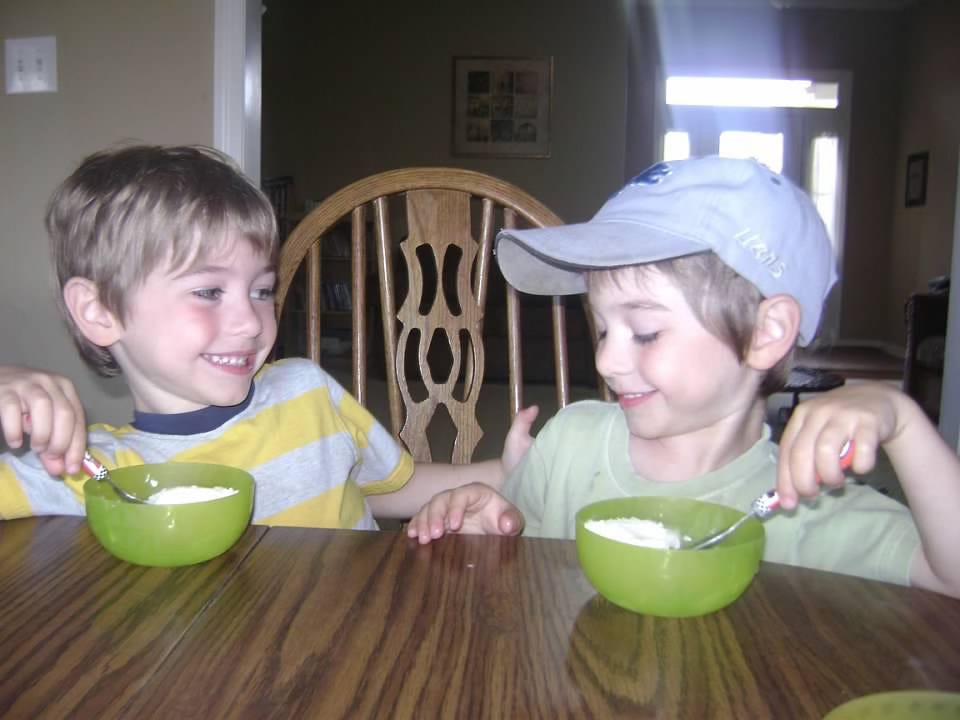
Over the course of those early diagnosis years, we enrolled in the local public school, set up an IEP, acquired services, tried the inclusion classroom, changed the IEP, tried the Autism unit, fought with the school, tried having a buddy, tried ABA, tried an in-home therapist, joined a support group, traveled to parent trainings at Vanderbilt, participated in studies at Vanderbilt, saw a developmental pediatrician, tried to get services the pediatrician recommended, fought with the schools some more, read lots of books, changed our diets, tried supplements, changed our diets again, attended seminars, considered moving to another state to get access to “better services,” talked to other parents, fumbled through disastrous mornings at Sunday school, tried changing churches, attended conferences, did OT, did PT, did Speech therapy, did Food therapy, mourned the fact that insurance wouldn’t pay for anything that would actually help, tried to get more support, pushed away from any support, prayed a lot, cried a lot, tried homeschooling, tried to pretend everything was still normal, accepted the fact that everything was not still normal, bought an ipad because that was supposed to help with communication (it didn’t), saw a therapist, broke the ipad, tried labeling everything in our kitchen with picture cards, limited screen time, saw more therapists, cut screen time entirely, found a doctor in the Nashville area who specializes in neurodivergent kids, tried a new therapy, and scoured the internet for answers.
Some of it helped. Most of it just left us all exhausted and frustrated.
And the whole time, a still, small voice cried out inside of me, “How do I not know how to help my own children?” I felt uneasy. Unsettled. Totally disconnected. Maybe you’ve been there, too.
I was so convinced that someone else needed to answer all my questions, it never occurred to me that I might be able to answer some of them myself.
I want to say something to you and I want you to let this sink in because it is true for every parent here: you are the expert on your child. You may not know much about autism/ADHD/dyslexia/homeschool/fill in the blank, especially if it’s new to you, but you are still an expert on your child. Don’t ever discount this. While it’s wise, of course, to seek help from professionals and those who have gone before you, there is no one who can filter through the information better than you can.
Henry David Thoreau said, “If a man does not keep pace with his companions, perhaps it is because he hears the beat of a different drummer. Let him step to the music which he hears, however measured or far away.”
Listen for the music.
Step to the beat you hear.
Autism Breakthrough: a Book Review
Boost Attention & Concentration this Summer with Brain Beat
Why Homeschool is the Best Educational Choice for a Child with Autism
What is the Best Homeschool Approach for a Child with Autism?
How to Get Your Child to Do Something He Doesn’t Want to Do
What is Autism? A Peek at Both Sides of the Spectrum
Record Keeping When Your Child Has Autism
10 Day Detox for Autism & ADHD
What is the Son-Rise Program®?
Speech Therapy on a Shoestring Budget
Fitting Therapy into your Homeschool Schedule
10 Tips for Homeschooling a Child with Autism
Inspiring Speech with Kate Wilde, Director of The Son-Rise Program®
How to Help Your Child Deal with Anxiety
Autism in the Teen Years with Raun K. Kaufman
Books for parents to read:
Books for parents to read:
The Daniel Plan: 40 Days to a Healthier Life by Rick Warren, D Min., Daniel Amen, M.D., and Mark Hyman, M.D.
Private Occupational Therapy (check your local listings)
The Two Sides of Sensory Processing Disorder You Never Knew Existed
Autism Research Institute (the ATEC is a great tool)
Books for parents to read:Reset Your Child’s Brain: A Four-Week Plan to End Meltdowns, Raise Grades, and Boost Social Skills by Reversing the Effects of Electronic Screen-Time by Victoria L. Dunckley M.D.
Uniquely Human: A Different Way of Seeing Autism by Barry M. Prizant, PhD.
Thank you for reading. I offer forever-free articles every month and a paid monthly resource, as well. You can become a paid subscriber to support my work.
If that’s not for you right now, shared links are the best way for others to find my work. If you enjoyed this article, please like and share :).
Till next time,
Cindy
*Many of my resources contain affiliate links. If you purchase an affiliate product, your price does not increase but I do get a tiny “thank you” portion from the company for recommending their products. I only have an affiliate relationship with products I use and love.
2 Corinthians 12:9-11, New International Version
9 But he said to me, “My grace is sufficient for you, for my power is made perfect in weakness.” Therefore I will boast all the more gladly about my weaknesses, so that Christ’s power may rest on me. 10 That is why, for Christ’s sake, I delight in weaknesses, in insults, in hardships, in persecutions,in difficulties. For when I am weak, then I am strong.
No posts
Comments
Nothing yet. Say the first thing.
Sign in to join the conversation.