
Note: This is an excerpt from ‘The Reluctant Diplomat.’ It was written a decade ago when I was serving in Milan, Italy, as the Public Affairs Officer, long before the Trump Administration and DOGE started their scorched-earth campaign against USAID, randomly selected State Department staff who were in the wrong place at the wrong time, and Federal workers in general. More information about ‘The Reluctant Diplomat’ can be found here.
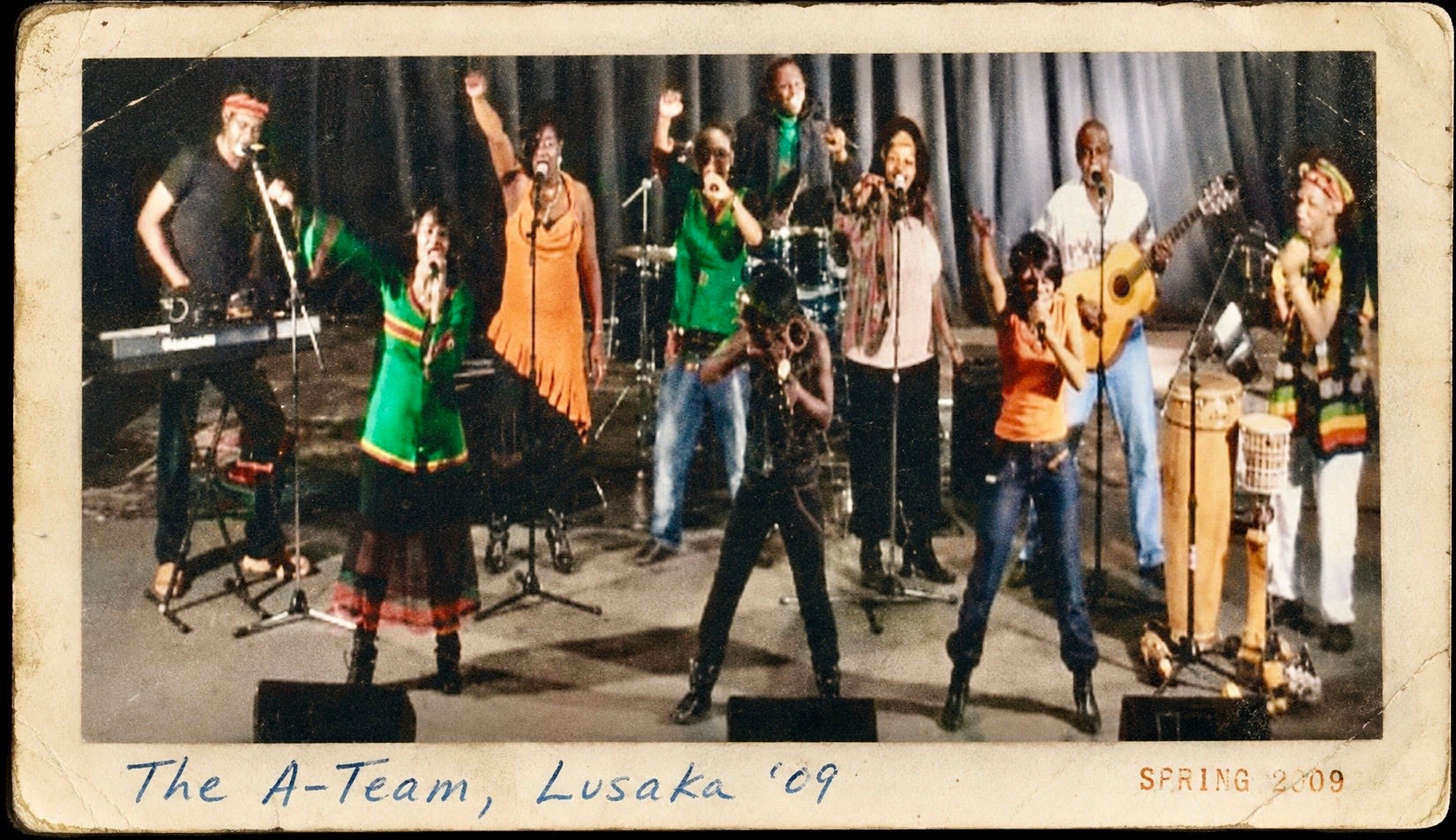
People worldwide listen to our tunes in their cars and on their headphones. They might deplore or distrust our foreign policy, or even detest our Administration. But all bad feelings disappear when the music starts. As a soft power tool, our longstanding efforts to export American jazz, blues, pop, bluegrass, and hip hop to the world are invariably met with open arms. Music held a huge appeal for me as a Public Affairs Officer (PAO), and I oversaw a number of ambitious and unique public diplomacy programs that were as dancable as they were educational. It all started on inauguration day 2009, while I was the PAO in Lusaka, Zambia.
Months before, we’d thrown an all-night election party at our Martin Luther King, Jr. Library (which had been dedicated by Coretta Scott King in 1974). It was a tough crowd for John McCain, with Obama winning the Zambian straw poll in a shutout. At midnight—not coincidentally after several journalists were caught trying to carry out a tub of Mosi Lager—we stopped serving. Despite that, at 6 AM, when the West Coast polls closed and Obama was declared the winner, we had a large and jovial crowd on hand.
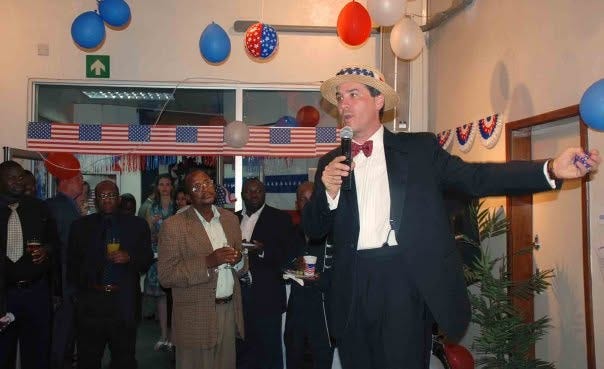
As many of my colleagues in other African countries attested, the Obama victory resounded on the continent. Countless Zambians I met talked as if Obama had been elected their president.
So we decided to open the MLK Library doors again, this time to watch the inauguration. (Certain journalists were not asked back.) As Obama spoke, it again felt to the Zambians like they were the intended audience. There was laughter, there were tears, there may have been shouts of “hallelujah!” I thought, boy, is my job going to be easy for the next few years. And, as applause broke out again and again—in all the right places—an idea occurred to me.
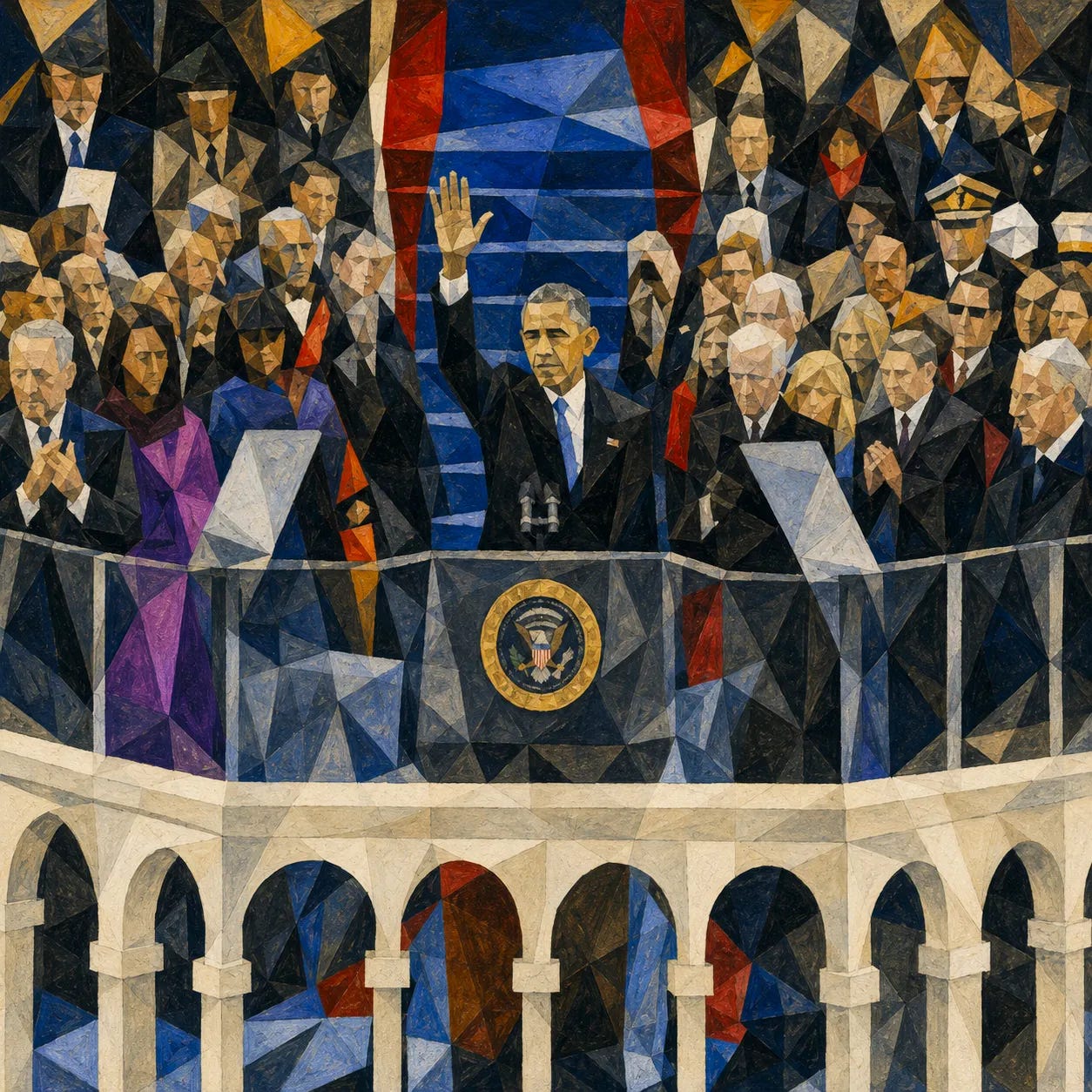
I had been wanting to do a locally-produced music program, and had gotten close to a number of talented Zambian artists. Standing in the back of the auditorium, watching the Zambians whoop and holler at Obama’s inaugural address, I had an idea: Give the audio of the speech to some musicians to sample and ask them to create something that appealed to the hopes and needs of Zambian youth.
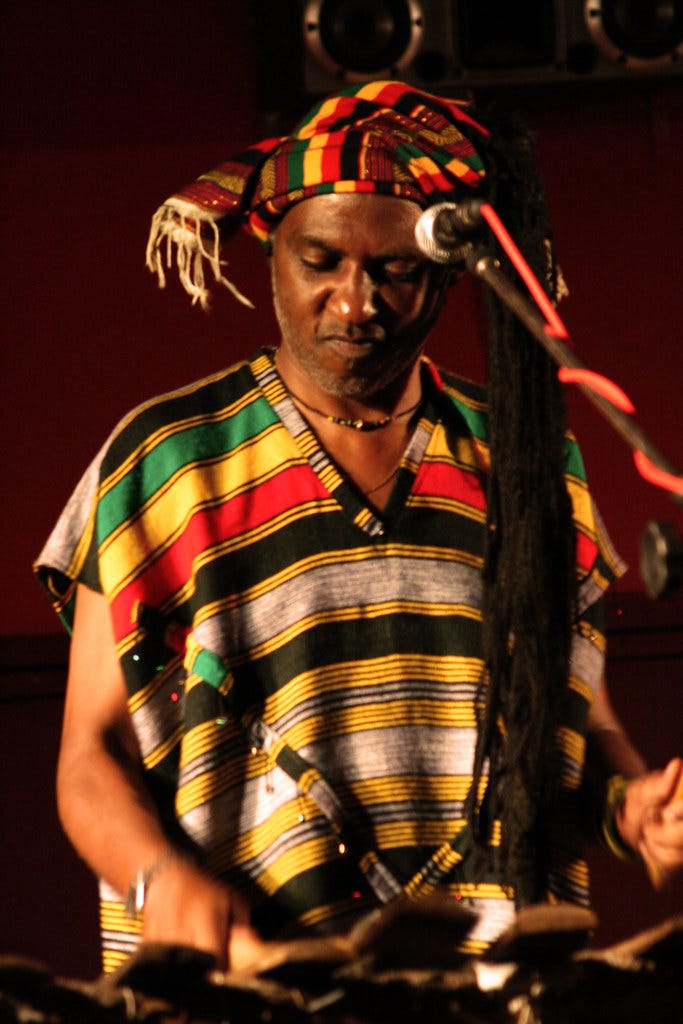
That night, I socialized the idea with Brian “Shakarongo” Chengala, the unofficial dean of Zambia’s music community. He loved it, thought it could work, and helped recruit an eclectic group, including traditional and gospel musicians, rockers, and hip-hoppers. (And, if you are asking yourself, “Zambian rocker?” Listen to this.)
We discussed transforming Obama’s message within a local Zambian context. Ten days later, the group—calling themselves The A-Team—recorded “Change We Can Believe In.” Actually, that’s what roughly half of the A-Team thought the title was. The other half referred to it as “Yes We Can.” Pro tip: Always try to give your original song one name. It’s much less confusing when it actually hits the charts—but I’m getting ahead of myself.
The lyrics went like this:
We are at a time in history where our challenges are so great
Hatred and war, failing economies
Threaten our very existence
Let’s put aside selfish agendas
And build to make a better world,
Transform the sectors of energy, education and health
And bring prosperity to all
Different people, different tongues, but still we resolve to make a difference;
Not just a dream, hope and words; change we can believe in
I remember standing in my office, for what seemed like an hour, waiting for my overmatched USG computer to open the 5 MB zip file containing our song. (All done within the existing security protocol, I swear.) I groaned as the song began with the ABC News jingle—a tip of the cap to the time-honored Zambian tradition of music piracy—before settling into a sweet guitar riff, and then Obama’s voice: “My fellow citizens, I stand here today, humbled by the task before us.” And then The A-Team takes over.
Yes We Can, Yes We Can…
Earlier in the creative process, as I glanced at the handwritten lyrics, I noticed at the end it just said “vamp.” They vamped alright. Like they didn’t want it to end. Ergo, the song went on forever, almost eight minutes, with about five minutes of “Hey Jude”-style vamping, where absolutely every artist got a moment (or seven). I don’t know how many vocal tracks they had layered in the final mix, but a good dozen or so, I would guess.
After the song was recorded, I invited the musicians to a reception in the backyard of the Deputy Chief of Mission’s residence. They asked if they could lip-synch the song for the assembled guests, which caused a bit of confusion among those gathered. After the song ended, they queued it up again and lip-synched it again. Worried about a third run-through, the DCM started clinking his glass like a maniac and began speaking into a handheld microphone extemporaneously as only a seasoned diplomat can.
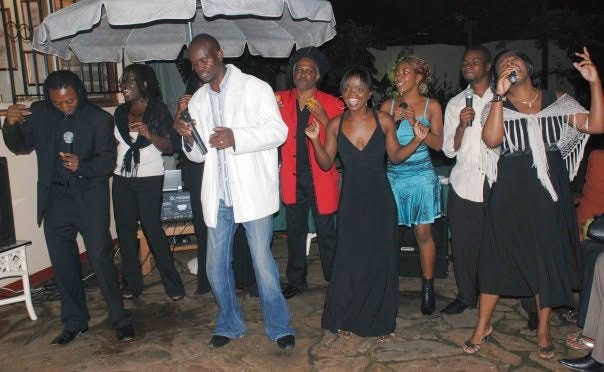
By now the musicians had choreographed some slick moves to go with the music, and I succumbed to their pleas to make a video. We sent the song to every Zambian radio station, and made a deal with a Zambian music website to host free MP3 downloads of the song—surely the first time that had been done in diplomatic history. Given the internet service and tech on hand at the time, you could probably download all eight minutes in about a weekend.
We leveraged the veneration for Obama, especially among young people, and tied the project to a Zambia youth voter campaign being undertaken by Global Justice Zambia, an NGO that we had given a small grant to. The musicians joined youth voter programs, and the media was great about connecting the song and the campaign (which is another way of saying that we could count on them to print our press releases verbatim).
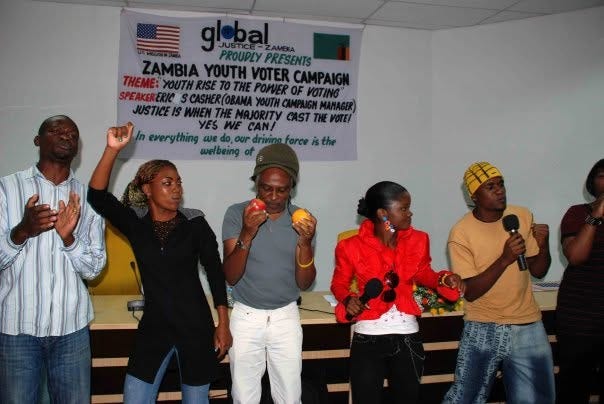
There was a ton of national press, and the radio stations started to get behind the song—and it became a bona fide hit, which took us all by surprise. The State Department took note.
It was my first “executive producer” credit, and I had the bug.
What I found with this program, and tried to replicate for many years, was the power of creating something with great local appeal (the song), making it available to people (for free), and then finding ways to connect it with themes that were important to us. Obama’s popularity was the cherry on top. We acted fast, quickly tying it to existing Embassy priorities (strengthening democracy and civil society, youth outreach and voting).
Oh, and nothing makes an ambassador giddier than something extremely popular that they can delight people with, and hand out for free. We bought one of those CD towers that could record six CDs simultaneously, and ran it constantly. The Ambassador, and many fellow officers, handed them out at meetings like candy.
Later on, this program, which was done on a shoestring budget, seemed kind of quaint. Definitely very Zambian. But the pattern of deep local collaboration, creating original material and then building around it to meet the mission’s priorities, that would be a cornerstone of some of my giant cultural programs to come. Soft power we can believe in.
LISTEN: "Zambia" - Rikki Ililonga
Thanks for reading! This post is public so feel free to share it.
No posts
Comments
Nothing yet. Say the first thing.
Sign in to join the conversation.