
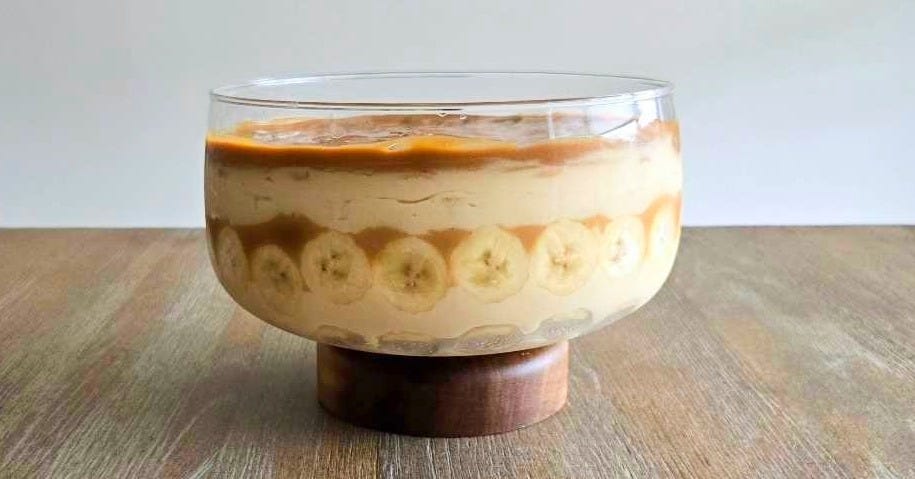
Banana pudding? I am supposed to be a well-schooled cook who has traveled the world looking for exciting new ways to prepare food, and now I am talking about a recipe you can find on the back of the Nilla wafer box!
Let’s turn back the clock to 1984, when I first dined at An American Place, Larry Forgione’s paean to American cooking. I do remember the term “marsh hare” on the menu (a type of rabbit) and for dessert there was banana pudding. Larry was flat out celebrating American cooking, including a recipe that ended up on the back of a box of cookies.
So if banana pudding was good enough for Larry Forgione, one of my culinary heroes, it is more than good enough for me. I started with the recipe on the back of the box and it was quite good. It is simple enough—a vanilla custard layered with banana slices and cookies, topped with a meringue. It’s a Southern classic that, let’s be fair, may not need much improving.
I complain all the time about folks who take winning recipes and muck them up, so I am skating close to the edge by suggesting that dulce de leche might work well here.
But rather than present a basic banana pudding with a ribbon of dulce de leche, I flavored the pudding with a simple butter-sugar caramel, giving it a deeper, slightly bittersweet flavor and a bit of color. If the method sounds familiar, it’s the same one I used when making the pain perdu: Instead of caramelizing the sugar directly in the pan (or with water), it’s caramelized in a pool of melted butter. It takes about 5 minutes, then the milk is added and the regular pudding method continues.
Cornstarch is the preferred starch for thickening this pudding, it doesn’t leave the powdery mouthfeel that flour sometimes does, and adds a glossy finish. A 1/2 cup of cornstarch might seem like a lot, but it’s well within the ratio for classic pastry creams. I did test 1/3 cup and the pudding was, for me, too soft, almost runny.
This pudding is also lighter than usual. Instead of using whipped cream as a topping, I decided to fold it into the caramel base after it cooled. It gave the thick, sometimes heavy layer a touch of lightness, without detracting from its creamy richness. It also gave it more structure; the plated scoops kept their shape and distinct layers, without slumping.
Another big difference is how I treated the eggs. Instead of separating them and using the yolks in the custard (and whites for a meringue topping), I kept them whole. The resulting texture was thick—but not overly heavy—creamy and smooth.
For the dulce de leche, I tested three different brands—one canned grocery brand from Nestle, and two jarred brands ordered from Amazon. Surprisingly, their colors and textures were practically identical, so the directions on thinning worked for all of them. You can thin your brand of choice with water or milk; I left it at water. The only modification I made was a little bit of vanilla extract, added to the dulce de leche to give it some depth, but this is optional if you think it’s too fussy.
One last thought: You can skip the dulce de leche topping if you like. I have made a bunch of changes to the basic recipe so it works great on its own. There is something to be said for keeping a classic a classic.
If Larry is still around, I hope that he gives this a shot and then gives me a shout. It would be just like old times.
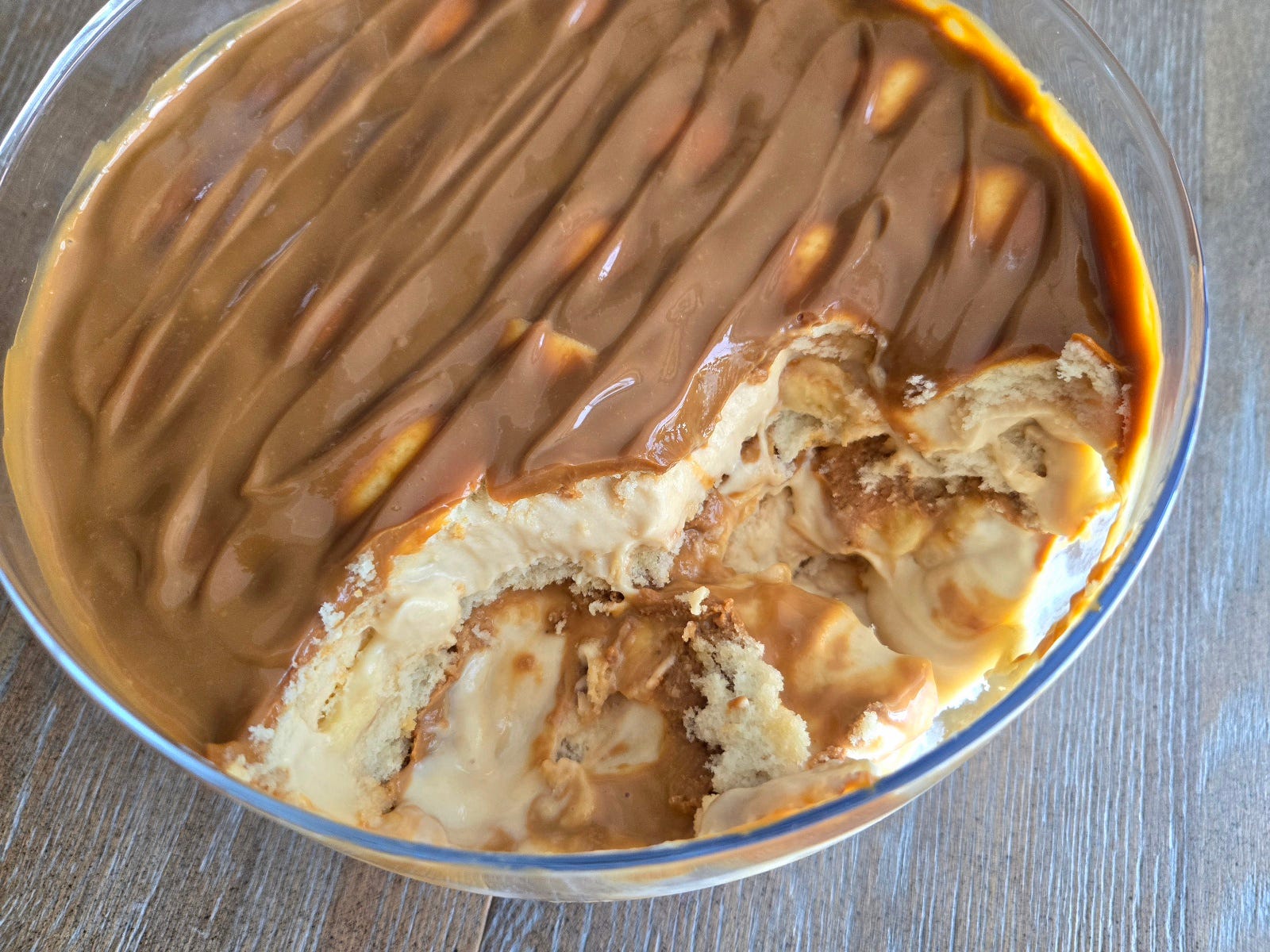
Instead of the typical vanilla custard and meringue or whipped cream topping, this banana pudding is flavored with a butter-sugar caramel, lightened with whipped cream, and layered with dulce de leche.
Comments
Nothing yet. Say the first thing.
Sign in to join the conversation.