
It is well known that John the Baptist was the last and greatest of the Old Testament prophets. Surprisingly, this rarely (in my experience) leads to reflection on the prophetic signs his eccentric behaviors are obviously intended for. This Friday ‘flection asks: Why locusts and honey?
Both ingredients in the Johannine entree are already meaningful in the symbolic language of the Bible.
Locusts recall God’s judgment. First and most memorably, God sent them as a plague on the Egyptians to encourage Pharaoh to reconsider his immigration policy. By ravaging the crops, they deal a substantial blow to the labor and military forces of Israel’s captors. In Joel 2 God employs them again, this time against the Israelites, to drive them away from material wealth and back to the only true prize, Himself.
So when John sits down to a steaming plate of fresh locusts, he’s proclaiming the coming judgment of God.
But he does not come only to herald gloom.
Honey does a few different things in the Bible. Most notably, it characterizes the Promised Land, which “flows with milk and honey.” It also appears at the very end of Psalm 81, where God enigmatically declares that if only Israel would turn back to Him, He would feed them with “honey from the rock.” Grace, abundance, the fulfillment of divine promise; all these drizzled on top of God’s wrath.
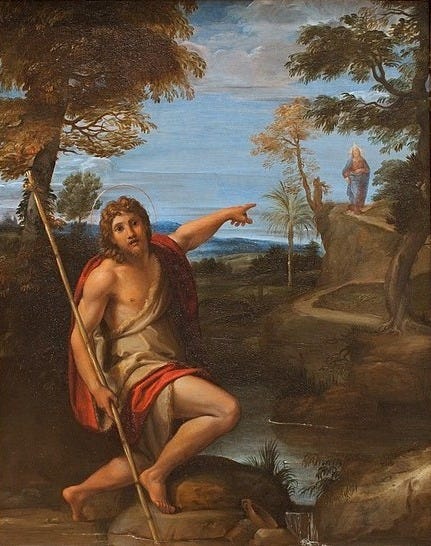
John’s ministry is about Christ. He anticipates, points to, and yields before Him. His prophetic signs are extensions of this office. In Christ the judgment of God on mankind is realized. Truly “the Lord punishes those He loves.” In Christ also the true Promised Land opens to God’s chosen. Justice and mercy mingled together, one dish with complementary flavors and textures, each element bringing out the distinctives of the other.
There goes Prophet John, unflinching representative of those eagerly awaiting Israel’s consolation, eating God’s judgment and faithfulness. And there by the grace of God go us, too.
When His disciples ask for worldly regard, Jesus asks them whether they can drink the cup that He will drink. He may equally have asked whether they could eat the meal that John ate. “Yes,” they reply eagerly, “we can drink this cup.” “And so you will,” Jesus replies. They will follow Him to their deaths, offering up their blood for the sake of the world, acting like little windows and doors into the Promised Land wherever they make Christ known. In their deaths as martyrs they will suffer the consequences of their murderers’ rebellion against God; they also become channels of grace to a people lost in darkness.
We can say a little more. The motif of physically consuming God’s fidelity is striking. Any number of metaphors would have done. If there’s one thing we learn from God’s dealings with Jeremiah, it’s that He is very creative with His signs. I suggest that the image of John being continually sustained each day by a fresh instance of the same symbol is intentional. It puts one in mind of “our daily bread.”
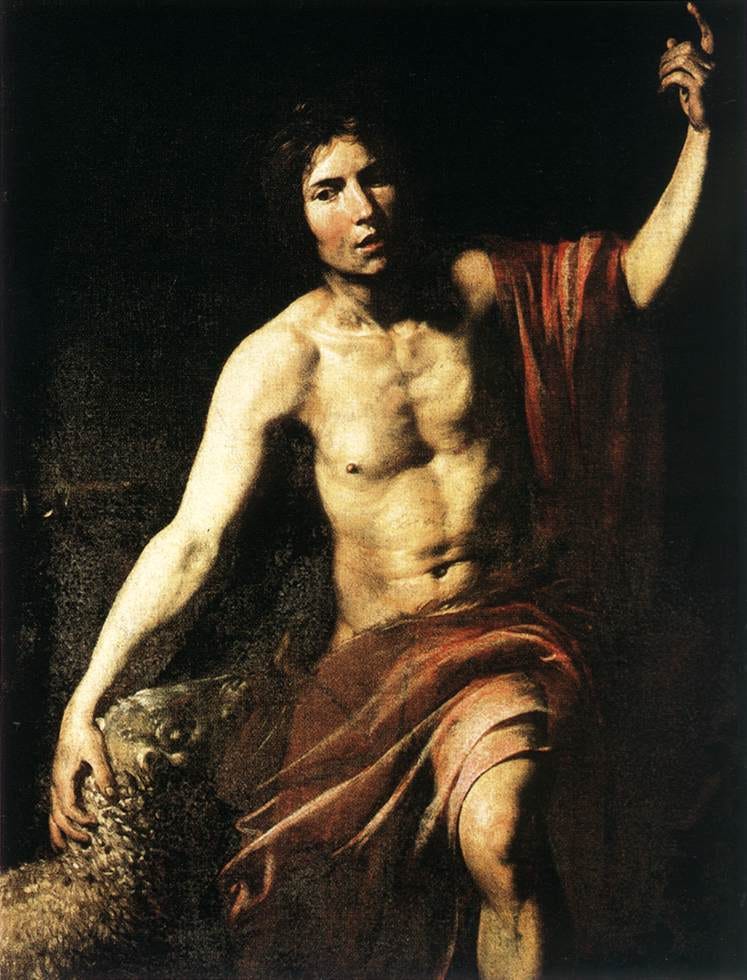
John’s prophetic food does not merely point to what Jesus will do, but anticipates how He will apply His work to Christians. Sacrifice and wedding feast, born new every minute on countless altars across the world without change or division, it is the Eucharist. Can you eat this supper? Will you shoulder the Cross of Christ all the way to heaven? When the priest places the Son of God on your tongue, he condemns you to a “death like His” as surely as he renews your hope for a “resurrection like His.”
Victim and victor. Death and deliverance.
Locusts and honey.
Saint John the Baptist, pray for us.
< Last Commentary | All Commentaries | Reformation Catholicism >
No posts
Comments
Nothing yet. Say the first thing.
Sign in to join the conversation.