
If anyone is looking forward to these every week and resents my inconstancy, I offer my deepest apologies. We shall see if I can get back to making this a weekly feature. It was in the Lord’s providence that this be delayed, though, because I discovered at Mass that this is today’s Gospel reading!
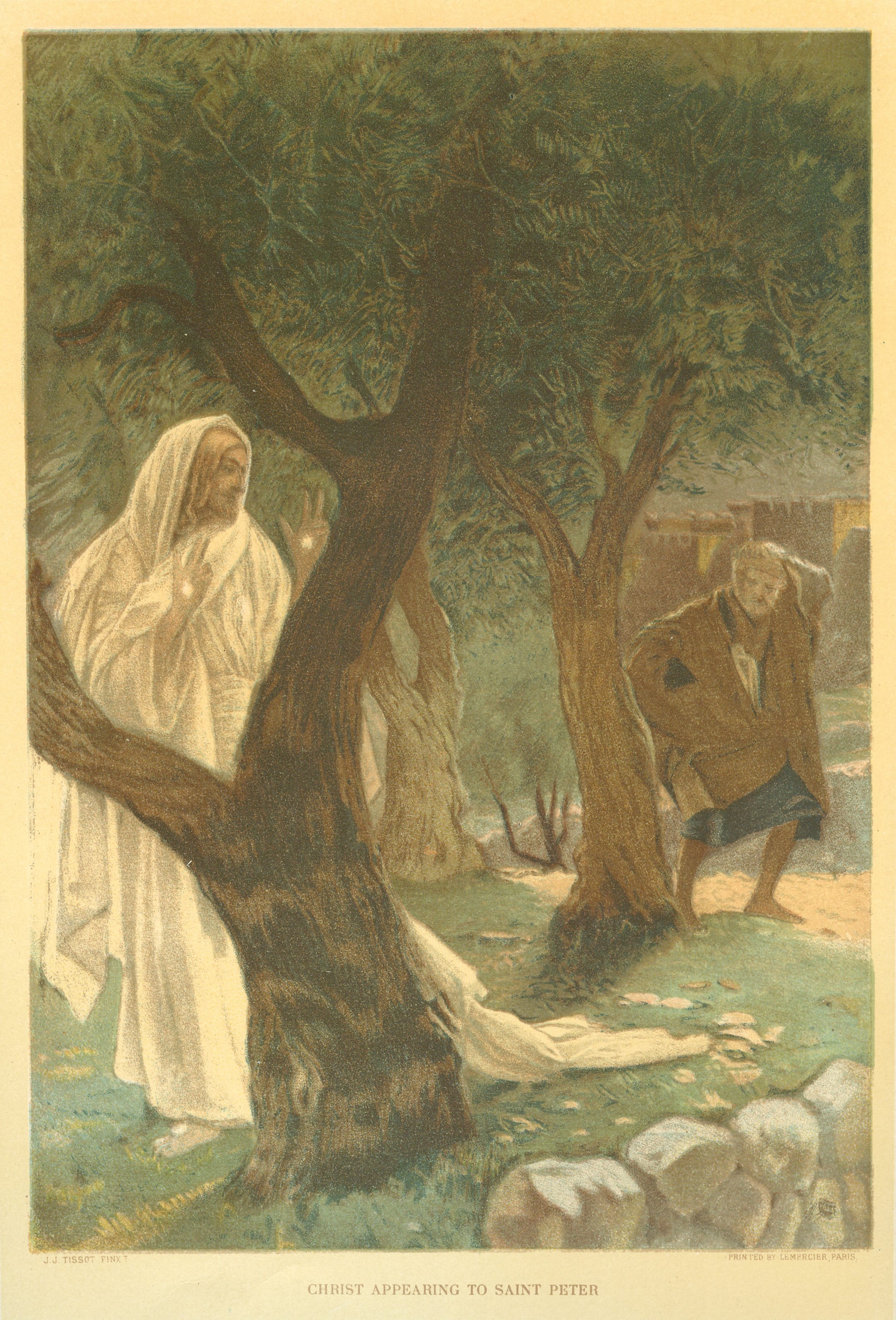
At the end of John’s Gospel, Jesus asks Peter three times whether he loves him. Peter responds, with increasing anxiety, that he does love him. The exchange is enigmatic, in part because there are a few oddities that stand out rather conspicuously but offer no clear explanation for themselves. Here is the exchange in full:
When they had finished eating, Jesus said to Simon Peter, “Simon son of John, do you love me more than these?”
“Yes, Lord,” he said, “you know that I love you.”
Jesus said, “Feed my lambs.”
Again Jesus said, “Simon son of John, do you love me?”
He answered, “Yes, Lord, you know that I love you.”
Jesus said, “Take care of my sheep.”
The third time he said to him, “Simon son of John, do you love me?”
Peter was hurt because Jesus asked him the third time, “Do you love me?” He said, “Lord, you know all things; you know that I love you.”
Jesus said, “Feed my sheep.
Some of what’s happening here is obvious. Jesus is reinstating Peter after his triple denial of Christ between the arrest and the crucifixion. Jesus is also confirming Peter as the Prince of the Apostles; this serves as John’s version of Matthew 16. Even so, many details feel strangely out of place.
Here’s one. In the Greek, Jesus asks Peter, “Do you agape-love me?” Greek has several words for love. Agape is the New Testament, and especially Johannine, way of signalling pure, other-centered love. It’s the love we’re commanded to offer God and others in the Greatest Commandments. In short, it is divine. Yet Peter responds, “You know that I philia-love you.” Philia is friendship love, brotherly love. That’s interesting in itself, but we’ve no sooner noticed this asymmetry in the first two exchanges before it changes; in the last exchange, Jesus switches to ask Peter whether he philia-loves him.
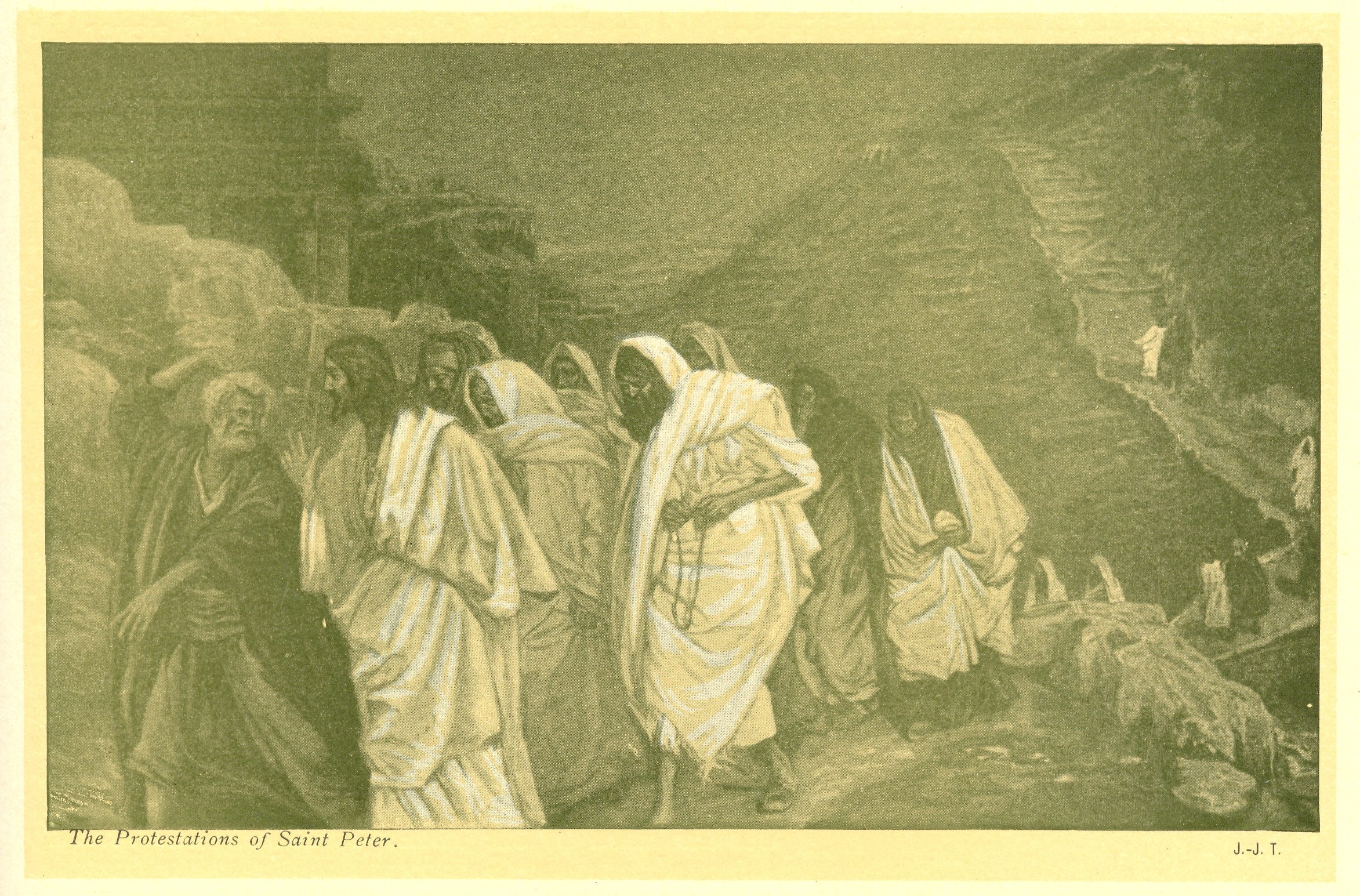
Jesus calls Peter to divine love, calls him into the divine Life itself. “Do you agape-love me?” asks, “Do you love me with God’s own love?” Peter responds in humility. The same way that he shrank from agreeing to the remarkably strong claim that he loves Jesus more than the other disciples (saying instead merely that he, at any rate, loves Jesus; he can’t speak to how much the others do), so now Peter meekly replies that he at least know that he loves Jesus, the dear rabbi he has been following these past three years. Jesus then asks for agape a second time, and a second time Peter offers philia.
At this point, Peter may wonder whether philia-love is inadequate. Does his love for Jesus not take him far enough?
It would seem not. In the third questioning, Jesus condescends to Peter and asks about philia. This proves too much for Peter—does his Lord doubt even whether Peter loves him with human love? Have his repeated affirmations of love, if only philia-love, counted for nothing?
Say rather that when Peter is weak, then he is strong. What he worries is a sign that Christ has lost confidence in him is just the opposite; it is a commissioning, an installation.
Agape, agape, philia.
Divine, divine, human.
Hold on to that for a moment.
Another strange feature of the dialogue is the way Jesus’ commands vary in seemingly random and insignificant ways.
“Feed my lambs,” “Tend my sheep,” “Feed my sheep.”
Most commentators say that these small variations exist only to avoid tiring repetition. But this is unsatisfactory. Why not just say, “And this happened three times”? And if the Holy Spirit is recording the words of the Son, surely we should expect a high degree of intentionality, even outstripping the human author’s awareness. But we need not even go that far; why couldn’t John, the master contemplative, have been attentive to the subtle self-disclosure of Christ in words that wouldn’t be properly appreciated until later?
Here is how I propose to read the passage: it’s about the Trinity and the Church.
“Feed my lambs.” The emphasis here falls on “lambs,” an intentional word choice. The start of the Christian life is especially associated with the Holy Spirit, who strengthens the young and immature, nourishing them with the milk of basic instruction in the Faith. The Church, under Peter, must take up the Holy Spirit’s mission to help build up new Christians to full stature.
“Tend my sheep.” Although Jesus does describe Himself as the Good Shepherd, when the whole Trinity is in view, the Father is most properly associated with governance. He is, after all, the Father. This time Jesus uses the generic word for “sheep,” which seems to have the whole Christian fold in mind. Thus the emphasis falls on “tend.” The Church must, under Peter, become the Father’s hands, providing for and protecting all believers.
“Feed my sheep.” If “sheep” again means “all Christians,” the emphasis most naturally falls on “feed.” And what shall we be fed? Or rather, whom shall we be fed? The Son of God made man, hidden under the appearance of bread and wine. This is our daily bread. Those who have been born into the Faith by the indwelling of the Holy Spirit and the milk of basic catechesis, over whom the Father has stood watch as they grow to maturity, finally come to the privileged point of contact between God and man, that is, God become man. And, in wonderous reversal, it is here that man becomes God. Our Lord charges Peter with the awesome and sacred duty of serving as custodian of the mysteries of God, seeing to it that the Eucharist permeates the whole of Christian life, the whole Christian people, from the least among the faithful to the greatest.
Because this final exchange centers on the Son, Jesus condescends to Peter’s philia-love. Twice He has asked Peter for divine love, and twice Peter has responded by offering human love. Now we see the glory of the Incarnation: Christ offers Peter human love, philia-love. If man cannot offer divine love, the divine will offer human love, and thereby make a way for man up into the soaring reaches of divine agape. Jesus, particularly in the Eucharist, serves as our bridge into the Trinity.
This reveals the radical Christocentricity of the passage, and indeed the whole Catholic religion. Catechesis and the indwelling Holy Ghost, the Father’s lidless vigil over His people, it all leads us to Christ in the Eucharist, to a union with God that elevates us beyond our wildest dreams into the very heart of our Maker.
“But I have prayed for you, Simon, that your faith may not fail. And when you have turned back, strengthen your brothers.”
< Last Commentary | All Commentaries | Reformation Catholicism >
No posts
Comments
Nothing yet. Say the first thing.
Sign in to join the conversation.