
Cheek journalist, Bernadette Clarke, listened in on the AUKUS Public Inquiry last week. She writes, on the NSW coastline where I call home, a little suburb called Port Kembla, is pushing back on becoming the east coast’s submarine base. Among the residents who highlighted concerns about being kept in the dark, were victim-advocates who shared disturbing statistics and teachers protesting to keep their students safe.
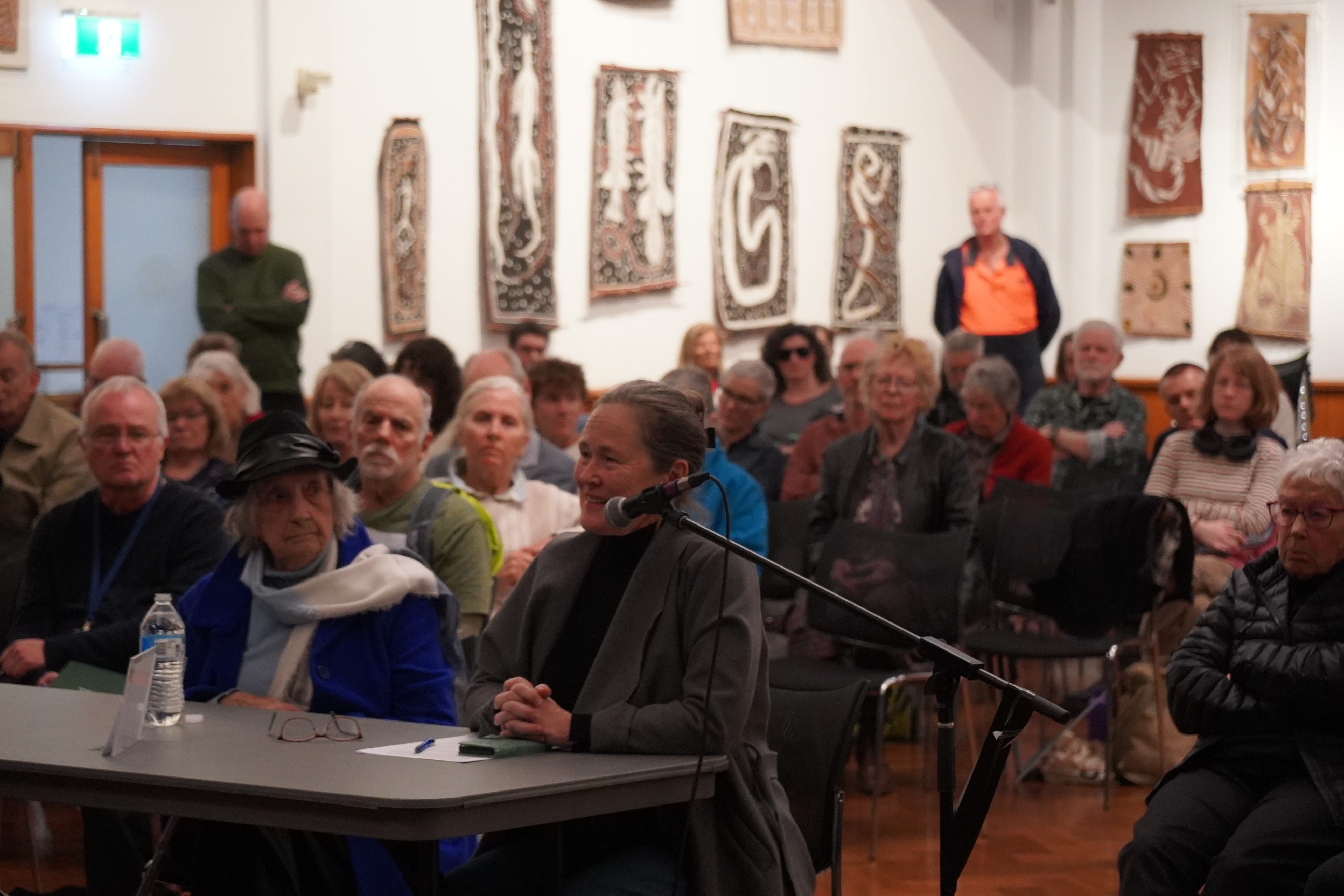
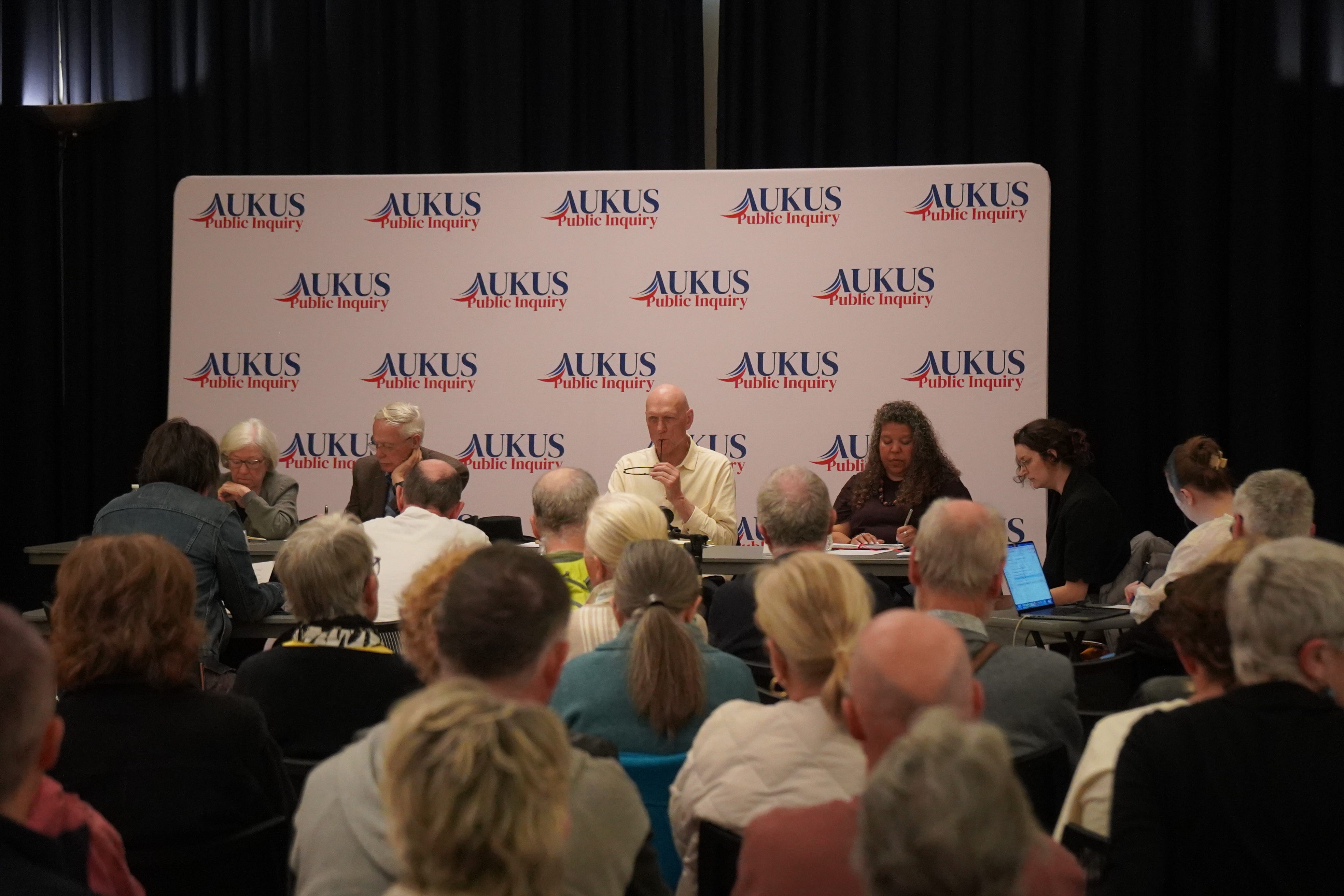
There was an immediate contradiction sitting in on the Public Inquiry into the $368 billion AUKUS agreement held at Wollongong Art Gallery.
Here we were discussing the implications of our regional area becoming home to a nuclear submarine base, in front of a backdrop of beautiful Indigenous artwork.
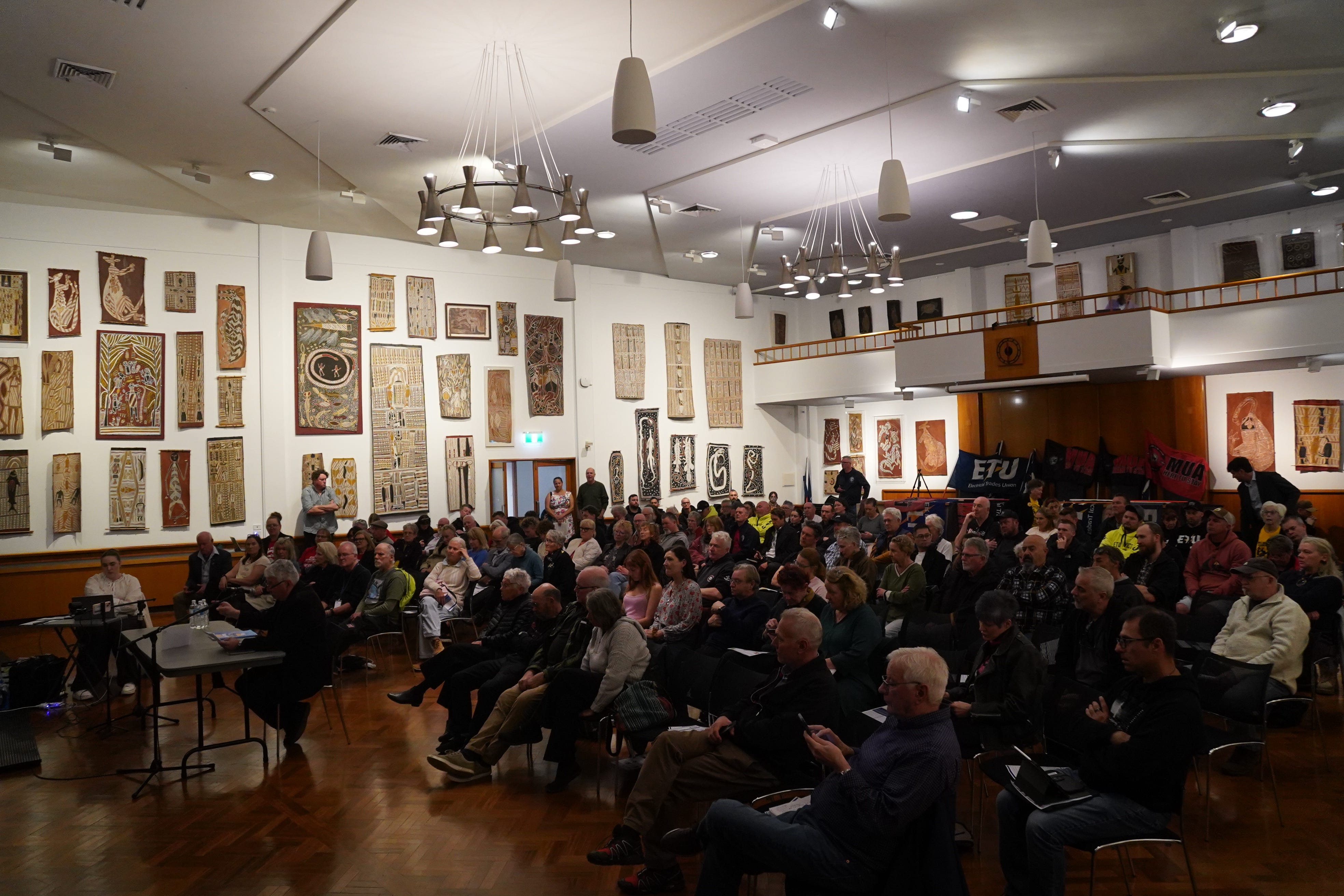
No one knows where the nuclear waste from the submarines will go, but what we do know is that there is a historical pattern of this burden being thrust upon Indigenous communities.
The AUKUS agreement comprises of two pillars. The first is obtaining eight nuclear-powered submarines (three of which will be pre-loved), and the second is sharing technology and information with the United Kingdom and United States.
It was revealed in secret documents that Port Kembla, a small suburb just south of Wollongong, is the ideal preference for the east coast nuclear submarine base.
However, the exact details have been hidden from us. In response, an independent public-funded inquiry was born. It is led by someone who wears many hats, former Midnight Oil frontman and former Labor Minister, Peter Garrett.
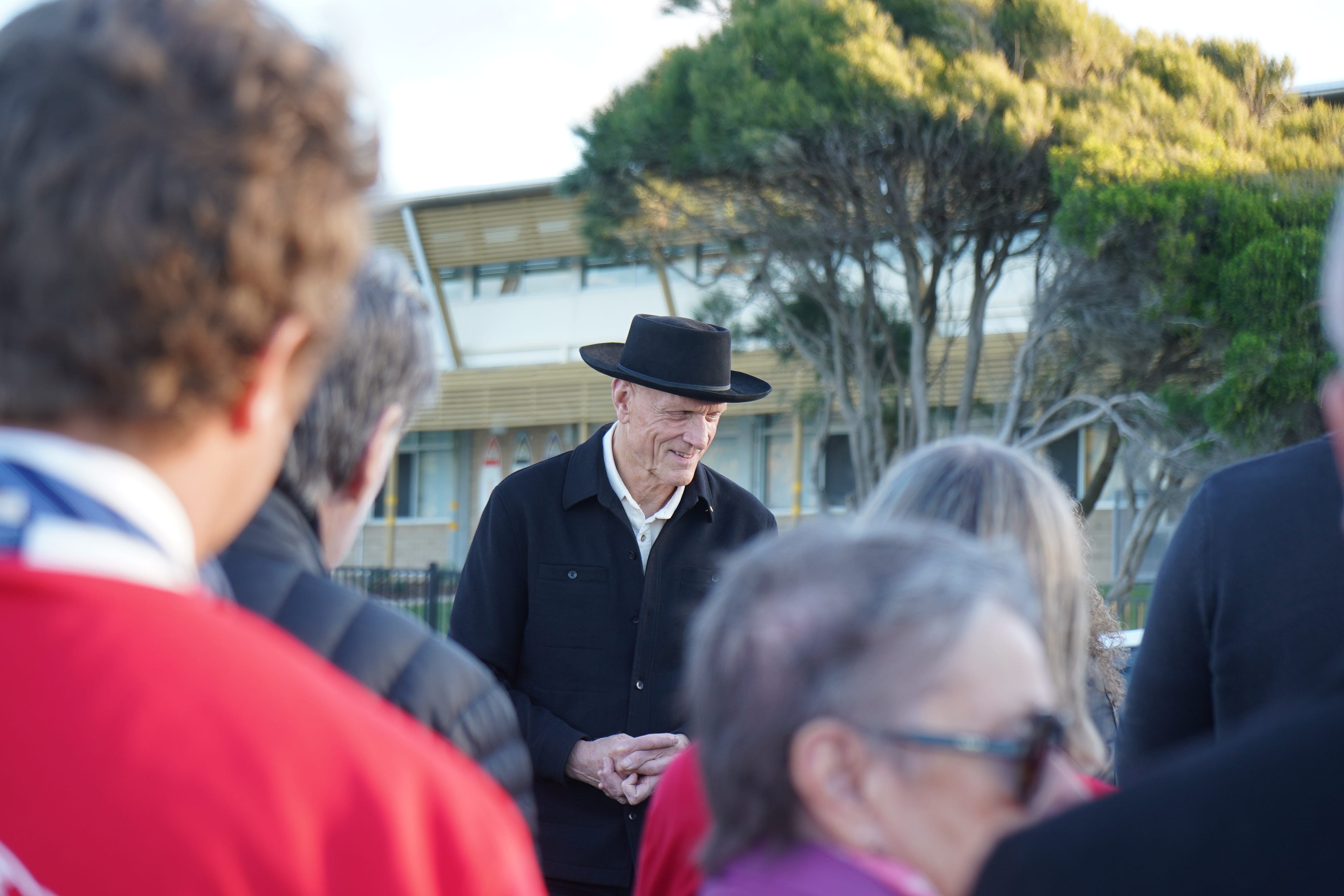
The agreement was conducted behind closed doors with no parliamentary discussion and no transparency. The inquiry exists to ask straightforward questions like: Will we actually receive the submarines? Where will the nuclear waste go? And will the pact actually make our country safer?
A worrying parallel can be drawn between the secrecy of the AUKUS agreement and one of the country’s first nuclear weapons tests done without any consultation 70 years ago.
The lands of the Anangu Pitjantjatjara Yankunytjatjara (APY) people in South Australia became the site where nuclear weapons were tested back in 1953 - administered without consent.
An atomic bomb of two explosions was detonated. It left devastating environmental, health and social repercussions for the APY mob, land and animals to this day.
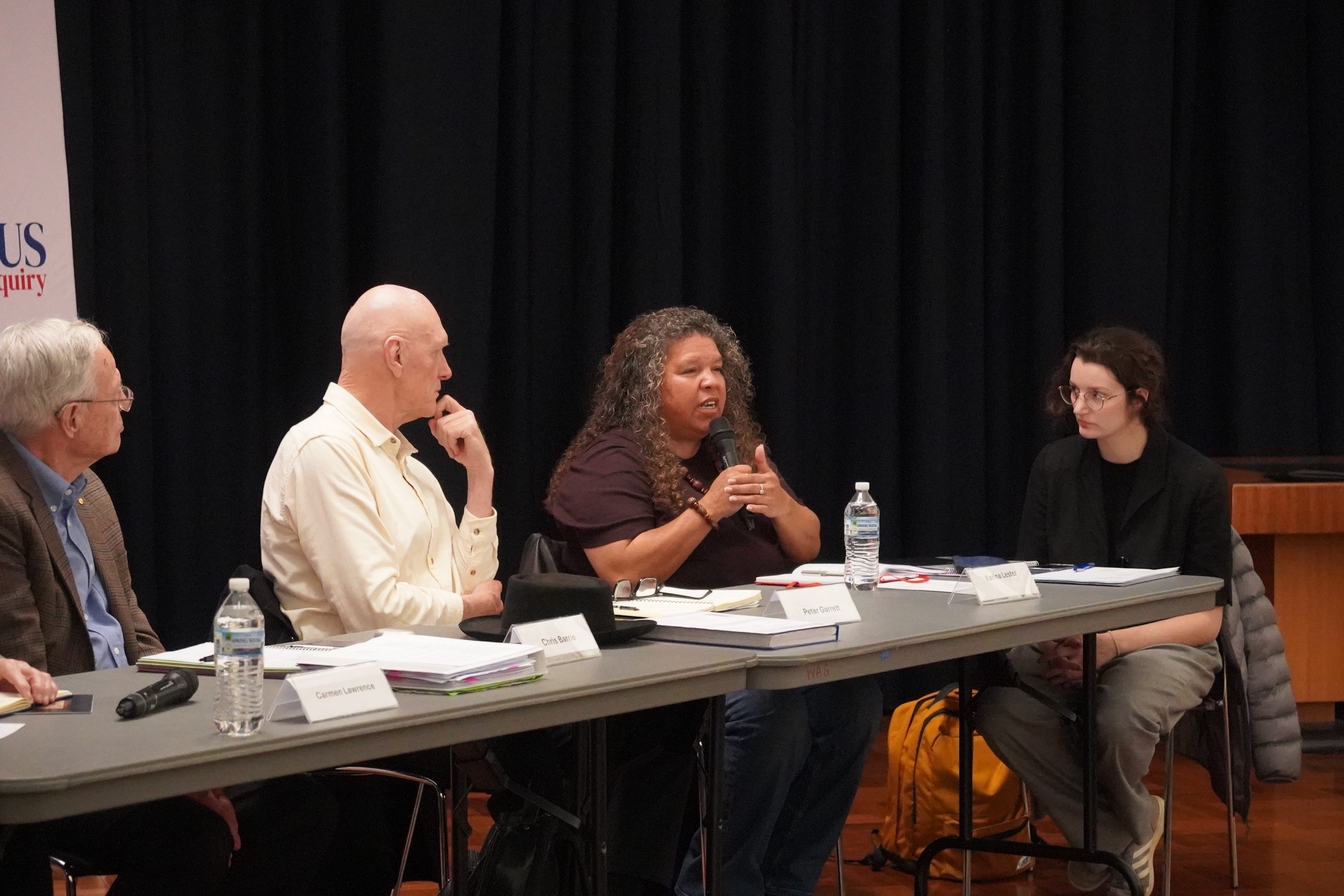
Anangu woman, Karina Lester, is a second-generation nuclear waste survivor from the APY lands. Her Dad was only a teenager when black soot fell from the sky that day.
Karina was one of the five AUKUS Public Inquiry commissioners in the room last week.
I wanted to learn more about the impact of the test all those years ago, so we had a chat. Karina recalled her father’s trauma following the atomic bomb.
“He witnessed family, Elders passing, panic in the community, sore eyes, rashes on their skin, diarrhoea, people who were vomiting.”
“Gradually four years after 1953, Dad’s world turned into complete darkness, he was blinded by those nuclear tests” she told me.
Coming from Jervis Bay, a regional coastal town, and having lived in remote corners of the country I’ve noticed a stark pattern. Smaller communities are in a continuous battle. Fighting to protect the environment. Protesting for better health services. Battling overdevelopment.
One of the most devastating fights that comes to mind is the battle for compensation taken on by the Aboriginal Wreck Bay village. Their sacred land and water were poisoned by the nearby navy base using poly-fluoroalkyl chemicals (PFAS) in firefighting foams.
The community demanded justice from the Department of Defence and received a settlement.
The PFAS contamination caused a “cancer cluster” in the community according to one doctor. No amount of money will be able to repair the cultural and social consequences that will come from the “forever chemicals”.
Just an hour north, on a different stretch of coastline I now call home, residents from Port Kembla with a population of just five thousand people, are now fighting against the AUKUS submarine site being built in their backyard.
At the public inquiry last week, electricians, nurses, midwives, parents, residents and students were among those who took to the stand to make it clear that the military base was not welcome.
Teachers from around the region also gathered out the front of Port Kembla School to protest the site which would be situated 100-metres from the primary school, if materialised.
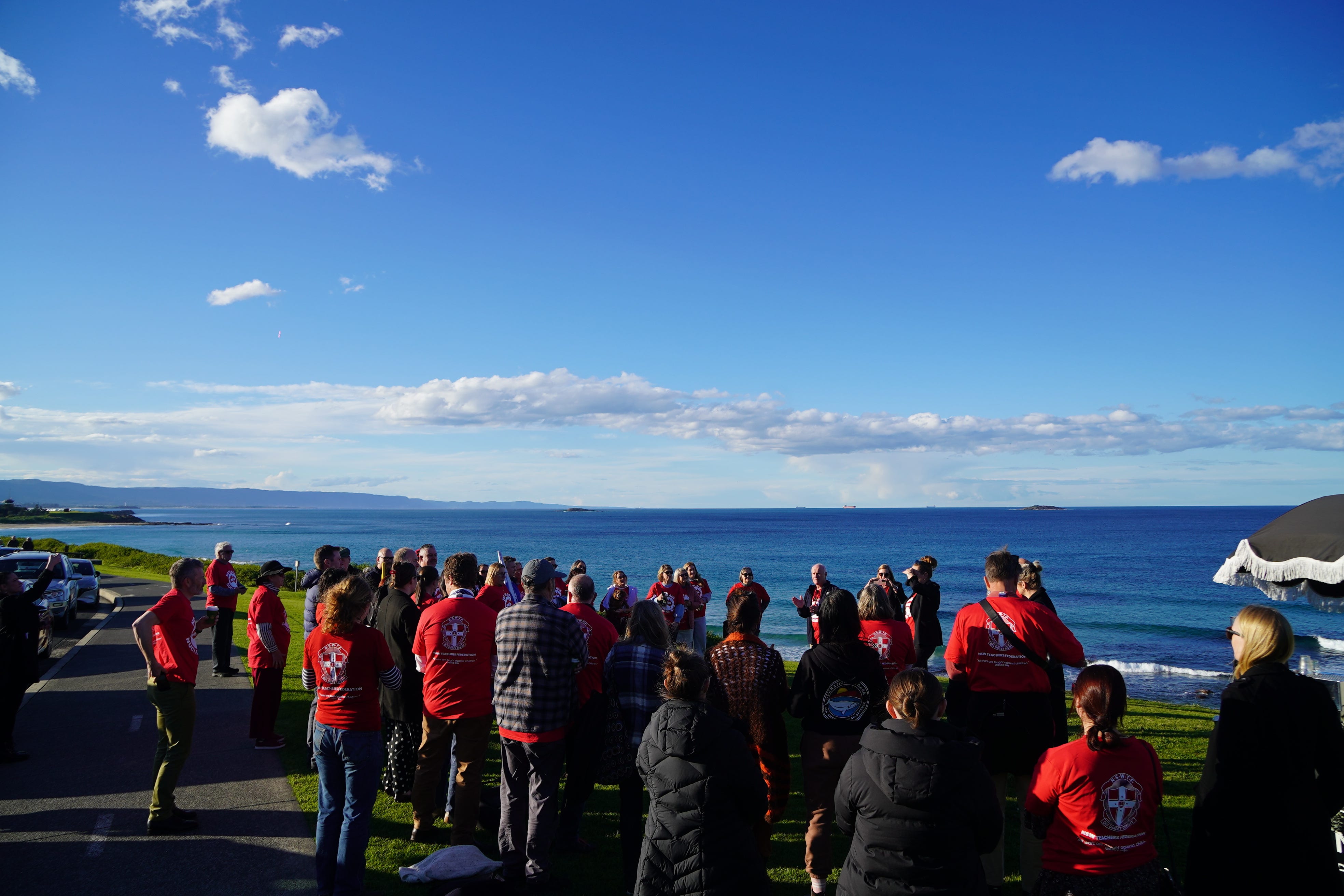
Many residents also argued against the AUKUS agreement as a whole.
It seems opposition against the defence pact comes from across the political spectrum. That’s something I noticed on the day, and within my own circle of friends.
There were compelling arguments made against AUKUS. This included criticism that the United States cannot be a trusted ally, so we shouldn’t be sharing intelligence with them. There were also legitimate concerns that the Illawarra region would become an international military target.
But the most gripping speaker to me was Sally Stevenson, the former Executive Director of Illawarra Women’s Health Centre.
She raised a point that hasn’t been extensively discussed: the evidence of increased sexual assault and violence in areas where US military camps are based.
“International experience with US military bases, most extensively documented in Okinawa, Japan, shows a persistent, decades-long pattern of sexual offences by military personnel against local women and girls,” she told the Public Inquiry commissioners.
According to a speaker at the public inquiry, secret documents reveal that 4,000 US personnel would be present in the region if the base was to surface.
“Australia has direct recent experience of this same pattern through the US Marine Rotational Force in Darwin, including multiple substantiated allegations of sexual assault, drink spiking and rape involving US personnel and local or ADF women.”
“Jurisdictional arrangements between Australia and the United States have, in practice, resulted in cases being transferred to the US military authorities or dropped completely, leaving survivors without confidence in any access to justice.”
At a local level, Sally also shared a devastating statistic.
The NSW Bureau of Crime Statistics and Research, OSCA, reported in April 2026 this year that sexual assaults in the Illawarra rose 163% over the preceding decade.
That’s the highest increase across New South Wales.
It’s a side to the debate that hasn’t had much air-time and got people ruminating including myself.
If Port Kembla was to be chosen, the military base would be sitting 100 metres from a public school. That proximity worries educators who say they already work extremely hard to make their students, many of whom come from diverse backgrounds, feel safe.
The City of Wollongong which encompasses Port Kembla is an official Refugee Welcome Zone. Many families have escaped war-torn countries and have settled in the region to provide their children with the safe future they deserve.
The status of a 'welcome zone means the region has pledged to support humanitarian migrants.
One local teacher told Cheek that they have students who can be triggered.An example she referred to was when their school bell changed one day from a song to an alarm sound due to a system update.
“Many of the refugee children reacted quite strongly to this. Running around trying to find a teacher, asking if everything was ok, speaking urgently to one another in Arabic.”
“The students were so triggered from the surprise sound of a school bell that I cannot imagine the anxiety and anticipation that having Port Kembla as a potential target would cause to them.”
Teachers from the region echoed these concerns to me. One mentioned that her students reacted similarly during the AusAlert emergency warning.
The surrounding suburbs close to Port Kembla are home to many lower-socioeconomic families after a fresh start.
The teacher continued:
“There are often moments in my conversations with students who have fled their home countries and settled in Wollongong where they express a deep gratitude for the freedom and safety of this country.”
“The naval base would bring an enormous military presence to our community. This threatens a place that is a sanctuary to local people, local Indigenous community, and to families and children who have fled from war torn countries and refugee camps,” a concerned teacher said.
A nurse from Shellharbour Hospital summed up the sentiment felt by public sector workers in one sentence:
“Teachers and nurses are the two most undervalued professions - especially when we all help shape society more than the military do on a day to day basis.”
Public school teachers and nurses said they were angry that Australians will be paying $368 billion dollars towards the AUKUS agreement, while they work in decrepit buildings.
Ewen Levick is an international security analyst and the online editor for the Australian Defence Magazine, he has estimated the project will cost Australian taxpayers $23,750 each.
Emma Gedge from the NSW Nurses and Midwives’ Association said the billions-of-dollars being spent on the AUKUS agreement is a number beyond comprehension.
She believes the cost of just one submarine would make a massive difference to the health sector if ever redirected.
Nurses and midwives have recently been in discussions for a pay rise with the Industrial Relations Commission (IRC).
“We didn’t get as much as we deserve and the [NSW] state government made a big thing about taking us to IRC and then blaming nurses and midwives for raising the taxes for Australians.”
Meanwhile, nurses and midwives say they still feel overworked and underpaid.
“We always see that the healthcare community needs to be lifted up to provide the care for Australians that they deserve.”
Within the last fortnight, NSW hospitals experienced the busiest winter day on record. Emma told me that hospital staff are stretched.
The demand of nurses in the region already means the potential of an AUKUS military site will only further the burden.
“To think about it in flux with so many other people and accidents to do with nuclear submarines is a really scary thought.”
She said that nurses and midwives feel undervalued constantly.
“That really taps into how teaching and nursing and midwifery are really feminised workforces.”
“It taps into gender inequality as a massive group of mostly women work in these spaces.”
“We are not valued by our Government.”
The AUKUS Public Inquiry will make its final report available in October. Peter Garrett will aim to take the findings to Canberra and present it to the Government.
Cheek Media reached out to the Department of Defence for comment.
About the author
Bernadette Clarke is a Digital Journalist at Cheek Media. As a third-culture kid, she is passionate about writing from a Filipina-x-Aussie lens. Bernie, as we more affectionately call her, is also an avid ocean-lover who grew up in a small coastal town, so she is committed to reporting on regional affairs and the effects of climate change.

No posts
Comments
Nothing yet. Say the first thing.
Sign in to join the conversation.