
Cheek’s Digital Content Producer, Varsha Yajman, explores the allegations of plagiarism and subsequent media campaign against Cambridge University’s former professor of sociology, Dr Jason Arday. Arday’s death has launched a global discussion of the ways racism impacts not only how one individual is held accountable for wrongdoing, but the ripple effect onto their entire community.
Over the weekend, I was reminded that if you are not a straight, able-bodied white person, every move you make, especially the bad ones, do not represent your character, but your whole community.
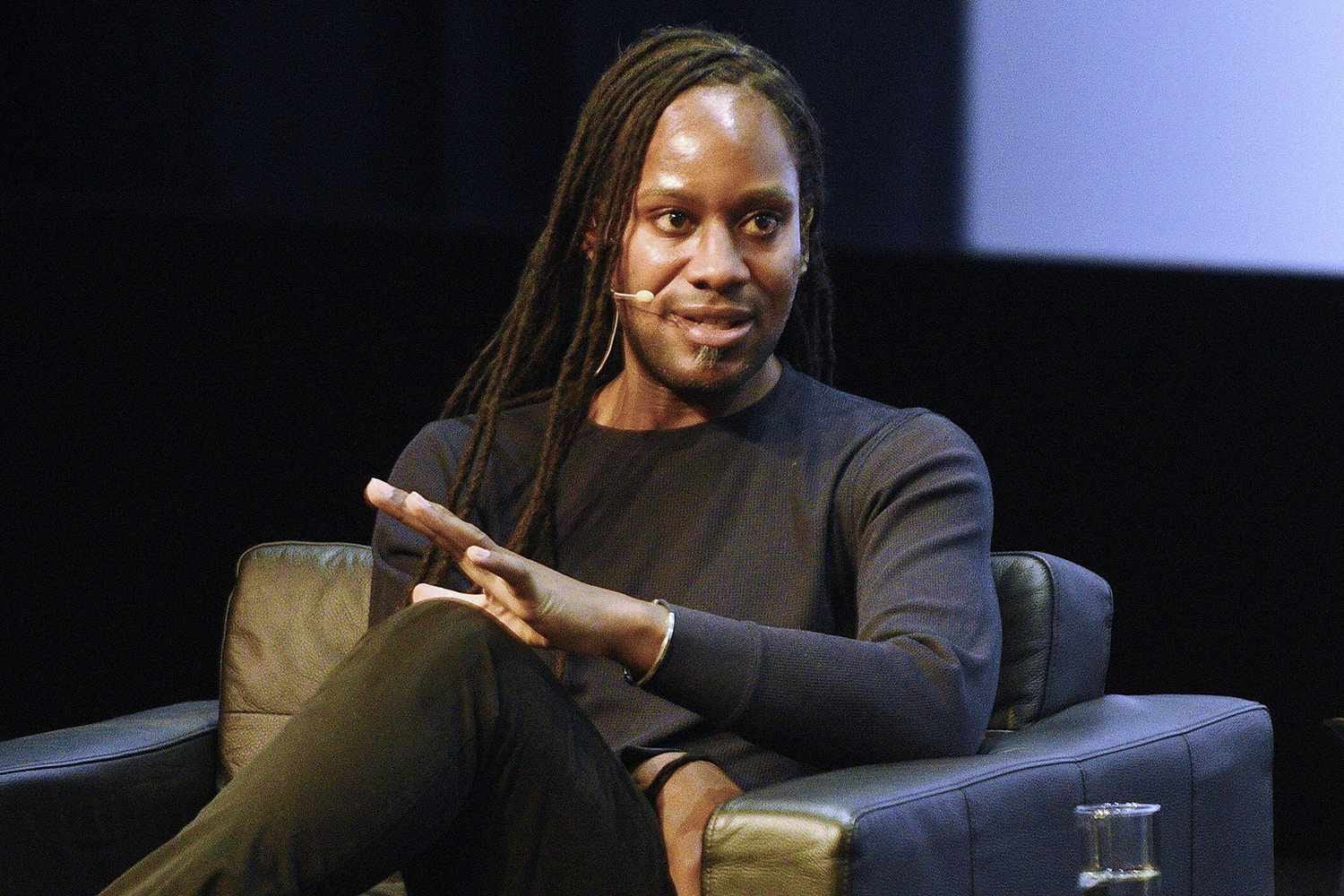
On the 14th of August, following weeks of constant media scrutiny, Dr Jason Arday, an author and former professor of sociology at the University of Cambridge, was found unresponsive and pronounced dead at his home.
Arday, who at 37 became Cambridge’s youngest Black professor, has, since his appointment as a professor in 2023, faced several accusations of plagiarism, as well as speculation about his claims about the brutality and violence he faced growing up, that he ran 30 marathons in 30 days and that he has subsequently raised 5.5 million pounds for charity over the last 20 years.
But in recent weeks, allegations were reignited by an article and the media piled on.
I am not here to assess whether the claims against Arday were accurate, but to unpack the campaign against him.
The diversity hire
Arday’s appointment as a Cambridge professor seemed to be less about his intelligence and more about the potential for him to be the poster child of Cambridge University’s work on inclusion.
Speaking to the Times of London, the University’s head of the Faculty of Education, Hilary Cremin, noted Arday’s wealth of experience: but all in relation to his status as someone from a minority group.
Cremin said that “hiring Arday was proof of the university’s commitment to tackling existing inequalities…Hopefully it is becoming increasingly clear that with concerted effort and a genuine commitment to change, those barriers that still exist either to working or studying at top universities can be overcome.”
The politics of the allegations
Arday’s plagiarism came to light the same year as his appointment. Dr David Harris, an Emeritus Professor at Plymouth University, emailed Arday about his plagiarism. Arday and the university rejected these claims.
Harris’ accusation was also followed by questioning of Arday’s claims about his childhood and the hardships he overcame, with Times Higher Education journalist, Jack Grove, contacting Arday for comment for an article. The article was subsequently scrapped as Arday hired defamation lawyers, threatening to sue, and Arday lodged a police complaint of harassment against Harris and Grove.
However, in July 2026, the claims were reignited by Nathan Cofnas’ Substack piece, ‘DEI Fraud and Cover-Up at Cambridge’, which compared passages of Arday’s 2015 PhD dissertation to a dissertation submitted by Paula Zwozdiak-Myers in 2009. Confas’ comparison shows that Arday did, in fact, copy much of Zwozdiak-Myers’ work, in most cases word for word, and in some with slight paraphrasing or alterations.
Dr Harris, who initially alerted Cambridge to Arday’s plagiarism, temporarily lost his status as professor emeritus at Plymouth Marjon University following a publication in 2024 where he critiqued critical race theory, a theory arguing that every structure in our society has racism. Harris stated that, while having some useful research, critical race theory “tends to find prejudice and things like microaggressions everywhere”.
Confas, on the other hand, was sacked from his position as a research associate by Emmanuel College and resigned from his fellowship at the University of Cambridge after publishing a blog post arguing that black people are less intelligent and that in a merit-based system, the number of black professors at Harvard University “would approach zero per cent”.
Rather than attempting to bring light to plagiarism and academic misconduct, the overtly racist and white supremacist publications by both of these academics, seem to suggest that their goal is not to shine light on Arday’s academic misconduct but about the supposed lack of intelligence of all Black academics.
The media’s pile on
‘Wokeness makes false gods and real tragedies‘.
Cambridge’s diversity poster boy in plagiarism row‘.
‘DEI must end to prevent another Jason Arday scandal’.
‘Jason Arday’s enablers are insufferable pseuds, too’.
I never got a PhD — after the Jason Arday Cambridge row, perhaps I should have tried
These are a few of the many awful headlines published by right-wing papers in Australia and the UK.
The UK’s The Telegraph, alone, has published 25 articles since 28 July.
Following the scrutiny, Arday resigned on 5 August, with Cambridge University announcing an independent investigation into Arday’s appointment on 6 August. It was just 8 days later that Arday was found dead.
Good Law Project, a group focused on legal action, investigations, and campaigning, which represented Arday following his resignation noted that many of the signatories of a letter it issued calling for a public inquiry into the media coverage prior to Arday’s death, actually warned media outlets about the nature of their reporting.
The letter now has 30,000 signatures and claims that Arday’s death followed “two weeks of relentless harassment”.
And Australia is not immune to the attack of media outlets either.
Race Discrimination Commissioner Giridharan Sivaraman told Cheek that the profitability of racism is a key reason coverage like this mounts.
“Careless or deliberately provocative reporting on race related issues provides sensational clickbait, which leads eyeballs to media platforms”, Sivaraman said.
The same profitability concept applies to the reach of these racist posts on social media, Sivaraman noted.
“There’s a direct nexus between, direct connection between profit and racism.”
“It comes at a great cost to communities that experience racism.”
The ripple effect on people of colour
The cost is evident. The ripple effects of the media’s individual pile-on impacts marginalised communities, as it called into question not just Arday’s integrity or the universities that endorsed him, but the scholarship of any neurodivergent person or people of colour.
Several papers and articles are now questioning the merits of Black academics, inferring themes of white supremacy and eugenics.
And despite there being several examples of white academics being accused and then found to have plagiarised work, this has never led to the questioning of the merits of white academics.
For instance, in 2005, Dr Neil Winn, a former senior lecturer in European studies, was accused of using substantial passages from another scholar’s work in his own book. The allegation, upheld at his university, the University of Leeds, led to disciplinary action but not a dismissal.
Similarly, in 2010, Nicola Morrison, a Cambridge senior lecturer in the Department of Land Economy, was found to have copied parts of her student’s dissertation without credit. She apologised, with a spokesperson stating the article was written “on a very short deadline, without properly attributing some of the source material. This was swiftly rectified, the lecturer has apologised to the student concerned, who does not wish to take the matter further, and the matter is closed.”
Most recently, in 2023, Dr William O’Reilly, an associate professor in early modern history at Cambridge University, threatened to sue Varsity if it reported that Dr O’Reilly copied one of his undergraduate’s supervision essays. However, he was unable to pursue legal action after it was revealed that he did, in fact, copy almost verbatim twelve pages from two essays by one of his students.
These academics faced little media scrutiny, moved on with their life and kept their position.
In the meantime, like Arday, Claudine Gay, a Black American political scientist, resigned as president of Harvard University in 2024 after allegations of plagiarism by conservative activists and media outlets.
And the accusations of plagiarism do not just start at the top; a 2021 US survey found that Black and Asian/Asian American university students were reported as being accused of plagiarism at double the rate compared to the overall student body average.
The responsibility of the universities
In an interview with the The Guardian, Priyamvada Gopal, professor of postcolonial studies at Cambridge’s English faculty, said that regardless of what an investigation finds into Arday, Cambridge should be held accountable for “the grotesque racism which this whole business has unleashed, and for the harm done both to the individual in the line of fire, to Black academics as a group, and the broader field of critical race studies.”
Gopal, along with other Cambridge academics, has called for an independent investigation into Arday’s appointment, questioning whether the university was seeking “public kudos for itself rather than teaching and research from this appointment”, given the media uproar that surrounded it.
Universities like Cambridge have scholarships focusing on support for Black, Asian, and other ethnic minorities and marginalised groups. But how effective are they when the universities are consistently proven to perpetuate racism in overt and covert actions?
To this point, Sivaraman says these scholarships are a “good thing,” but without cultural safety, and if systemic bias or prejudice is a limiting factor, then the universities are “luring someone in on a false promise.”
It is also clear that marginalised groups are not reaching the same levels of success as their white counterparts, with a 2021 study finding that less than 1% of university professors in the UK are black. In Australia, only 1.3% to 1.5% of university staff are Indigenous.
Accountability moving forward
The inquiry into the hiring process and UK’s media coverage is a step in ensuring a situation like this does not happen again.
In the Australian context, Sivaraman noted that recommendations from the Human Rights Commission’s National Anti-Racism Framework address key elements media organisations should follow when reporting on race-related issues.
“It is important that media organisations ensure that their staff and everyone involved have done anti-racism training and built their racial literacy”, Sivaraman said.
Sivaraman also pointed to the importance of building anti-racism training into the university curriculum.
“Universities are really important institutions, but we shouldn’t take it for granted that just because they’re places of learning and knowledge that they’re immune to racist beliefs and ways of learning.”
Sivaraman also noted that while protecting freedom of speech and the press is critical, regulating media organisations is still necessary to ensure content is not racist.
Regarding social media in particular, Sivaraman said there needs to be a protocol to report and remove racist content and, importantly, a Digital Duty of Care for the platforms to abide by.
As Sivaraman said, “Racism is like a disease. You can try and treat the symptoms. But until you address the cause of the disease, it remains entrenched in there like a cancer.”
Entrenched racism in our media and academic institutions is nothing new, and I know I’m not the first and will not be the last person to write about it. What I do hope is that this moment brings a moment of self-reflection for universities and their “we include everyone” propaganda.
Varsha Yajman is the Digital Content Producer at Cheek Media. She is a youth advocate and lawyer with a background in climate litigation and is passionate about looking at the intersection between race, climate justice, and mental health.
No posts
Comments
Nothing yet. Say the first thing.
Sign in to join the conversation.