
To be human is to feel. It’s proof we are alive.
I went to visit the new galleries at LACMA recently and was stopped — as I so often am — by the work of the great Ghanaian artist, El Anatsui.
His work shimmers and flows like silk, curving and bending like a river across the hallways. It beckons. Invites closer inspection. Stirs something almost primal — a deep, aching yearning to touch.
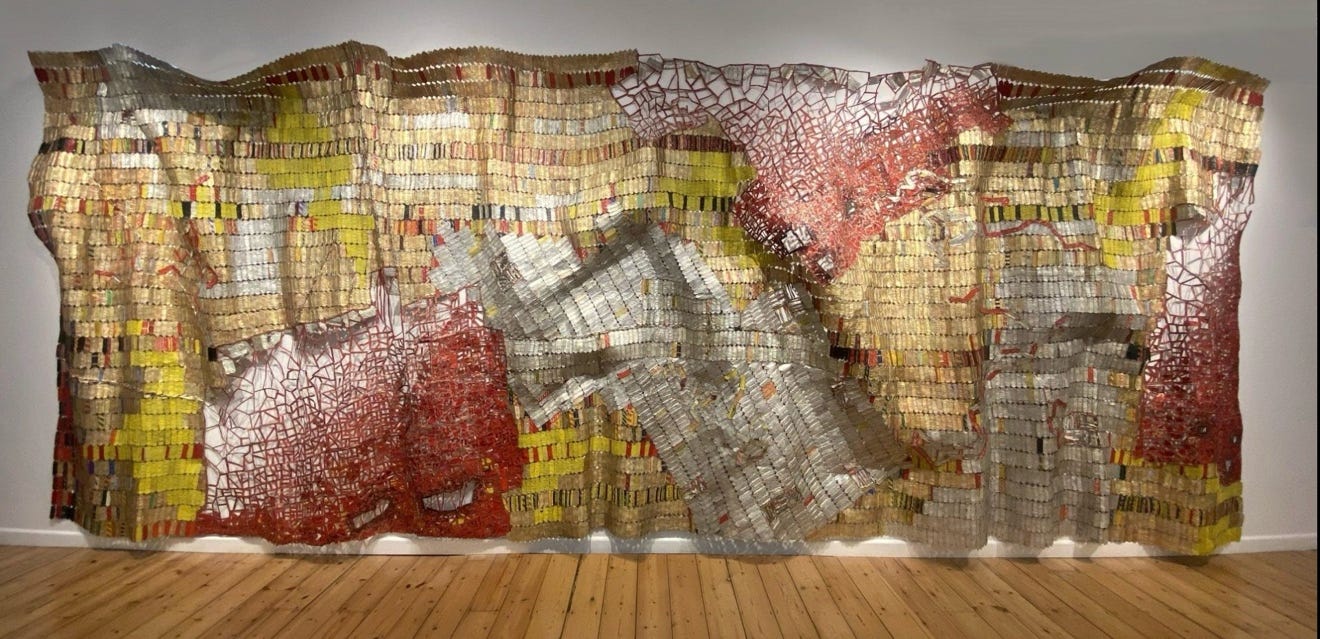
What makes his work all the more breathtaking is what it’s made of: bottle caps, tin labels, and aluminum seals. The flotsam and jetsam of everyday human consumption, painstakingly stitched together with copper wire into something that takes your breath away. It is the story of us — our common denominators, our shared debris — converted into pure gloriousness. A testament to our innate and irreplaceable ability to weave the abstract human experience into something physical.
There is nothing precious about the materials. And yet the work is unutterably precious. Tangible. Touchable. Three-dimensional.
And I think that is the pull.
We are living in an increasingly two-dimensional world. Flat screens. Memes and emojis. Disappearing texts. Driverless cars and invisible food deliveries. We have been handed a life of frictionless convenience — seamless, streamlined, optimized — and slowly, quietly, it is hollowing us out.
Because here is the thing about friction: we need it to keep us warm.
The result of this slow flattening is what I’ve started calling Haptic Hunger — a deep, embodied craving for depth, texture, touch, and presence. A longing not just to scroll through life but to feel it. To leave fingerprints on it. To carve our initials somewhere — to prove, in the most elemental way possible, that we were here.
And it is sparking a revolution. We can see it everywhere.
Last Saturday, I was walking through Santa Monica when I noticed a line of tween girls snaking out the door of a small shop. I stopped. Looked closer. It was a DIY beading store — but it was so much more than that.
Inside, girls were covering Lucite phone cases with stickers and charms. Making key fobs. Crafting sneaker charms. Building small, deeply personal talismans of their own lives — tiny, tactile stories told in color and texture and glitter. Every single face was shining with the particular joy that only comes from making something with your own two hands. Something uniquely theirs.
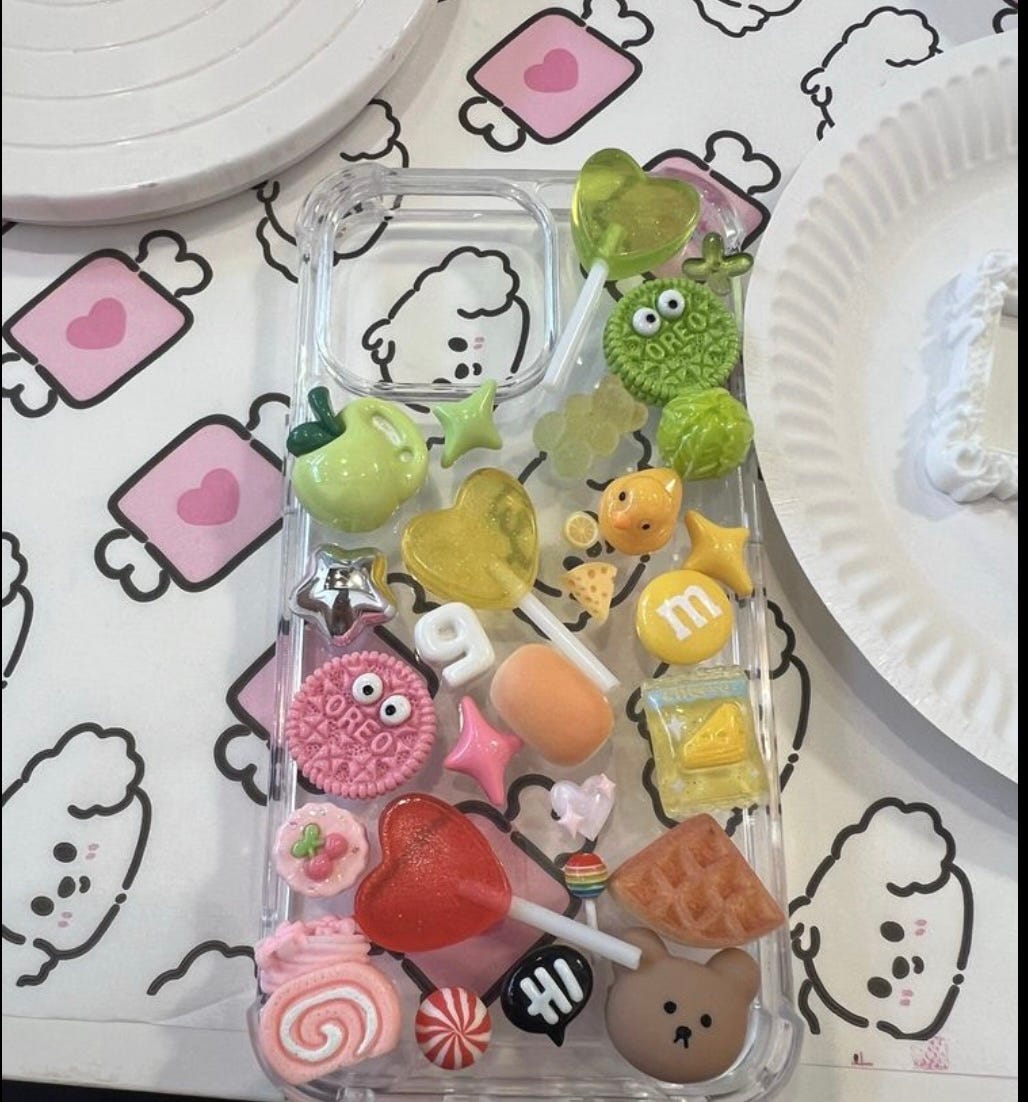
This is not a trend. This is a signal. The maker moment is real – and it is essential.
It’s a return to human. To employing all of our senses to regain a sense of time – to reassert ourselves into the story of us.
Decades ago, right at the moment social media was just beginning to take hold — I noticed something that has stayed with me ever since. I was on a field trip talking with young college girls. All of them had covered their dorm room doors with pictures. Old-fashioned Polaroids. Track meets and sleepovers and best-friend-at-the-beach shots. A kind of visual autobiography, a self-portrait assembled in four-by-three inches of glossy paper, mounted at eye level for strangers to read. A decoupaged dissertation on who they were, and what they loved.
They had CD cases then. Physical books with cracked spines. Totems they could arrange and rearrange — a pastiche of identity, a way to say here is who I am before we’ve even spoken. Like those Egyptian warriors whose faces have outlasted millennia, they were constructing their own cartouches. Proof of a life, pressed into the physical world.
And then technology quietly took all of that away.
Until today.
Over the past several years, I have watched the resistance to the ephemeral grow.
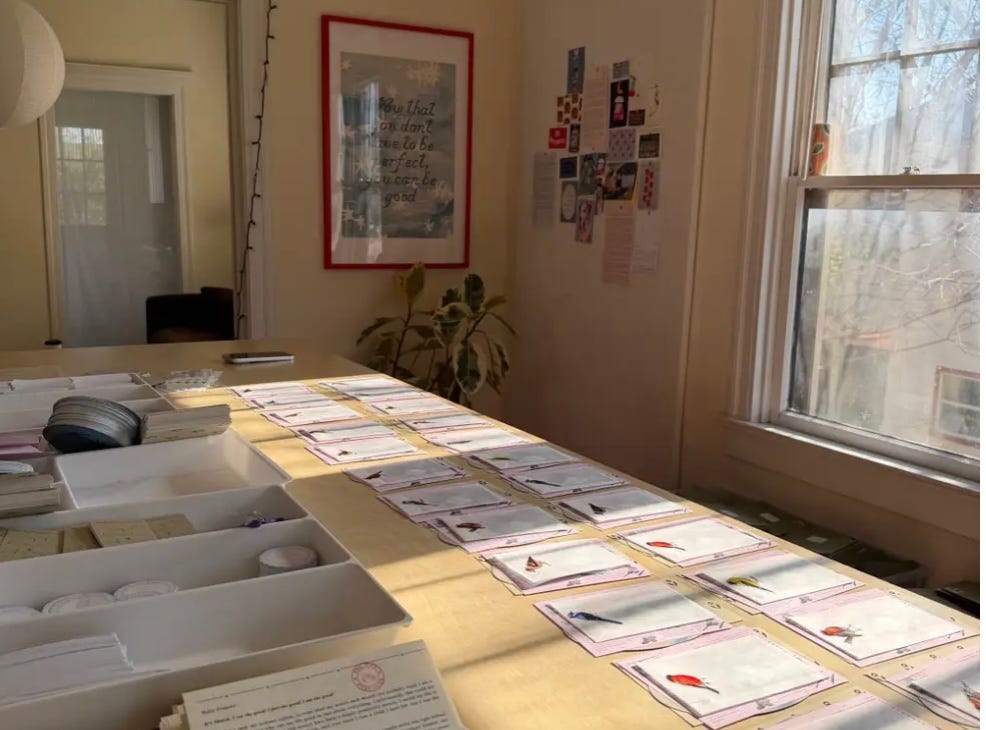
Scrapbooking, “junk journaling,” and newsletters are emerging around the globe. People are signing up for pen pals, subscribing by the thousands to postcard exchanges, and “snail mail clubs”, with Reddit estimating there are over 10,000 such clubs in existence today and growing.
Annotated books and personalized ‘zines continue to grow, and print magazines are making a comeback.
Consider the explosive growth of fragrance. Scent is the most memory-drenched sense we have — one breath and you are six years old, or nineteen, or standing in your grandmother’s kitchen. The double-digit surge in perfume sales isn’t vanity. It’s hunger. We are chasing the deepest immersive experience the body knows. We are diving headfirst into the physical.
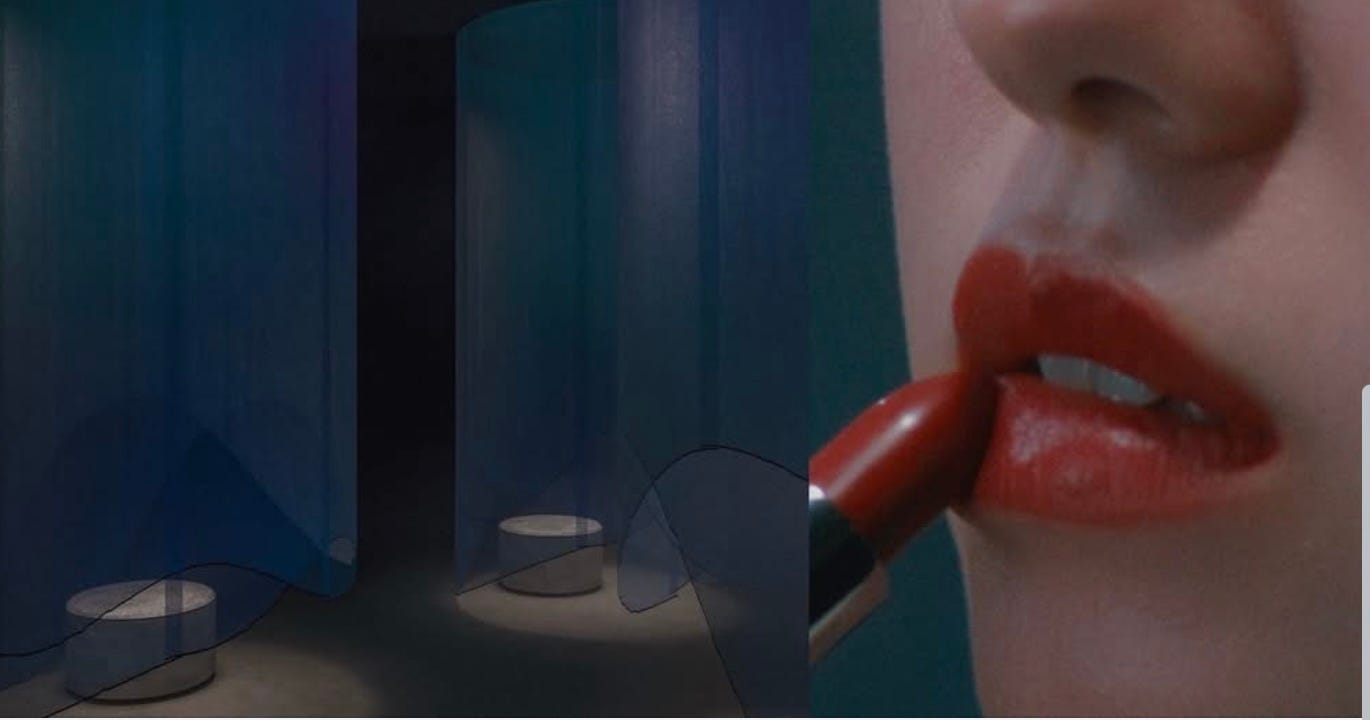
Japanese cosmetics brand KissMe Ferme understood this instinctively. Their “lipstick in the dark” pop-up stripped away every distraction — dimmed lights, hushed space — leaving customers with nothing but the pure sensation of the product against their lips. No mirror. No performance. Just touch. Brands paying attention are already building for this hunger.
Last year, I once again spent time on several college campuses, and what I found moved me deeply. The polaroids on the doors were gone. The hallways stood mute and silent.
But still, these students — Gen Z, the most digitally fluent generation alive — were determined to send out their own codes of being. As I walked through the libraries, I saw laptops blanketed in stickers. Water bottles layered in them. Notes written directly onto their jeans. Little hand-lettered declarations on backpacks and notebooks. Morse codes of self, sent out into the world.
Not distress signals exactly — but messages in a bottle. Tiny, handmade dispatches, set adrift and hoping someone will pick them up, read them carefully, and say: hi.
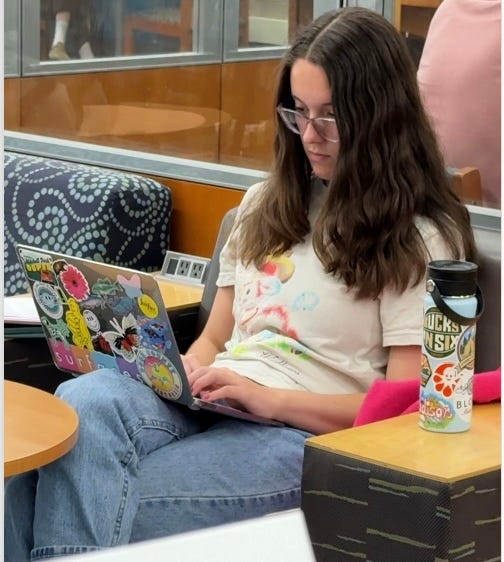
This is what we are doing when we craft and make and build. We are constructing time capsules of our most precious moments. We are insisting, the way that Egyptian warrior insisted eight thousand years ago, that we were here. That we lived. That we loved. That we existed and it mattered.
It’s why we love secondhand things — a vintage jacket, a dog-eared paperback, a thrifted lamp. We aren’t just buying objects. We are connecting with the story already living inside them, adding our own chapter, and passing them forward. There is something quietly radical about that. Something that says: I believe there is a future. I believe someone will be here to receive what I am leaving behind.
In a world that can feel increasingly disposable and ephemeral — where content vanishes in 24 hours and last year’s phone is already obsolete — the handmade, the physical, the personally marked object is an act of defiance. A declaration of permanence.
We are not just passing through. We are leaving proof.
Here is what I want to be very clear about: this is not a fear of technology.
The very people making the biggest moves toward the physical, the sensorial, the handmade — they are not technophobes. They are digital natives. They are adept. They grew up fluent in the language of screens and algorithms. They know how to use every tool in the box.
But technology was never offered to them as a choice. It was a room they were shoved into — cold, white, antiseptic — from the time they were children. And now, like Dorothy flinging open the door from that gray Kansas farmhouse, they are stepping out into the technicolor world of real life. A world where senses exist. Where things taste like something. Where the weight of another person’s hand in yours is irreplaceable by any app ever built.
This is not a running away. This is an opening up.
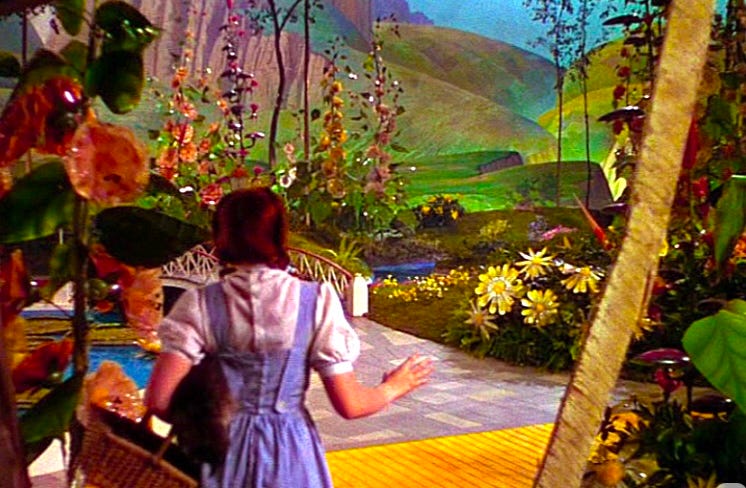
Knitting circles are filling up. Scrapbooking is back. Craft sessions, memory-making workshops, ceramics classes — all oversubscribed, all electric with something that feels less like a hobby and more like a hunger being fed. The nostalgia for the ’90s isn’t just aesthetic — it’s sensory. We miss the chokers and the low-slung belts, yes, but more than that, we miss the physicality of that era. The DVD you held in your hands. The video store you had to walk into. The conversation you had to have. Blockbuster is having a revival not because people are afraid of Netflix, but because there was something in that ritual — the browsing, the touching, the choosing — that streaming quietly stole from us.
We didn’t notice it was gone until we started to ache for it.
The more synthetic life becomes…
the more we crave fingerprints.
Texture. Ritual. Mess. Memory. Human evidence.
This hunger — haptic, primal, unstoppable — has enormous implications for how we design the next decade. For retail, for restaurants, for entertainment, for every space where human beings gather. The brands and experiences that understand this won’t just survive the coming shift. They will define it.
The tipping point isn’t coming. It’s already here, stitched together in copper wire and bottle caps, glittering on a phone case outside a shop in Santa Monica.
We are building ourselves back.
What are you making right now? I’d love to know. Drop it in the comments.
No posts
Comments
Nothing yet. Say the first thing.
Sign in to join the conversation.