
Emanuel Garbin, Guy Adam, Oded Krams, Zohar Barzelay, Eran Guendelman, Michael Schwarz, Moran Vatelmacher, Yigal Shenkman, Eli Peker, Itai Druker, Uri Patish, Yoav Blum, Max Bluvstein, Junxuan Li, Rawal Khirodkar, Shunsuke Saito
Meta
🚧 Project: N/A
📄 Paper: https://arxiv.org/pdf/2510.14081
❌ ArXiv: https://arxiv.org/abs/2510.14081
💻 Code: N/A
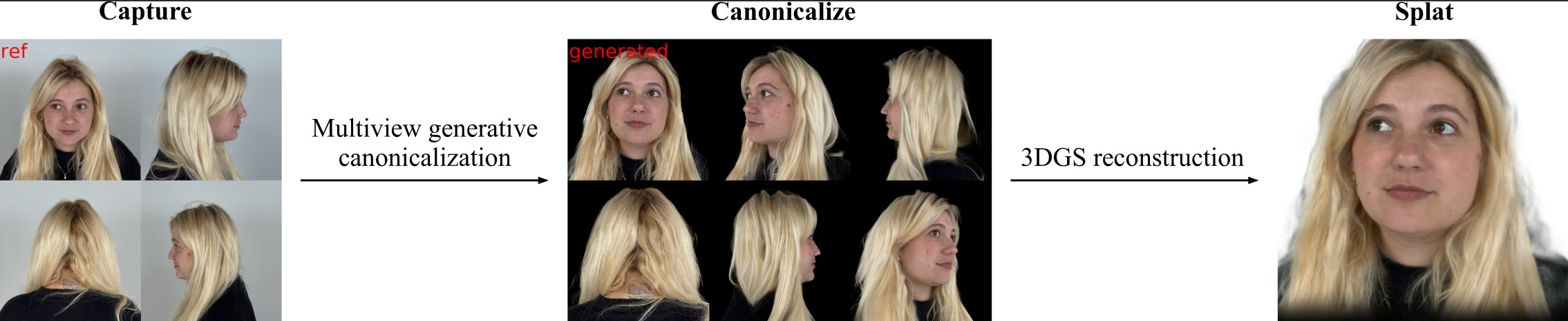
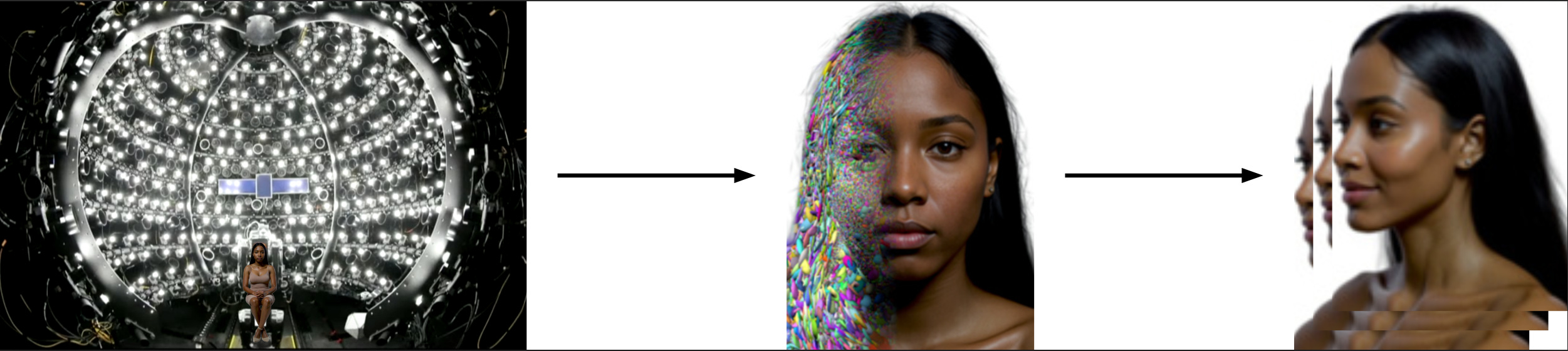
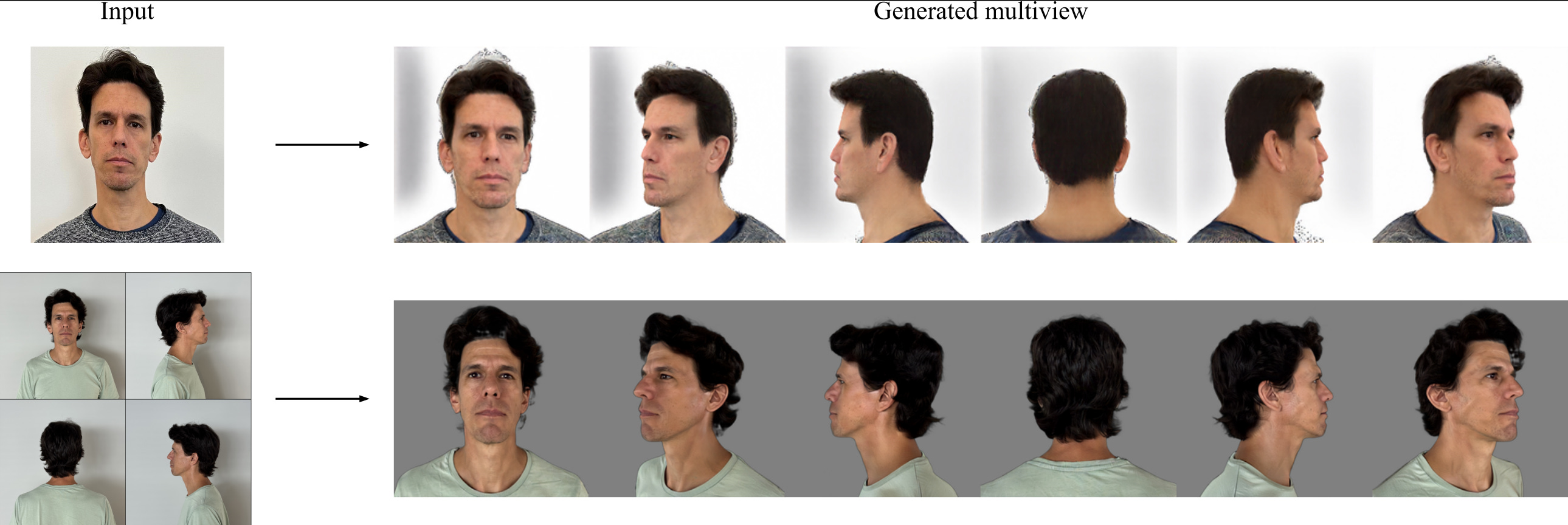
We present a novel, zero-shot pipeline for creating hyperrealistic, identity-preserving 3D avatars from a few unstructured phone images. Existing methods face several challenges: single-view approaches suffer from geometric inconsistencies and hallucinations, degrading identity preservation, while models trained on synthetic data fail to capture high-frequency details like skin wrinkles and fine hair, limiting realism. Our method introduces two key contributions: (1) a generative canonicalization module that processes multiple unstructured views into a standardized, consistent representation, and (2) a transformer-based model trained on a new, large-scale dataset of high-fidelity Gaussian splatting avatars derived from dome captures of real people. This “Capture, Canonicalize, Splat” pipeline produces static quarter-body avatars with compelling realism and robust identity preservation from unstructured photos.
Zhe Li, Weihao Yuan, Weichao Shen, Siyu Zhu, Zilong Dong, Chang Xu
1 University of Sydney
2 Alibaba Group
3 Fudan University
🚧 Project: (coming…)
📄 Paper: https://arxiv.org/pdf/2510.14954
❌ ArXiv: https://arxiv.org/abs/2510.14954
💻 Code: (coming…)
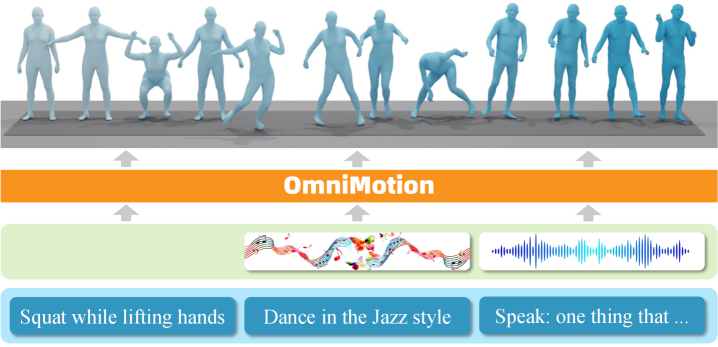
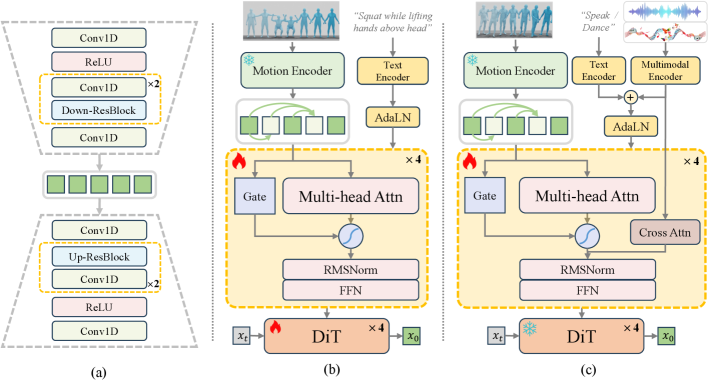
Whole-body multi-modal human motion generation poses two primary challenges: creating an effective motion generation mechanism and integrating various modalities, such as text, speech, and music, into a cohesive framework. Unlike previous methods that usually employ discrete masked modeling or autoregressive modeling, we develop a continuous masked autoregressive motion transformer, where a causal attention is performed considering the sequential nature within the human motion. Within this transformer, we introduce a gated linear attention and an RMSNorm module, which drive the transformer to pay attention to the key actions and suppress the instability caused by either the abnormal movements or the heterogeneous distributions within multi-modalities. To further enhance both the motion generation and the multimodal generalization, we employ the DiT structure to diffuse the conditions from the transformer towards the targets. To fuse different modalities, AdaLN and cross-attention are leveraged to inject the text, speech, and music signals. Experimental results demonstrate that our framework outperforms previous methods across all modalities, including text-to-motion, speech-to-gesture, and music-to-dance. The code of our method will be made public.
Shaowei Liu, Chuan Guo, Bing Zhou, Jian Wang
1University of Illinois Urbana-Champaign
2Snap Research
🚧 Project: https://stevenlsw.github.io/ponimator/
📄 Paper: https://arxiv.org/pdf/2510.14976
❌ ArXiv: https://arxiv.org/abs/2510.14976
💻 Code: https://github.com/stevenlsw/ponimator
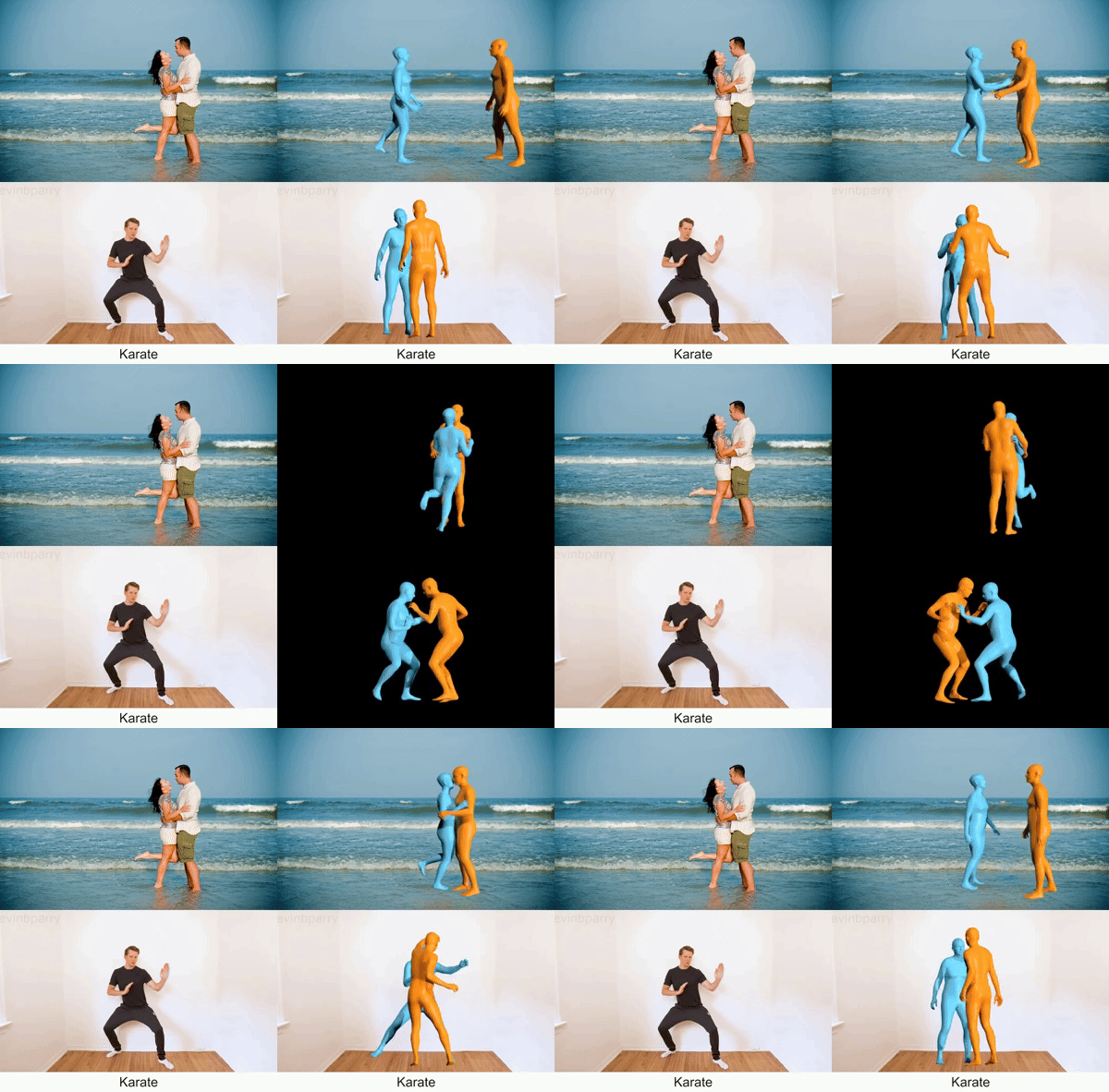
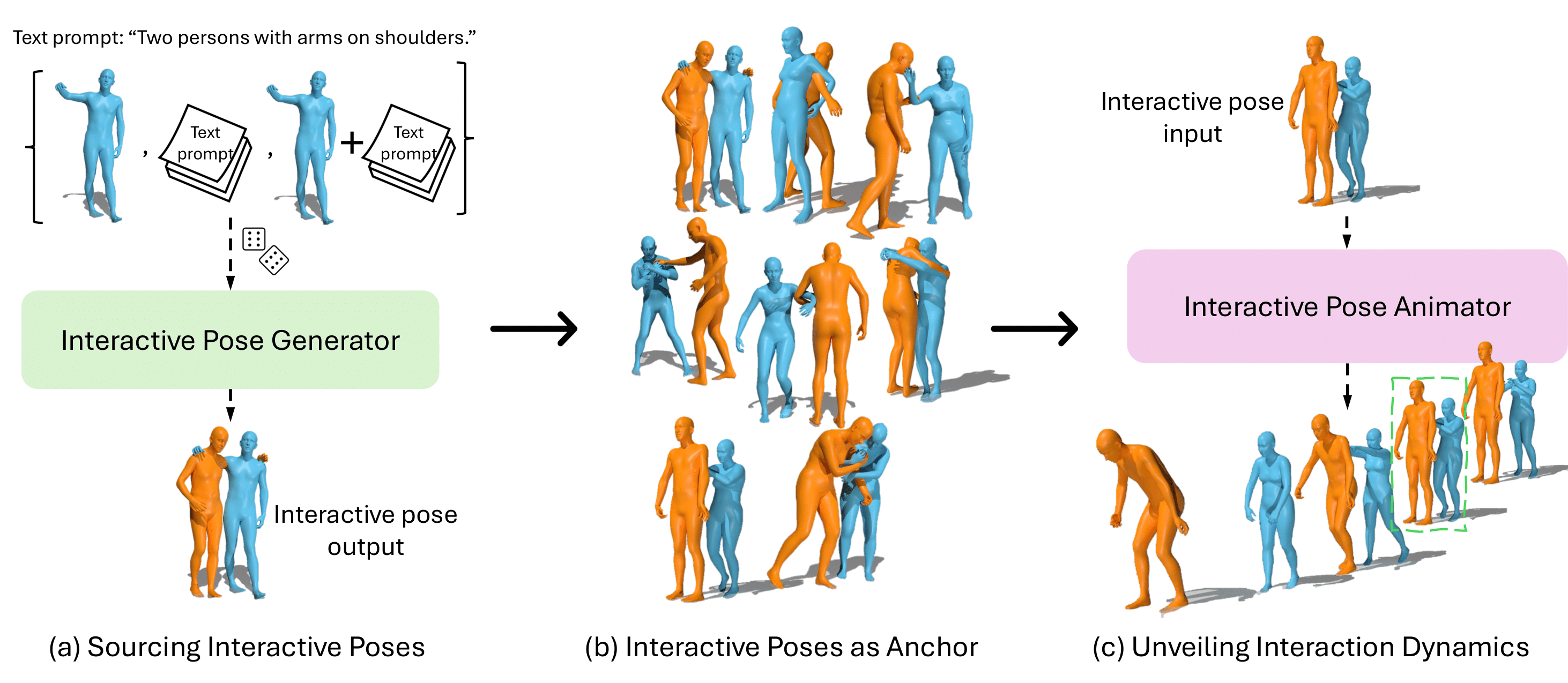
Close-proximity human-human interactive poses convey rich contextual information about interaction dynamics. Given such poses, humans can intuitively infer the context and anticipate possible past and future dynamics, drawing on strong priors of human behavior. Inspired by this observation, we propose Ponimator, a simple framework anchored on proximal interactive poses for versatile interaction animation. Our training data consists of close-contact two-person poses and their surrounding temporal context from motion-capture interaction datasets. Leveraging interactive pose priors, Ponimator employs two conditional diffusion models: (1) a pose animator that uses the temporal prior to generate dynamic motion sequences from interactive poses, and (2) a pose generator that applies the spatial prior to synthesize interactive poses from a single pose, text, or both when interactive poses are unavailable. Collectively, Ponimator supports diverse tasks, including image-based interaction animation, reaction animation, and text-to-interaction synthesis, facilitating the transfer of interaction knowledge from high-quality mocap data to open-world scenarios. Empirical experiments across diverse datasets and applications demonstrate the universality of the pose prior and the effectiveness and robustness of our framework.
Guocheng Gordon Qian, Daniil Ostashev, Egor Nemchinov, Avihay Assouline, Sergey Tulyakov, Kuan-Chieh Jackson Wang, Kfir Aberman
Snap Inc
🚧 Project: https://snap-research.github.io/composeme/
📄 Paper: https://arxiv.org/pdf/2509.18092
❌ ArXiv: https://arxiv.org/abs/2509.18092
💻 Code: N/A
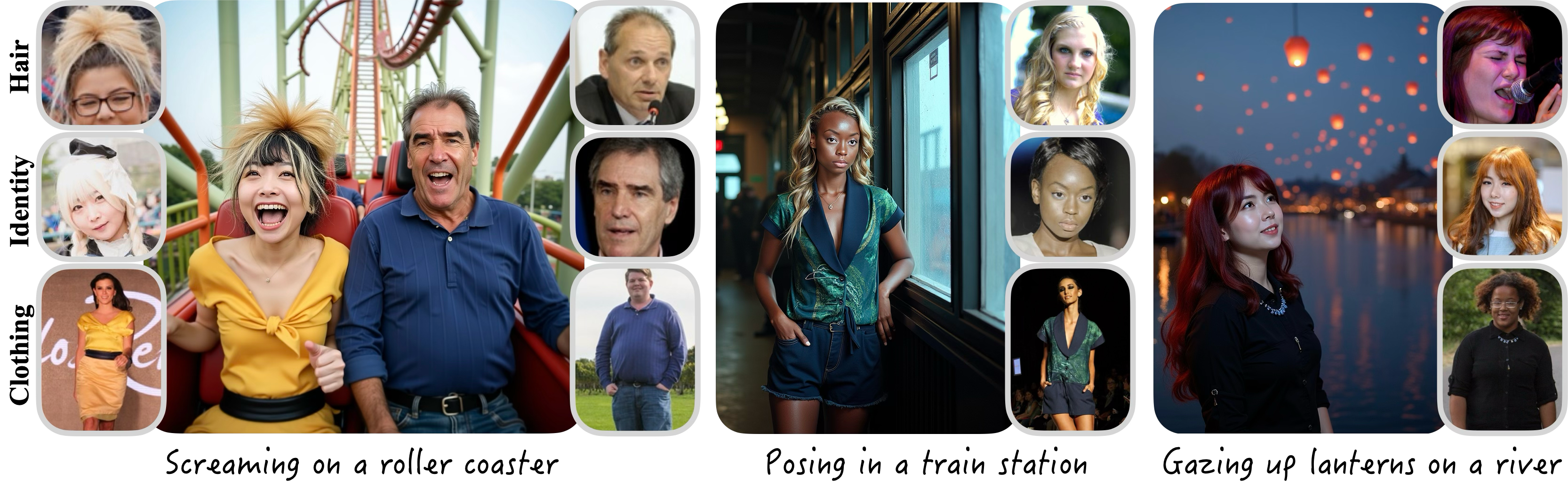
Generating high-fidelity images of humans with fine-grained control over attributes such as hairstyle and clothing remains a core challenge in personalized text-to-image synthesis. While prior methods emphasize identity preservation from a reference image, they lack modularity and fail to provide disentangled control over specific visual attributes. We introduce a new paradigm for attribute-specific image prompting, in which distinct sets of reference images are used to guide the generation of individual aspects of human appearance, such as hair, clothing, and identity. Our method encodes these inputs into attribute-specific tokens, which are injected into a pre-trained text-to-image diffusion model. This enables compositional and disentangled control over multiple visual factors, even across multiple people within a single image. To promote natural composition and robust disentanglement, we curate a cross-reference training dataset featuring subjects in diverse poses and expressions, and propose a multi-attribute cross-reference training strategy that encourages the model to generate faithful outputs from misaligned attribute inputs while adhering to both identity and textual conditioning. Extensive experiments show that our method achieves state-of-the-art performance in accurately following both visual and textual prompts. Our framework paves the way for more configurable human image synthesis by combining visual prompting with text-driven generation. Webpage is available at: this https URL.
Liao Shen, Wentao Jiang, Yiran Zhu, Tiezheng Ge, Zhiguo Cao, Bo Zheng
1Taobao & Tmall Group of Alibaba
2Huazhong University of Science and Technology
🚧 Project: https://ipro-alimama.github.io/
📄 Paper: https://arxiv.org/pdf/2510.14255
❌ ArXiv: https://arxiv.org/abs/2510.14255
💻 Code: https://alibaba.github.io/ROLL/...
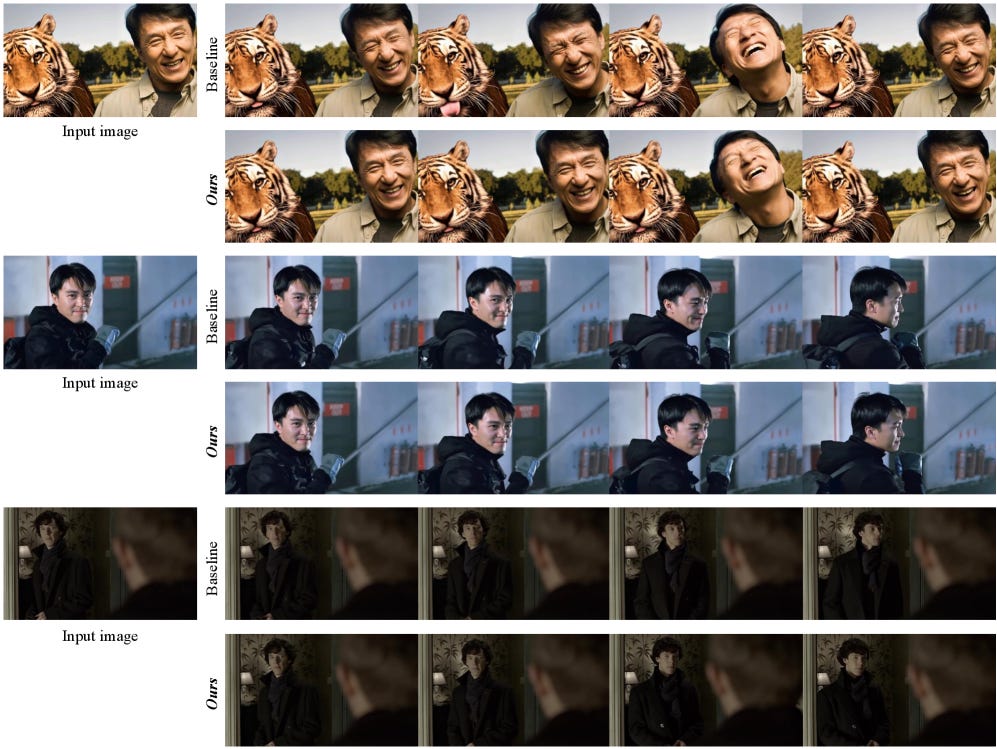
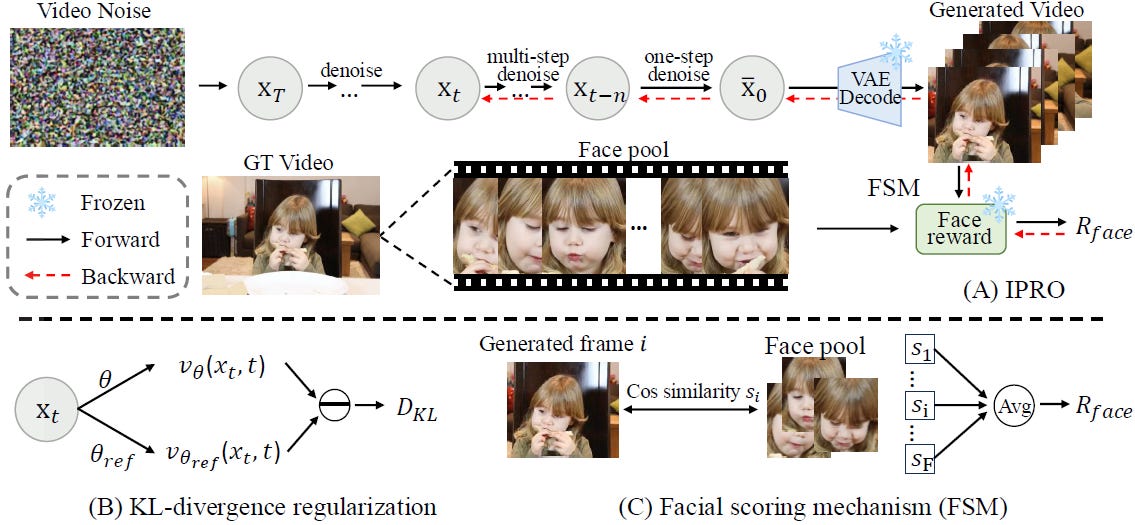
Recent advances in image-to-video (I2V) generation have achieved remarkable progress in synthesizing high-quality, temporally coherent videos from static images. Among all the applications of I2V, human-centric video generation includes a large portion. However, existing I2V models encounter difficulties in maintaining identity consistency between the input human image and the generated video, especially when the person in the video exhibits significant expression changes and movements. This issue becomes critical when the human face occupies merely a small fraction of the image. Since humans are highly sensitive to identity variations, this poses a critical yet under-explored challenge in I2V generation. In this paper, we propose Identity-Preserving Reward-guided Optimization (IPRO), a novel video diffusion framework based on reinforcement learning to enhance identity preservation. Instead of introducing auxiliary modules or altering model architectures, our approach introduces a direct and effective tuning algorithm that optimizes diffusion models using a face identity scorer. To improve performance and accelerate convergence, our method backpropagates the reward signal through the last steps of the sampling chain, enabling richer gradient feedback. We also propose a novel facial scoring mechanism that treats faces in ground-truth videos as facial feature pools, providing multi-angle facial information to enhance generalization. A KL-divergence regularization is further incorporated to stabilize training and prevent overfitting to the reward signal. Extensive experiments on Wan 2.2 I2V model and our in-house I2V model demonstrate the effectiveness of our method.
Hengyuan Xu, Wei Cheng, Peng Xing, Yixiao Fang, Shuhan Wu, Rui Wang, Xianfang Zeng, Daxin Jiang, Gang Yu, Xingjun Ma, Yu-Gang Jiang
1 Fudan University
2 StepFun
🚧 Project: https://doby-xu.github.io/WithAnyone/
📄 Paper: https://arxiv.org/pdf/2510.14975
❌ ArXiv: https://arxiv.org/abs/2510.14975
💻 Code: https://github.com/Doby-Xu/WithAnyone

Identity-consistent generation has become an important focus in text-to-image research, with recent models achieving notable success in producing images aligned with a reference identity. Yet, the scarcity of large-scale paired datasets containing multiple images of the same individual forces most approaches to adopt reconstruction-based training. This reliance often leads to a failure mode we term copy-paste, where the model directly replicates the reference face rather than preserving identity across natural variations in pose, expression, or lighting. Such over-similarity undermines controllability and limits the expressive power of generation. To address these limitations, we (1) construct a large-scale paired dataset MultiID-2M, tailored for multi-person scenarios, providing diverse references for each identity; (2) introduce a benchmark that quantifies both copy-paste artifacts and the trade-off between identity fidelity and variation; and (3) propose a novel training paradigm with a contrastive identity loss that leverages paired data to balance fidelity with diversity. These contributions culminate in WithAnyone, a diffusion-based model that effectively mitigates copy-paste while preserving high identity similarity. Extensive qualitative and quantitative experiments demonstrate that WithAnyone significantly reduces copy-paste artifacts, improves controllability over pose and expression, and maintains strong perceptual quality. User studies further validate that our method achieves high identity fidelity while enabling expressive controllable generation.
No posts
Comments
Nothing yet. Say the first thing.
Sign in to join the conversation.