
Hi Again.
It’s my six year Milky-Way-versary and I’m back to chronicle my firsts from each year of the adventure. There has certainly been an evolution in my skills, as well as my gear!
2020
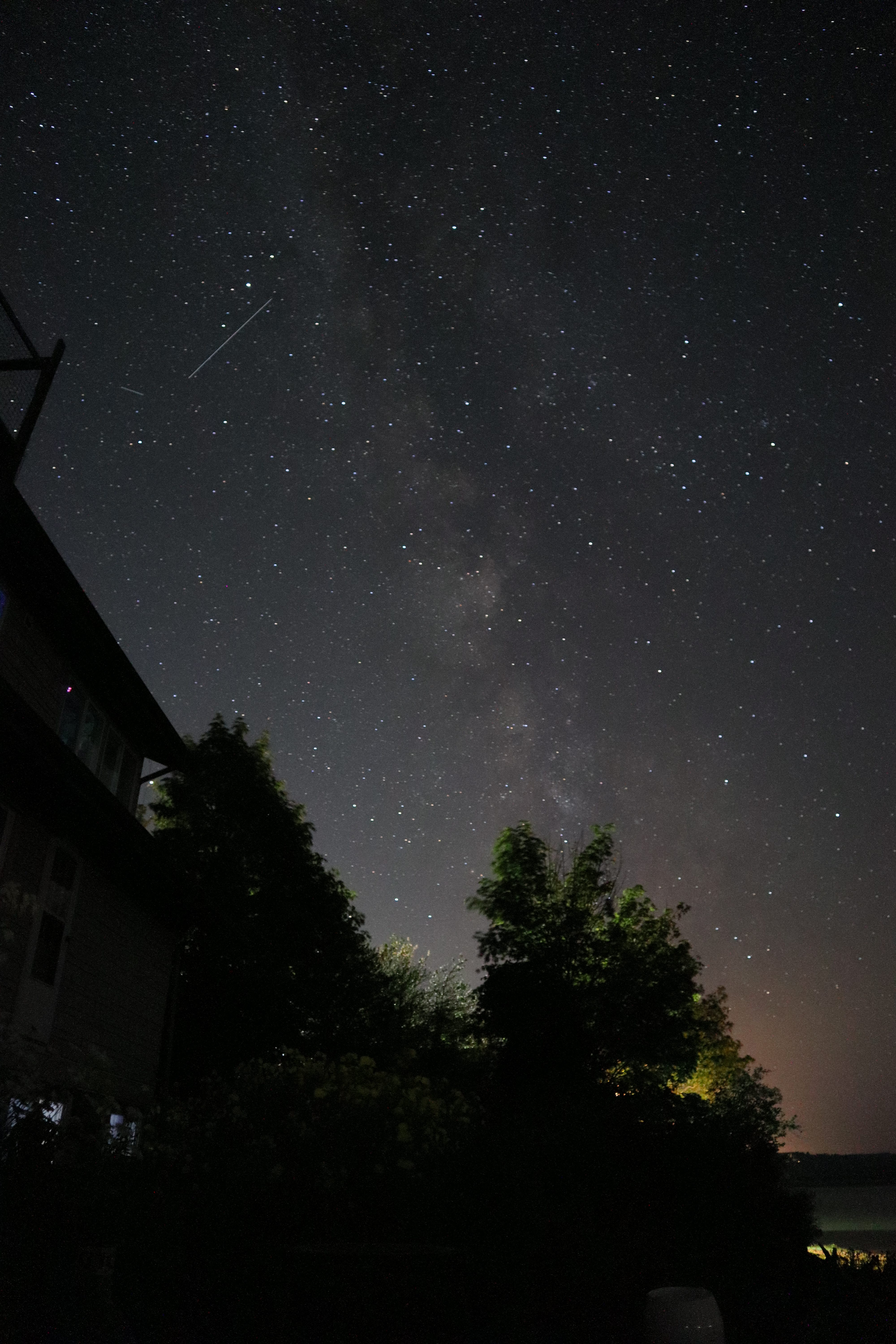
Six years ago on July 21, 2020 at 12:52 a.m. PDT, I took my first photograph of the Milky Way. Standing out on my waterfont deck, facing south, the neighbor’s tree blocking most of the view. I was just beginning to learn how to use my 35 mm camera, and had taken my first after dark photo a few weeks earlier, making images of the Comet Neowise. I took two or three images that night, and that was it for the season.
2021
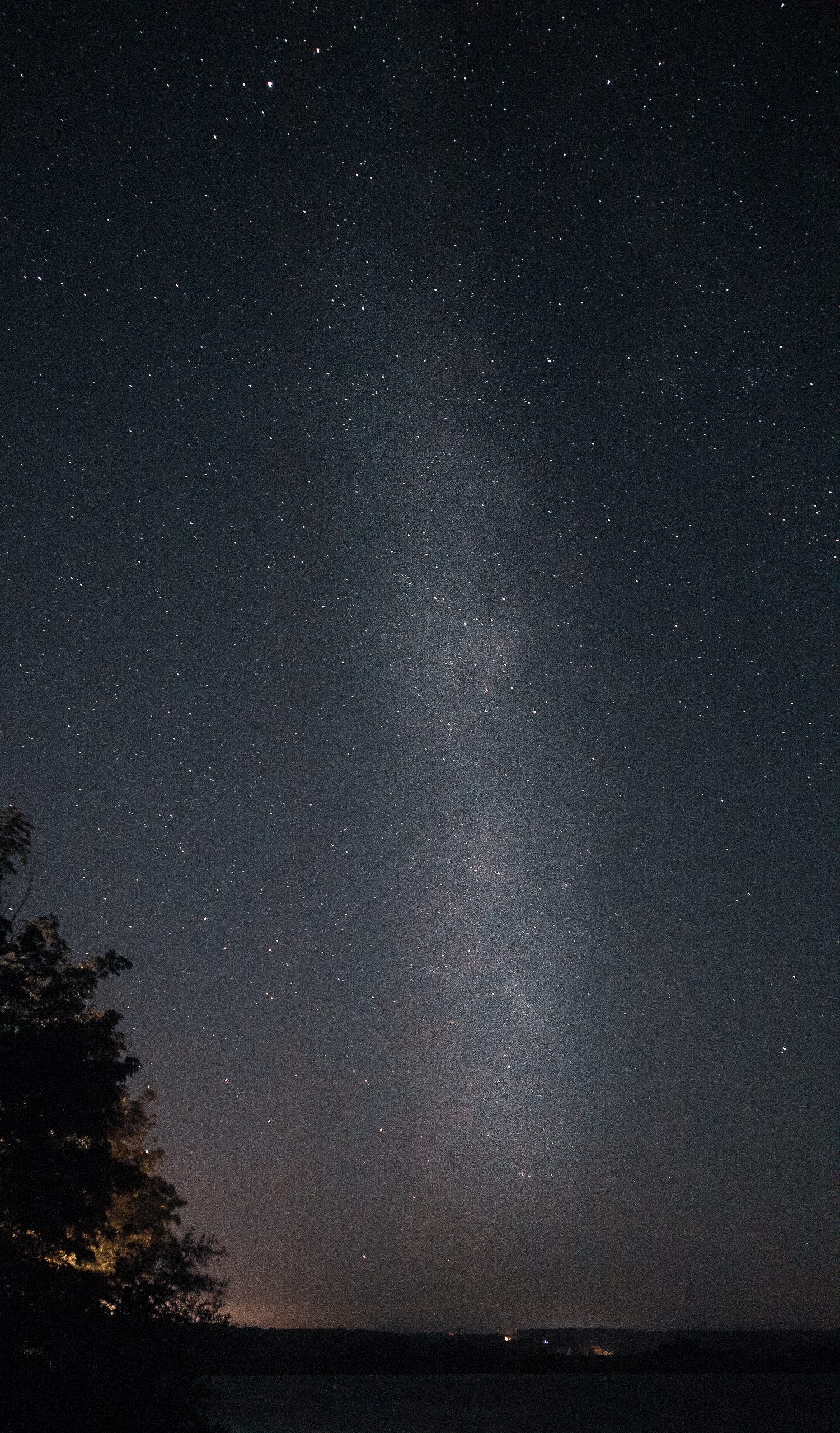
It would be another year before I took my second Milky Way photo on August 29, 2021. And that was my only Milky Way image of the season. I don’t know what I did upon editing, but I somehow managed to paint the Milky Way core unnaturally white and I can’t undo it.
2022
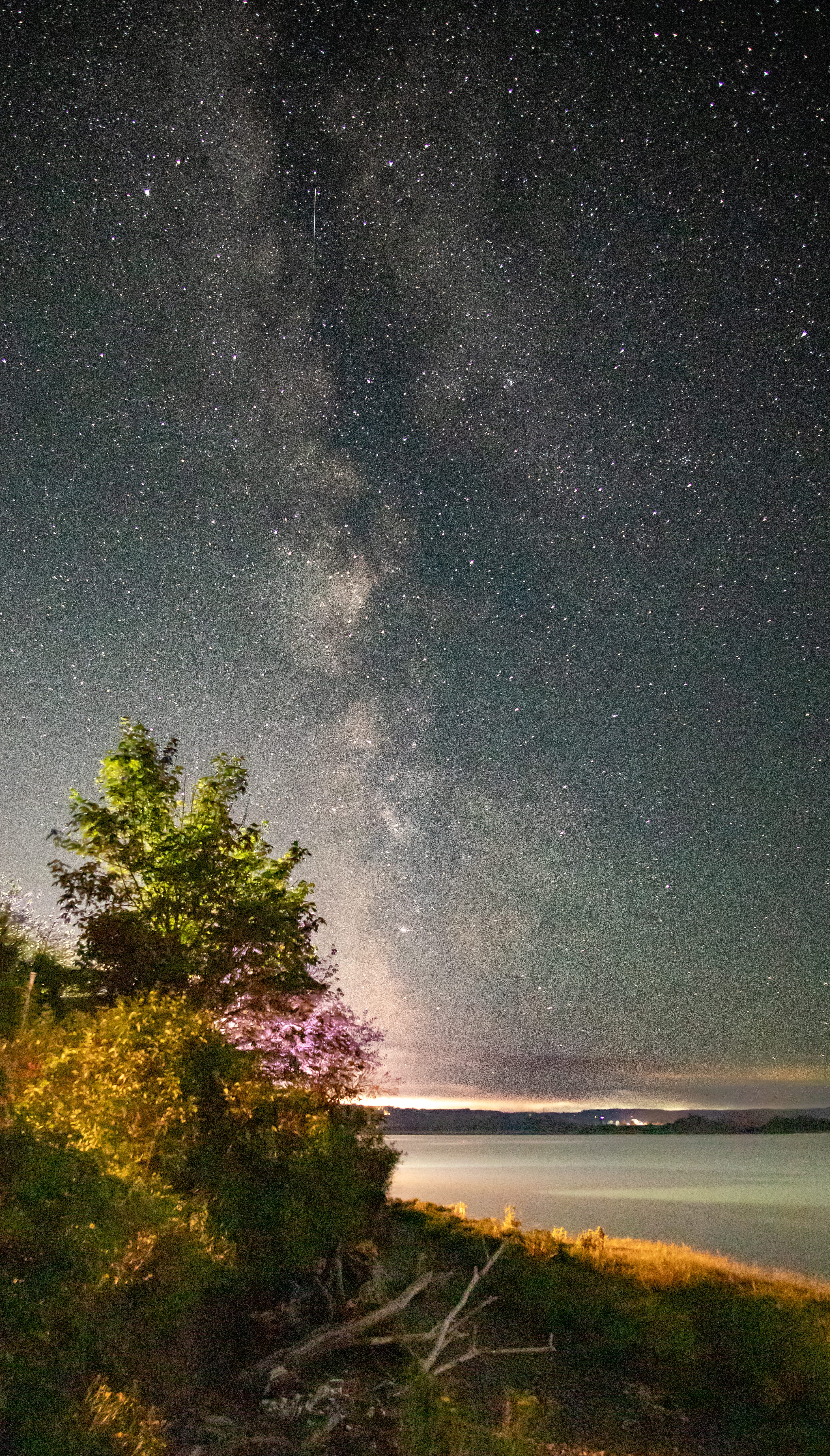
In February of 2022, I found Kristine Rose photography and her online Milky Way training, where I learned how to better use the gear I had, and how to edit my photos properly. Taking her class I realized that I needed a lens with a wider aperture in order to capture enough light to photograph the Milky Way satisfactorily. It was late July before I could test out my new skills in “my big backyard.” Once I did, Nightscape/Milky Way photography became my favorite genre, and I spent a lot of time after midnight on clear nights after the moon had set out on the deck with my camera.
2023
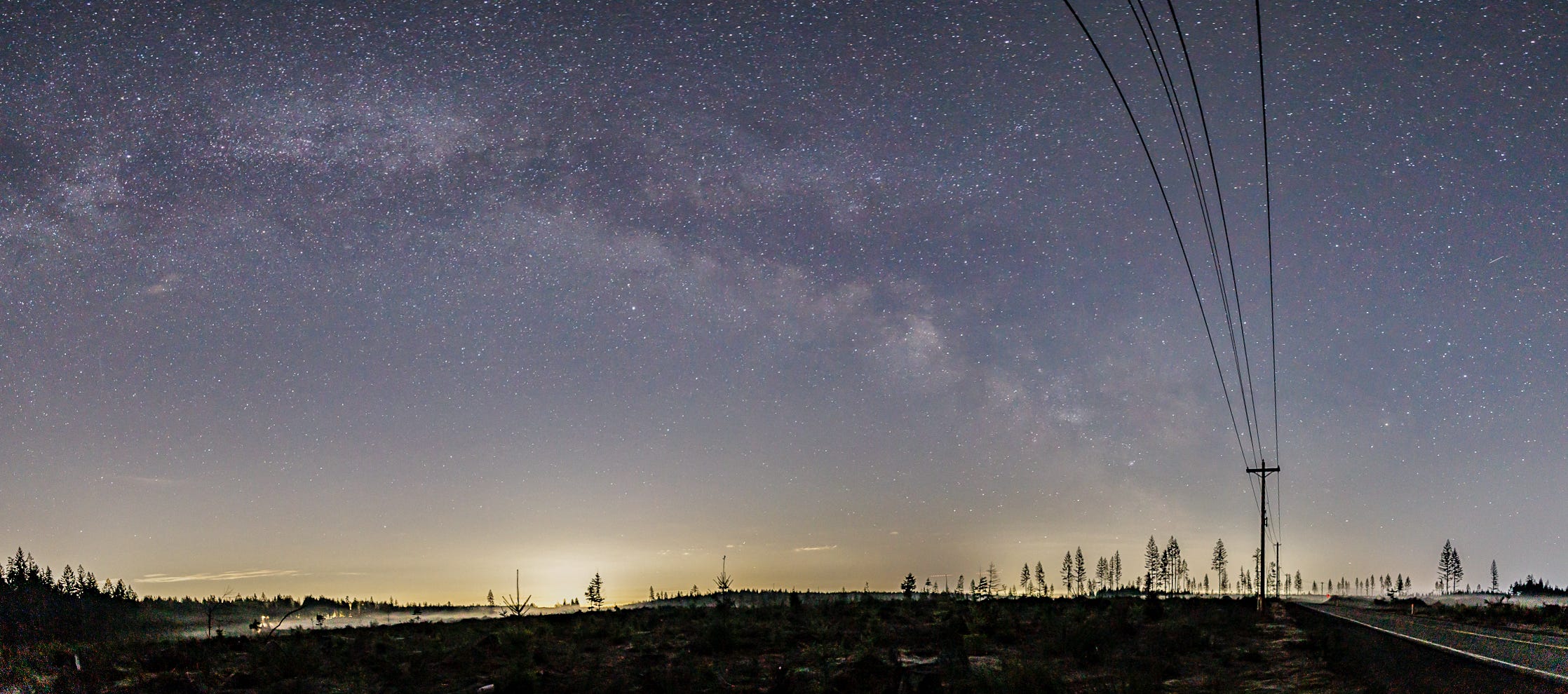
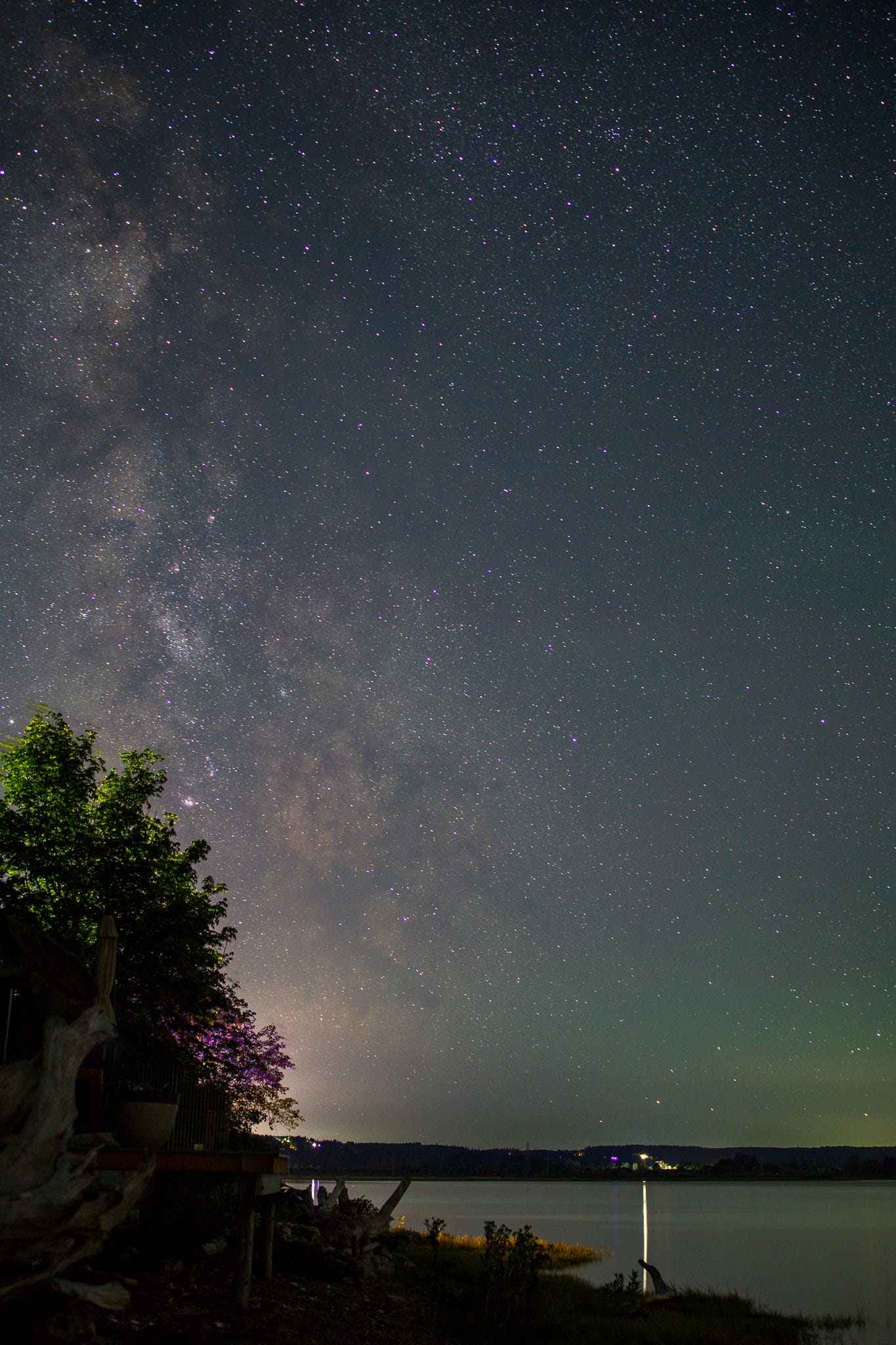
When 2023 rolled around, I upgraded to an entry level full frame camera, which allows me to gather more light into the images, and helps reduce the noise. I managed one outing at 5 a.m. on March 22nd to photograph Milky Way arch, which is prominent in March, April, and May, in the East to Southeastern sky. My view at home is South to North. I dragged my husband with me to a pullout alongside McCreavy Rd. here in Union, the glow along the horizon isn’t the sunrise, it’s light pollution from the Tacoma area. Later in the season, the Milky Way appears more vertical, and also is visible earlier more in the range of midnight to three a.m. — which is what all my summer and fall photos capture.
Another big learning for 2023 was “stacking” which combines multiple images with the exact same settings taken in the same location to be overlayed one upon another, and anything that doesn’t appear in all the photos is removed. This makes the photos less noisy, and also removes satellites and plane trails. My camera has a builtin intervalometer, which allows me to take multiple images easily.
2024
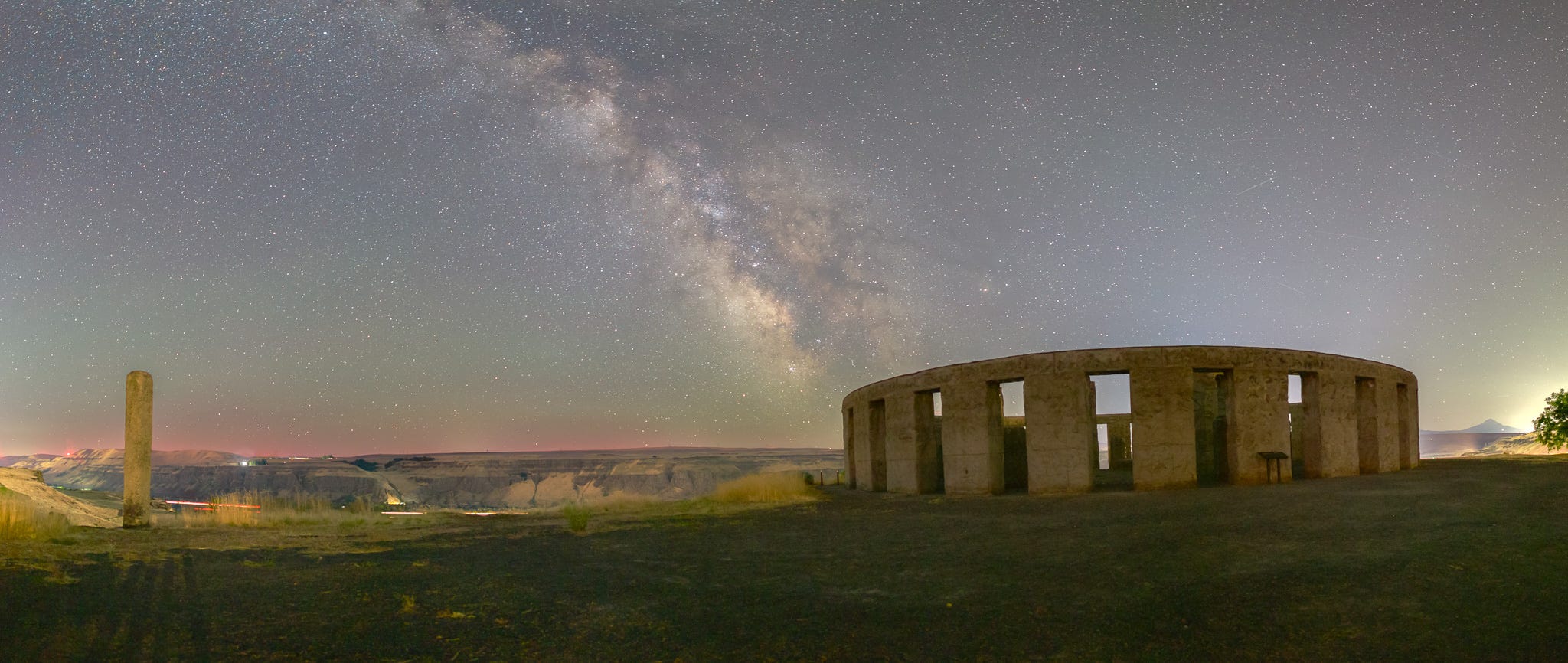
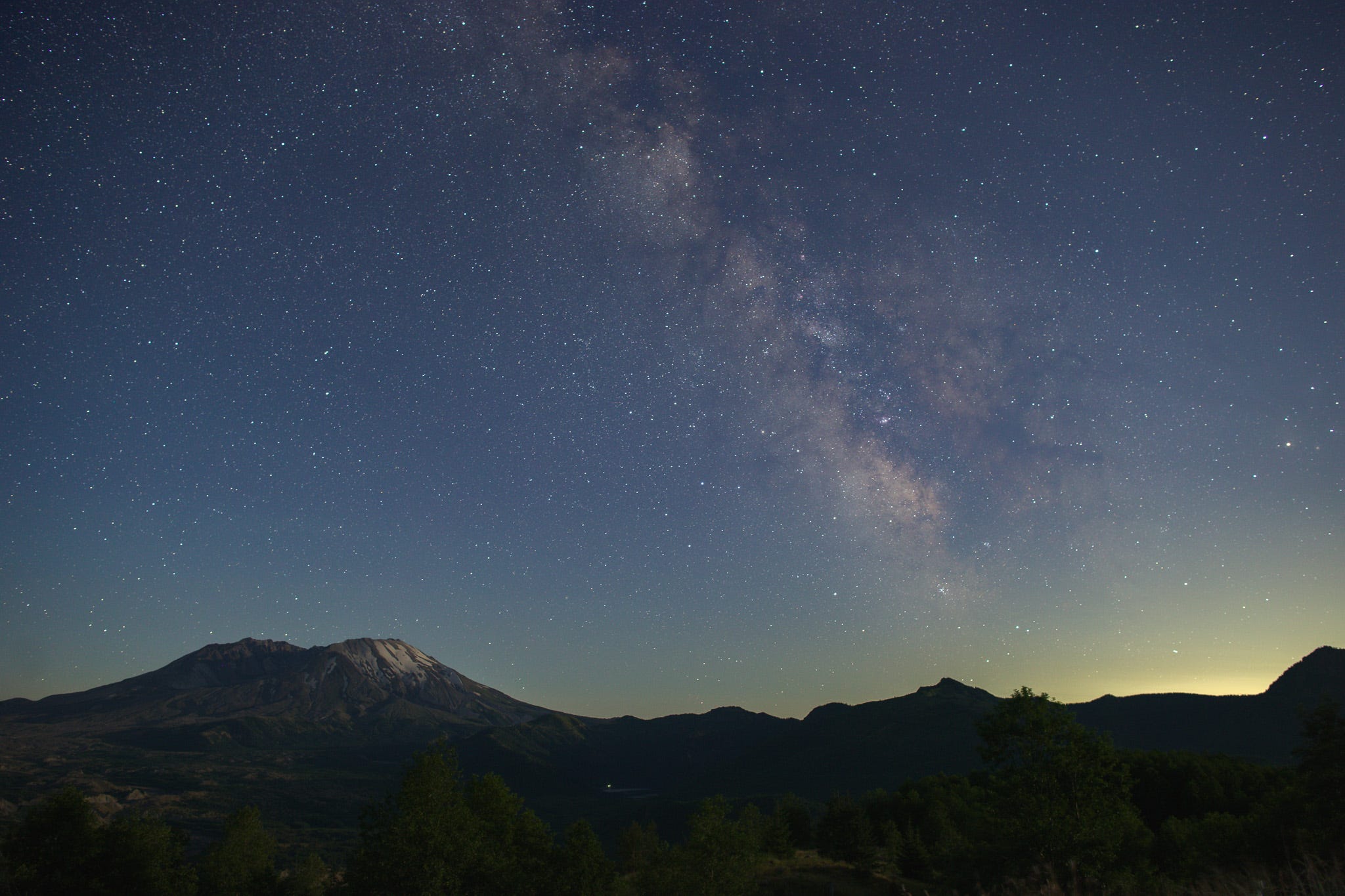
My husband and I purchased a travel trailer in 2023, and in 2024 I began planning new moon Milky Way photography trips, and we began to venture away from our backyard and immediate surroundings to some iconic Pacific Northwest Milky Way locations including Mt. St. Helens and the Stonehenge Memorial on the Columbia River Gorge.
It turns out I had a bad sensor on my full frame Canon EOS RP camera and by the time I realized it, it was out of warranty, so I shoved it in a drawer and replaced it with a Canon EOS R8, along with a Rokinon f/1.4 24 mm lens — both of which I’m still happily using.
2025
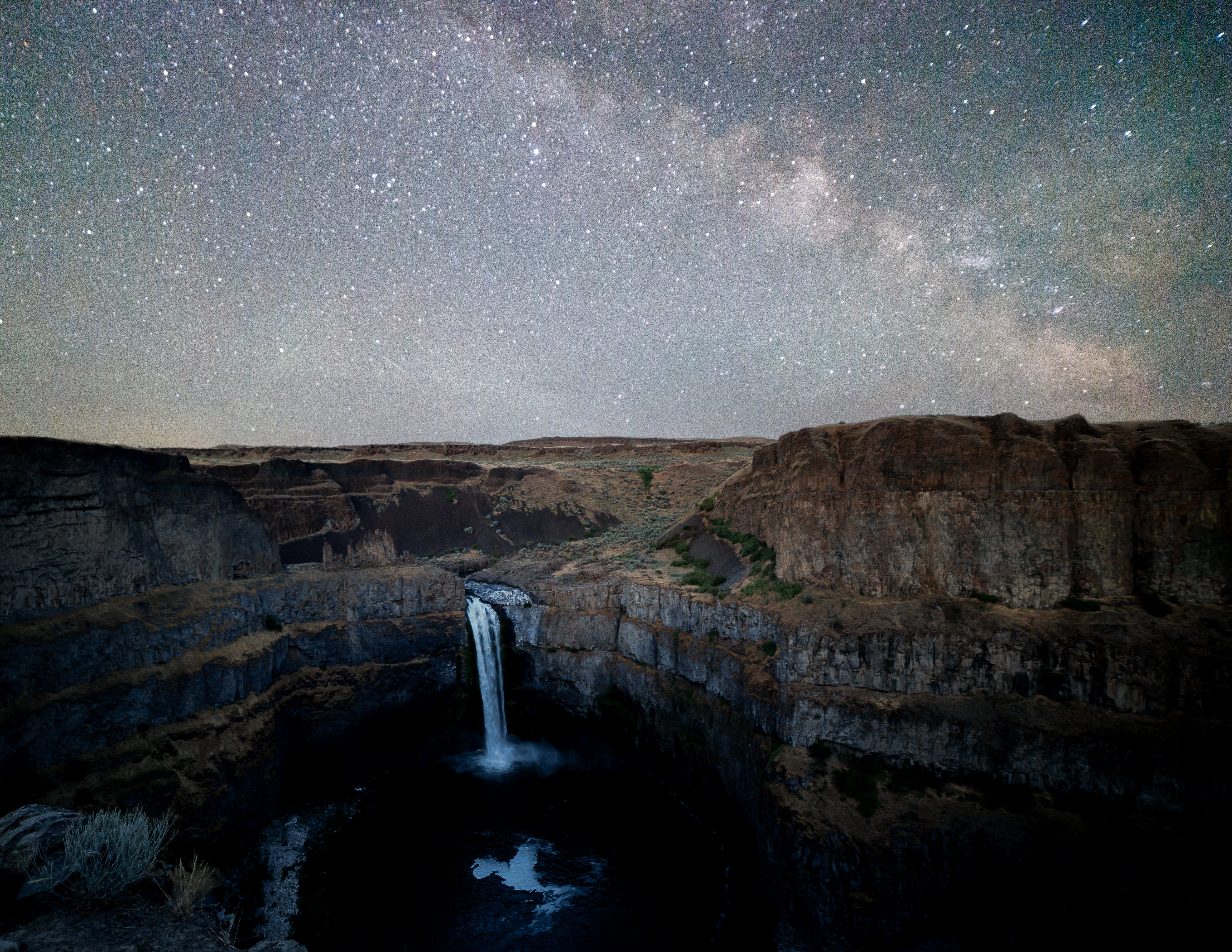
Palouse Falls is another incredibly iconic Washington Milky Way location. The only problem is the park is no longer open after dark — too many people were engaging in risky hiking behaviors. I was fortunate to come across a photo of the Falls after dark in May on Facebook and messaged the photographer, who let me know of a special permit application. I was granted permission to photograph there in June, and we found camping not too far away — a great find considering the remote location. Here I photographed my first blue hour blend: setting up my tripod before dark to photograph the canyon and Falls and leaving it in position until dark to photograph the sky.
2026
Just a few days ago in my “Star Search” edition, I wrote at great length about my birthday/Milky Way camping weekend along the Columbia River Gorge and up to Lake Easton. I won’t rehash that here, except to say that, combined with a trip in June to Alder lake, 2026 has so far included three firsts for me: first Milky Way images with my Hydrogen-Alpha astromodified Canon EOS RP camera; first tracked images with a Move Shoot Move Nomad tracker; and first composite image, combining images from two locations in Photoshop.
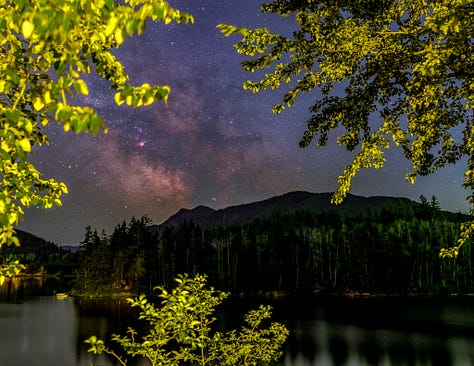
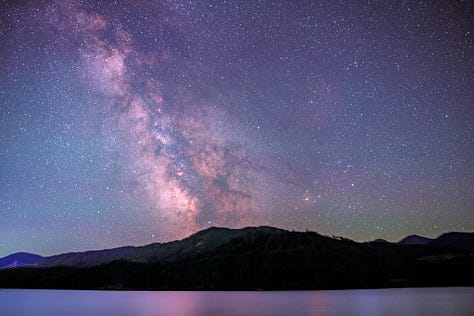
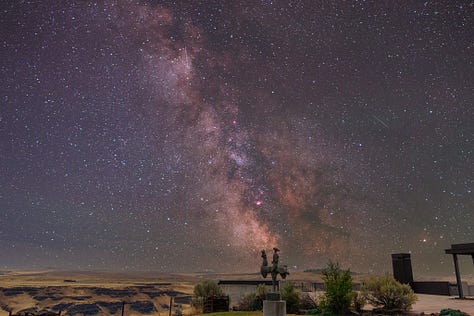
I’d say the changes over time are night and day. But, they’re night and night!
Thanks as always for joining me on the journey.
Wishing you all well.
Comments
Nothing yet. Say the first thing.
Sign in to join the conversation.