
Greetings Friends,
This is a LONG email and I’ve been warned it maybe truncated for gmail addresses, and maybe others. Please click whatever you need to in order to read the entire message — or you’ll miss some Milky Way!
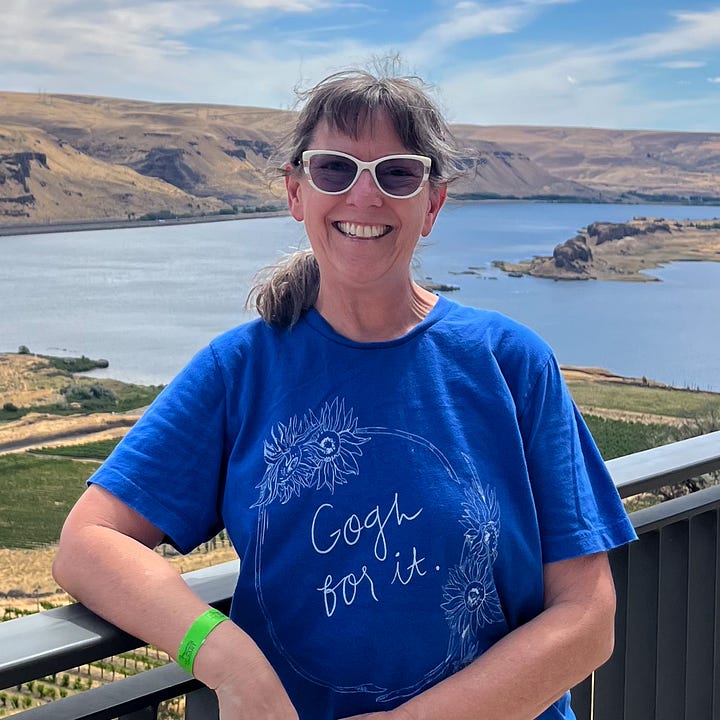
Months ago I made camping plans in the Lake Chelan area for the second weekend of July when the waning moon and visibility of the Milky Way after dark would coincide with my big birthday. You know the birthday I mean: Universal senior discounts. Medicare.
I’d never been to that beautiful area of Washington east of the Cascades. And I still haven’t. A wildfire broke out in the Chelan Hills on July 4th and has burned about 10,000 acres. It is now, thankfully, fully contained. Even though the highway we would’ve traveled reopened after a single day closure, I wasn’t keen on camping under smoky skies. It’s no good for outdoor recreation, for our lungs, and for night sky photography. That, and after both my sister-in-law’s homes were destroyed in the CZU lightning complex fire in 2020 in the community where I’d lived for 25 years, I was reluctant to travel to an area with active evacuations, taking up space they might truly need for camping and meals. So I pivoted.
Finding camping spots with electric hookups for a trailer on a weekend at the height of summer at a location with the ability to easily find an open view to the South accessible in the dark with less than a week’s notice was a challenge. Yet the birthday gods were smiling on me. I reserved the last available campsite at 3 different parks for the 3 nights I planned to be away.
Our first two campgrounds, Beacon Rock, and Maryhill, are on the Columbia River Gorge where the Burlington Northern Santa Fe railroad tracks run just feet from the camps, and train traffic is brisk. The other campground, forested Lake Easton in the Eastern foothills of the Cascade Range, is located along I-90 with ubiquitous traffic noise. Thank goodness for the sound insulation of a travel trailer, noise canceling Apple AirPods, and earplugs at night.
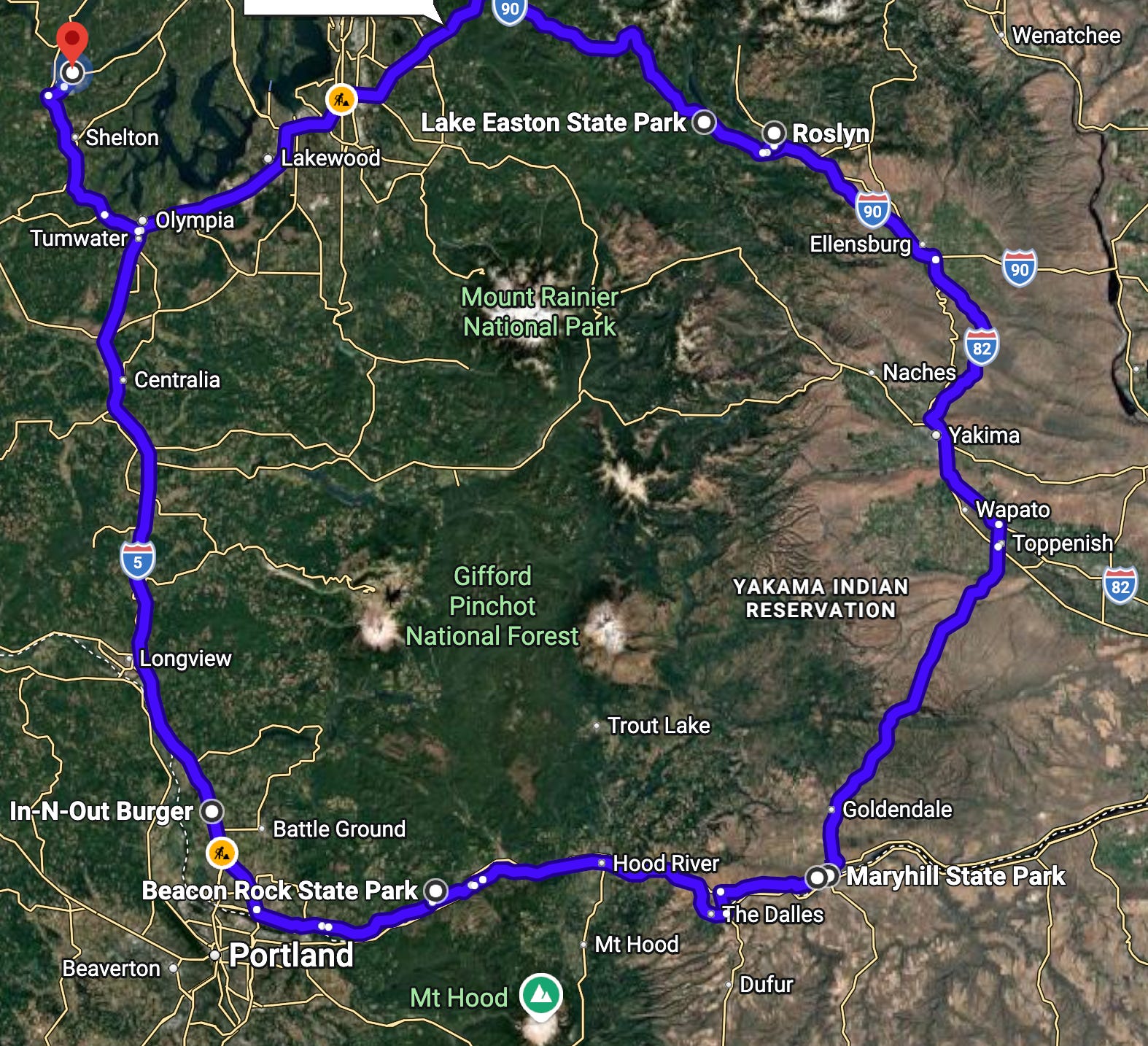
Our new route was a 600 mile loop travelled in four days. All of it driven by my husband Kevin.
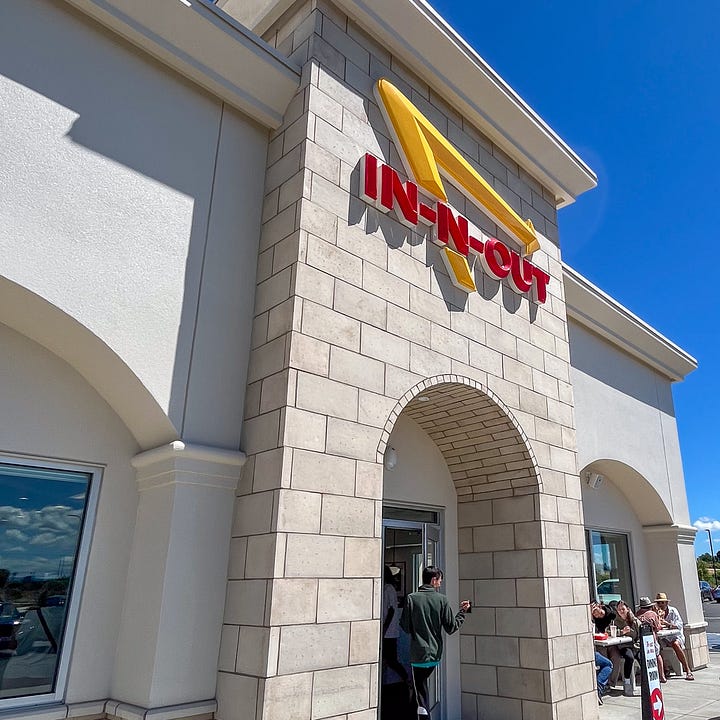
On our way to the Gorge we were excited to lunch at In-N-Out Burger along I-5 in Ridgefield, north of Vancouver. It was the first location of the chain to open in Washington last August and our first visit there. In-N-Out is a Southern California phenomenon that my dad, who lived and worked in Los Angeles County until his retirement, introduced us to in the early 1990s featuring fabulous fresh-cut fries. They also make a great lettuce wrap burger for us gluten intolerant folks.

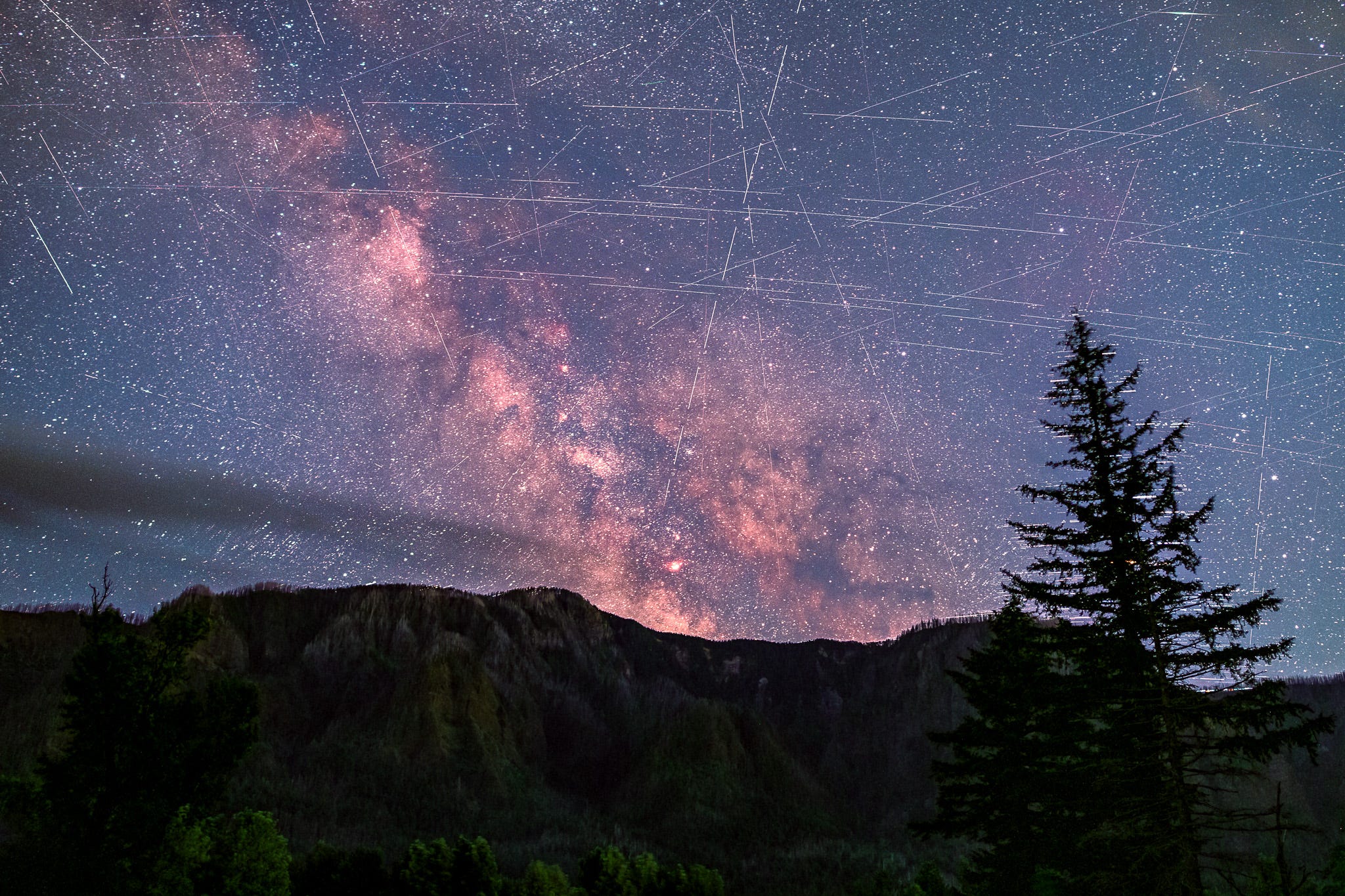
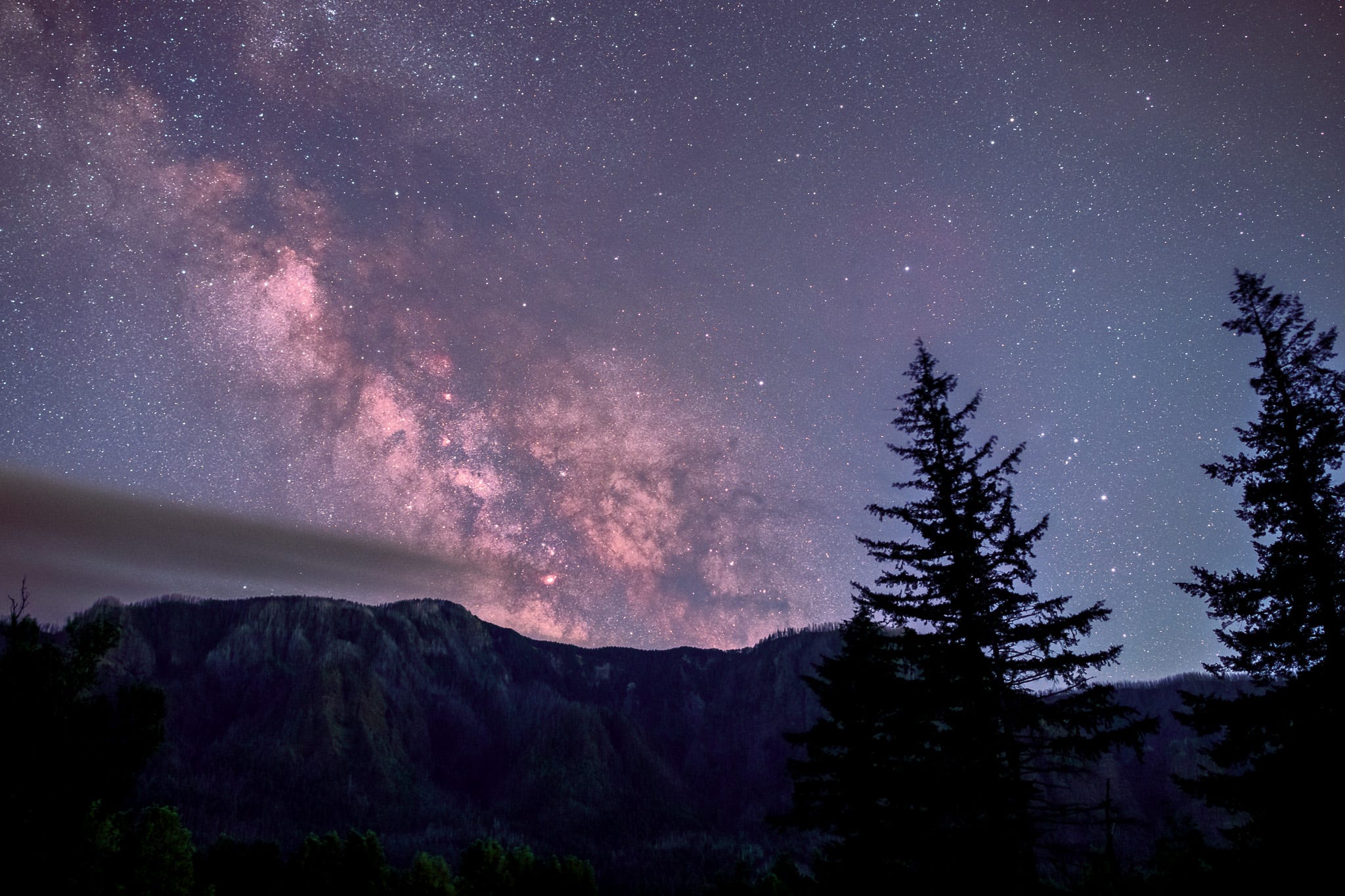
Our weather apps promised clear skies on Friday night at Beacon Rock, with astronomical twilight around 10:30 p.m. and nighttime at 11:30 p.m. We scoped out a location before dark with a view of the south bluffs of the Gorge on the Oregon side. We returned during astro twilight to set up my gear, which includes a hydrogen alpha modified camera, that allows more color and detail from non-visible light to be recorded. [In early 2025 I had an out of warranty camera with a damaged sensor that turned out to be less expensive to modify for night sky use than to be repaired. A happy accident, as Bob Ross would say.]
I began recording images about 10:50 p.m. and the sky was busy with satellites and planes on approach to Portland west across the river, leaving lots of trails in my photos. So, I used a technique called stacking which involves taking 10-20 photos in a row with the same exposure, aperture, and ISO settings, then running them through software that automatically removes objects that do not appear in every photo. (
Within 15 minutes the skies clouded up, the Milky Way and stars disappeared from view, and we didn’t get any photos during true dark.
Below are two versions of my photo stack. The first showing all the traffic that moved across the sky in the 3.5 minutes I was taking photos. The second is the stack with the traffic and some of the less bright stars removed.
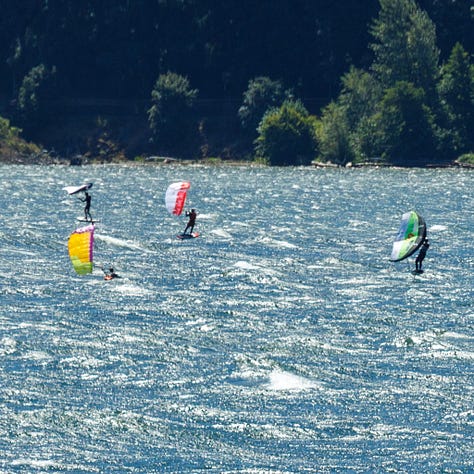
Saturday we set out in the wind for a drive along WA-14 along the Gorge, and through 7 tunnels to Maryhill, where we planned to stop at the museum of art before heading to our campground. Along the route we saw hundreds of people on kiteboards and wingfoils in the choppy waters outside Hood River, OR participating in an annual cancer research fundraiser.
When we arrived on the museum grounds, Kevin discovered his truck had a flat tire . Thankfully, he’ d brought an air compressor, allowing him to fill the tire enough to drive to Goldendale, the nearest town for a repair, while I stayed and explored the museum and grounds.
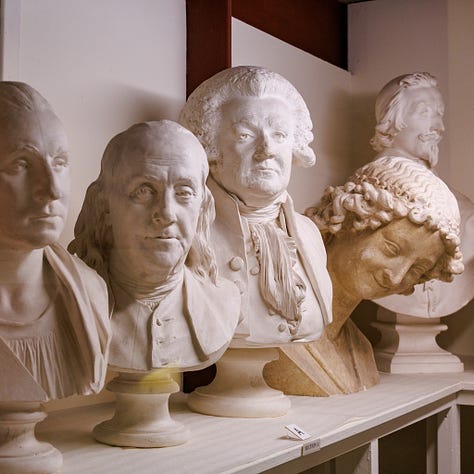
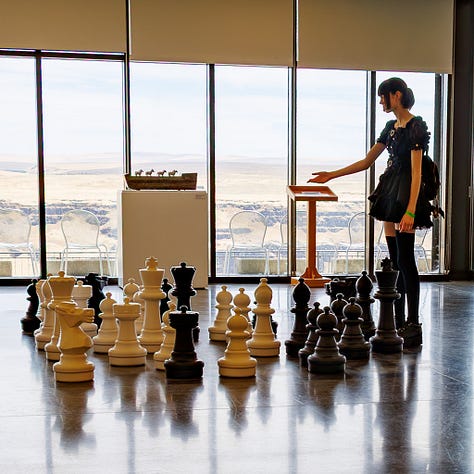


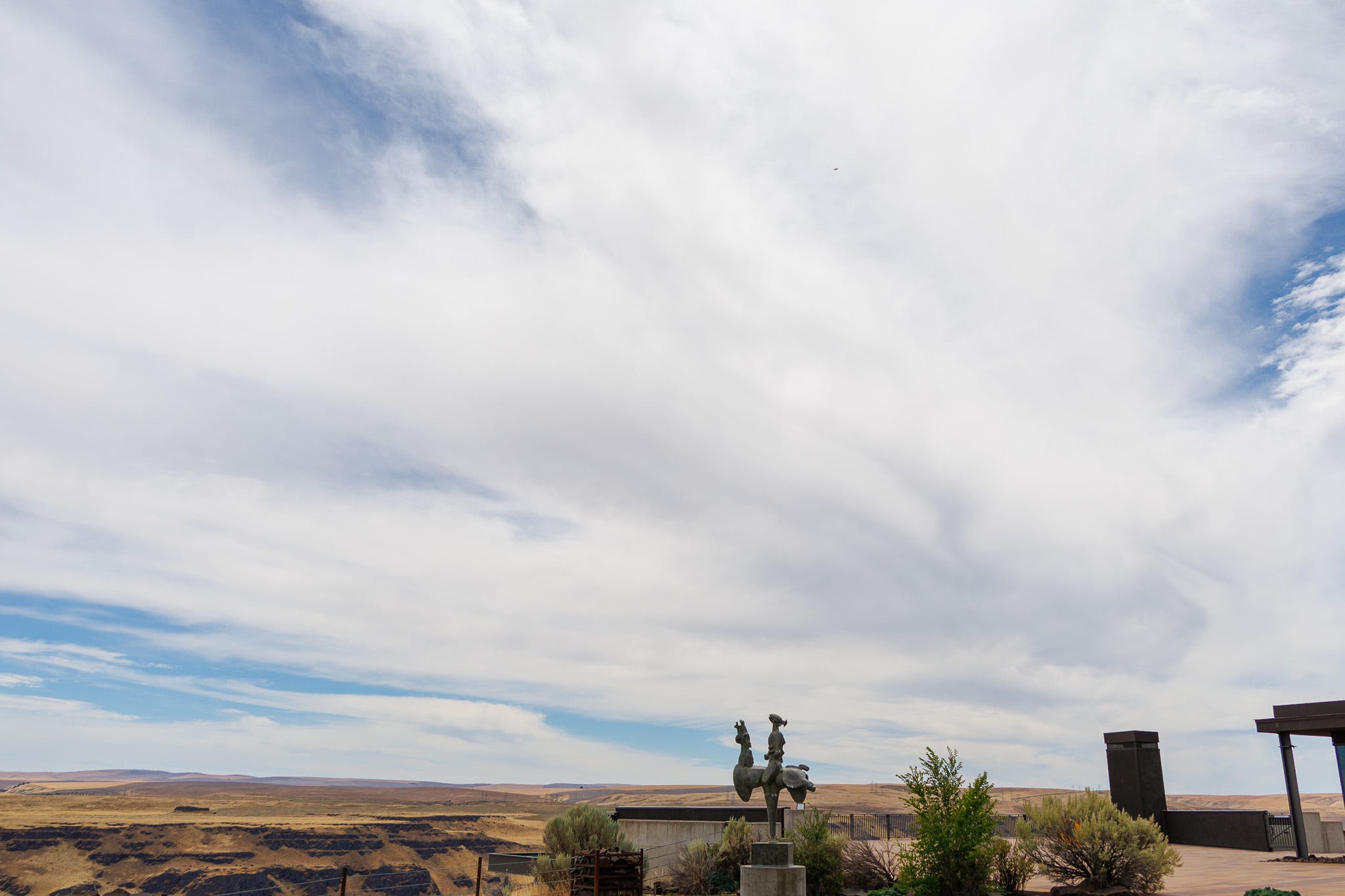
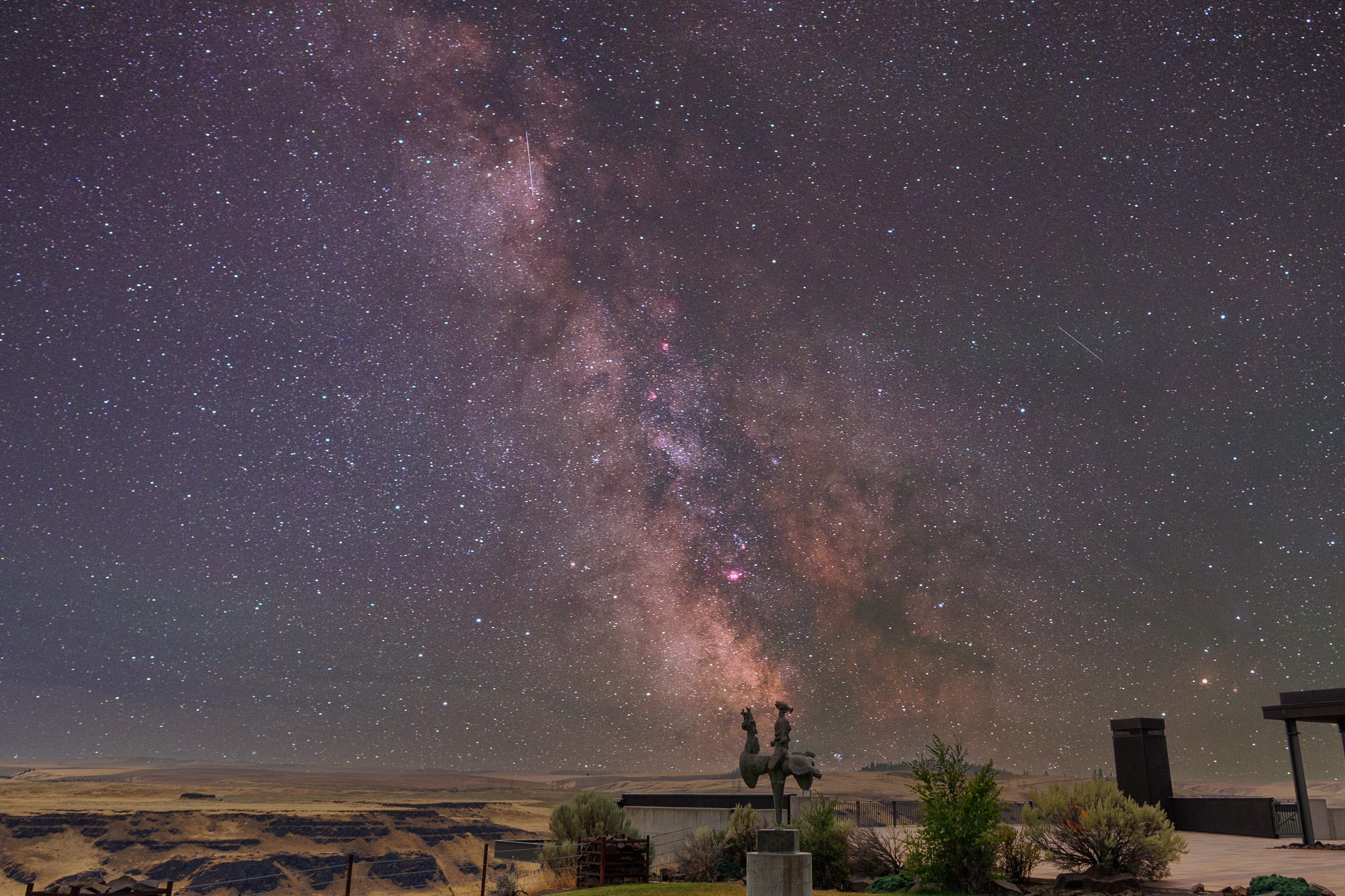
While at the museum, I had taken a number of outdoor exposures facing due south across the Gorge, thinking I might try out a technique called a composite where the foreground and sky images are taken from different locations, but where the Milky Way is placed exactly where it would appear in the sky that night. Photographers use this technique for several reasons: at the coast when the incoming tide covers the beach, making it impossible to stand in the same location, or when an area is inaccessible at night for other reasons, like a locked gate at a day use park.
The museum was having an overnight campout that was sold out that night, so I couldn’t return after dark. My plan was to take night sky photos from the ridge above Maryhill State Park near the Stonehenge Memorial, where I photographed the Milky Way two summers ago, and to make a composite with a foreground from the museum grounds. The forecast for Saturday had been sunny, but the day was mostly cloudy, and by evening it was clear we were out of luck for the night, so we watched a movie (thanks Netflix download) on Kevin’s iPad instead of venturing out.
Sunday night we had clear skies up at Lake Easton, 155 miles to the north. Editing photos at home this week, I decided to create a composite using a foreground from Maryhill Museum with the Milky Way from the lake. Yes, there are differences in latitude and longitude: Maryhill Museum is 45.68 degrees North and 120.86 West, and Lake Easton is 47.24 degrees North, and 121.19 West, and the Milky Way was recorded one day later than the foreground, so the placement is not exact. However, it’s a reasonable approximation of what we might see, if we could see color and definition of the night sky with our eyes.
The composite turned out to be my favorite image of the trip. And it’s my new computer wallpaper.
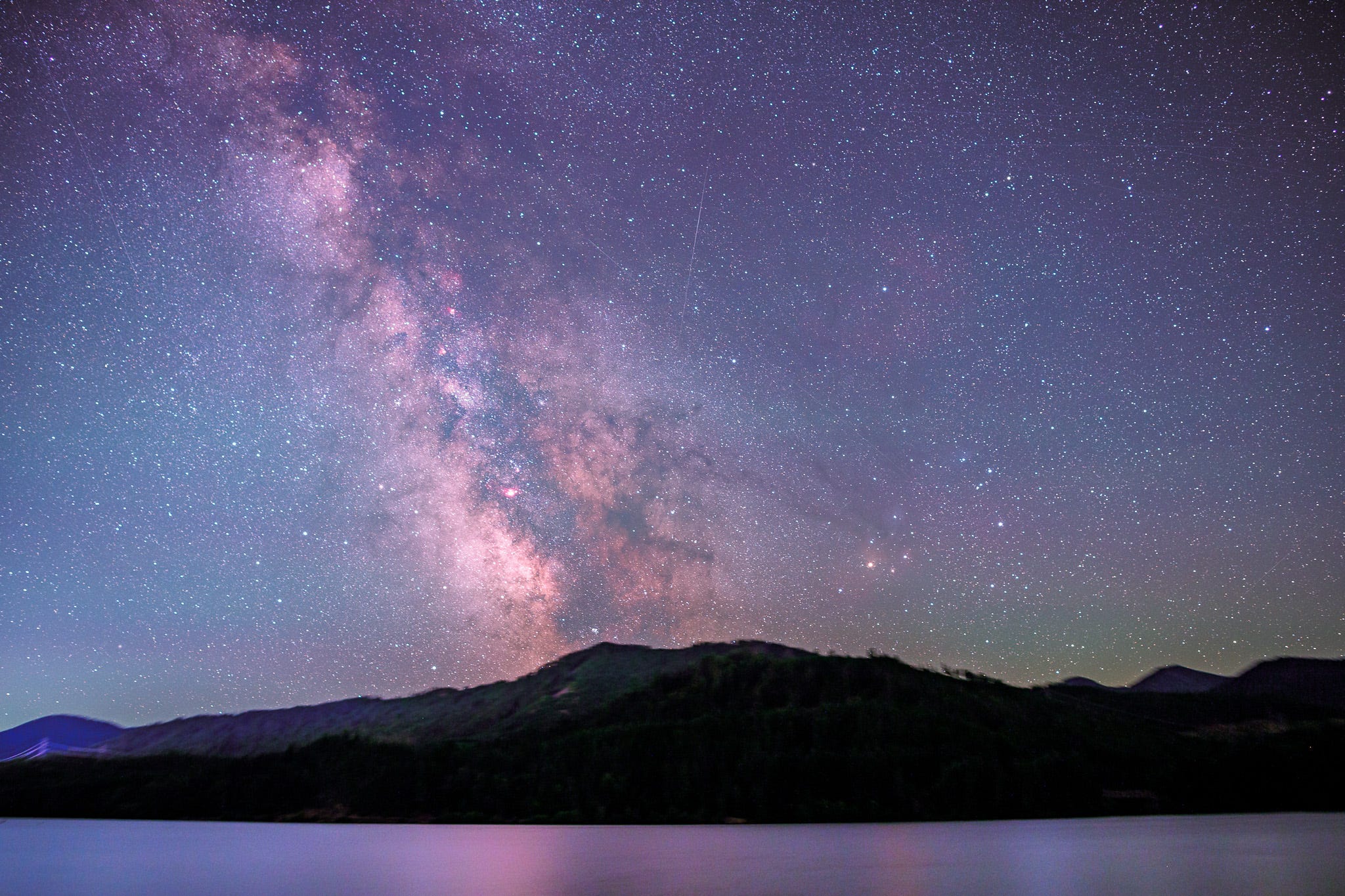
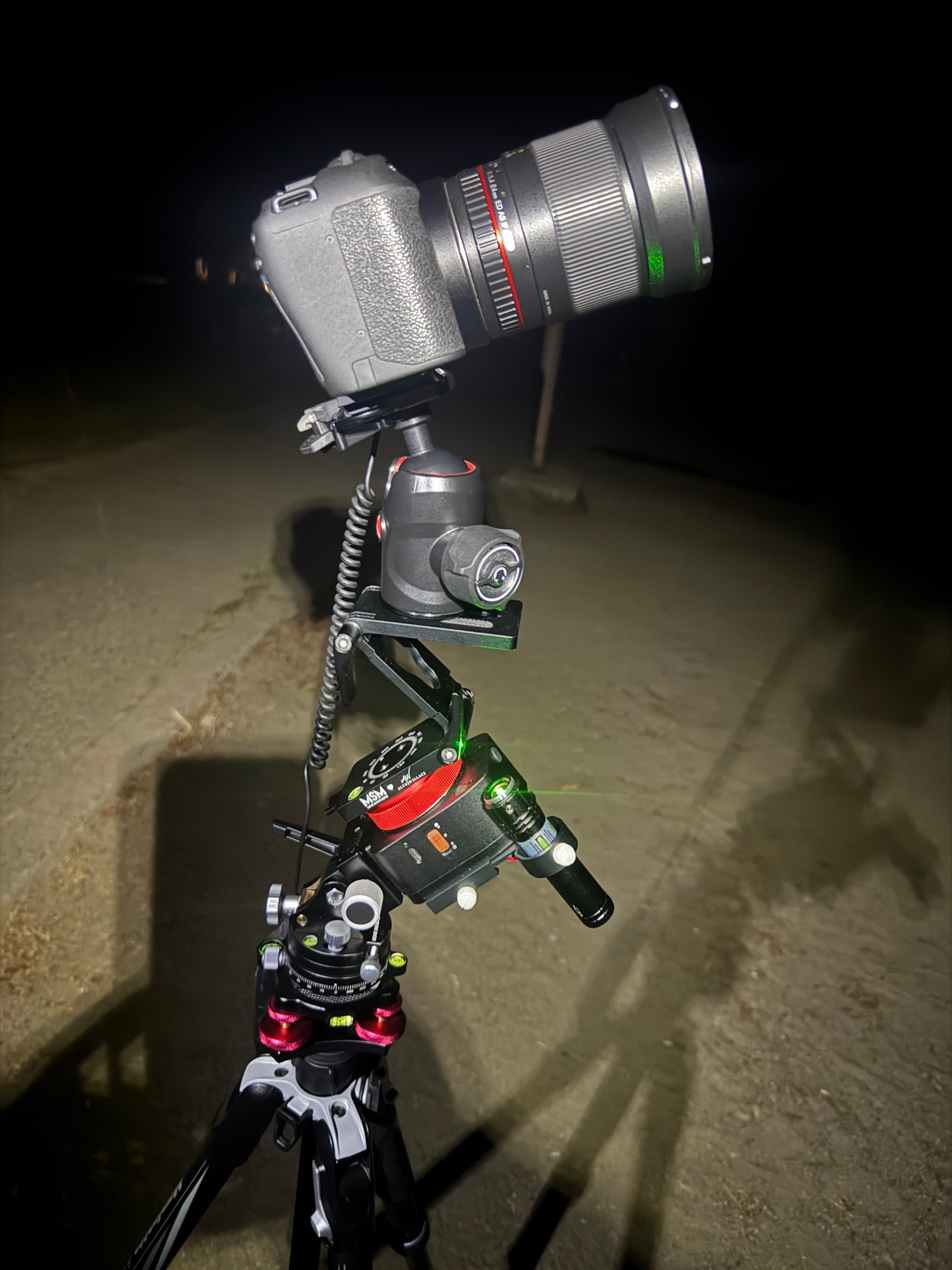
At Lake Easton we had an easy walk to the beach from the campground to an area that wasn’t gated (yahoo) and even had a bench where Kevin could relax while I had the opportunity to use a star tracker on the Milky Way for the first time. The tracker, a Move Shoot Move (MSM) Nomad, was a Christmas gift from my hubby (you know the kind you buy and then tell your person it’s what they bought you). A star tracker attaches between the tripod and the camera and slowly rotates to counteract the rotation of the earth while you’re making images. This allows for longer exposures which allows for more light, and therefore more detail in an image while the stars stay sharp. Without a tracker, stars trail with long exposures (anything longer than 15 seconds with my 24 mm lens). With the tracker, I was able to make two 2-minute images with no trailing.
Trackers are complicated, and something I never thought I’d use. But five years into photographing the night sky, I find myself compelled to continually expand my skills, even though I’m often frustrated and fussy during the uncomfortable error filled learning curve. My night at the lake was no exception, and if it weren’t for Kevin’s calm demeanor and gadget understanding brain, I would’ve called it quits before I got started.
All my research prior to purchase indicated that the Nomad is the simplest, lightest weight, easiest to use, and least expensive tracker on the market. That said, it’s still complicated. Setup requires polar alignment, where a particular part of your tracker needs to be directly aligned with Polaris (the North Star), or the southern celestial pole, depending on your location.
The Nomad comes standard with a laser pointer for polar alignment, which is allowed in the U.S. but not some other countries, and one needs to take care not to point at aircraft when using them. You also need to mount your camera atop the tracker in a way that doesn’t interfere with camera movement, since the camera needs to be pointing in the direction of the Milky Way, which is south (southeast in the spring, southwest in the fall).
Adjusting my camera after the second 2 minute exposure shifted the tracker a bit and when I went to realign, the tracker had rotated so that the laser was blocked by my camera and I couldn’t realign. At that point, I switched to 30 second images, where a small misalignment wouldn’t be noticeable. I have three weeks until our next Milky Way camping trip to figure out how to realign after the tracker’s been moving.
To use a tracker you must use Photoshop, or another editing program to combine two photos, because while a tracker records a crisp sky, the foreground is blurry, since it’s now what is moving in a photo. I am a Photoshop novice, and thankfully, because the upper edge of the foreground (mountain silhouette) lacked detail, I was simply able to select “replace sky” when editing, rather than having to figure out how to mask and layer the images.
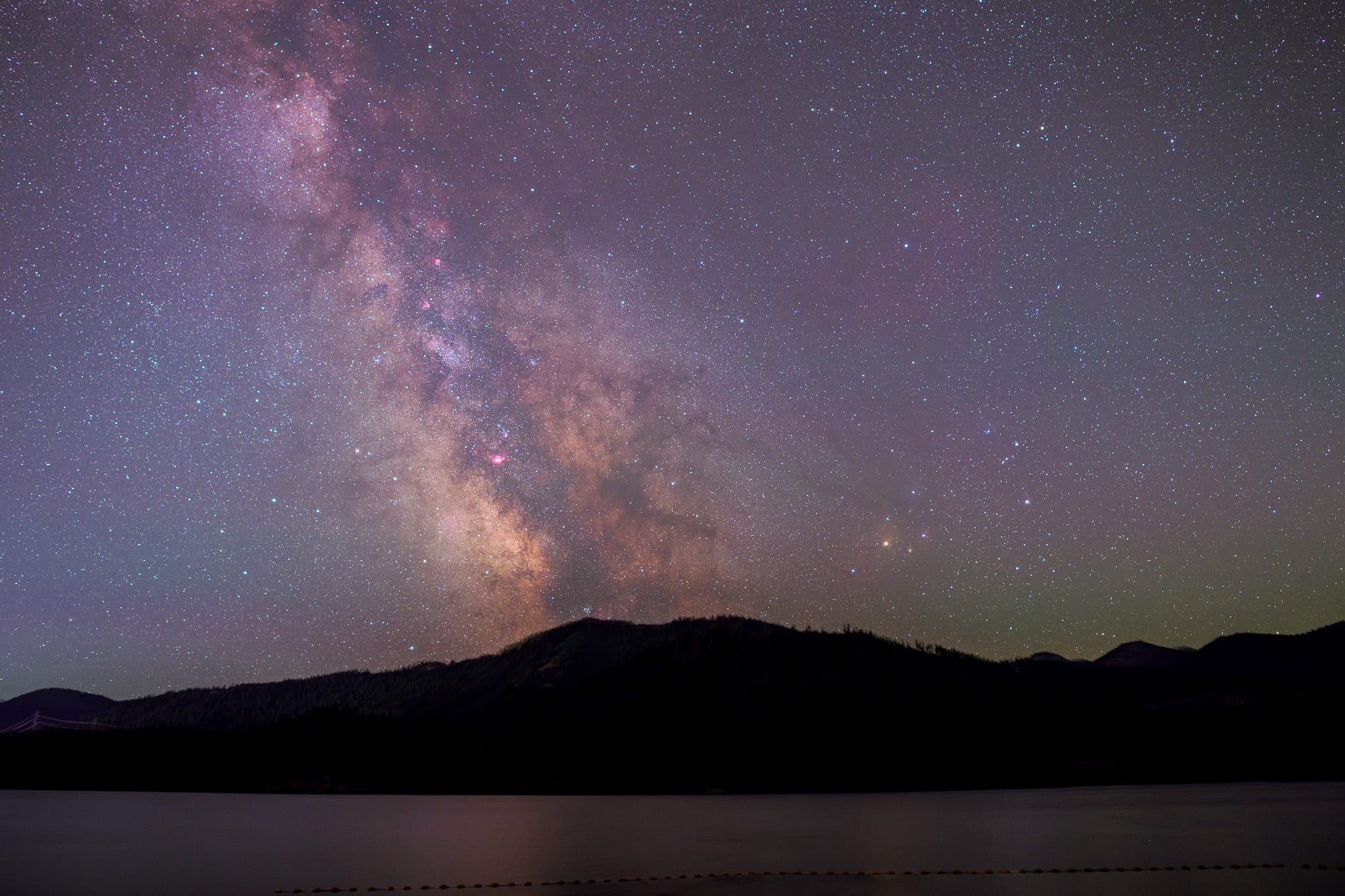
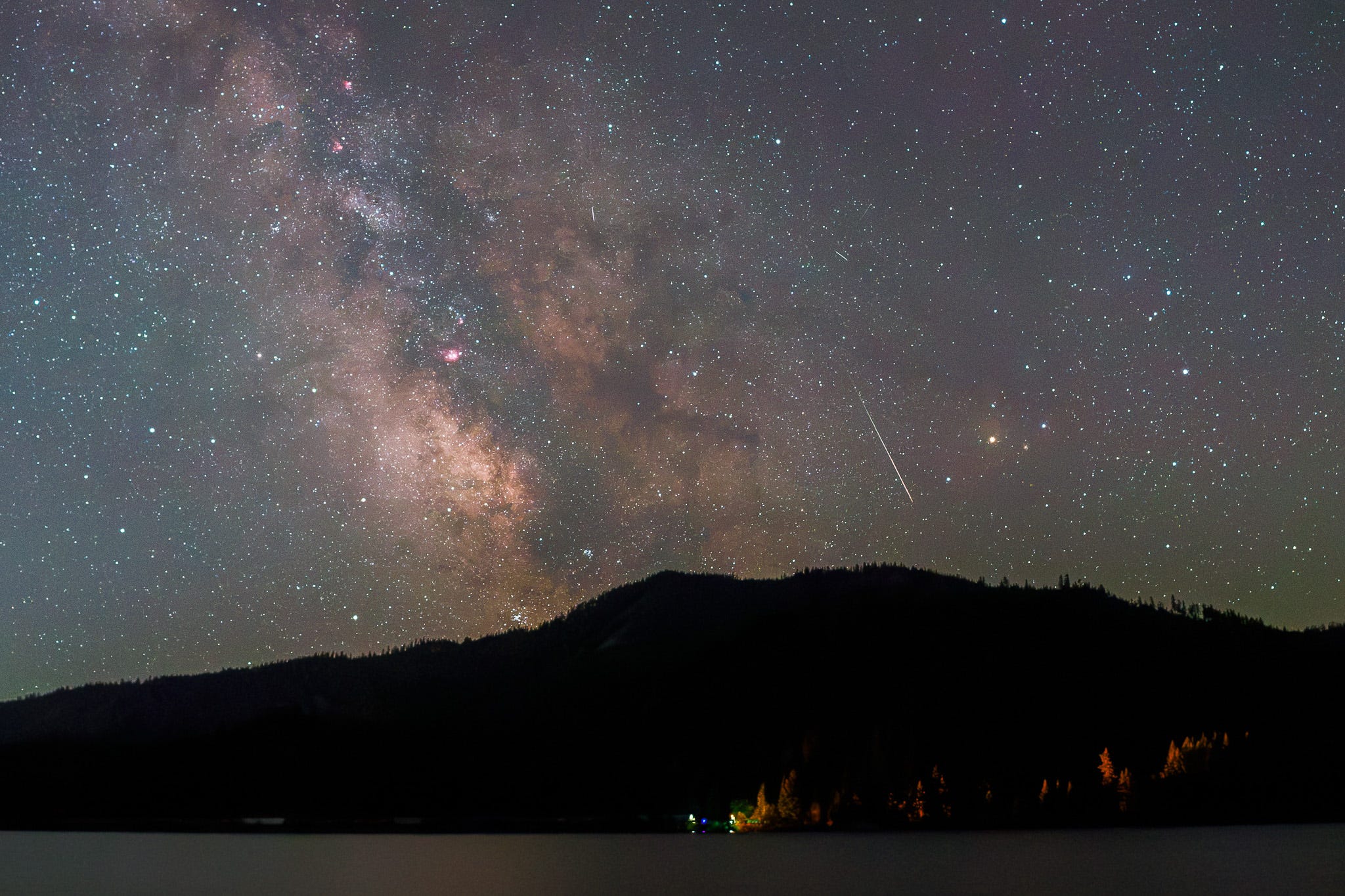
I always take a very high ISO test shot (12800) of 2-4 seconds to make sure I like the composition before I began photographing in earnest. At the lake my test image included a meteor. It’s a very noisy image and color is wonky, but I’m sharing it here anyway. The red lights are from a train.
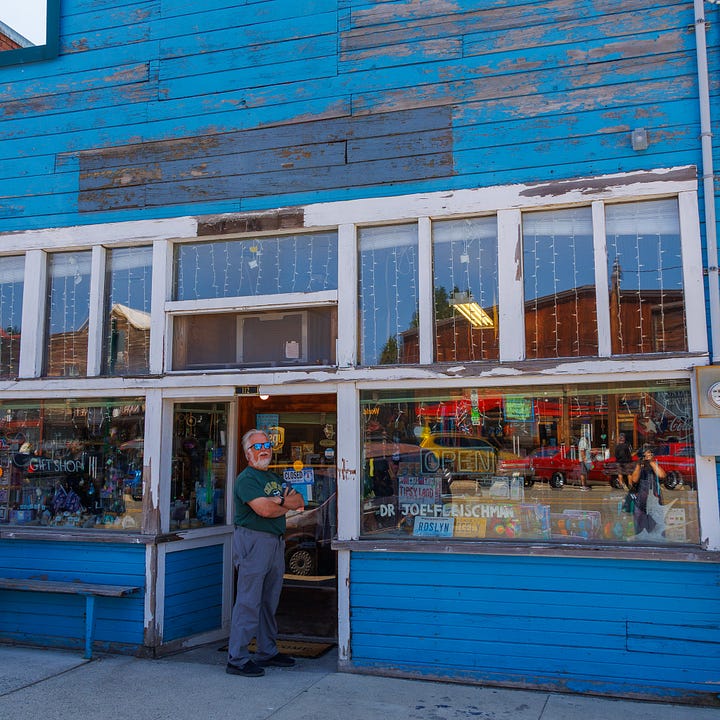
We closed out our excursion with a 15-mile detour to the tiny town of Roslyn where Northern Exposure was filmed. Almost 15 years ago, I read about the show being filmed in Roslyn in a visitor’s guide, but being so new to the state, had no idea where that was. It took this long to be in the vicinity. We were big fans of the show, and it was fun to see the familiar buildings in person.


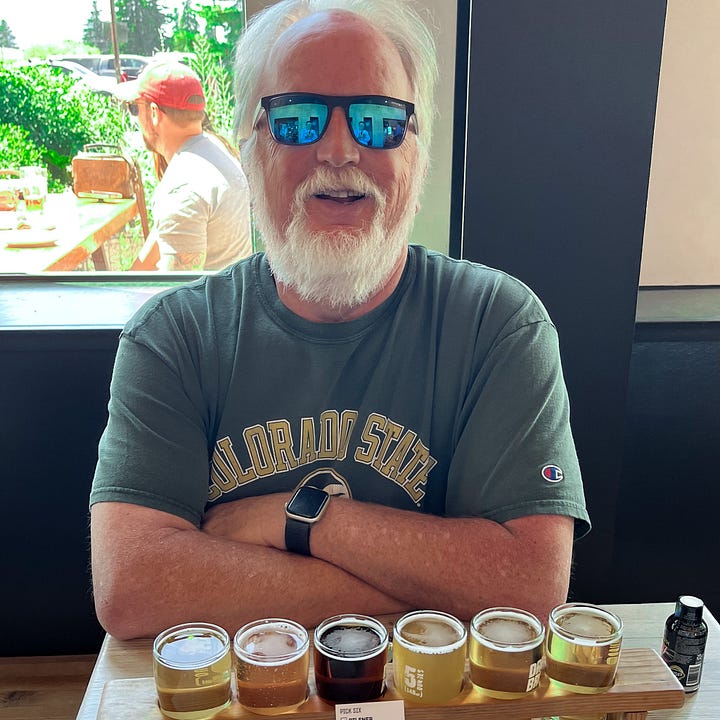
Thanks for celebrating my birthday travels with me, and listening as I geek out on night sky photography!
Wishing you all well.
Comments
Nothing yet. Say the first thing.
Sign in to join the conversation.