
Friends,
Today is national oyster day, and as if the oysters outside my door knew it, they celebrated with a procreation party!
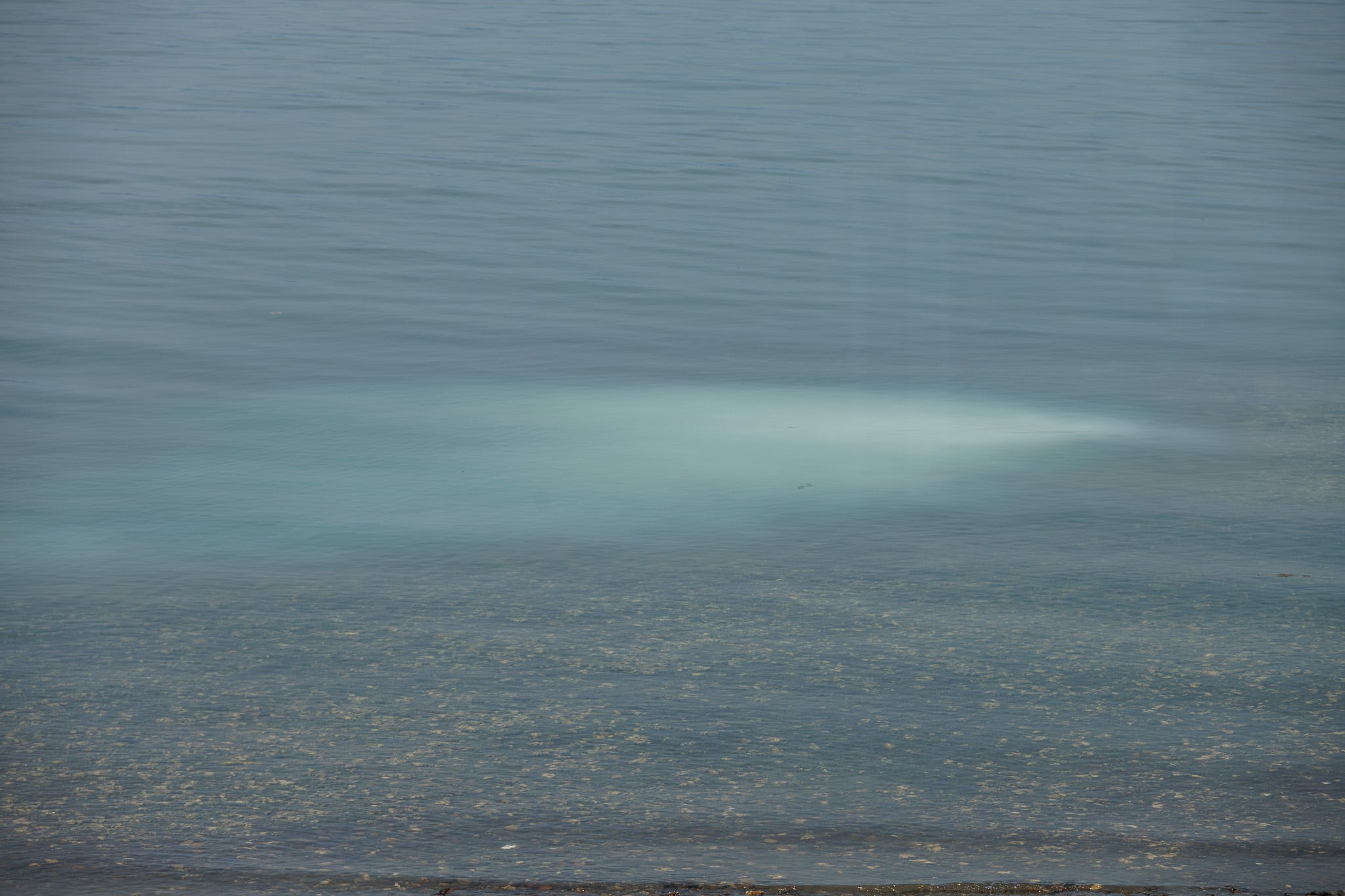
The way NOAA fisheries describes it, our Pacific oysters engage in broadcast spawning: When the water heats up, the males clap their shells to release sperm and the females respond by each launching 50-200 million eggs into the water to be fertilized. There’s no need for FOMO with the oysters, once one starts getting jiggy, the rest follow, and it’s an underwater orgy of sorts, resulting in a milky white streak in the water that’s visible for just a short period of time. Once fertilized, the tiny larvae float as zooplankton in upper layers of water, drifting with the currents, and are susceptible to die off in changing temperature.
About three weeks later, the successful ones will begin to “set” by attaching to a shell, or rock, and begin forming their own shells. Commercial oysters usually live 4-5 years before they’re harvested. We don’t harvest on our beach, and I read that they can live up to 20 years, so we may have some old bivalve souls in the neighborhood.
It sounds like this can happen once or twice a summer, though this is only the second time in our 10 years working and then living here, that I’ve witnessed the spawn. Today the event was visible for about two-three hours from my first notice of a pale white streak that grew into a brighter longer cloud, and then gradually began to fade and become less defined.

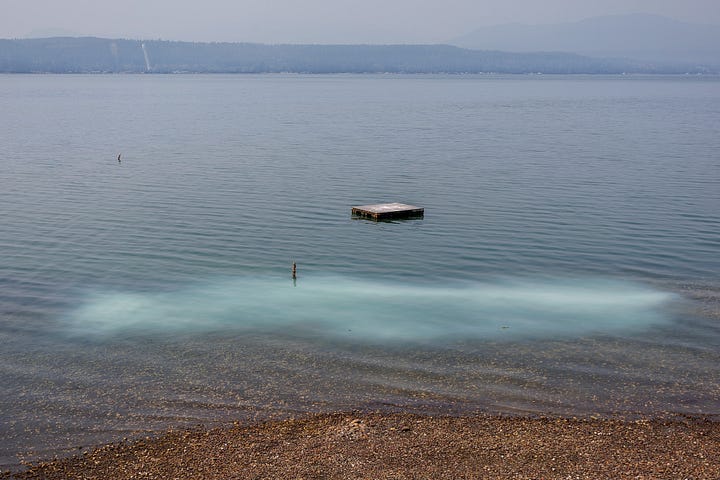
The origins of Oyster Day remain as murky as our wildfire-smoke skies, though what I read online seems geared toward consuming them. Here on the Hood Canal, our oysters are currently toxic with the threat of paralytic shellfish poisoning, and harvesting is closed. And generally, there’s a rule here in the Pacific Northwest of only eating oysters in months with an “r” — that is from October through April.
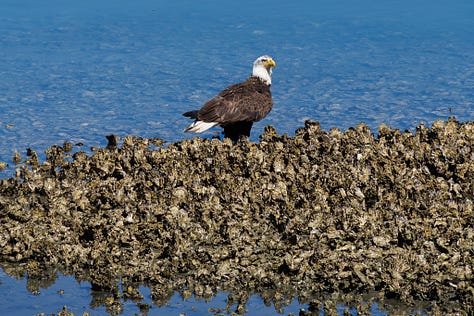
I’ve eaten oysters in the Pacific Northwest three times, all at swanky restaurants: once as Oysters Rockefeller on our scouting trip to the Seattle area before moving here, and twice in the first year we lived on Bainbridge Island. Each eating brought on a migraine, so that was the end of oysters, and other filter feeders for me. But there’s plenty of local wildlife that enjoy perching and snacking on the oysters outside our windows.
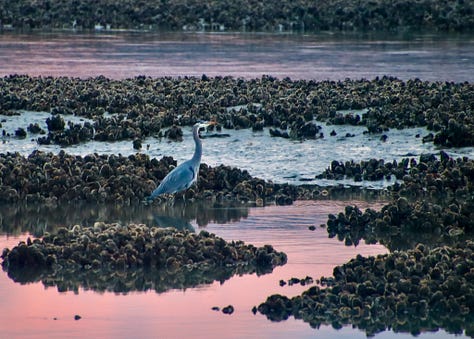

It’s amazing to me that the oysters on our beach are alive and thriving, given that they are exposed and out of water for many hours each day, and that our water quality isn’t always the best with the number of seals toileting in the area, and failing septic systems from older cabins ashore. Ours was one of the failed systems when we bought the house a decade ago, with a cracked cement tank that leached right into the water. It was our first priority for replacement, and it’s good to know when the water quality boat comes by each month testing the water, that we’re not contributing to the problem — at least in that way.
Here’s to the resilient Pacific Oyster, and a Happy Oyster Day to you!

Comments
Nothing yet. Say the first thing.
Sign in to join the conversation.