
My dad spent several months in the hospital after a heart attack and stroke and was diagnosed with congestive heart failure. For months his survival was touch and go, the kind of medical event that reorganizes everything. At discharge, the doctors had predicted he might have five years left, and when he was finally well enough to go out, I took him to dinner. He ordered fettuccini alfredo and I was furious.
All of that time in the hospital, and this is what he chooses. I told him how I felt and he listened the way he always did, and then he told me that he likes pasta. He said that he hadn't had many vices in life, that he'd quit smoking young, rarely drank, took his walks. He had spent months in a hospital bed, and he wasn't there now, and he wanted pasta. So he ate it, not all of it, and moved on with the conversation.
A few months later we were in Florida at the beach and he decided to have a piña colada. We all tried to dissuade him, his balance wasn't great and we didn't want him to fall, but he looked at us and said, well, I'll sit down then. And he did, and he enjoyed that piña colada.
Maybe the pasta and the drink were just about him establishing his autonomy, or pretending that things were fine when so much had changed, or maybe he just knew himself well enough to know what he wanted in that moment. Regardless, he lived seventeen more years after that fettuccine alfredo and piña colada. And during that time he ate more things we didn’t really approve of, but he also took his medications and went to his doctor appointments and ate his fruits and vegetables, and walked when he could. And the week before he died, he had a big piece of cake to celebrate his birthday.
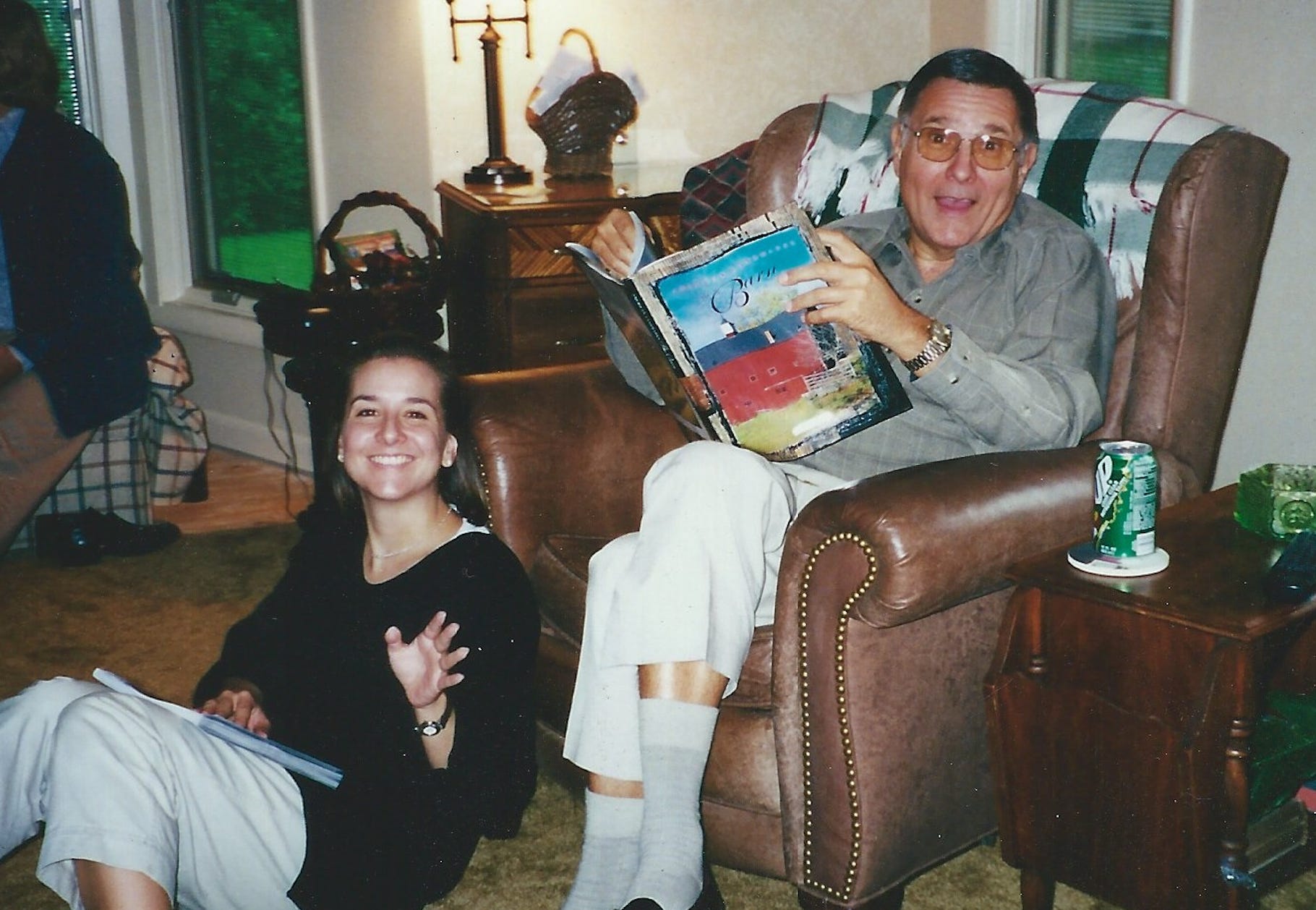
We called it denial a lot of the time, but I think my dad just wanted permission to enjoy what he enjoyed, even when we didn’t approve, even when it wasn’t the safest choice or the one we would have made for him. He wasn’t interested in doing everything right, he was interested in doing things he loved.
I think about him when I watch people treat their own lives like a project or problem to be solved, tracking every step, avoiding every toxin, optimizing every meal, as though if they get everything right, they can skip the part where they're just a person, living.
I have worked with people who eat so strictly or hate what they are eating because they are trying so hard to be well. I have watched clean eating become obsessive, wellness become indistinguishable from suffering. As a therapist I have sat across from people whose pursuit of optimization leans into something darker, but they call it discipline. Optimization is the new workaholism, the new "I'm a perfectionist." We always find ways to repackage obsession as virtue and then culture rewards it.
And I don't know about you, but I'm overwhelmed by the ever-changing information coming at us every day. Eggs are bad, eggs are good, coffee causes cancer, coffee prevents cancer. A glass of red wine was good for your heart until alcohol was suddenly declared poison and a carcinogen, so now society has normalized taking a THC gummy every night to unwind. I’m sure the research around this will be totally fine.
Every study is a headline and new moral instruction, and we are addicted to finding the absolute answer. But there are no absolute answers because everything changes and so many things are out of our control. It's okay to pay attention, to try things, to feel good about new habits, but there's a difference between being curious about our health and being consumed by it.
And being consumed has become a status signal: the right supplements, red light therapy, peptides, cold plunge, sauna. These are a social language that says I am informed, I am disciplined, I am ahead of you. Which means the person eating Taco Bell every once in a while must be way behind, undisciplined, or uncaring. But there is a difference between taking care of yourself and performing how well you take care of yourself. One is personal, the other needs an audience.
And performing how well you take care of yourself often means pushing it on others and judging those who don't follow. It’s great to care about your wellness, but it doesn't make you superior to anyone who does it differently. Of course we can share what works for us (and those of us navigating perimenopause have plenty to share) but we also have to have enough humility to know there are no absolutes. What works today might not work tomorrow and what works for me might do nothing for you.
I have spent my career watching what happens when people get lost in idealism and optimization and lose their relationship with their own body signals, when the pursuit of wellness becomes its own kind of disorder. And what I know from that work is that moderation is not weakness, it is actually a sophisticated choice. It takes significant self-knowledge to say I know myself well enough to enjoy this and move on, rather than eliminate entire categories of experience because a podcast or social media said you should. Allowing yourself to enjoy things isn't a failure of discipline, it's evidence that you know the difference between a habit and a moment.
We've outsourced our knowledge about our own bodies to apps and influencers and studies and scores. And once something is scored, we're competing against yesterday's version of ourselves, against our friends, against an algorithm's idea of optimal. The data stops being information and starts feeling like daily judgment, and we give it that power.
I have lived inside the self-improvement world my whole adult life. I have written books, read the books, done the work and supported others in doing the same. From a personal and professional perspective, I have seen the industry's expectations and contradictions up close. What I know is that every author who writes a book is one person sharing what they believe is most important, and for each one, there are numerous counter-arguments and more extreme versions. We can always take what resonates and leave the rest, but a life spent trying to do it all leads to anxiety and goalposts that never stop moving.
Life carries risk, stress carries risk, sitting all day carries risk, and loneliness carries enormous risk including a Surgeon General warning that it’s comparable to smoking 15 cigarettes a day. Life is not a project or an optimization problem, it's an experience. We get healthy so we can live, not so we can perform living correctly. We sleep well so sometimes we can stay up late laughing or watching something we love. We move our bodies so we can keep using them and showing up for the people who matter. We build strength so we can keep getting up for the life that's actually happening. We don't have to be constantly optimized, most days, pretty good is great.
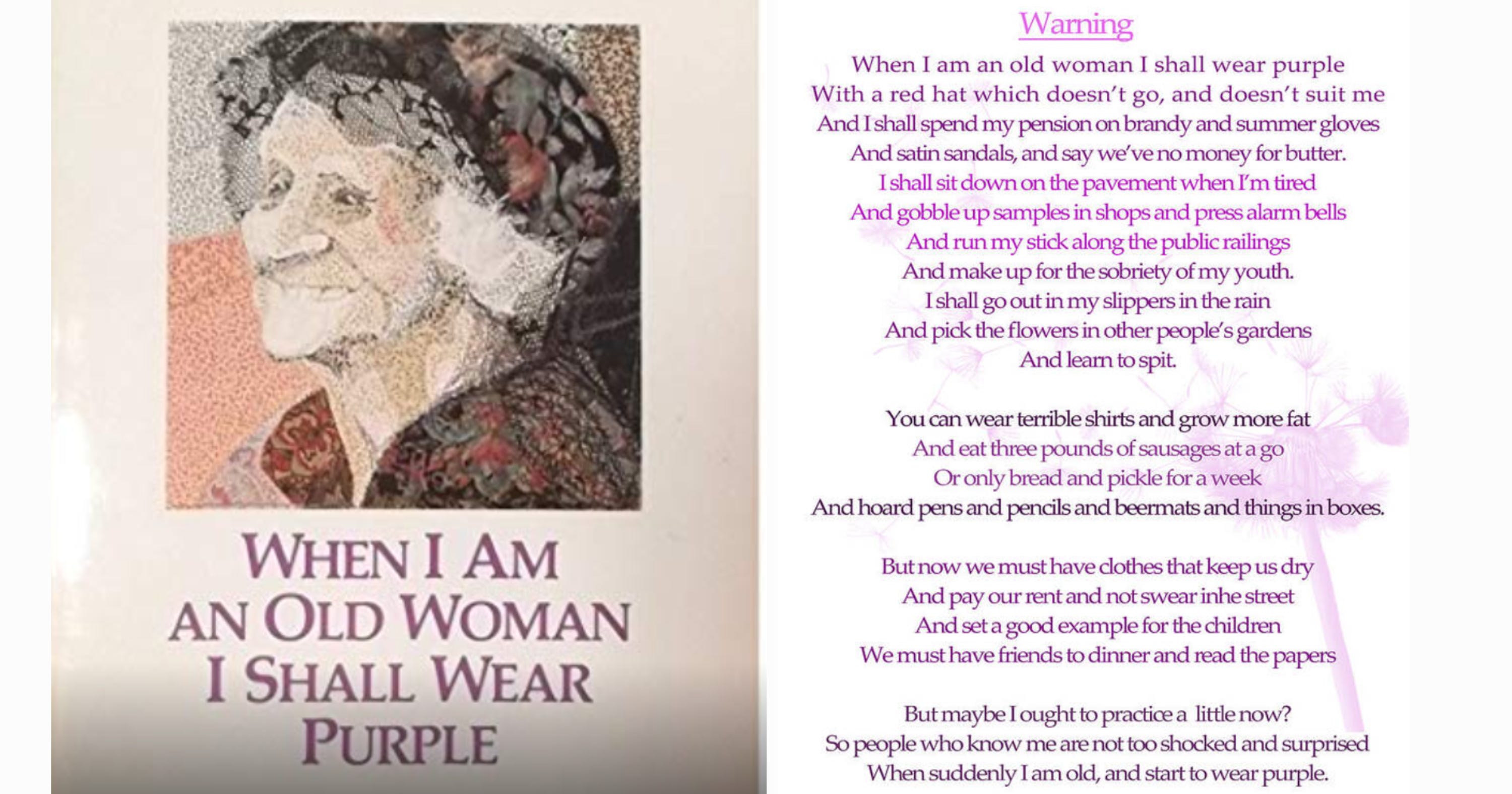
When I was in high school, this anthology lived in our family room. Before phones, you just read whatever was around: cereal boxes, magazines, books someone had left on the coffee table. There was a poem inside it called “Warning” by Jenny Joseph, declaring that when she’s old she’ll wear purple and a red hat that doesn’t go, spend her pension on brandy and summer gloves, and make up for the sobriety of her youth.
I got the gist but I couldn't feel it yet, I was too young to understand what it actually costs to spend your one wild and precious life being so chronically sensible and careful. What's interesting is that Jenny Joseph was only 28 when she wrote it. Maybe she couldn't fully feel it yet either, but she could see it coming.
The message stuck with me and I thought about it when my dad explained why he ordered the pasta. And I think about it now when I watch people exhaust themselves optimizing toward some version of themselves that they hope will make them feel worthy or special.
Moderation doesn't get a lot of credit, it doesn’t come with a product to buy or a community to join because it doesn't signal anything to anyone. It's just a decision to enjoy life without making it such a project. And right now, that might be the most countercultural thing you can do.
p.s. Paid subscribers will receive this week's Zen Moment podcast in their inbox. If you're considering upgrading, below is a preview from this week's show.
0:00
-4:15


Comments
Nothing yet. Say the first thing.
Sign in to join the conversation.