
Arguably part of the economy has been in one for the past few years… however aside from recessionary periods where not defined as a recession between 08-10 to Covid there wasn’t really a recession per se because the currency (spending power) was debased using Liquidity (Central Bank Balance Sheets) i.e buy up the underlying toxic asset and add it to their balance sheet, creating a bottom in the market for that asset (Fed Put or equivalent) and allowing the asset(s) to be hypothecated and liquidity to be printed/injected into commerce.
At this time we’ve got issues in Private Credit, Commercial Real Estate (credit), Payday/Deferred Loans, Auto loans, and more, this is without factoring in the Banking system is holding bonds that are underwater but if held to maturity are fine (nominally).
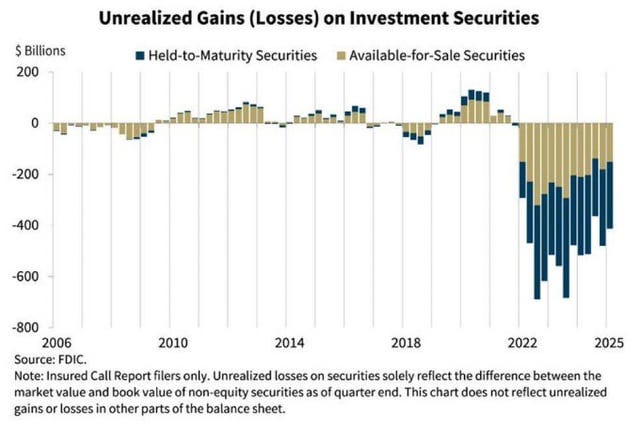
In essence as long as there is enough liquidity flowing in from the Central Banks, then there is enough juice going into the Financial System and Economy, therefore we just keep pilling up the debt but at the same time we starve off the recession as the liquidity is like a injection of smack, therefore we debase it, but we have enough to keep refinancing it…
Robin Williams pretty much lays out the cycle we’ve gone through, and currently are at a juncture, i.e liquidity cycle is coming to a close, but the economy, and the markets (dependent) have not performed due to the lack of liquidity flowing in, i.e starved...
Though markets are optically up, Bitcoin was repressed from 2023-2025, Gold was repressed from 2013 to recently, meaning they’d underperformed liquidity growth (debasement) other asset classes naturally have underperformed i.e SP500 was flat, Property 2.3%
Whilst some are calling for a deep recession and the collapse of the Everything bubble, though this is only possible if the spice doesn’t flow, i.e Covid the entire economy was closed, yet spice flowed and well… life went on, assets rose, because well, debasement, i.e optical growth offsets the collapsing mechanisms… until it doesn’t, the following will go into why a recession is unlikely, in the terms of a global reset…
Why Some Analysts Argue Traditional Recessions May Not Occur Anymore
This view isn’t about economic strength; it’s about how the system has changed, and how downturns manifest differently due to high liquidity dependence, extreme leverage, and state-engineered market support.
The modern economy may avoid classical recessions (like 1982, 1991, 2001, 2008), but only by replacing them with different forms of instability.
Below is the structure.
Liquidity Dominates the Cycle, Not Output
In classical macro:
recessions = declines in production, jobs, consumption
expansions = rising output
In the post-2008 liquidity regime:
liquidity injections, not productivity, drive cycles
asset prices and credit conditions become the “true economy”
central banks intervene at any sign of instability
This means downturns often get neutralised before they meet the technical definition of recession.
Mechanism:
When growth slows, central banks increase liquidity or pause tightening → asset prices stabilise → credit flows don’t collapse → GDP dip is shallow or brief.
But this creates:
suppressed volatility
higher systemic fragility
dependency on intervention
“liquidity recessions” instead of output recessions
Debt Levels Are Too High to Allow a Classical Recession
Global debt ≈ 350%+ of GDP.
High leverage makes the system sensitive to any drop in cash flow.
A traditional recession would cause:
mass defaults
bank impairments
bond market collapses
collateral chain breakdown
Governments and central banks cannot tolerate this anymore.
Therefore:
Policy is forced into “permanent anti-recession stance.”
Whenever contraction appears:
QE
YCC-style interventions
liquidity injections
fiscal stimulus
regulatory forbearance
backstopping collateral markets
This prevents the recession — but at the cost of growing fragility.
Collateral Chains Cannot Be Allowed to Break
The modern system relies on:
U.S. Treasuries
high-grade collateral
repo markets
derivatives collateral
money-market fund flows
A recession triggers:
asset price declines
falling collateral values
margin calls
forced deleveraging
systemic freeze
To prevent this, authorities support asset valuations almost mechanically.
This is why downturns turn into:
liquidity crisis → immediate QE or swap lines
asset wobble → instant policy reversal
bond market stress → stealth YCC
Thus you get “non-recession recessions”: GDP doesn’t fall deeply, but underlying fragility intensifies.
Demographics Make Growth Too Weak to Withstand Classical Recessions
Explainer here
Ageing economies (EU, China, Japan, U.S.) have:
lower birth rates
higher dependency ratios
low productivity
high social obligations
An ageing population:
cannot sustain long periods of unemployment
requires constant fiscal support
relies on asset prices for pensions
A classical recession — with falling asset prices and rising unemployment — becomes politically and socially untenable.
Thus the system shifts into:
permanent stimulus
liquidity cushioning
managed cycles
very shallow contractions
Dollar Hegemony Changes the Rules
Because global finance runs on USD:
when USD liquidity tightens, the world struggles
when USD liquidity flows, global growth “returns”
The U.S. can export liquidity through:
Fed swap lines
Treasury issuance
MMF flows
offshore banking
stablecoins (increasingly)
This gives the U.S. the ability to prevent global recessions by easing offshore dollar stress, even if domestic GDP contracts.
So instead of a recession, we see:
rolling currency crises
sovereign debt stress
asset bubbles
EM liquidity shortages
short, sharp slowdowns
“technical recessions” that don’t behave like historical ones
The U.S. doesn’t need to avoid recession for the world to avoid one — it just has to keep offshore USD liquidity flowing.
Governments Shift to “Financial Repression” Instead of Recessions
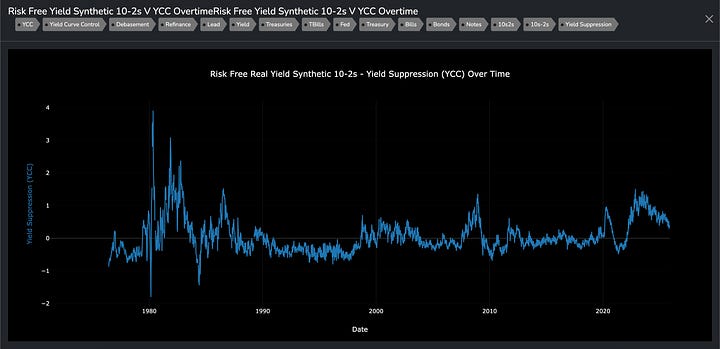
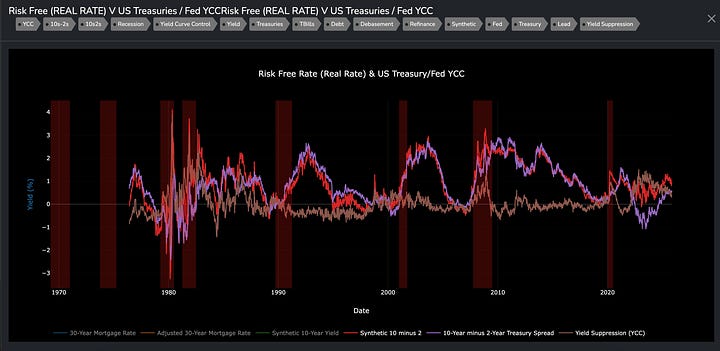
To manage the debt overhang without recessions, states use:
inflation > interest rates
yield curve anchoring
liquidity support
fiscal deficits monetised by markets
regulatory pressure on banks to hold sovereign bonds
pension-system forced buying
credit guarantees
This “represses” the economy slowly rather than allowing a sudden contraction.
It avoids:
mass unemployment
mass bankruptcy
political collapse
But in exchange it produces:
slow productivity
high inequality
recurring asset bubbles
zombified corporates
long periods of low real returns
The System Doesn’t Eliminate Recessions — It Transforms Them
Instead of:
Classical recession:
GDP falls, unemployment rises, defaults rise.
You get:
Modern recession substitutes:
liquidity recessions (markets crash while GDP holds)
collateral recessions (Treasury market stress like 2019 & 2020)
stealth recessions (households squeezed despite positive GDP)
demographic recessions (labour shortages + slow GDP)
balance-sheet recessions (Japanification)
rolling sectoral recessions (housing → manufacturing → tech → services)
inflationary recessions (real incomes collapse)
The real “economy” is now financial liquidity, not production output.
So policymakers manage liquidity, not GDP.
This is why some claim “recessions no longer happen” — not because the economy is healthy, but because the system cannot survive one.
No posts
Comments
Nothing yet. Say the first thing.
Sign in to join the conversation.