
(Note: I read all my pieces out loud for you; I think they’re best that way—but feel free to read instead! And while I do love an em dash, rest assured every post is written by me—a human—not AI.)
This is Part 3 of my series on ADHD. If you haven’t yet, go back and read or listen to Part 1 and Part 2, then come back and listen to Part 3.
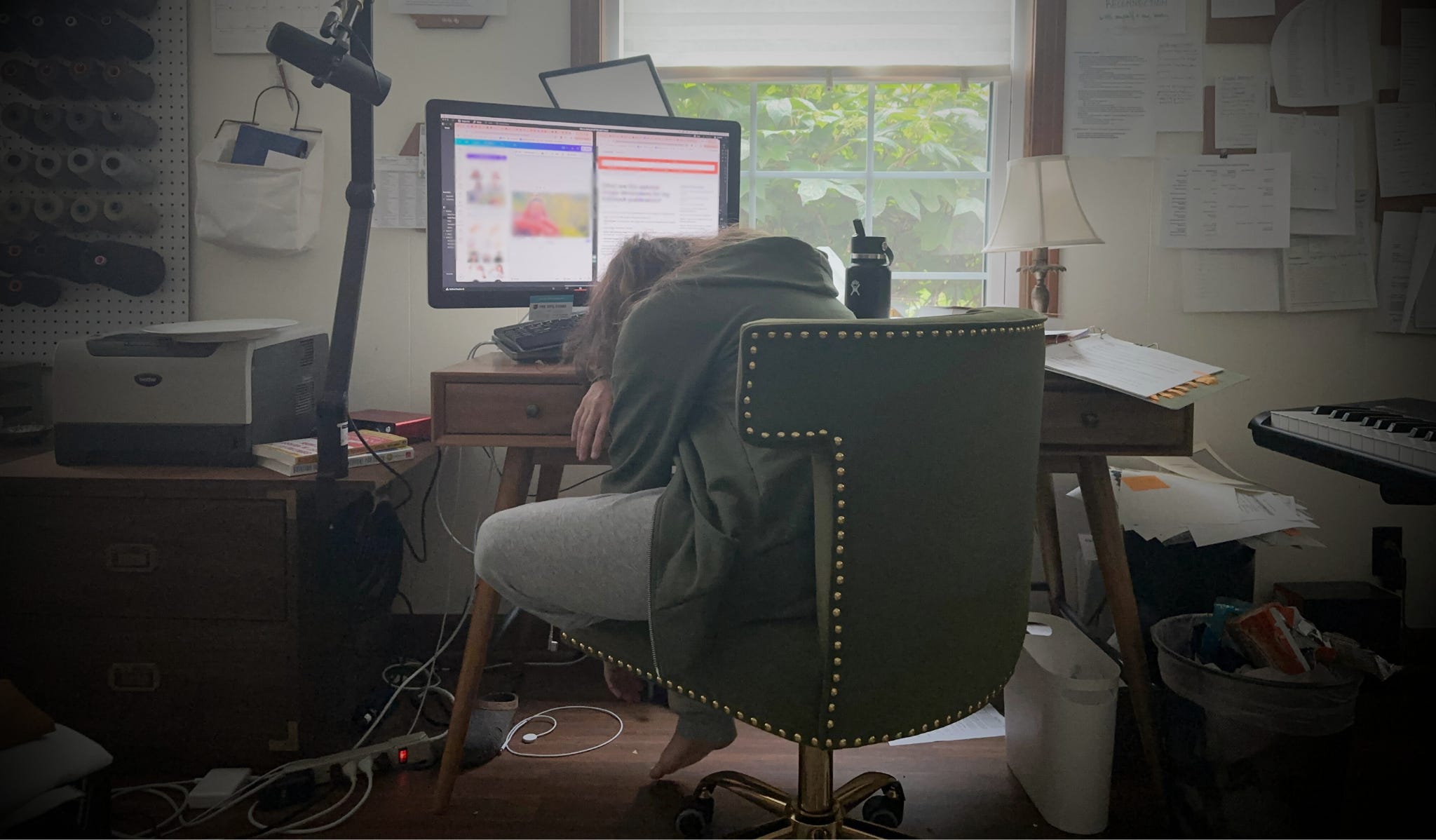
The desperation started when I turned 41.
The year before, I had expected 40 to be the spark that would break me out of the
goal—>overwhelm—>shame spiral I’d been living in for decades.
But it didn’t. 40 is just a doorway you walk through.
“I’m 41,” I told Seth. “I’m getting desperate.”
“I think you should talk to my therapist,” he said.
A few female friends had told me what happened when they shared their ADHD suspicions with professionals. One psychologist declared my friend couldn’t possibly have ADHD because she had the ability to carry on a conversation. Another friend was told the same after failing a computer test. Both friends left feeling confused, misunderstood, and unheard.
I didn’t want to feel that way.
But things were feeling dire.
Something happens when a woman realizes she may have more life behind her than ahead.
That’s when Wild Woman comes out.
She understands that no one is coming to save her and that she must save herself.
And in order to do this, she must start Doing Large instead of playing small.So, in desperation, I birthed my Wild Woman (or maybe she birthed me), and in doing so, we made an agreement:
We’re removing all roadblocks preventing us from becoming the fullest expression of who we were meant to be..
And that meant stepping around my fears and meeting with the therapist.
The night before I met with her online, I spent hours with the DSM-V’s list of criteria for ADHD. I copied and pasted them into a Word document, and then underneath each one, I explained whether or not that criterion echoed in either my childhood or adult experience. If it did, I included examples of how each one played out in my thinking and behavior. If something didn’t apply to me, I moved on to the next.
By the end, I had eight pages of typed examples. I had left only one criterion blank: “Often has trouble waiting his/her turn (e.g., while waiting in line).”
I stared at the pages filled with childhood frustration and adult despair. I saw my eagerness to live a life of curiosity and meaning, like a white tipped river rushing down a canyon. I felt the power of its velocity, the force pushing me forward to always search and learn and expand.
I also saw the river’s diversions—the branches that began as tiny streams, trickling away from my river—always thinking they’d rejoin the flow—only to end in dry basins. And the eddies at the sides that swirled, gathering foam and leaves, and often traveling backwards in the wrong direction. I saw drought, a flow brought low, forming pools that stagnated in the sun.
I saw the control I did and did not have over these systems.
I saw how I could talk about my river all I wanted (in therapy, in writing, to friends), but I couldn’t make her move—even though I knew in my marrow what she was capable of.
It was all there—in the pages whose words flowed alongside these criteria.
OK, Universe, I thought. I’m listening now.
I met with the therapist several times.
She read my eight pages (she thought I was a very good student—see “The Sector of Success” Section from Part 1).
She asked lots of questions.
She was also very curious about my “comorbidities,” an unnecessarily grim word that just means “the other things a person has been diagnosed with”—in my case, OCD, panic disorder, anxiety, and depression. She wanted to make sure my symptoms weren’t better explained by one of my other diagnoses.
At the end, she said, “I am diagnosing you with ADHD, combined presentation.”
I clicked “End Session,” closed my laptop, and just sat there staring ahead.
And that, as they say, was that.
Then, the relief hit me like a gust of air to the face.
You mean all those times I couldn’t shoehorn my body out of my bed during a shutdown—there was a reason for that, and the reason wasn’t LAZINESS?? I scanned through years of memories, yanking off the “LAZY” labels and speaking the word Neurodivergent over them like a blessing.
I had a reason for the pain.
The confusion was understandable.
Over the next couple of days, other thoughts floated to the top.
What if the diagnosis isn’t real?
What if you’re just cosplaying a person with ADHD?
This is the part few people talk about: the anxiety (I’m an imposter) that shows up after the relief.
I said this to myself when the voices got loud:
“I’m trusting myself through this process. I also trust the professionals.”
I chanted it as a mantra for the first few weeks.
And just as the voices started to fade, my own asked a really good question:
It’s great to know something about yourself, but how do you turn it into behavior change?
I read books and scanned the socials for next steps. I learned there are two helpful options to explore when trying to create lasting and sustainable change with ADHD:
Developing tools that actually work for your specific brain (and not against it)
Medication (when helpful, accessible, and managed by a professional)
In regard to the first point, I have always been a mental health tool collector.
I’ve been a regular participant in mental health therapy for most of my life—at least, ever since I was old enough to seek out an actual professional and not just church counselors. My shelves are full of self-help books, and mental health podcasts are a daily staple in my online media consumption.
Heck, I even co-host one myself:
I’d been using ADHD tools long before I was ever diagnosed, and they’d helped…up to a point. But they weren’t helping enough. I was still very sleepy and shut down.
I wasn’t where I wanted to be.
So I turned to medication for help.
About six months before diagnosis, I had talked to my doctor, and he had suggested I was experiencing depression.
Depression is the quiet middle child of my mental health family. Often, I don’t even know he’s been around until I see the evidence he’s left behind:
fatigue, weight gain, loss of satisfaction in things I once enjoyed.
I’m most familiar with Depression’s kid sister, Anxiety. You know when she’s around when she wakes you up in the morning with a vice grip on your heart while dumping a swimming pool’s worth of cortisol into your bloodstream.
She makes sure the only thing you can see is her.
But Depression is different.
I looked back and found that, yes, naps had become a part-time job and that I had indeed added 20 pounds to my 5’0” frame. No books had been written past Chapter 2. Depression had visited me, that sneaky bastard, and was, in fact, currently living in my house, spooning me in my bed during naps and whispering,
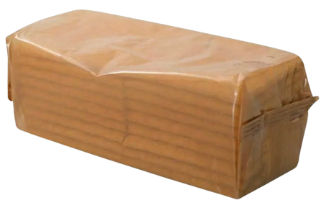
Yes, an entire brick of graham crackers would make everything feel better.
I needed to send Depression packing, so I started on a low-dose of Wellbutrin (bupropion) - an NDRI (norepinephrine-dopamine reuptake inhibitor).
The on-ramp was bumpy (short-term vertigo & dizziness), but after about a week, I stopped napping altogether.
Like I can count on one hand in nine months how many times I’ve fallen asleep during waking hours (not including migraine attacks).
I can’t tell you how much of a win this has been for me.
In short, Wellbutrin has given me my life back.
I was awake now, but the focus still wasn’t there.
“OK, so you have ‘ADHD,’” my mom said. “But that doesn’t mean you’re going to get on medication, right?”
I was in my parents’ kitchen and had just told my mom about the diagnosis.
“I’m open to the idea,” I said, annoyed. Historically, my mom hasn’t approved of psychiatric medication, even when it’s dramatically improved my quality of life. We would take a bullet for each other, but we do not see eye-to-eye on religion or politics or science. She’s getting to where she doesn’t approve of most medications.
But she does approve of Ivermectin for COVID-19 and faith healing for everything else.
“Oh, Carrie. You don’t need to take medication,” my mom said. “I wouldn’t if I were you.”
“Well you’re not me,” I said. “And I’m removing every barrier for myself, and if medication helps me do that, I won’t hesitate to try it.”
And I walked my Wild Woman self outside into the sunshine.
A week later, I once again met with my doctor. I had heard good things about Vyvanse (lisdexamfetamine), a stimulant often used for ADHD treatment. He wrote me a prescription for a low dose, and I have been taking it for a little over a month.
So far, I’ve definitely seen improvement in focus and get-up-and-go. I also feel like medication has removed a couple of layers of resistance I feel between me and a task, making it easier to start. So far, it hasn’t transformed me into a completely different person or an emotionless husk. I haven’t become a marathon runner or a drug addict. And I haven’t penned an entire book in a weekend.
But I have shown up consistently to write.
Which is all I’ve ever really wanted.
And that, Dear Reader, is a win.
I’m not saying my day-to-day is perfect. In fact, there are days, when I just can’t.
So I don’t.
And I try not to feel guilty about it.
Remember Wild Woman?
She got us here. We agreed:
“We’re removing all roadblocks preventing us from becoming the fullest expression of who we were meant to be.”
I’m determined to finish my book, and when I do, you’ll be among the first to know.
ADHD is not my roadblock.
It’s part of what makes me unique. I love that my brain lets me hyper-focus, see patterns, and connect dots in ways other people might miss. What might look like “getting stuck” on a particular subject is actually me building a web of meaning. My need for novelty leads me past where others would have turned back and into new, unexpected creative territory.
The fear of asking for help was my roadblock—until I held my own hand and got help.

Dear Reader, if you relate to any of this, please reach out too.
You’re not lazy, and you’re not crazy.
Talk to a professional—someone who will look you full in your face, listen to you, and ask you questions—not just have you complete a test on a computer.
If that person won’t help you, find someone else.
Trust your gut if something feels off or you leave feeling confused, misunderstood, or unheard.
You know your own body and brain better than anybody else.
I hope for you what I hope for all of us: that we become the fullest expression of who we were meant to be.
In the fourth and final part of this series on ADHD, I’ll share the tools that have helped me navigate life— with my marbles mostly intact. I’ll also expand on my experience thus far with ADHD medication. I’ll see you in two weeks.
No waiting for you! → Here’s Part 4! ←
Comments
Nothing yet. Say the first thing.
Sign in to join the conversation.