
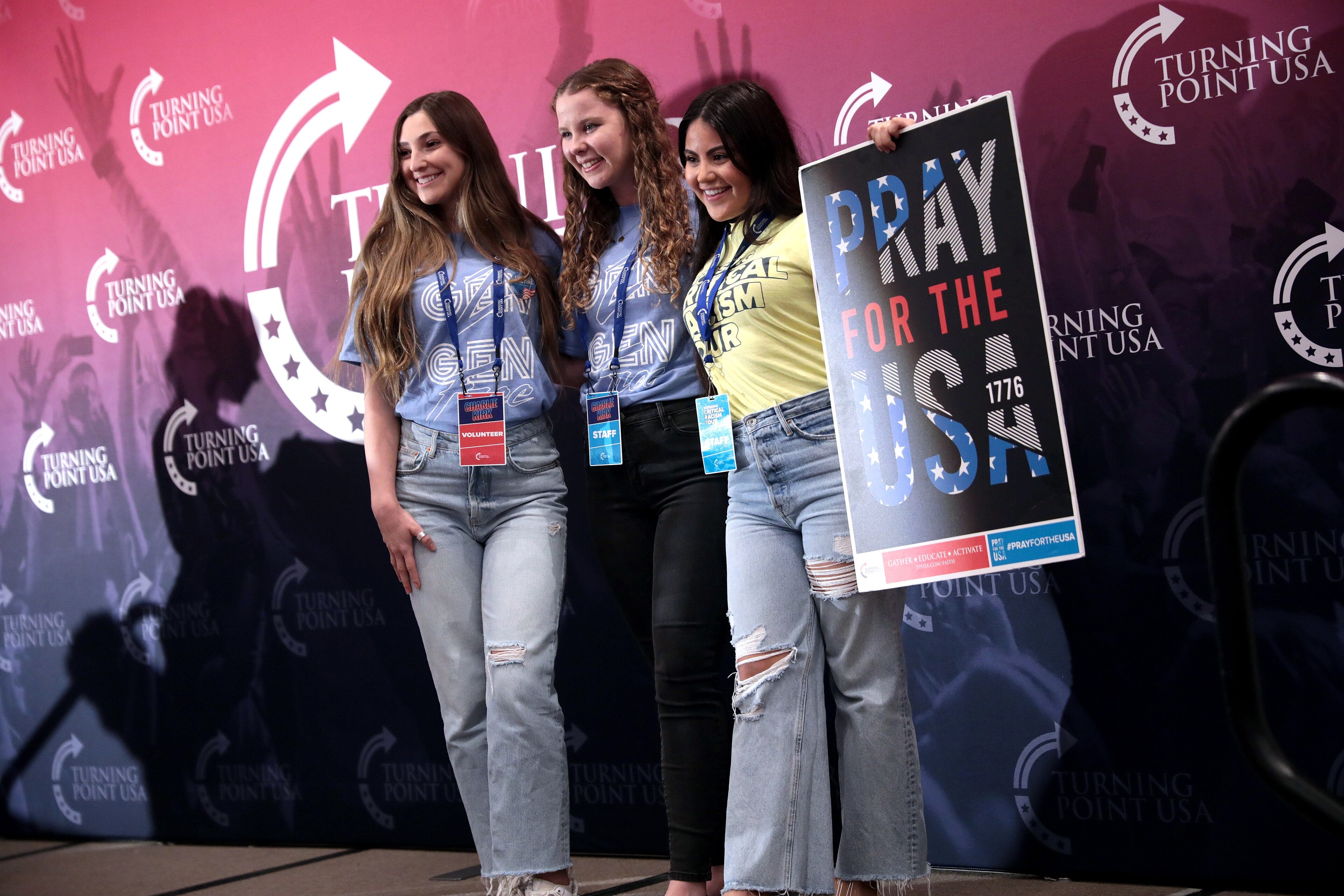
From the OB-GYN’s office to federal websites, American women can feel the effects of rising Christian nationalism, and its attempts to push women back into neotrad roles. Whether it’s Pete Hegseth cutting all the women from this year’s Navy’s promotion list, or Erika Kirk speaking of the joys of “Biblical womanhood” at Turning Point USA’s recent Women’s Leadership Summit, we’re seeing a new assertion of American purdah.
How to push back on a political movement wrapping itself in pious language? One tactic: listen to Muslim women, who’ve had decades of experience with masculinist power grabs. After the Iranian Revolution and Afghan mujahideen inspired a wave of Islamist sentiment in the 1980s and 90s, women in Muslim-majority countries found their rights increasingly curtailed by rigid, patriarchal interpretations of Islam. Women from Kabul to Cairo found themselves facing waves of regressive policies that affected everything from how they dressed to court rulings on domestic violence. Local resistance movements sprung up from Indonesia to Morocco, taking on neotraditionalist laws and discourse.
While tactics varied widely, here are some ways women fought back:
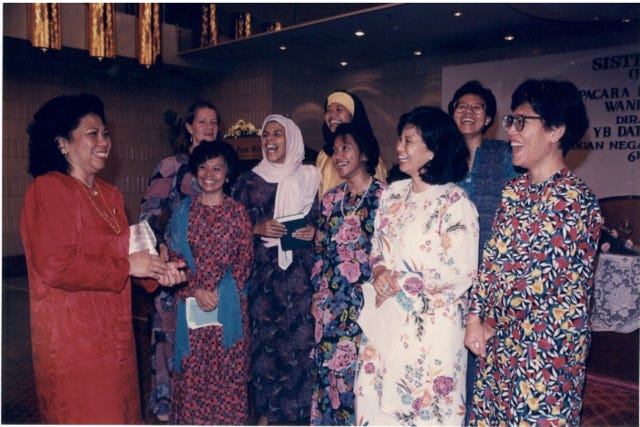
Head for the Root: In the early 1990s, faced with increasingly discriminatory laws on marriage, divorce, custody, and inheritance based on conservative interpretations of Islamic jurisprudence, a group of eight women started meeting Monday nights in Kuala Lumpur, Malaysia, to read the Qur’an. Led by the American scholar amina wadud, who’d just completed her doctorate on the Qur’an and women at the University of Michigan, they studied the scripture to find that—contrary to what mullahs and populist politicians were claiming in the courts and on the airwaves—men didn’t have a God-given right to four wives, or to beat their wives. Calling themselves Sisters in Islam, they went on to fight discriminatory interpretations of religious law, equipped with arguments not from international human rights legislation, but from within Islam itself. By 2009, this faith-based social justice drive was launched as the global movement Musawah, its teachings and methods used by women activists from Lagos to Lahore.
Talk to Tradwives: Islamists would routinely brand feminism as an imported Western ideology—a new imperial attempt to undermine Muslim cultures by imposing American ‘universalism’ on the rest of the world. By articulating a faith-based feminism, Muslim women activists avoided reducing religious women to passive victims of patriarchy, waiting to be rescued. (The Christian resistance takes on a new importance in the current American situation, given that a recent report from the Public Religion Research Institute PRRI found that American women are just as likely to hold Christian nationalist views as men.)
Meet People Where They Are: During the 1990s, as neo-trad populists made women’s bodies their political platforms, women’s groups realized they had to teach women their rights in simple, plain language. Cue for bold pamphlets handed out at rural mosques, catchy bumper stickers, and creative online approaches. (Check out one of Musawah’s animation from 2020— created by none other than New York City’s future First Lady, Rama Duwaji.)
Play the Long Game (and the Wide One): While political actors think in election cycles, fundamentalists plan in generations. So it was that the Muslim gender activists held teach-ins for religious scholars and madrasa students. They’ve learned to share resources across borders, both in-person and online. At international conferences, Nigerian women opposing FGM share tactics with Afghans activists battling gender apartheid. Egyptians fighting sexist marriage laws share notes with Yemenis working on child marriages. Though the fights are often localized, the Islamic sentiment and solidarity aren’t.
I type this from the United States. Given the current state of the union, it’s understandable that we’re focused on our own homegrown religious extremism’s shadow on freedoms for all. Sadly, there’s nothing particularly American about patriarchal power grabs wrapped in pious language.

Barnes & Noble | Bookshop.org | Amazon | See more options at PRH.com
No posts
Comments
Nothing yet. Say the first thing.
Sign in to join the conversation.