
In 1973, while still an undergraduate at the University of Pennsylvania, amina wadud married Dawud at-Tauhidi, a fellow recent convert she met at the mosque. Their wedding took place during what the progressive icon refers to as her “Salafi days,” when she lived a life ruled by strict traditionalist interpretations of Islamic traditions. Her father had recently passed away, her mother was too ill to make the journey from Washington, DC, and none of her seven siblings could make the trip to Philadelphia. So amina entered the first of her two marriages as she did so much else in life—alone.
In this exclusive excerpt from my latest book, The Lady Imam (available now), amina is in love with both Dawud and her new-found faith. Like many new converts, she’s keen to follow the traditionalist rules of Islamic practice to the letter.
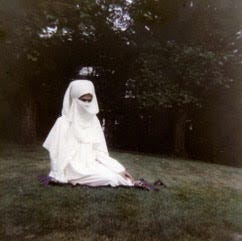
With no family present, the mosque’s imam served as amina’s wali, traditionally a male family member who contracts a woman’s marriage. In Islamic wedding ceremonies, the imam asks both bride and groom for their consent. When the moment came, and the imam asked whether amina agreed to be married to Dawud, she surprised herself by saying nothing. She’d read a hadith, one of the words and deeds of Prophet Muhammad that provide guidance for Muslim behavior and Islamic law, in which he was asked whether a woman should be asked for her consent to marry. Yes, he said, but if a virgin is asked, and she feels shy, “her silence means her consent.” Though not a virgin, amina was keen to observe traditional Islamic norms. Married at twenty, “I was in love with love, and in love with Islam, and in love with being married in Islam,” she recalled. “I believed a hundred percent that I would receive everything I anticipated, within the ideal of that patriarchal, hegemonic marriage scenario.” Under Islamic law, women can specify conditions in their marriage contract, but at her first wedding, amina felt none were needed. Dawud and Allah, she was sure, would deliver all she needed.
Ever the perfectionist, she set out to be the best Muslim she could. During what she refers to as her “Salafi days,” ruled by strict neotraditionalism, she assumed that there was a single, universal Islam, and that sticking to rules brought you as close as possible to the time of Prophet Muhammad. When she or Dawud read a hadith, they assumed they should follow it to the letter. The preacher’s daughter and the former altar boy had shucked off their Christian pasts. “We were still fighting against the currents that had been our lives before, and we were trying to get into this thing we mutually agreed upon was Islam,” she recalls. “We didn’t know what it was. But we’d internalized that everything we’d been doing before was wrong, and to do it right, we had to change everything.”
Pious rigor replaced amina’s hippie ways. No more nights at drumming circles or afternoons dreaming to Joni Mitchell: For two years, amina cut music entirely out of her life. Friendships with other undergraduates faded. When Barbara Smith saw wadud in the mid-seventies, she found her brilliance and fire “banked, somehow tamped down,” recalls Smith. “She seemed so constricted.”
The zeal of two converts made for a disciplined existence. Briefly, amina even considered dropping out of college, unsatisfied with Penn’s provisions for Muslim students. So careful were she and Dawud about Islamic dietary rules that she scoured Philadelphia for cheese without rennet, lest the animal whose stomach produced the enzymes for the stuff was not halal. She eventually found some in a kosher deli.

Barnes & Noble | Bookshop.org | Amazon | See more options at PRH.com
Crossing Borders is a reader-supported publication. If you’re finding value in these reflections, you can become a paid subscriber and join our thoughtful community, participate in monthly Zoom chats, and comment on posts. Founding members also receive a 1-on-1 session to talk through their work. I’d love to have you there.
Comments
Nothing yet. Say the first thing.
Sign in to join the conversation.