

In the 1990s the fashion world gave birth to the “waif dress” and a related “waif fashion” look associated with models such as Kate Moss. At the same time tech hardware was also presenting super-thin as a newly desirable form factor: from slender ‘Discmans’; to wall-flush B&O Besound 3200; to the first flatscreen TVs. Premium tech had on occasion aligned to small, but this was the first time it had specifically embraced thin. Thin-design was a new thing.

Being thin is useful for products that fit in our pockets or bags or against walls. Thin is also a signifier of technical leadership: because of the palpable challenge of making high performance in a small package, thinness evidences mastery of designing and making stuff - and such mastery has always been a quality associated with premium brands.
So people will pay more for the greater tangible value of thin and more for the intangible value of premium that it brings too. But beyond useful and premium qualities, thin-design brings a unique aesthetic and identity that has a growing resonance in the car market today. Unlike being small in all dimensions, thin is akin to waif-fashion in being stand-out yet unembellished, in being the opposite of inefficient or fat, and in being pure.

Since the nineties debut of thin-tech we have variably seen products presenting very slender volumes as markers of their leading technology and associated premium stature — the 2004 Motorola Razor and 2008 MacBook Air being notable early stakes-in-the-ground. And in the twenty years since the Razor and Air, thin-tech has become a staple from all tech-brands: thinness in technology products has become ubiquitous and so less noticed, less special. But we see a shift now in consumer technology design, and a related one in automotive design too with thinness coming up a notch and perhaps repeating what we saw in the nineties in making a stronger statement akin to waif fashion.
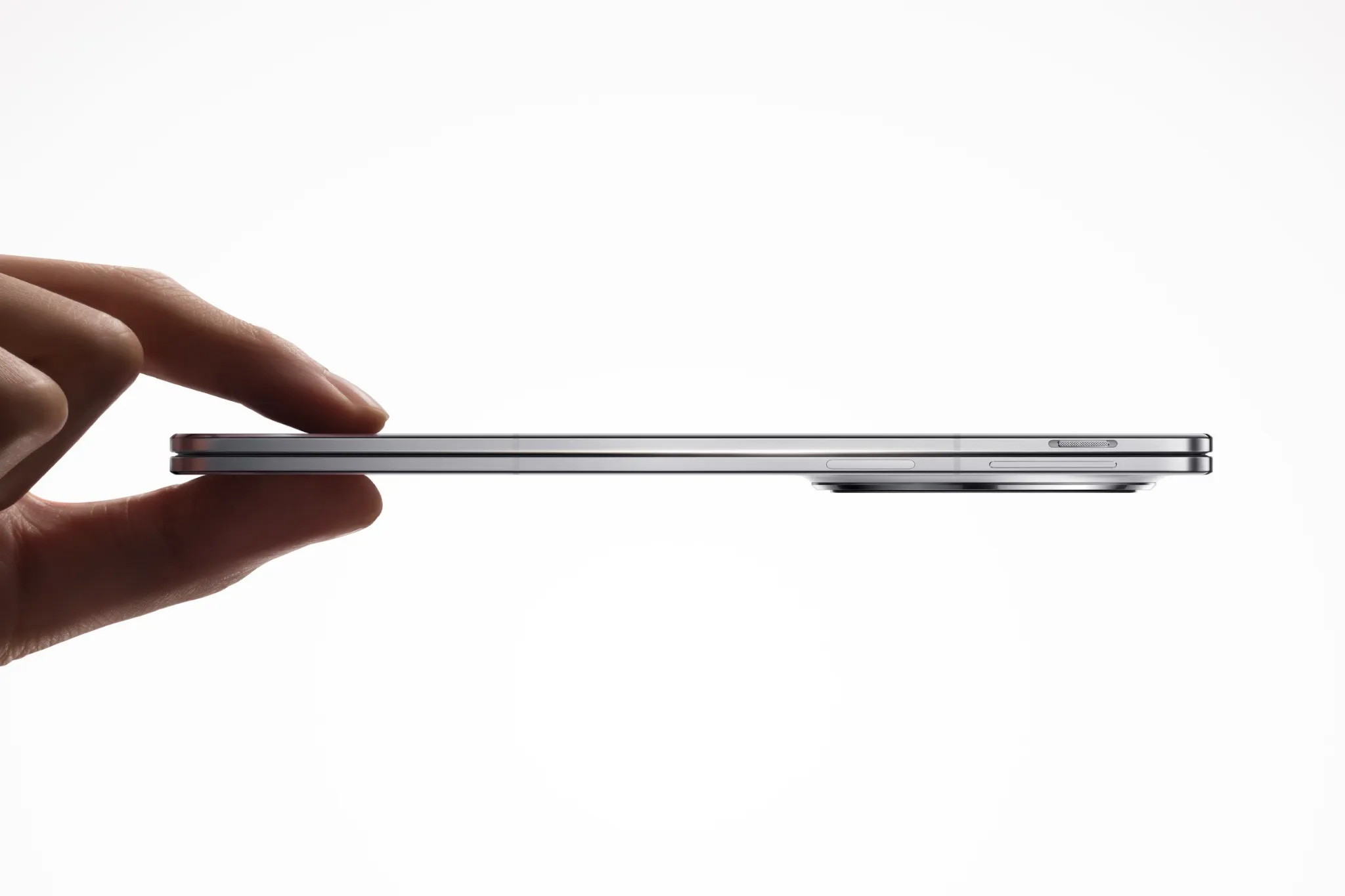
This year Oppo unveiled at MWC the Find N5 as the thinnest foldable phone that shows how high performance in the foldables sector no longer necessitates physical bulk. Lenovo also revealed there a series of laptops with sharply defined, ultra-slim profiles, and Tecno presented the Spark Slim concept that uses new silicon-carbon battery technology to enable a visibly slender housing.
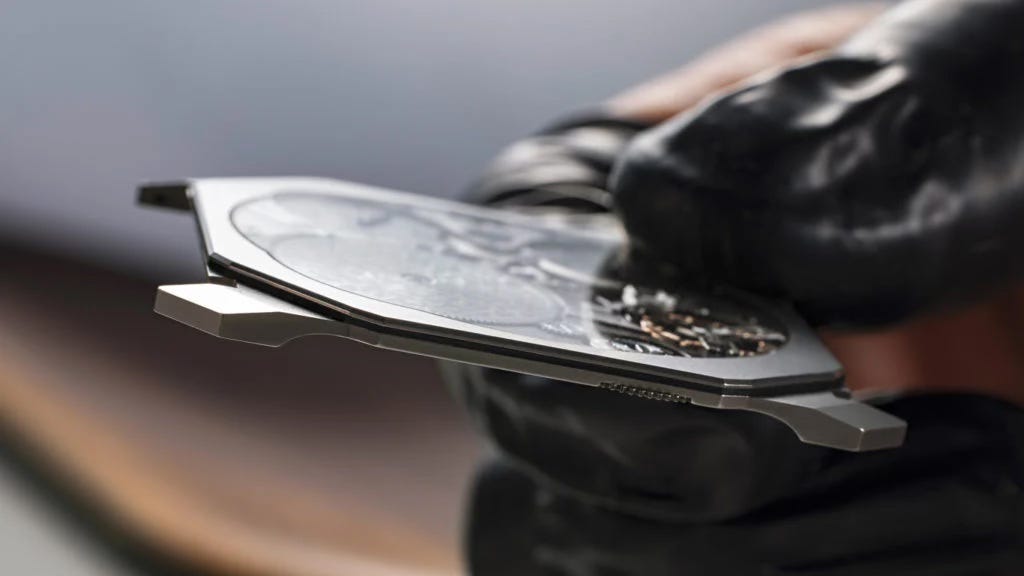
In the watch sector a similar focus on attaining a waif-like silhouette is a battlefield for several brands; only last year the Bulgari’s Octo Finissimo Ultra beat Piaget’s Altiplano Ultimate Concept Tourbillon to be the thinnest Tourbillon at 1.85mm deep (yours for US$700k).
These products are using their thinness to signal technical mastery and a level of conscious command of material and packaging constraint that goes further than ever before. And just as Kate wore the waif-dress to such startling effect, so today’s leading tech brands are putting effort into communicating their super-slimness: chassis materials, hinge architectures, OLED layering, and battery density and chemical make-up have become key topics in launch messaging and product positioning. The waif-aesthetic is evident in the product and in the ways brands are presenting the product.
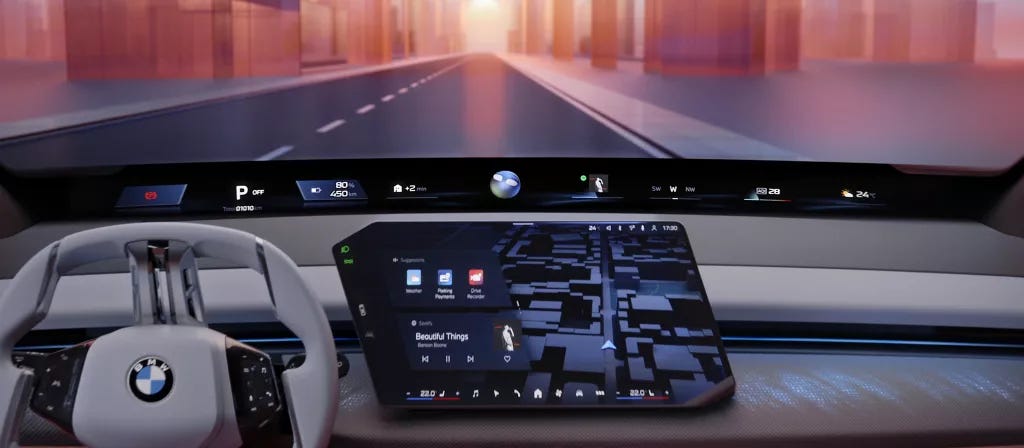
And this waif-aesthetic is also coming to automotive too. With fast evolving in-car UX reshaping the layout and priorities of vehicle cabins, a sense of space and visual light-weightness have become central tenants for automotive interior design much realised by the stripping out of analogue controls, and the fast adoption of slender screens and control interfaces. Now leading car interiors are defined by a super thin centre screen floating above the Instrument Panel (IP), a driver-information-module (DIM) housed in blade-like enclosure, and ever smaller display bezel radii. Even within automotive interface software design we are seeing a waif-aesthetic: graphical and text-based iconography are getting thinner, layouts are getting flatter, and with fewer layers and greater spacing between zones too — a shift, sometimes described as ‘zero-layer’ UI, that prioritises speed and clarity. Overall, automotive UI design is getting lighter in tone and more slender in form to be freer from visual clutter. it is very much embracing a waif-aesthetic.
While the nineties waif fashion rekindled a slender feminine form from the 1960s - eponymously defined by Twiggy in a Mary Quant mini-skirt - which in-turn echoed the Flapper fashion look of the mid-1920s, this new and growing trend in consumer technology design and automotive design for a waif-aesthetic has a more substantive basis: waif-aesthetic has currency with car customers because it speaks of digital, of electric, of efficiency - and this reflects the shifting identity of the car from mechanical horse to smart-phone on wheels. Fundamentally, waif-aesthetic is set to be a lasting and significant trend as it wholly aligns with today’s digital user-experiences, the efficient EV, and the software defined car.
No posts
Comments
Nothing yet. Say the first thing.
Sign in to join the conversation.