
This weekend, Memphis and Jackson and a host of cities, communities, and human beings in between celebrated the 60th anniversary of the Meredith March Against Fear.
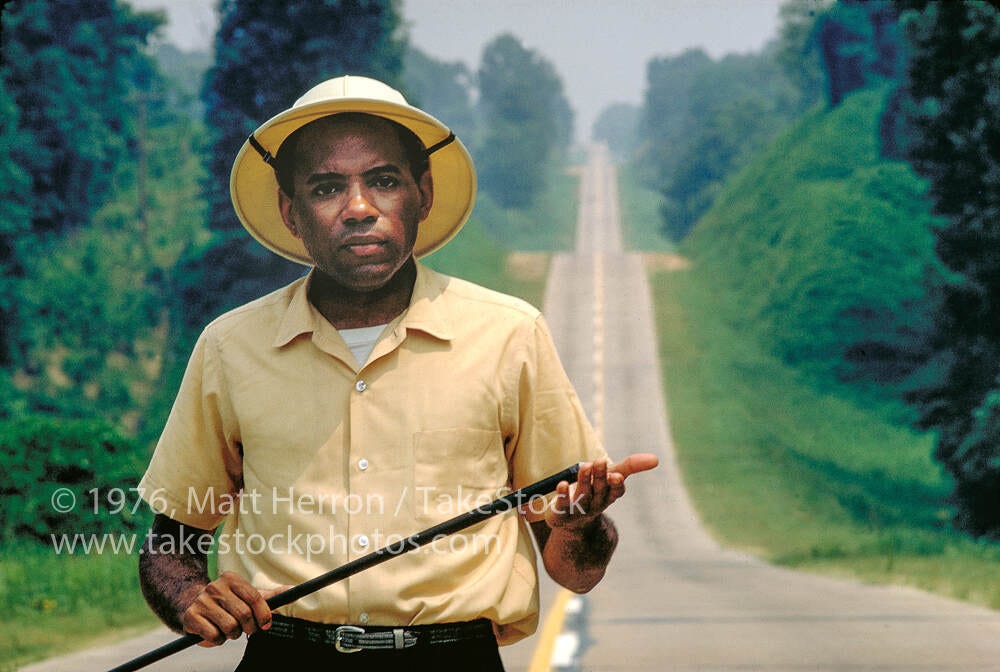
In case you’re unfamiliar with the march, it took up almost an entire chapter in my first book, The Color of Life.1 Even though there’s so much more to say about it, here’s an excerpt:
In 1966, my father-in-law organized the Meredith March Against Fear, a march that would come to be known as the last great walk of the civil rights movement, as well as the beginning of the Black Power movement.
Of course, this wasn’t his intention for the march. Although three years had passed since James Meredith became the first African American to graduate from the University of Mississippi, an obvious need to stand up for the civil rights of every citizen remained. Within weeks of my father-in-law’s graduation, Martin Luther King Jr. solidified his standing as a national figure, leading hundreds of thousands in the historic March on Washington, ending with the famous “I Have a Dream” speech. Two years later, King and other nonviolent leaders led a five-day walk from Selma to Montgomery, a march that not only resulted in voting rights for black Alabamans but also birthed the Voting Rights Act of 1965. Within a year, though, activity within the movement slowed, a trend that continued until King’s death in 1968, the year that also marked the movement’s official end.
But the need for equality hadn’t lessened. Following graduation, my father-in-law stood on the sidelines, pursuing more education, not always associating himself with the greater cause. Although he had been marked as a figurehead of the movement, it was a label slapped on him by others. And were James Meredith sitting beside you today, he’d be the first to tell you that he does what he wants. He does not conform to classifications but conforms to his own destiny and to the duties of divine responsibility. According to author and historian Ann Bausum, “he wanted to battle something even bigger than Ole Miss, something even bigger than segregation. This time he wanted to battle fear, the fear that pulsed through so many racial interactions in the South.” The fear that lived in the hearts of his fellow black Mississippians made him set his sights on a 220-mile walk from Memphis, Tennessee, to Jackson, Mississippi. If he could just walk, if he could just keep putting one foot in front of the other, then his steps might further encourage black voter participation — and secure their future vote, were he ever to run for office. So he prepared to walk without fanfare, without military intervention and police protection, and without thousands walking beside him. Unlike King and other protest organizers who followed with an equal kind of courage but with a Gandhian model of protest, my father-in-law “embraced the era’s more traditional view of manhood, believing that men proved their worth with courageous behavior.” James Meredith disliked the movement’s inclusion of women and children, and on the afternoon of June 5, 1966, with a handful of followers and $11.35 in his pockets, my father-in-law started walking. He didn’t know where he would sleep or how he would eat, but he believed the good Negroes of Mississippi would take care of him.
But then there was an enemy. On the second day of his walk, a white man from Tennessee, Aubrey James Norvell, ambushed him, shooting four hundred and fifty shotgun pellets at him. Although James Meredith wanted to walk alone, without protection, law enforcement officers, journalists, and other witnesses stood nearby and, after the shock of the surprise attack, came to his aid and arrested Norvell on the spot.
Although our little family would have loved to have attended events this weekend, we were instead attending events around my ordination to the Episcopal Church.
However, if history is an ongoing dialogue between the past and present, then I’m curious how the anniversary of this event informs us today. Perhaps we too note that the need for equality hasn’t lessened, but has only grown more obvious and more extreme. Maybe we see how, when movements slow and wane and start to come to a close, a need to agitate still exists, because the need itself doesn’t necessarily go away. Or maybe we’re struck by that “if he could just walk” part of the paragraph that prompted him, yes, to walk, but also yes, so he could encourage the Black vote.
Whatever it is, I’d love to hear from you. Share a thought with me?
With hope,
c.
PS: Like I said earlier, there’s so much more to this historical event. Pick up a copy of my book or dig into The March Against Fear by ANN BAUSUM.
Or, if you’d like an autographed copy, order one through my website! You can find that here.
No posts
Comments
Nothing yet. Say the first thing.
Sign in to join the conversation.