
If you want a pithy, artistic version of this essay, scroll to the end for the poem. Above is a guided meditation that supports being with the unresolved. Below is me reading the essay that follows:
We don’t like things to be unresolved. In fact, it’s arguable that we spend most of our time and energy resolving things that we have deemed to be unresolved: clearing our inbox, putting things back where they belong, addressing conflict or tension with other people. We live in a world that is constantly unresolved, where things are always falling apart in some way. To quote Joseph Goldstein, “you don’t do anything, and your house or apartment gets dirty.”
Rarely do we question whether there’s anything to do about this other than try and keep our shit together all the time. But the dharma points to a new possibility. What would it be like to be ok with a moment that feels unresolved?
If you think about it, much of humanity’s dysfunction can be traced back to an inability to hang when things are unresolved. When we sense a problem, we feel like we can’t relax until it’s solved. So we either ruminate about it until we’re an anxious mess, or we go out into the world to find a solution. Someone misunderstands us, and we must set them straight as soon as possible. Or consider how conflicts between nations escalate — each side unable to tolerate the ambiguity of an unresolved threat, so every provocation gets answered immediately, each response justifying the next, until de-escalation starts to feel impossible. These days, when something breaks, rather than going without that item even for just a week, people can buy another one on Amazon and have it delivered the next day, leading to massive amounts of energy and resource consumption.
But if you’re like me, what comes to mind when I consider simply sitting with the unresolved is an image of my home filling with clutter and grime; my kids yelling obscenities at me while covered in mud and poop; colleagues, friends, and students losing all faith in me or having no support as I stop responding to their needs. So I’m not making a case for shirking responsibility or giving up, but rather a new quality of attention.
What would it be like if we could be ok with the feeling of things being unresolved? To get to this, we start by noticing what exactly is happening when we feel compelled to start or finish a task— anything from cleaning clutter to telling someone off to buying something online. We might notice a leaning forward, a momentum that is taking us out of the present moment. A kind of strain, a stress. Dukkha. We don’t want to be interrupted and we want this thing to be done— so that we can relax.
Speaking of interruptions, your support makes a huuuuge difference. To receive new posts and support my work, consider becoming a free or paid subscriber.
One underlying assumption is that we are alone with this problem, and that we are somehow burdened with the task of resolving it on our own. If I don’t do something about it, something bad will happen. I am responsible for fixing this and there’s no other way it could be resolved. But the dharma tells us that we are not alone at all, and that all the problems we think are ours alone to deal with are much broader and more nuanced than our minds make them out to be. In fact it’s often the case that by doing nothing, the problem resolves itself. If I don’t set someone straight after they yell at me, by not fueling their anger but rather letting it be, they’ll be given space to feel their own feelings a bit more, and tension eases.
The other underlying assumption here is that we can’t be ok until this task is done, until this problem is solved. That the problem is more important than anything else, and is worth turning away from this moment for, worth sacrificing our peace for; worth sacrificing our awakening for.
Without mindfulness, these assumptions go unnoticed and unchallenged. But with just a short mindful pause, we get a life-changing glimpse into a mind that is caught in some erroneous and very painful beliefs. In pausing and sitting in the unresolved, we can finally have space to touch into the tenderness associated with feeling alone with all these problems. And we can begin to re-center ourselves around our true priorities.
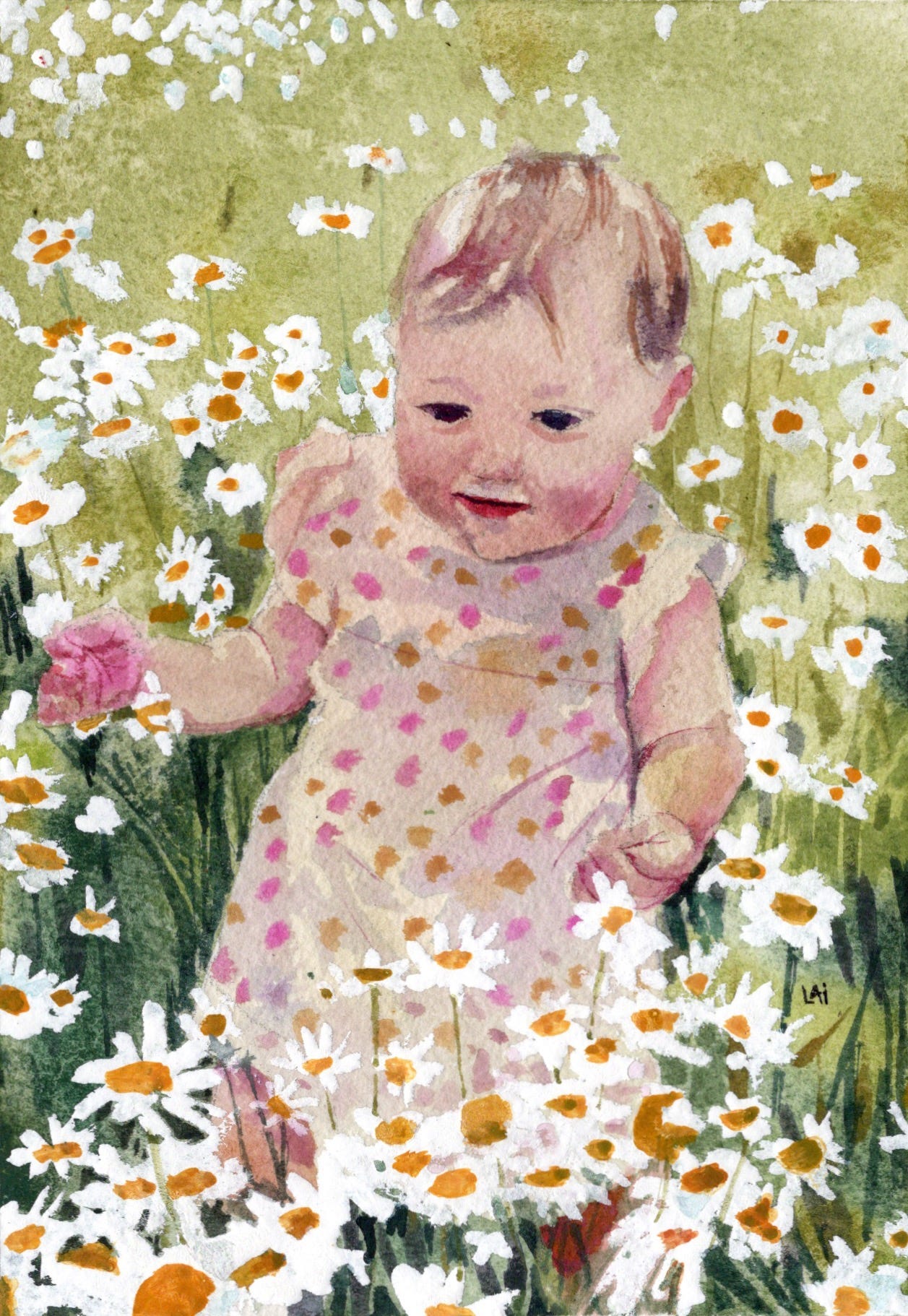
Lately, my baby girl Rumi has been just on the cusp of walking. She can take a step or two on her own, but mostly she’s been spending her time finding something to hang onto— a chair, a stool, my legs— and balance herself while she wobbles around. She often corners me while I’m in the middle of some task, like washing dishes or getting dressed, grabbing my legs and knees so that if I were to move away, she’d fall down and cry. I’m frozen in the middle of the kitchen holding dirty dishes or a handful of chopped zucchini until she moves on to another activity, or decides she needs me to pick her up.
This is an excellent chance for me to hang out with myself while I’m caught in the belief that I can’t be ok unless this task is finished. How could I feel complete when I only have a bra and socks on? So I look inward, and I notice the feelings, and I begin to bring some tenderness towards my current state.
Ah, here it is, the belief that I’m at a shortage of time, that there’s too much to do, what if I can’t get it all done and be a good mother to these kids? Here too is the belief that I have to rush through this task so I can pay better attention to my kids, so that later I can just relax and play with them, and eventually actually be mindful. There’s actually physical discomfort happening, that I’ll let go of once I give myself permission to relax. So much pain that I hadn’t seen. Then I remember that getting dressed isn’t nearly as important as getting free. I’m already exactly where I want to be: waking up in this moment.
And then, I notice Rumi down below me, learning to walk. Shaky and balancing, she’s completely present, all while focused on accomplishing a task. I’m sort of wobbly too, as I try to put my pants on without knocking her over. In some ways, we are learning to walk together.
If you find yourself interrupted in the middle of a task today, can you treat those interruptions as cues to be with the unresolvedness of your own awakening — prioritizing that over whatever task felt so urgent? What would it be like if you stopped postponing your peace for a time when things feel more resolved? What would it be like if you made it your whole practice to be with the unresolved, to watch things fall apart while you hold your heart with compassion? It is from this place of present compassion that we find clarity about how to act with kindness, clarity about what is really worth doing.
In the grand scheme of things, everything is constantly falling apart. If we wait until things are resolved, we spend our whole lives just trying to keep our shit together. We might have moments where things are finally figured out— all the emails are answered, the bills paid, the garden weeded. But invariably, something will slip out of place. Someone gets injured, the dinner on the stove gets burned, the car breaks down: all while dust bunnies are gathering in the corners of every room in the house.
And if everything is constantly falling apart, and that’s just the way things are, maybe that’s also perfect. If our sense of completion does not depend on outside circumstances at all, then things are already whole and complete, impermanence and all.
Stop delaying your peace. Go all in on this moment. Everything, right now, is already resolved. Sit back and marvel at its fleeting beauty.
* * *
Not Knowing

If she thinks she cannot bear the unresolved,
she forever runs towards what is not.
She believes in her limitations,
builds a desperate reality on a road with no end,
and misses most of life.
For this world is made of unresolved mystery
ever poignant because we care.
If it were otherwise
it would cease to be.
But if, standing still
she holds her uncertain heart,
she drops into her limitlessness
and
right there
she lives fully.
Comments
Nothing yet. Say the first thing.
Sign in to join the conversation.