
The paid version of this post has an extended guided meditation. Paid subscribers can also scroll to the bottom of the essay for an additional recording of a dharma talk on this subject, which was originally given for the Burlington Dharma Collective on July 13th, 2026. If you can’t afford a paid subscription and want one, message me and I’ll give you one, no questions asked. Above is a guided meditation that uses pleasure and desire to help you awaken. Below is me reading the essay that follows:
0:00
-6:57
Summer is in full swing here in Vermont. Apple trees are already getting heavy with fruit. Wildflowers have suddenly doubled in height and come into brilliant bloom. Ponds are teeming with frogs and salamanders; the air is filled with insects and birds and a cacophony of song.
Our daughter Rumi, at ten months, is positively bursting with squishy, adorable joy. Several times a day, a well of aliveness suddenly springs up through her and she squeals and shakes with delight. Both of our kids can often be found crawling all over me and each other— it seems as though life is attempting to consume me from all sides.
Meanwhile, I meditate. I think about, study, and practice the Dharma. What was it that the Buddha said about all this life? Didn’t he say that suffering is caused by birth? That to be alive is to suffer? And to be free we need to become dispassionate, to stop the cycle of birth and death, to stop being born at all?
The last lines of the Metta Sutta:
The pure-hearted one, having clarity of vision,
Being freed from all sense desires,
Is not born again into this world.
As I sit with myself, looking from out from the porch upon the ecstasy of summer’s orgasm, I can tap into both sides of this. Being alive, for me, does not feel all that great. My body still feels the effects of a long-term illness, there are thorny knots inside of me that I live with all the time. I am constantly aware of a deep sorrow, an anticipatory grief: my children will grow up, not want affection from me, move away, have lives of their own. Everything that I love will one day be parted from me.
Admittedly, at times, I have found myself using practice to escape life. It’s easy to do when you find yourself bereft of pleasure. And too often, the Dharma has been interpreted in ways that enable escapism, leaving the dirty work of meeting life’s basic needs to the laypeople, while monastics escape into a celibate meditative bubble. But it turns out, avoidance is also suffering, since it takes work to constantly run from your experience.
What was the Buddha really trying to teach us about dispassion, about the end of birth and death? Why should I become dispassionate? Should I seek the end of the cycle of life altogether, simply because death is a part of it?
In his teachings on dispassion, the Buddha was not trying to get us to stop enjoying life. He was trying to say something like: “Can’t you see? The pleasurable things in life you believe to be so wonderful, are not so wonderful after all. They are impermanent, fleeting, ungraspable; they’ll never make you happy.”
He didn’t stop there. He also said that there was a much deeper kind of pleasure available to us, one that is not fleeting, that is indeed satisfying. What we feel in a moment of pleasure is not simply the fear of its passing and the craving for more. We also experience a moment of pure presence. A moment of deep connection to the ultimate pleasure. Something that is untouched by the birth and death of this fleeting world. A mind, however briefly, undistracted. A momentarily pure heart. We could call it awareness, presence, enlightenment. We could call it love.
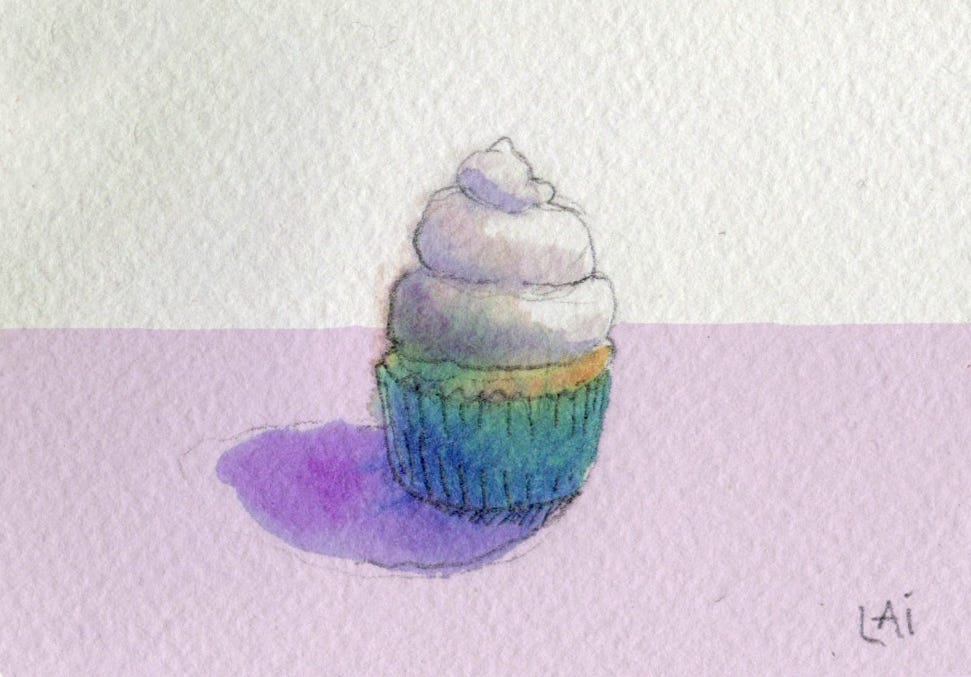
All pleasures point to this ultimate pleasure. Even the pleasure of something as trivial as a cupcake. It’s just that we don’t notice that the pleasure is emanating from this place of oneness. We are tricked, distracted by the cupcake, thinking that the pleasure is somehow inside the cupcake, when really it’s inside us. The awakened mind was here for a brief moment, using a cupcake as its excuse to appear.
The Buddha spoke of this type of pleasure: that of the undistracted mind. He said it was not to be feared, that it was to be cultivated.1 And in fact, human life is the optimal realm in which to cultivate it2.
If all pleasures point to the awakened mind, we need not fear any of them. We get to use pleasure to lead us to awakening. The trick is that you actually have to practice. Don’t use this essay as your excuse to indulge blindly in everything you want. When you feel something pleasant, pay attention. Feel it fully. All of it. Notice the places that you suffer around that pleasure, before, during, and after. Surrender completely to the pleasure, but also to the stress, the yearning, the guilt, or whatever else comes up. Stay awake for the whole experience, even if it gets hard. You will see where you get squirrely, avoid things, distract, fall asleep. Stay present, keep feeling, and the mind will recognize the fear, the clinging, how it makes no sense to cling to something so fleeting. The mind will notice that it’s not really about the sex, or the puppy, or the cupcake, but rather about a quality of attention and the opening of your heart. You will find yourself porous, awake, alive.
Ultimately, stopping the cycle of birth and death is not about dying permanently, or avoiding your life. It’s the opposite. It’s about not abandoning your life in this moment, in favor of some other, more tantalizing future moment. It’s about being alive right now, and letting life flow through you completely.
No matter what stage of life you’re in, whether you’re teeming with life like our little Rumi, or feeling things slow down: don’t stop living fully. Life and all its pleasures are leading you towards the ultimate pleasure of being fully alive. Fall in love with this moment of life, and you will release yourself into the bliss of awakening.
Whenever I teach a retreat, someone has to take care of the baby. Nowadays, we have to find double the childcare, since Huck stays at home and Rumi comes with me. It’s expensive! I’m looking for someone with some amount of skill/experience, who’d be interested in offering dāna (i.e. volunteering), by taking care of a sweet baby while I teach. Your housing and food would be covered, and you’d get to hang out with a group of cool Dharma teachers. There are three retreats this year that I’m in need of childcare for:
Barre Center for Buddhist Studies (Barre, MA): August 24-28th
Spirit Rock (Woodacre, CA): September 8-14th and December 6-11th.
If you’re interested or want more information, please send me a message:
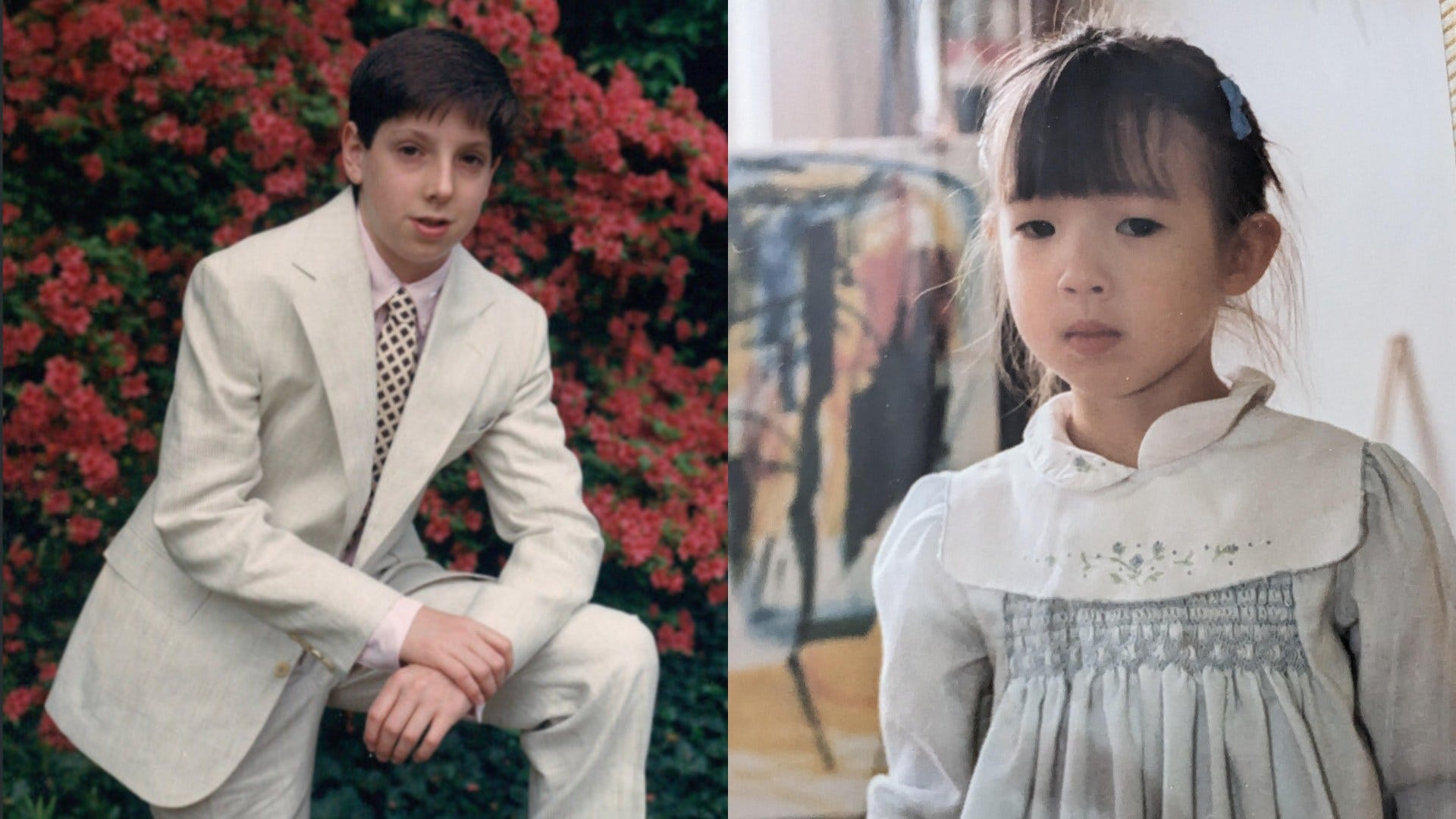
Matthew and I are, once again, attempting to teach the Dharma together. Join us online or in-person at Spirit Rock on September 6th for this Daylong retreat. It’s about the balance of self-compassion and determination, which is currently one of my favorite subjects.
Another retreat I’m teaching with an incredible teaching team: Oren Jay Sofer, Yong Oh, and devon hase, September 8-14th. It’s a Brahma Vihara retreat, which means we’ll be practicing with the qualities of the awakened heart. If you don’t know what that means, no worries—it’s basically just another way of learning not to suffer.
The following is a dharma talk based on the above essay, which I gave at the Burlington Dharma Collective on July 13th, 2026.
Comments
Nothing yet. Say the first thing.
Sign in to join the conversation.