
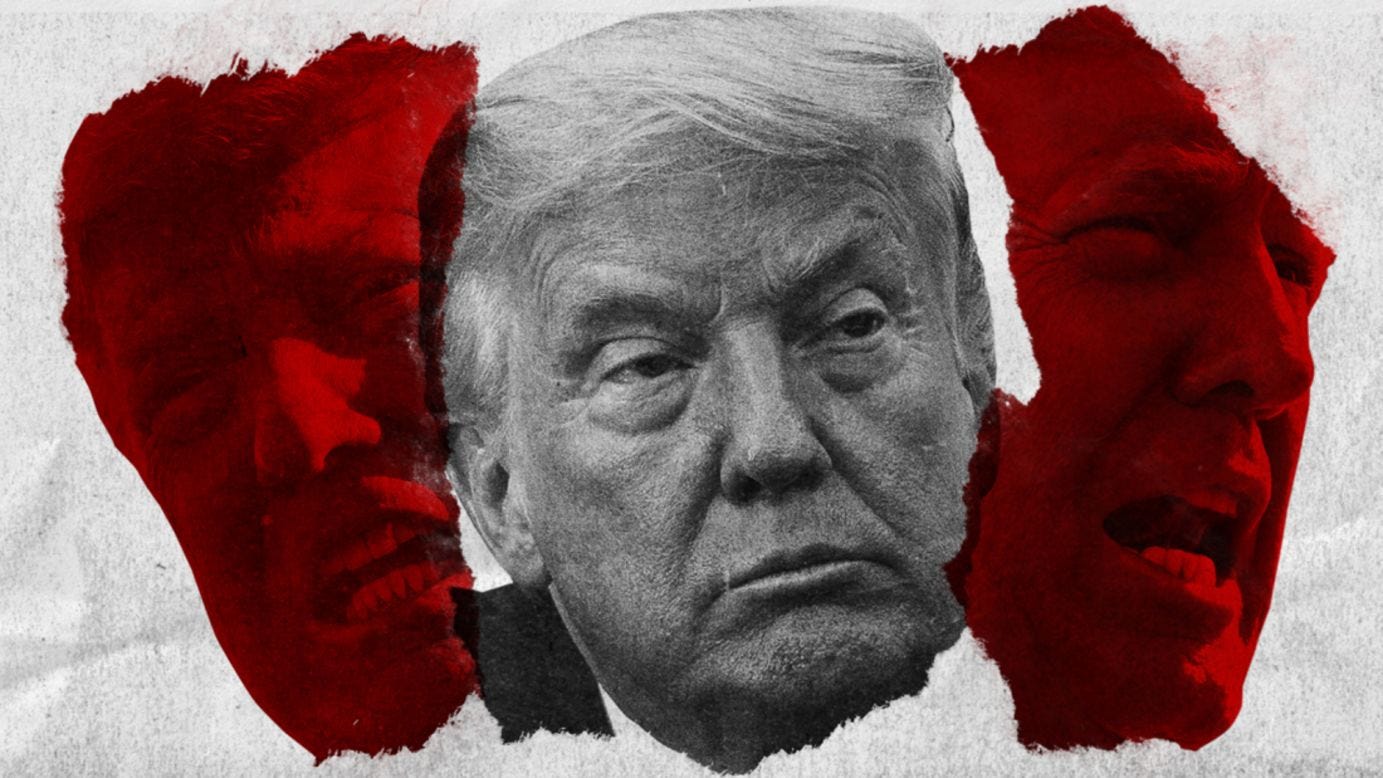
There are moments in history when political language becomes more than political language.
There are moments when a threat, a boast or a seemingly absurd declaration reveals something much more dangerous underneath: the belief that power itself creates legitimacy.
We may be approaching such a moment.
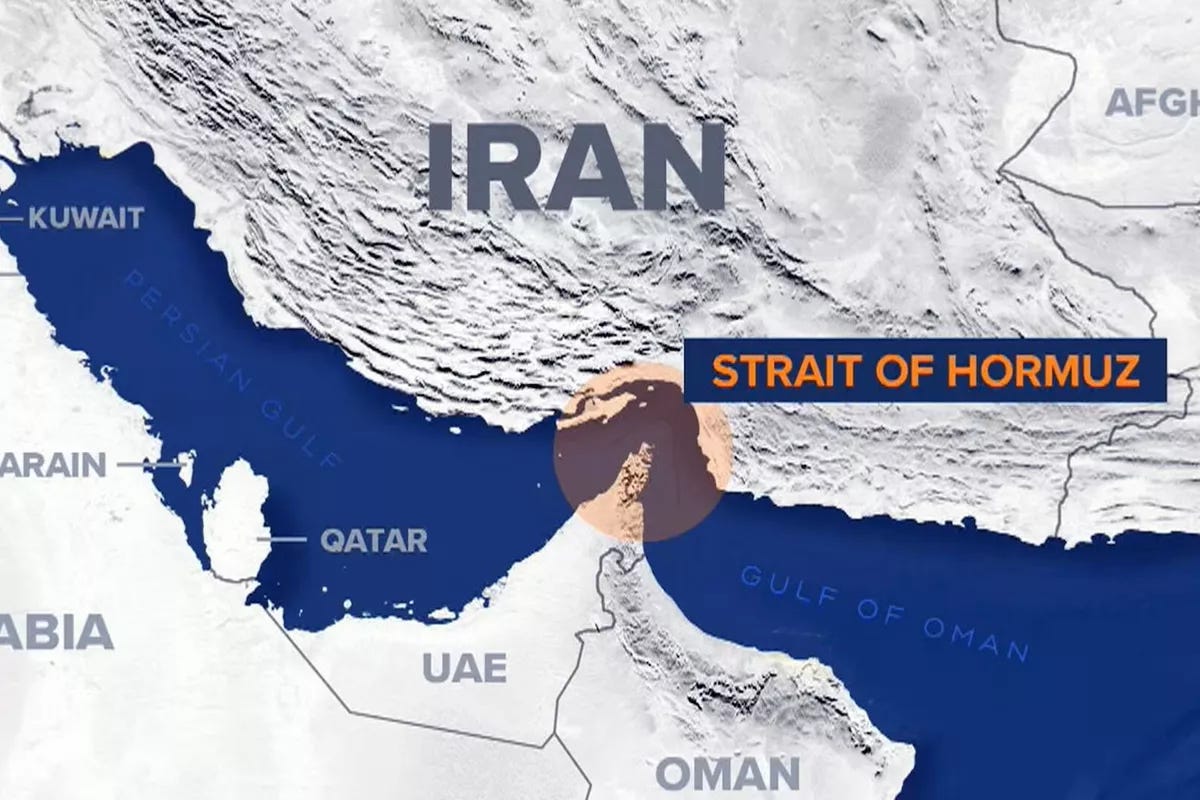
Donald Trump has now threatened to declare the Strait of Hormuz “a territory of the United States” after, in his words, the United States defeats Iran. He has also claimed that America effectively already controls the waterway because of the U.S. naval blockade. Iran, unsurprisingly, has rejected that claim and insists the strait remains Iranian.
This is not normal diplomacy.
It is not normal presidential rhetoric.
And it should not be normalized simply because the man saying it is the president of the United States.
The Strait of Hormuz is not a piece of real estate sitting on a Monopoly board waiting for the strongest player to put a flag on it. It is an international maritime chokepoint between Iran and Oman through which an enormous share of the world’s energy supplies traditionally passes. Around one-fifth of global oil flows through the waterway. When it closes, the consequences are felt not only in Tehran or Washington but in Brussels, Berlin, London, Tokyo, Delhi and millions of households far removed from the battlefield.
And that is precisely why this situation should terrify us.
Because the question is no longer simply what happens between Donald Trump and the Iranian regime.
The question is what happens when the world’s most powerful military alliance system allows one political leader to turn war, economic pressure, territorial ambition and personal power into a single instrument of foreign policy.
That is where democracies should draw a line.
Not tomorrow.
Now.
The United States and Israel launched their military campaign against Iran on February 28, 2026. Iran responded with attacks across the region and closed the Strait of Hormuz. A ceasefire and subsequent diplomatic arrangements followed, but the agreement was fragile from the beginning. The two sides interpreted crucial provisions concerning the strait differently, and the ceasefire subsequently broke down.
Then came the cycle we should have learned to recognize.
War.
Pressure.
Negotiations.
Claims of victory.
Threats.
More fighting.
More negotiations.
And now another confrontation over Hormuz.
Trump has repeatedly threatened renewed military action when negotiations fail, while simultaneously presenting himself as the leader capable of making peace. In July he told Axios that he had paused strikes to give negotiations another chance but warned that the United States would return to “very strong military action” if talks failed.
This is not a coherent peace strategy.
It is a pressure cooker.
And eventually, pressure cookers explode.
It is “mine.”
That is the mentality we should be challenging.
The idea that because the United States possesses overwhelming military power, it can simply decide that a strategically important waterway belongs to America is not a minor diplomatic disagreement.
It is an assault on the basic principle that borders, sovereignty and international law cannot simply be rewritten by whoever possesses the largest military.
If this principle collapses, what stops another powerful state from doing exactly the same thing?
What happens when China decides a disputed maritime passage is Chinese territory because Beijing has the naval power to enforce it?
What happens when Russia decides that another strategic corridor must belong to Moscow because it is necessary for Russian security?
What happens when regional powers conclude that international law is merely a suggestion that can be discarded whenever military circumstances are favorable?
We know where that road leads.
History has already shown us.
And history does not forgive societies that see the warning signs and decide that they are somebody else’s problem.
The Strait of Hormuz is precisely the kind of place where great powers must exercise restraint, not territorial appetite.
The current crisis is already economically damaging. Oil prices have risen as tanker attacks and the closure of the waterway have disrupted energy markets. Reuters reported on August 14 that Brent crude had risen to $88.52 per barrel, with global markets increasingly worried about the consequences of prolonged disruption.
Those numbers are not abstract.
They become heating bills.
They become transportation costs.
They become food prices.
They become higher production costs for businesses.
They become pressure on families already struggling to pay rent.
They become another reason someone decides they cannot afford to drive to work.
And when governments tell ordinary people to simply “accept” higher energy prices while political leaders continue escalating a war, eventually people are entitled to ask a very simple question:
Who exactly is paying for the politicians’ decisions?
Because it certainly isn’t only the politicians.
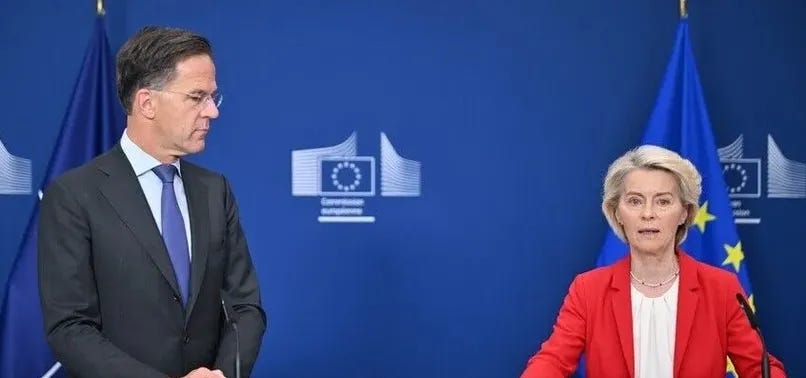
European leaders cannot continue treating American foreign policy as an unavoidable weather event.
They cannot sit in comfortable conference rooms issuing carefully worded statements while the world’s energy markets are shaken by decisions made thousands of kilometres away.
They cannot endlessly say that the transatlantic relationship is “strong” while refusing to confront what happens when American power is used in ways that threaten European economic stability and international law.
Allies are not subjects.
NATO is an alliance.
Europe is not America’s passenger seat.
And friendship between democracies does not mean silence when one partner begins taking decisions that threaten everyone else.
If Washington wants Europe to support American security objectives, then Washington must also understand that European governments have a responsibility to their own citizens.
That means saying no when necessary.
Not because Europe hates America.
Quite the opposite.
America has been one of Europe’s most important allies for generations. American soldiers fought and died in Europe. The United States helped build the post-war international order. The transatlantic alliance has protected democratic societies against genuine threats.
That history deserves respect.
But respect for America cannot mean blind obedience to one American president.
There is a fundamental difference.
America is not Donald Trump.
The American people are not Donald Trump.
The United States Constitution is not Donald Trump.
And the democratic alliance between Europe and America is certainly not supposed to be a personal vehicle for the ambitions of one president.
That distinction matters enormously.
Look at the rhetoric surrounding Greenland.
Look at the arguments surrounding the Panama Canal.
Look at Gaza.
Look now at the Strait of Hormuz.
Different places.
Different circumstances.
But the same underlying temptation keeps appearing: strategic territory is treated as something powerful states can acquire, control or redefine if they possess enough leverage.
That should make every democratic government deeply uncomfortable.
Because once territorial acquisition becomes normalized again, we cannot selectively condemn it when Russia does it while applauding it when another great power proposes it.
The rules have to apply to everyone.
That is the whole point of rules.
Otherwise they are not rules.
They are preferences.
And a world governed by the preferences of powerful leaders is not a free world.
It is a world in which every smaller country lives under permanent uncertainty.
Today it is Iran.
Tomorrow it could be somewhere else.
And eventually the precedent comes home.
Winston Churchill understood something that democracies repeatedly forget.
Peace is not protected by pretending danger does not exist.
It is protected by recognizing danger early enough to confront it.
Churchill’s great warning was not simply about defeating enemies. It was about understanding that freedom requires courage, vigilance and collective action.
He understood that appeasement does not necessarily buy peace.
Sometimes it simply buys the aggressor time.
That lesson should be remembered now.
Not because Donald Trump is Adolf Hitler , he is not, and simplistic historical comparisons obscure more than they illuminate , but because the underlying democratic lesson remains brutally relevant:
When a leader begins treating constraints as obstacles rather than safeguards, institutions must become stronger, not weaker.
When a leader treats personal power as political legitimacy, institutions must say no.
When a leader begins speaking about territory as though sovereignty can be awarded by presidential declaration, democratic governments must make clear that sovereignty does not work that way.
And when leaders repeatedly threaten war while simultaneously presenting themselves as indispensable peacemakers, the public has a duty to demand accountability.
Churchill once warned that “the price of greatness is responsibility.”
That principle should be engraved above every government building in the Western world.
Power without responsibility is not leadership.
It is recklessness.
There is another uncomfortable truth here.
Politicians do not develop unlimited power in isolation.
They develop it when institutions allow them to.
They develop it when advisers become afraid to challenge them.
They develop it when political parties place loyalty above constitutional responsibility.
They develop it when media organizations turn every outrageous statement into another ratings cycle.
They develop it when foreign governments calculate that confronting Washington is too uncomfortable.
They develop it when citizens become exhausted and conclude that nothing they do matters.
And they develop it when everyone waits for somebody else to say “enough.”
That is how democratic systems become dangerously passive.
The problem is not simply one man.
The problem is the ecosystem that allows one man to become increasingly convinced that nobody can stop him.
That is why this moment requires more than outrage.
It requires institutions.
Congress must exercise its constitutional responsibilities.
Courts must remain independent.
European governments must speak clearly.
NATO allies must insist upon consultation.
International institutions must defend the principles they were created to protect.
And citizens must stop confusing political strength with political correctness.
A president who cannot be challenged is not a strong president.
A democracy that cannot challenge its president is a weak democracy.
There is a brutal irony at the heart of the Hormuz crisis.
A war justified partly in terms of security is now helping create insecurity for millions of ordinary people.
Energy prices rise.
Transportation becomes more expensive.
Businesses absorb higher costs.
Consumers pay more.
Governments face inflationary pressure.
And the people with the least financial room to absorb those shocks suffer first.
That is how geopolitics reaches the kitchen table.
It reaches the pensioner deciding whether to turn on the heating.
The family calculating whether it can pay its electricity bill.
The worker wondering whether driving to work is still financially viable.
The small business owner watching fuel and supply costs rise.
The person already one missed paycheck away from losing their home.
We must be very careful here: no responsible analysis can claim that every case of homelessness or financial hardship is directly caused by one politician or one war. Economic hardship has many causes.
But governments absolutely must understand that military escalation has real economic consequences, and those consequences fall unevenly across society.
Trump himself has told Americans to accept higher gasoline prices as the cost of confronting Iran. Reuters reported that he defended the sacrifice while the conflict continued to disrupt the Strait of Hormuz.
Fine.
Then let politicians explain that sacrifice honestly.
Do not tell working families that pain is noble while political leaders continue escalating a conflict whose strategic objectives keep shifting.
First it is nuclear weapons.
Then regime pressure.
Then shipping.
Then the Strait of Hormuz.
Then sanctions.
Then negotiations.
Then threats of renewed war.
At some point, citizens have every right to ask:
What is the actual end state?
What does victory look like?
How many lives is it worth?
How much economic damage is acceptable?
And who decides?
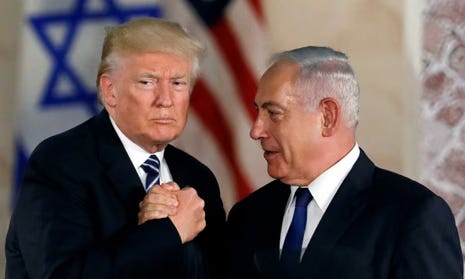
This is perhaps the most important point of all.
The Strait of Hormuz cannot become a trophy awarded to the winner of a war.
It cannot become an American possession simply because American ships have the ability to dominate the waterway.
And it cannot become an Iranian possession in the sense that Tehran has unlimited authority to deny international navigation either.
The solution cannot be “whoever has the biggest gun wins.”
The solution must be a negotiated, internationally recognized maritime framework that protects commercial navigation, regional security and the legitimate interests of the states bordering the waterway.
There are serious legal and geopolitical questions surrounding the strait, including sovereignty, territorial waters, freedom of navigation, transit and the rights of coastal states.
Those questions should be resolved through diplomacy and international law.
Not presidential improvisation.
Not naval coercion.
Not threats.
And certainly not annexation rhetoric.
The United States should be using its enormous power to create stability.
Not to create a new precedent for territorial expansion.
This is not about choosing Iran over America.
It is about choosing law over lawlessness.
It is about choosing democracy over personality cults.
It is about choosing diplomacy over permanent escalation.
European leaders should be united around one simple principle:
No major power gets to redraw borders, annex territory or permanently seize strategic international infrastructure simply because it has the military capacity to do so.
That principle should apply to Russia.
It should apply to China.
It should apply to Iran.
And it should apply to the United States.
There can be no exceptions simply because the flag is familiar.
That is what an international order actually means.
Otherwise, we are not defending a rules-based world.
We are defending the privileges of whoever currently has the largest arsenal.
And that is a terrifying world to leave to our children.
The history of Europe is filled with examples.
Again and again, democratic societies saw dangerous developments and decided that confrontation would be inconvenient.
They hoped threats would disappear.
They hoped agreements would hold.
They hoped aggressive rhetoric was merely rhetoric.
Sometimes they were right.
Sometimes they were catastrophically wrong.
The lesson is not that every aggressive politician is destined to become a dictator.
The lesson is that democratic institutions should never gamble on that assumption.
That is why I would go even further than simply criticizing Trump’s behavior.
We need to challenge the concentration of power itself.
If a president can initiate military action, threaten economic punishment, pressure allies, speak openly about territorial acquisition and then expect everyone around him to simply adapt to the new reality, the problem is no longer merely foreign policy.
It is democratic resilience.
And democratic resilience requires resistance.
Not violent resistance.
Not insurrection.
Not political extremism.
Constitutional resistance.
Institutional resistance.
Electoral resistance.
Diplomatic resistance.
The peaceful refusal of democratic societies to surrender their principles because one leader demands obedience.
That is what democracy is supposed to look like.
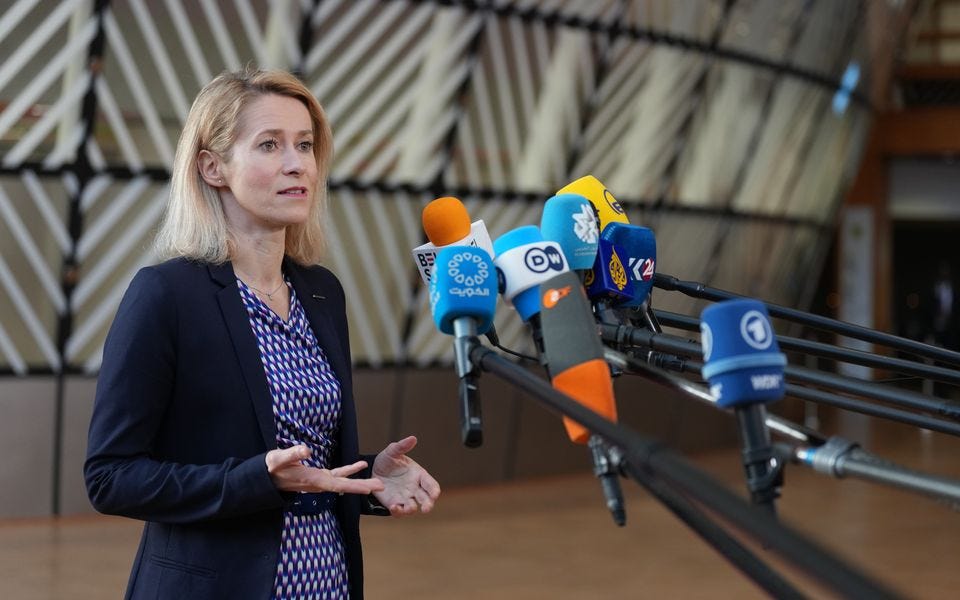
The world cannot afford another decade in which every crisis becomes a test of how far one leader can push before everyone else finally says no.
There must be a line.
The line is sovereignty.
The line is international law.
The line is civilian protection.
The line is parliamentary oversight.
The line is democratic accountability.
The line is the principle that military power does not automatically create political legitimacy.
Trump may believe that maximum pressure produces maximum results.
Perhaps sometimes it does.
But maximum pressure without a credible political end state is not strategy.
It is escalation.
And escalation has a habit of producing consequences that no politician can control.
The Strait of Hormuz is already demonstrating that.
The United States says it effectively controls the waterway.
Iran says it controls the waterway.
Ships are being attacked.
Traffic has collapsed.
Oil prices are rising.
Diplomacy is struggling.
And ordinary people around the world are paying for the confrontation.
Reuters reported on August 14 that only a handful of ships were moving through the strait compared with more than 130 daily before the conflict, while further tanker attacks were pushing the crisis deeper into economic and strategic uncertainty.
This is not strength.
This is a warning.
So I will say it bluntly.
Wake up.
Stop pretending this is normal.
Stop treating every outrageous statement as another piece of political theatre.
Stop assuming institutions will magically protect themselves.
Stop waiting for somebody else to confront the problem.
And stop believing that loyalty to an alliance requires loyalty to an individual leader.
It does not.
The United States remains an essential democratic power.
But Donald Trump is not America.
And America is not allowed to become whatever one president says it is.
That is the distinction we must defend.
If Trump wants to negotiate, negotiate.
If he wants to secure nuclear non-proliferation, build a serious international agreement.
If he wants safe maritime navigation, negotiate an internationally credible arrangement.
If he wants to protect American sailors, protect them.
If he wants to prevent Iran from threatening the region, build a coalition capable of containing the threat without turning the entire region into a permanent battlefield.
But do not tell the world that after defeating Iran, America will simply declare one of the world’s most strategically important waterways American territory.
Because that is not peace.
That is imperial logic.
And if we accept that logic from one great power, we have no moral authority when another great power uses exactly the same argument.
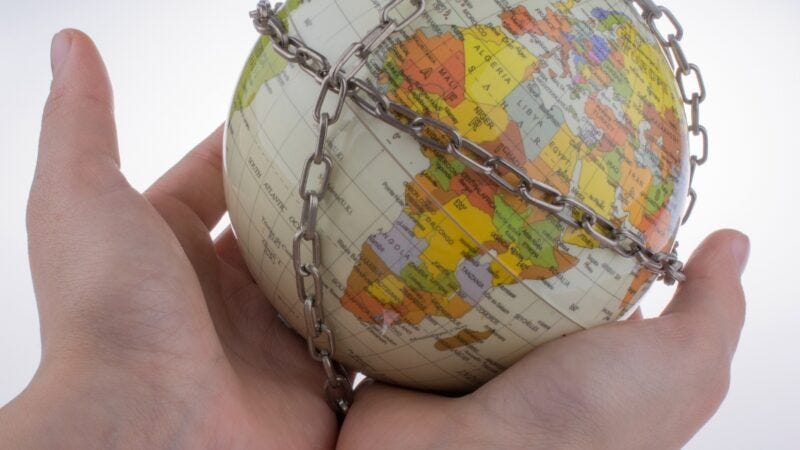
Europe, Canada, Britain, Australia, Japan and the democratic world should be capable of saying the same thing:
We stand with our allies.
We stand against terrorism.
We stand against nuclear proliferation.
We stand for freedom of navigation.
We stand for the security of civilians.
But we also stand for sovereignty, international law and democratic accountability.
No leader gets a blank cheque.
Not Putin.
Not Xi.
Not the Iranian leadership.
And not Donald Trump.
That is not weakness.
That is civilization.
The world does not need another leader who believes every problem can be solved by increasing the pressure until somebody breaks.
The world needs leaders capable of knowing when power must be restrained.
Because the ultimate test of power is not whether you can force somebody to surrender.
It is whether you possess the wisdom not to destroy the system that protects everyone , including yourself.
That is the lesson we must learn before it is too late.
The Strait of Hormuz should not become the place where the international order finally discovers that the rules were optional.
And if democratic governments remain silent while territorial annexation is casually discussed as the reward for military victory, history will not remember that silence kindly.
It will ask a much harsher question:
You saw the warning. You understood the danger. You knew where this road could lead. So why the hell did you wait?
We cannot wait.
We cannot surrender our democratic institutions to fear.
We cannot allow political power to become personal power.
We cannot allow military strength to become a substitute for international law.
And we cannot allow our children to inherit a world in which borders belong to whoever has the largest army and peace means accepting whatever the strongest leader demands.
This is bigger than Trump.
It is bigger than Iran.
It is bigger than the Strait of Hormuz.
It is about whether the free world still has the courage to defend the principles that made it free.
So let the warning be unmistakable:
Wake up now.
Because democracies rarely collapse in one dramatic moment.
They erode when people become accustomed to the unacceptable.
They erode when outrageous becomes normal.
They erode when institutions become afraid.
They erode when allies remain silent.
They erode when citizens decide that politics is someone else’s responsibility.
And they erode when power is allowed to convince itself that there are no limits.
There must be limits.
There must be law.
There must be accountability.
And there must be the courage to say no.
Not tomorrow.
Not after the next war.
Not after another territory is claimed.
Now.
Because once the principle that might makes right becomes normal, taking it back will be infinitely harder.
The free world has survived dictators, tyrants, wars and crises before.
It will survive this one too , but only if democratic people stop watching history happen from the sidelines and start defending the institutions, alliances and principles that keep power from becoming absolute.
That is our responsibility. That is our red line. And that is the battle we cannot afford to lose.
Comments
Nothing yet. Say the first thing.
Sign in to join the conversation.