
There are moments in history when an incident is easy to dismiss as an isolated security breach. A drone appears where it should not. Police close a runway. A bomb-disposal robot is deployed. Flights are diverted. Investigators open a file. Politicians hold a press conference.
Then everyone goes home.
That is precisely the response Europe cannot afford after what happened at Leipzig/Halle Airport.
A drone carrying explosives was discovered in the restricted area of one of Europe’s major cargo hubs, close to Ukrainian Antonov aircraft. German authorities suspended flight operations while specialists secured the device. A second unidentified flying object was involved in a collision with a cargo aircraft that had aborted its landing after the runway closure. Germany’s federal prosecutor has taken over the investigation, treating the incident as a suspected attack on transport and logistics infrastructure. Interior Minister Alexander Dobrindt called it a new threat scenario and said foreign powers could be involved.
That description is important.
Because this is no longer simply about drones.
It is about whether Europe understands that the battlefield has already changed.
And it is about whether we are prepared to defend ourselves in the grey zone between peace and war.
The Kremlin has spent years exploiting exactly that grey zone: sabotage, cyberattacks, disinformation, espionage, intimidation, interference and covert operations designed to remain just below the threshold that traditionally triggers a conventional military response. Moscow does not need to send tanks across a NATO border to create instability. It can attack systems, infrastructure, supply chains and public confidence while hiding behind deniability.
The Leipzig incident should therefore be treated as a strategic warning of the most serious kind.
Not because Germany has proven that Russia ordered this specific attack. It has not. Investigators are still establishing responsibility. Berlin has deliberately stopped short of publicly attributing the operation to Moscow. But the circumstances are serious enough that dismissing a Russian connection as impossible would be irresponsible. Reuters reported that investigators believe the device involved professional explosives and a detonator, while the airport itself is a significant logistics and military-transport hub supporting Ukraine and NATO activity.
Other reporting has gone further. U.S. intelligence assessments reported in the media have pointed toward Russian state involvement, while German authorities continue their own investigation. That distinction matters. Intelligence assessments are not the same thing as a public judicial finding, and responsible governments must establish evidence before assigning legal responsibility. But the existence of uncertainty cannot become an excuse for strategic inaction.
That is the trap.
Europe has spent too long believing that uncertainty means waiting.
The Russian war machine thrives on that hesitation.
The target may have been a runway. The real target is confidence.
Think about what an operation like this can achieve even if the explosive never detonates.
A drone appears at a strategic airport.
Flights stop.
Emergency services mobilize.
Cargo movements are disrupted.
Aircrews become more cautious.
Security procedures tighten.
Businesses begin calculating additional risk.
Military logistics become more complicated.
Public anxiety rises.
And governments are forced to ask whether the next drone will be carrying surveillance equipment, an explosive charge, chemical material or something even worse.
That is strategic effect without a traditional battlefield.
The device does not have to destroy an airport to damage the system.
It only has to demonstrate that the system can be penetrated.
That is why the Kremlin’s hybrid warfare model is so dangerous. It is designed to exploit the seams between institutions. The military sees one problem. The police see another. Intelligence agencies see a third. Airport authorities see a fourth. Politicians see an emergency. Private companies see a liability issue.
The adversary sees one battlefield.
That difference can decide the outcome.
A well-organized hostile actor does not respect our bureaucratic boundaries. Why should we?
The answer cannot be more committees meeting in separate rooms.
It must be integration.
Ukraine has already learned the lesson Europe is still arguing about
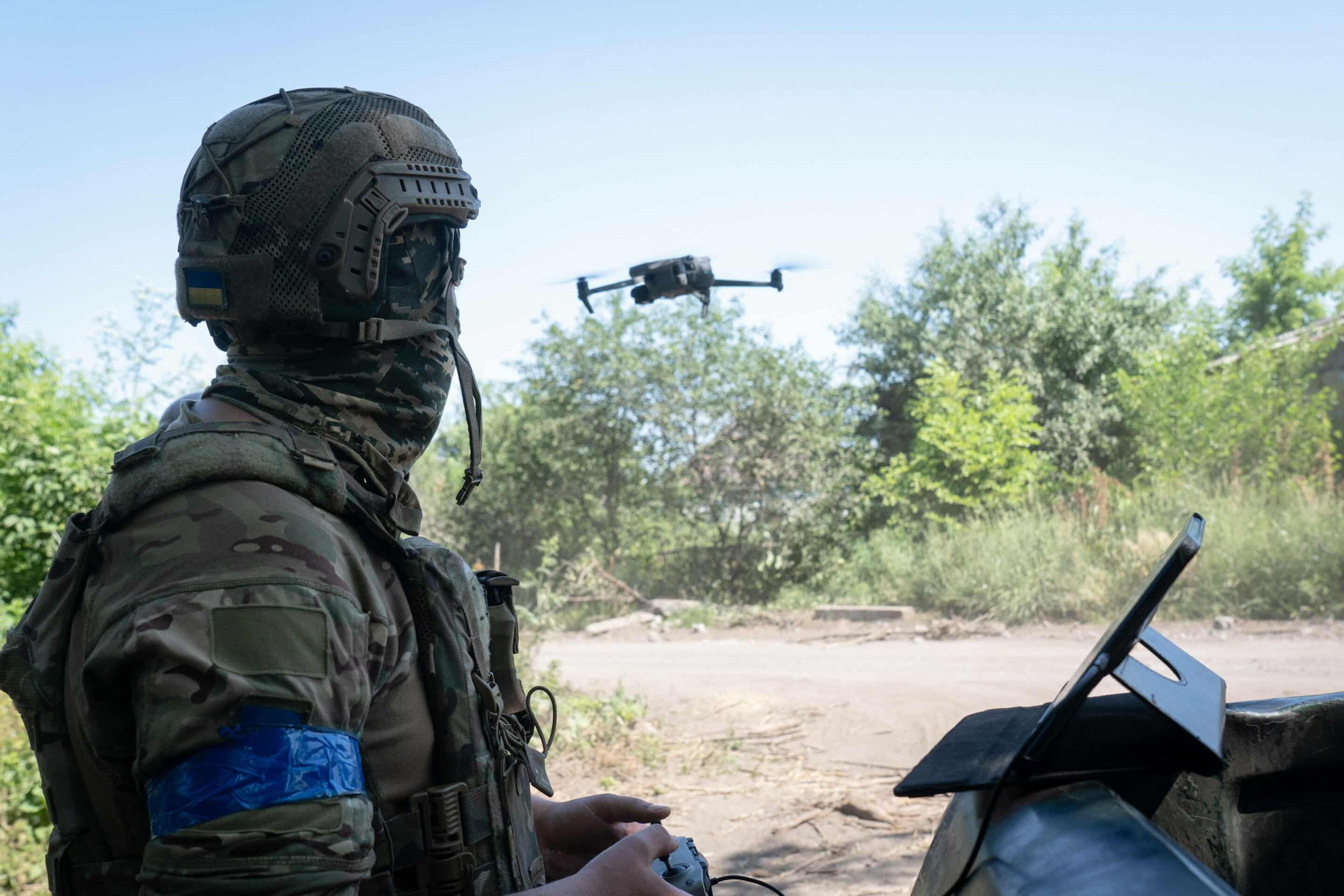
Ukraine understands this better than almost anyone on Earth because Ukrainians have been living inside this war every single day.
Civilian authorities, military formations, intelligence agencies, emergency services, police, firefighters, telecommunications companies, energy workers, logistics operators, volunteers, technology companies and ordinary citizens have all become parts of a national defensive ecosystem.
It is imperfect. Nothing at this scale is perfect. But it functions because people understand that the threat does not wait for organizational boundaries.
A drone approaching a Ukrainian city is not classified as “someone else’s problem.”
A power station under attack is not merely an issue for the utility company.
A damaged road is not simply an infrastructure problem.
A wounded civilian does not care whether the first person reaching them is a soldier, paramedic, police officer or volunteer.
They need someone to act.
Europe needs to rediscover that mentality.
We do not need to militarize every airport or turn every civilian facility into a fortress. We need to build resilience into the system itself.
That means layered defence.
And NATO is already moving in that direction. In 2026, Allied Command Transformation launched its Layered Counter-UAS Initiative, explicitly recognizing that drones can be used for surveillance, targeting, disruption and attack, and that effective defence requires connected sensors, command-and-control and defensive effectors operating as an integrated system.
NATO has also announced more than $40 billion in allied investment in counter-drone capabilities over five years, alongside expanded drone training.
That is the right direction.
But announcements do not intercept drones.
Budgets do not identify operators.
Press conferences do not stop sabotage.
People and integrated systems do.
Layered defence means everyone has a role
The fundamental mistake would be to interpret layered defence as simply buying more military hardware.
It is much broader than that.
The first layer is intelligence.
Who is watching? Who is collecting anomalies? Who is connecting suspicious activity at an airport with suspicious activity at a logistics company, military installation or industrial site 300 kilometres away?
The second layer is detection.
Radar is important, but radar is not enough. Europe needs a fusion of radar, electro-optical systems, radio-frequency detection, acoustic sensing, passive surveillance, artificial intelligence and human observation.
The third layer is identification.
A drone is not automatically a hostile aircraft. But a drone entering a restricted cargo zone near sensitive military transport cannot be treated as an inconvenience.
The fourth layer is response.
Police, airport security, military personnel, fire and rescue services and specialist counter-drone teams need predetermined procedures, authority and communications.
The fifth layer is resilience.
What happens when systems are disrupted?
What happens when an airport closes?
What happens when communications fail?
What happens when a cyberattack accompanies a physical attack?
What happens when false information floods social media while emergency services are already responding?
And the sixth layer is accountability.
Investigators need access to forensic data. Intelligence agencies need mechanisms to share information. Politicians need clear legal frameworks. Private companies need responsibilities as well as protections.
This is not theory.
This is modern security.
NATO itself says the challenge is not solved by technology alone, but by integrating sensors, effectors and decision-making into coherent layered defence.
Europe knows what the answer is.
The problem is that Europe is still too slow at making the answer real.
The Russian war machine should not be underestimated
For years, many Western policymakers treated Russian hybrid operations as nuisances.
A cyberattack here.
A suspicious fire there.
A disinformation campaign.
A GPS disruption.
An unidentified drone.
A broken undersea cable.
A hostile intelligence network.
A sabotage plot.
Each individual incident could be rationalized.
Taken together, they reveal something far more serious.
They reveal an adversary probing the architecture of Western society.
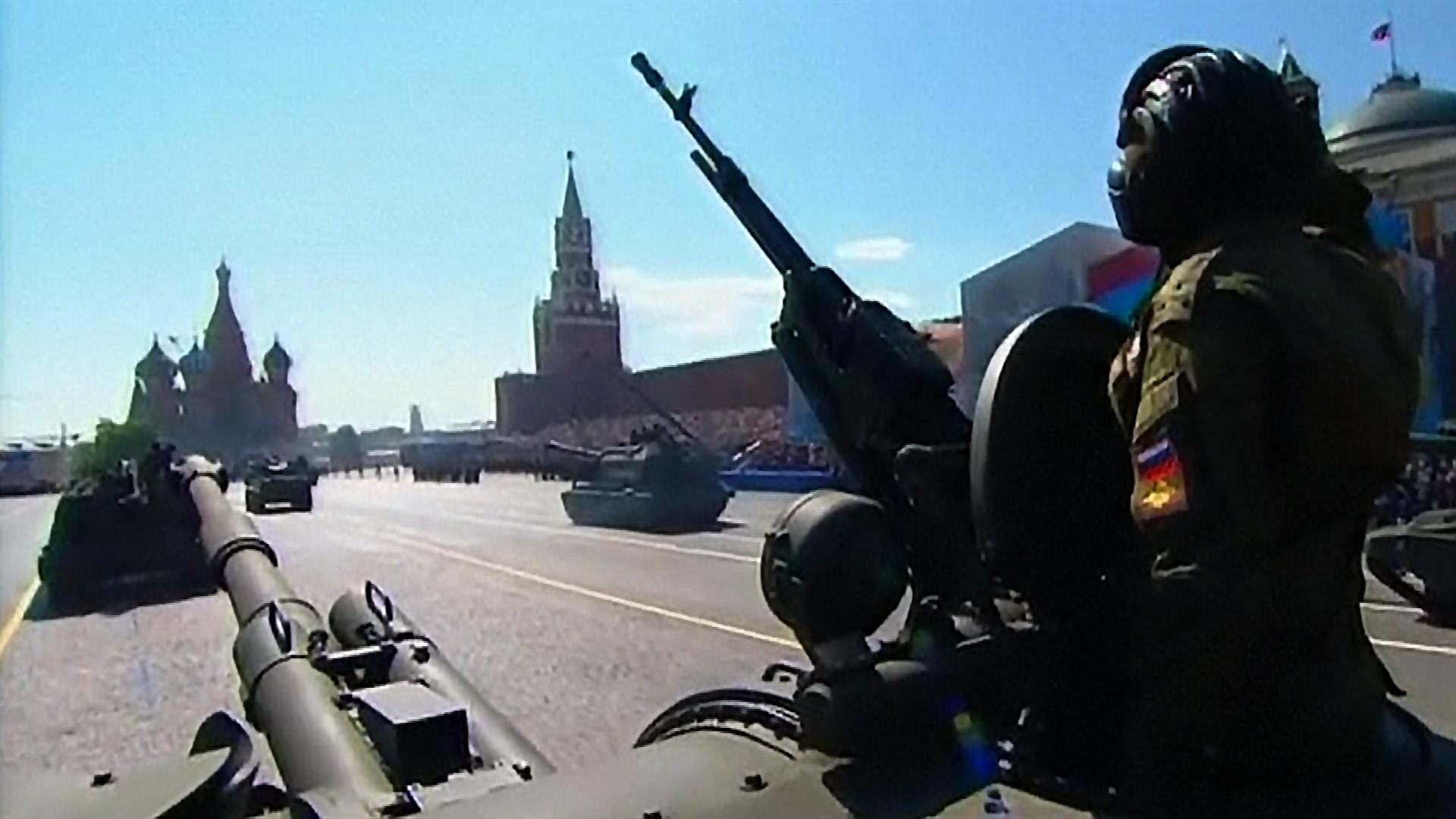
Russia’s war machine is not only the tanks, artillery, missiles and drones fighting in Ukraine. It is the intelligence apparatus behind covert operations, the cyber infrastructure used to penetrate networks, the propaganda machinery designed to divide democracies, the economic relationships exploited for leverage, and the clandestine networks capable of operating inside supposedly peaceful countries.
That is what makes this confrontation so dangerous.
The Kremlin does not need to defeat NATO militarily in one dramatic battle.
It can instead ask a series of smaller questions.
Can we get inside?
Can we disrupt logistics?
Can we frighten civilians?
Can we interfere with military shipments?
Can we make governments distrust one another?
Can we make voters believe supporting Ukraine is too expensive?
Can we make European publics believe that resistance is more dangerous than surrender?
Can we create enough political division that collective defence becomes impossible?
Those are the questions Europe must answer.
And the answer must be no.
Because deterrence is not built on hope
We should be brutally honest about something else.
If Russia and its allies are allowed to conclude that Europe is too divided, too cautious and too bureaucratic to respond effectively, their appetite for risk will increase.
That does not mean a full-scale NATO-Russia war is inevitable.
It means the probability of miscalculation rises.
And history teaches us that wars often begin through a chain of decisions that leaders did not initially intend to produce a major conflict.
A drone becomes a sabotage operation.
A sabotage operation produces retaliation.
Retaliation triggers escalation.
Escalation creates mobilization.
Mobilization produces fear.
Fear produces miscalculation.
That is how the impossible becomes possible.
We cannot build European security on the assumption that Putin will always stop one step before the line.
We need credible deterrence precisely so that he has no incentive to test where the line actually is.
Stop shutting each other out
The most absurd part of Europe’s security architecture is that the people closest to a threat can sometimes possess information that never reaches the people who need it.
Airport workers may notice unusual activity.
Private security contractors may identify anomalies.
A logistics company may detect suspicious booking patterns.
Police may receive intelligence about a potential threat.
Military officers may recognize a method.
A technology company may detect abnormal drone telemetry.
An emergency responder may know that a particular site has a vulnerability.
An intelligence agency may possess classified information.
And somewhere in the middle, the system can still fail because those pieces are not connected.
This is madness.
The modern threat is interconnected.
Our defence must be interconnected too.
Ukraine demonstrates what happens when civilians, police, military personnel, emergency services, technology companies, local authorities and politicians understand that everyone has a role.
Europe should learn from that.
Not copy Ukraine.
Learn from it.

This is exactly where initiatives such as AEGIS Guardian matter
There is a huge gap between conventional military structures and conventional humanitarian organizations.
The military is designed primarily for warfighting.
NGOs are designed primarily for humanitarian assistance.
Police are designed primarily for law enforcement.
Private security companies operate according to contracts and defined responsibilities.
Yet modern crises do not respect these categories.
A civilian evacuation may require security.
An aid convoy may require protection.
Critical infrastructure may need temporary defensive security.
A disaster zone may simultaneously be a target for sabotage.
A refugee corridor may be exposed to criminal networks.
A humanitarian organization may possess excellent medical and logistical capability but lack sufficient defensive capacity.
That is where concepts such as the AEGIS Guardian Initiative become relevant.
The principle is straightforward: bring legitimate defensive security, humanitarian capability, emergency response, medical support, investigation, logistics and legal oversight into one coordinated framework, while maintaining a clear defensive mandate and civilian protection as the central objective.
Not a private army.
Not a replacement for governments.
Not a substitute for NATO.
A bridge between capabilities that too often remain separated until a crisis forces them together.
The lesson from Leipzig is that waiting until the emergency begins is already too late.
A functioning system needs trained people, interoperable communications, procedures, intelligence-sharing mechanisms, medical capability, evacuation planning and relationships with authorities before the first incident occurs.
That is what a well-oiled machine looks like.
And a well-oiled machine is hard to stop.
We are running out of excuses
Europe has seen enough.
The warnings are no longer theoretical.
NATO is expanding counter-drone capabilities because the threat has fundamentally changed. Ukraine is providing operational lessons because it has been fighting this technology at scale. Germany is reforming its intelligence architecture because officials increasingly recognize the inadequacy of old assumptions.
And now an explosives-laden drone has appeared inside the security environment of one of Germany’s most important cargo hubs.
What more evidence do we need before we stop treating every incident as an isolated event?
We do not need panic.
We need seriousness.
We do not need hysteria.
We need preparation.
We do not need citizens staring at the sky every time a drone flies overhead.
We need systems capable of determining which drone matters before it becomes a disaster.
We do not need politicians competing over who can make the strongest statement.
We need them sitting at the same table.
Military.
Police.
Intelligence.
Fire and rescue.
Airport authorities.
Private industry.
Technology companies.
Local government.
National government.
NATO.
European institutions.
And yes, credible independent defensive initiatives capable of operating at the seams between those structures.
Everyone has a job.
Everyone has a responsibility.
Everyone must communicate.
Wake up now
The most dangerous conclusion would be that the Leipzig drone failed.
It did not.
It succeeded in demonstrating vulnerability.
The fact that an explosion apparently did not occur is not proof that the system worked. It may simply mean that human observation, chance, technical failure or a combination of factors prevented a catastrophe. The investigation will establish precisely what happened. Until then, we should be careful with conclusions but uncompromising about the lesson.
The lesson is this:
Europe is being tested.
Perhaps by Russia.
Perhaps by actors operating on behalf of Russia.
Perhaps by another foreign power.
The investigation will tell us.
But whoever was behind the operation understood something that Europe must understand too: the battlefield is no longer confined to the front lines.
It is at airports.
At ports.
At rail terminals.
At factories.
At data centres.
At energy facilities.
At communications networks.
At military bases.
And inside the confidence of ordinary citizens.
That is why this moment demands more than condemnation.
It demands a transformation in how we think about defence.
Putin’s war machine must not be allowed to become next to unstoppable because democratic nations were too busy arguing about jurisdiction, budgets, politics and institutional ownership to build a common shield.
We have the technology.
We have the intelligence.
We have the people.
We have the industrial base.
We have the operational lessons from Ukraine.
We have NATO.
We have European institutions.
What we have lacked is sufficient urgency and sufficient integration.
That must end.
Because deterrence works when the adversary sees strength, unity and resilience.
A divided Europe invites testing.
A confused Europe invites manipulation.
A passive Europe invites escalation.
But a Europe that shares intelligence, integrates civilian and military capabilities, protects its critical infrastructure, learns relentlessly from Ukraine and builds layered defence from the local level all the way to NATO is a very different proposition.
That Europe is harder to intimidate.
Harder to penetrate.
Harder to sabotage.
And much harder to defeat.
The drone at Leipzig/Halle should therefore be remembered not simply as a security incident.
It should be remembered as the moment when Europe was forced to look in the mirror.
The question is no longer whether the war in Ukraine can spill across borders.
The question is whether we are prepared for the possibility that the war has already begun to reach them , not necessarily with armies marching west, but through the shadows of hybrid warfare.
We cannot afford another warning.
We cannot afford another “unexpected” attack.
And we certainly cannot afford to keep shutting one another out while an adversary learns how to exploit every gap between us.
Wake up.
Connect the systems.
Share the intelligence.
Build the layers.
Protect the people.
Stand together.
Because a well-oiled defensive machine is difficult to break.
And right now, Europe needs to become exactly that.
Comments
Nothing yet. Say the first thing.
Sign in to join the conversation.