
This is one of those moments.
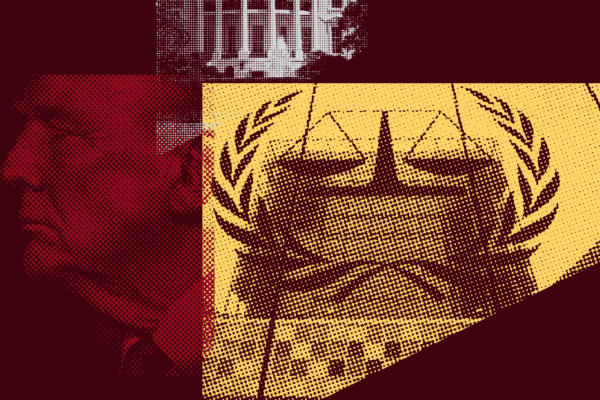
The United States government is escalating its campaign against the International Criminal Court in The Hague. Secretary of State Marco Rubio has openly declared that Washington intends to dismantle the institution “brick by brick,” while the administration has imposed sanctions on ICC personnel and is applying diplomatic pressure on countries to abandon the Court. The campaign has intensified following ICC proceedings involving Israeli officials, while Washington has also sought protection from possible accountability for American personnel.
That should concern every democratic government on this planet.
Not because the ICC is perfect. No institution created by human beings is perfect.
It should concern us because the alternative is infinitely worse: a world in which the powerful decide for themselves which laws apply to them, which victims deserve justice, and which crimes are conveniently beyond investigation.
That is not sovereignty.
That is impunity.
And the international community must refuse to accept it.
Washington’s argument is straightforward: the United States did not ratify the Rome Statute, and therefore American sovereignty should prevent the ICC from exercising authority over Americans.
But international criminal jurisdiction is more complicated than that.
The ICC is a court of last resort. Under the principle of complementarity, national courts retain primary responsibility. The ICC intervenes where national authorities are genuinely unable or unwilling to investigate and prosecute serious international crimes.
And the Rome Statute does not simply disappear because the accused person is American, Russian, Israeli, Chinese, African or European.
The Court’s jurisdiction can arise through territorial jurisdiction, nationality jurisdiction in appropriate circumstances, Security Council referrals, or other mechanisms provided by the Statute.
That principle matters.
Imagine a soldier from a non-member country commits an alleged war crime on the territory of a State Party.
Should the victim have no avenue to international justice simply because the perpetrator’s government refuses to recognize the Court?
Of course not.
That would create an absurd legal loophole: governments could effectively export their criminal conduct into another country and then declare themselves immune from international jurisdiction.
The victims would be told that their suffering matters less than the nationality printed on the perpetrator’s passport.
That is precisely the kind of impunity the modern international criminal justice system was created to confront.
There is an important distinction that must not be lost in the political shouting.
Supporting the ICC does not mean believing that every ICC decision is automatically correct.
The Court must itself obey the Rome Statute.
Its prosecutors must meet evidentiary standards.
Its judges must apply jurisdictional rules.
Defendants must receive due process.
The accused must be presumed innocent until conviction.
And every case must be tested against law and evidence rather than political emotion.
That is precisely why the ICC matters.
A functioning judicial system does not become illegitimate because somebody powerful dislikes the possibility of being investigated.
Indeed, the opposite is true.
The real test of judicial independence is whether an institution can investigate powerful people when doing so is politically inconvenient.
The Rome Statute establishes jurisdiction over genocide, crimes against humanity, war crimes and aggression. It also establishes procedural safeguards, jurisdictional limitations and defined penalties.
This is not mob justice.
It is supposed to be law.
And if governments believe the Court has exceeded its authority, the answer is litigation, legal argument, appeals and treaty-based diplomacy.
The answer is not intimidation.
The answer is not threatening judges.
The answer is not financial warfare against prosecutors.
And the answer certainly should not be attempting to dismantle the institution because its investigations have become politically uncomfortable.
Think about the precedent being established.
Today, Washington attacks the ICC because it objects to investigations involving American or Israeli officials.
Tomorrow, Moscow can say:
“We do not recognize international justice because the ICC investigated Russia.”
Beijing can say:
“We reject the Court because it investigated Chinese nationals.”
Another government can say:
“Our sovereignty comes first, therefore no international court may investigate us.”
And suddenly the entire international criminal justice system becomes optional.
Every authoritarian government on Earth would understand the message immediately.
Commit crimes.
Deny jurisdiction.
Attack the investigators.
Threaten the judges.
Pressure the member states.
And if necessary, destroy the institution.
That is not a hypothetical danger.
The current American campaign reportedly includes efforts to pressure ICC member states to withdraw from the Court. Several governments have already faced pressure, while some have announced withdrawal.
This is why democratic governments must act collectively.
Not against America.
Against impunity.
There is an enormous difference.
The United States is not the American people.
Donald Trump is not the United States.
Marco Rubio is not the United States.
An administration is temporary.
Institutions are supposed to endure.
Millions of Americans believe in constitutional government, judicial independence, freedom of speech, due process and human rights.
Many Americans have served, fought and died believing that those principles meant something.
It would therefore be profoundly wrong to turn this into hatred of Americans.
The argument must be directed at governmental policy.
The question is simple:
If the United States genuinely believes its conduct is lawful, why fear an independent investigation?
If American officials have nothing to hide, why attempt to cripple the institution capable of examining allegations?
And if Washington believes the ICC lacks jurisdiction, why not defeat that argument in court?
That is how civilized legal systems work.
You argue the law.
You submit evidence.
You accept judicial review.
You appeal.
You comply with lawful judgments.
You do not burn down the courthouse because you dislike the judge.

There is another contradiction that cannot be ignored.
Governments increasingly use the language of security to justify extraordinary measures: military operations, sanctions, deportations, detention, counterterrorism operations and attacks against suspected criminals.
Some of these measures may be lawful.
Some may be necessary.
Some may be justified by genuine national-security threats.
But the central principle remains unchanged:
Security does not abolish due process.
The accusation that somebody is a terrorist does not automatically make them guilty.
The accusation that somebody is a criminal does not automatically authorize their killing.
The accusation that somebody is a national-security threat does not automatically erase judicial oversight.
That principle must apply consistently.
Otherwise “rule of law” becomes nothing more than a slogan governments use against their enemies.
The same standard must apply to Washington, Moscow, Jerusalem, Beijing, Tehran, Brussels and every other capital.
No exceptions.
No political immunity.
No selective morality.
Here the legal reality must be stated clearly.
There is no lawful mechanism by which someone can simply announce: “Trump and Rubio attacked the ICC, therefore arrest them.”
That is not how international criminal law works.
Political opposition to the ICC is not automatically a Rome Statute crime.
Neither is imposing sanctions on ICC officials automatically genocide, a war crime or a crime against humanity.
If an individual were ever investigated by the ICC, prosecutors would have to establish jurisdiction and prove the elements of an actual crime under the Rome Statute.
That distinction is essential.
Otherwise supporters of international justice would destroy their own credibility by demanding punishment without legal foundations.
We should demand the opposite.
Investigate where there is credible evidence.
Prosecute where the law permits.
Convict only where evidence satisfies the required legal standard.
Punish only after conviction.
That is what separates justice from vengeance.
The Rome Statute provides serious penalties for individuals convicted of crimes within the Court’s jurisdiction.
Article 77 permits imprisonment for a specified term of up to 30 years.
Where the crime is of extreme gravity and the individual circumstances justify it, the Court may impose life imprisonment.
The Court may additionally impose a fine and order forfeiture of proceeds, property and assets derived directly or indirectly from the crime.
There is therefore no need for political theatrics.
No need for fantasies about extrajudicial punishment.
No need for revenge.
The law already contains mechanisms for punishment.
If evidence establishes that an individual committed a crime within ICC jurisdiction, prosecutors can pursue the case.
If judges establish jurisdiction and admissibility, proceedings can continue.
If the accused is convicted after a fair trial, the Court can impose the sentence permitted by the Statute.
That is enough.
Justice does not need a firing squad.
Justice needs evidence.
The answer to the American campaign should therefore be institutional, coordinated and lawful.
European governments should publicly reaffirm their support for the Rome Statute.
ICC member states should resist political pressure to withdraw.
Governments should protect ICC officials from unlawful intimidation.
Financial and technical support for the Court should be strengthened.
Civil society organizations must be allowed to document alleged international crimes without becoming targets of retaliation.
National prosecutors should cooperate with the ICC where legally appropriate.
Parliaments should scrutinize attempts by governments to undermine international justice.
Courts should independently examine sanctions and executive actions that allegedly violate domestic law.
And citizens should demand accountability from their own governments.
This is how a democratic counterweight is built.
Not through violence.
Not through revenge.
Not through war.
Through institutions.
Through courts.
Through evidence.
Through solidarity.
There is also a message that must be directed toward Washington.
You do not make America stronger by making international law weaker.
You do not protect American soldiers by destroying the principle that war crimes must be investigated.
You do not defend sovereignty by demanding immunity for political allies.
And you do not strengthen democracy by attacking independent judges simply because their decisions are politically inconvenient.
The United States helped build much of the post-Second World War international order.
American courts have prosecuted war criminals.
American soldiers have fought wars in the name of freedom.
American presidents have repeatedly spoken about democracy and human rights.
Those principles cannot suddenly become disposable when they become inconvenient.
If America believes the ICC is wrong, America should defeat the ICC’s arguments with law.
Not with threats.
Not with sanctions.
Not with diplomatic coercion.
And certainly not by attempting to dismantle the institution.
Europe now faces a test of its own.
It is easy to support international justice when the accused is Putin.
It is easy to demand accountability when the accused is a dictator from a hostile state.
The real test comes when the alleged perpetrator is an ally.
That is when principles either become universal or collapse into hypocrisy.
If Europe wants to claim that it believes in the rule of law, it must prove that belief when it becomes uncomfortable.
The ICC must therefore be defended not because it is politically convenient, but because independent justice is strategically necessary.
If the institution fails, the victims will pay the price.
And the next generation of war criminals will learn the lesson:
Power protects you.
Alliances protect you.
Military strength protects you.
Political influence protects you.
And international law is only for your enemies.
That cannot be the message we leave behind.

There must be a line.
Genocide cannot be normalized.
War crimes cannot be normalized.
Crimes against humanity cannot be normalized.
Torture cannot be normalized.
Forced displacement cannot be normalized.
The deliberate targeting of civilians cannot be normalized.
And political power cannot become a substitute for justice.
But there must also be another line:
We do not convict people without evidence.
We do not execute people without due process.
We do not turn accusations into convictions.
We do not replace courts with mobs.
We do not fight authoritarianism by becoming authoritarian ourselves.
That is the difference between justice and vengeance.
That distinction must never be lost.
So yes , we must form the bloc.
But make it a bloc of democracies, courts, prosecutors, journalists, investigators, lawyers, human-rights organizations and citizens committed to the same principle:
International law applies to everyone.
Not only to Russia.
Not only to Israel.
Not only to America.
Not only to dictators.
Everyone.
The ICC should not be destroyed because powerful governments dislike the possibility of investigation.
It should be strengthened where it needs strengthening.
It should be scrutinized where it makes mistakes.
It should be challenged through law where its jurisdiction is disputed.
And it should be defended against political retaliation.
Four major U.S. human-rights organizations have already taken the administration to federal court over its ICC sanctions, demonstrating that opposition to the campaign exists inside the United States itself.
That matters.
Because this is not America versus Europe.
It is not left versus right.
It is not globalists versus nationalists.
It is a much more fundamental question:
Do we believe that law governs power, or that power governs law?
If the answer is the first, then we cannot surrender.
Not to Trump.
Not to Rubio.
Not to Putin.
Not to Netanyahu.
Not to any government.
Not to any military.
Not to any billionaire.
Not to any president.
Nobody gets a permanent exemption from accountability.
The world has already learned what happens when powerful people are allowed to decide for themselves whether their crimes deserve investigation.
Millions died learning that lesson.
We should not need another generation of victims to learn it again.
So let the politicians threaten.
Let governments lobby.
Let diplomats apply pressure.
Let powerful men declare that international law is inconvenient.
The answer from democratic societies must be calm, lawful and absolutely uncompromising:
Investigate the evidence.
Apply the law.
Protect due process.
Protect the victims.
Protect the independence of the courts.
And if the evidence establishes criminal responsibility, prosecute , regardless of the flag above the accused person’s head.
That is not an attack on sovereignty.
That is civilization defending itself against impunity.
The ICC does not need to be worshipped.
It needs to be allowed to do its job.
And the world must make one thing unmistakably clear:
International justice is not for sale.
International law is not optional.
And no government powerful enough to threaten the law should ever be allowed to become powerful enough to destroy it.
Comments
Nothing yet. Say the first thing.
Sign in to join the conversation.