
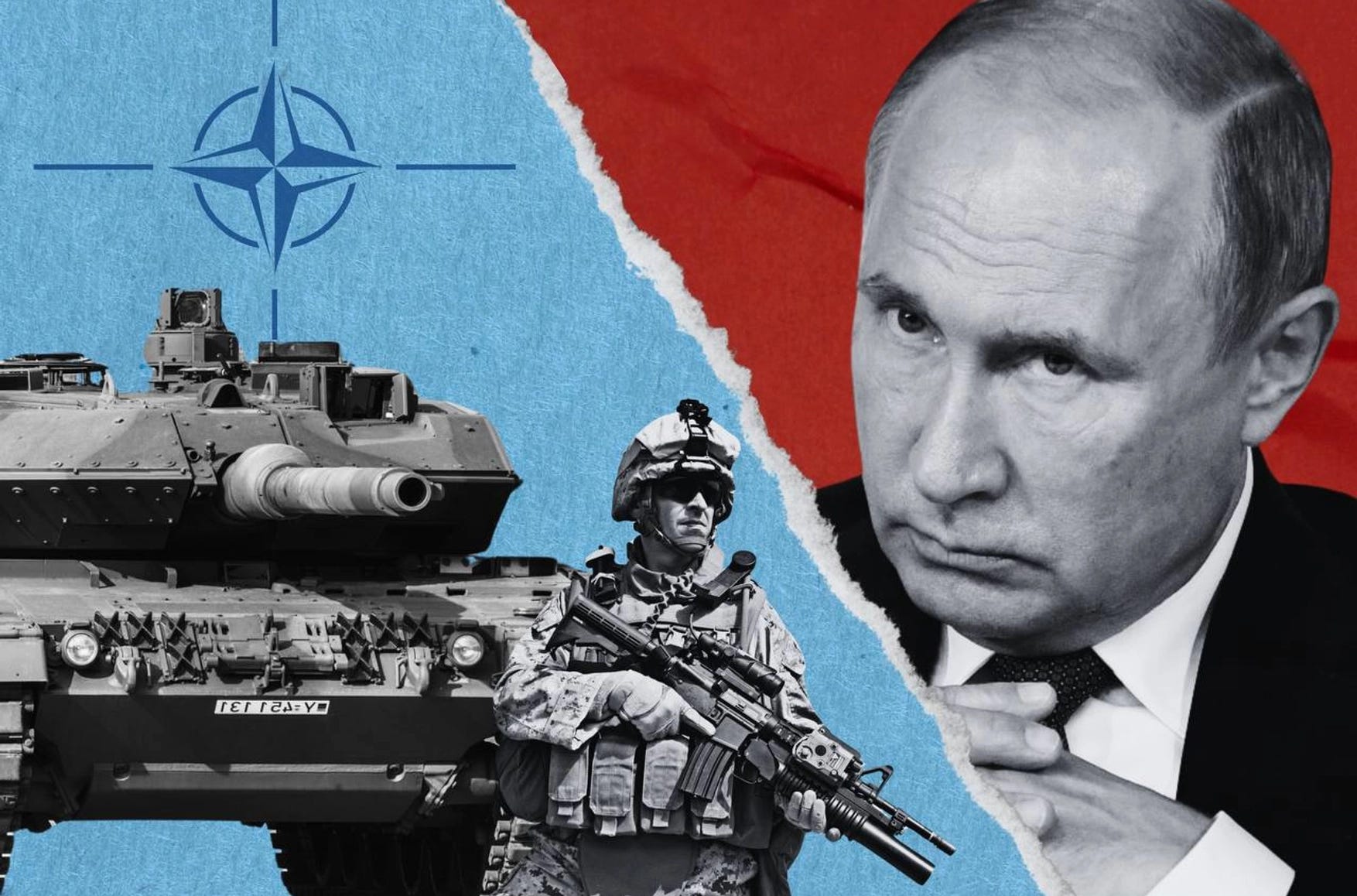
There is a moment in every crisis when hesitation stops being prudence and becomes weakness. Europe is dangerously close to that moment.
For years, Russia has tested the boundaries of the West , militarily, politically, economically and psychologically. The pattern is unmistakable: provoke, deny, observe the response, identify the weakness, and then push further. When the response is limited to statements of condemnation, Moscow learns one simple lesson: escalation carries a manageable price.
That lesson is precisely what must change.
The Kremlin regime under Vladimir Putin has demonstrated again and again that it is prepared to gamble with European security. Drone incursions, violations of allied airspace, sabotage allegations, disinformation, cyber operations, intimidation and attacks connected to the war against Ukraine are not isolated events when viewed as a broader strategic pattern. They form part of a pressure campaign designed to test how much the West will tolerate before it finally draws a line.
And the frightening part is not that Russia is testing us.
The frightening part is that we keep allowing it to learn from those tests.
Every time an incident occurs and the Western response consists primarily of another carefully worded statement saying that Russia must “show restraint,” Moscow receives another piece of intelligence about our political will. Every hesitation becomes information. Every internal disagreement becomes an opportunity. Every delayed decision tells the Kremlin that democratic governments can be pressured by fear of escalation.
That is not deterrence.
That is an invitation to continue.
We need to be absolutely clear about something: demanding stronger deterrence does not mean demanding an unnecessary war with Russia. Quite the opposite. Genuine deterrence exists precisely to prevent war. The objective must be to make escalation so politically, economically and strategically costly that Moscow concludes it is better to stop than to continue.
Peace without credible deterrence is not peace.
It is merely an interval between provocations.
Putin understands something that too many Western politicians still refuse to acknowledge: authoritarian regimes do not necessarily calculate risk in the same way democratic governments do.
The Kremlin can absorb enormous human and economic costs while maintaining its political narrative. It can portray failure as victory, retreat as strategy and aggression as self-defence. It can exploit fear, uncertainty and division while Western governments debate terminology.
That creates a dangerous asymmetry.
European governments worry about what their populations will think tomorrow.
The Kremlin worries about whether it can exploit that hesitation today.
This does not mean Russia is invincible. It is not. It does not mean war is inevitable. It is not. And it certainly does not mean that the West should respond recklessly to every incident.
It means we need a coherent strategy.
The West cannot spend years saying that Russia’s behaviour is unacceptable while simultaneously failing to establish consequences that Moscow genuinely understands.
There must be a point at which the calculation changes.
If Russian aircraft, missiles, drones, cyber operations or covert networks repeatedly approach or cross NATO’s security boundaries, the response cannot always be another press conference. There must be a coordinated system of detection, attribution, protection, diplomatic consequences, sanctions, counter-intelligence, infrastructure security and defensive military readiness.
Not because Europe wants war.
Because Europe wants to prevent one.
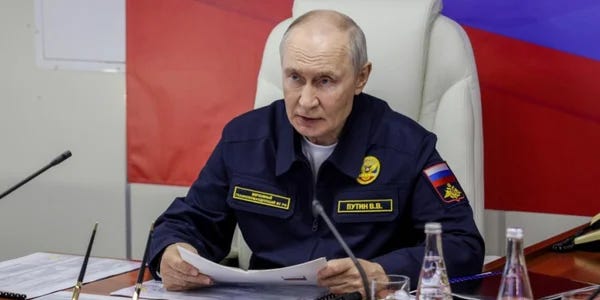
Perhaps the most disturbing development is how quickly extraordinary events become ordinary.
A drone enters allied airspace.
A fighter intercepts it.
Another incident follows.
Then another.
A projectile lands somewhere it should never have been.
European governments issue statements.
News cycles move on.
And everyone waits for the next incident.
That is how strategic escalation becomes normalized.
The public slowly becomes accustomed to events that would have triggered an emergency response only a few years earlier. Officials become accustomed to Russian risk-taking. Governments begin calculating how to respond without appearing to “escalate.”
But what does Moscow see?
It sees a security architecture increasingly trapped by its own fear of escalation.
That is dangerous.
Because if one side repeatedly escalates while the other side repeatedly limits itself to avoiding escalation, the strategic balance eventually shifts.
The aggressor becomes bolder.
The defender becomes more cautious.
Eventually, the aggressor believes the defender will always blink first.
That is the point at which deterrence begins to collapse.
There is a dangerous misunderstanding surrounding NATO’s Article 5.
Article 5 is fundamental to the Alliance, but European security cannot depend upon waiting for one dramatic attack that unquestionably crosses the threshold of an armed attack.
By then, the crisis may already be catastrophic.
Modern conflict does not necessarily begin with tanks crossing a border under a national flag. It can begin with cyberattacks, sabotage, drones, infrastructure disruption, political interference, covert operations, disinformation and deliberately ambiguous incidents.
The objective can be to create confusion rather than immediate destruction.
That is why the West needs layered defence.
Air defence alone is not enough.
Military forces alone are not enough.
Intelligence alone is not enough.
Civil defence alone is not enough.
Cybersecurity alone is not enough.
The answer is integration.
Military intelligence must communicate with civilian authorities. Border security must communicate with intelligence services. Critical infrastructure operators must be connected to national security structures. Emergency medical services must understand mass-casualty contingencies. Airports, ports, energy networks, telecommunications companies and transportation systems must have resilience plans.
And European governments must exercise these systems before they are needed.
Not during the crisis.
Before it.
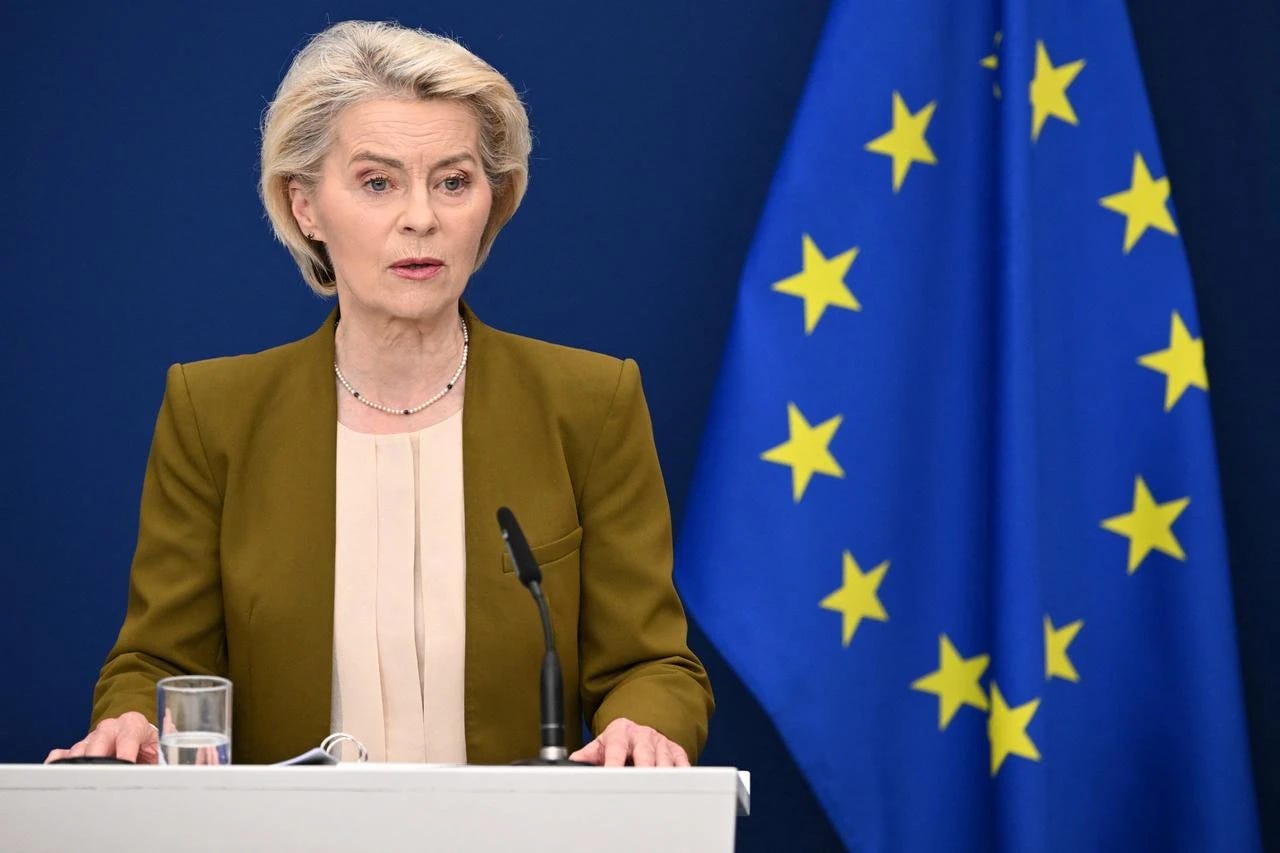
The West has enormous resources.
It possesses advanced technology, sophisticated intelligence services, powerful economies, highly trained armed forces and an alliance structure that Russia cannot simply wish away.
The problem is not that Europe is powerless.
The problem is that Europe frequently fails to use its power coherently.
We have spent years discussing cooperation while bureaucracies remain fragmented. We hold conferences about resilience while critical infrastructure remains vulnerable. We announce initiatives while implementation moves at the speed of paperwork.
That has to end.
Europe needs a genuine defensive architecture based on cooperation between governments, NATO, the EU, law-enforcement agencies, intelligence organizations, humanitarian organizations, technology companies, infrastructure operators and properly governed private initiatives.
This is where initiatives such as the AEGIS Guardian Initiative can contribute not as a replacement for governments or NATO, and certainly not as an independent military force, but as part of a broader model of civilian protection, defensive resilience, emergency response and cooperation in high-risk environments.
The principle should be simple:
Humanity first. Defence first. Prevention first.
We need organizations capable of operating in the spaces where traditional institutions can sometimes be too slow, too fragmented or too constrained to respond effectively.
That does not mean creating another army.
It means creating additional layers of resilience.
Because the strongest defence is not a single wall.
It is a system of walls, sensors, intelligence, people, institutions and partnerships working together.
Every incident provides information.
Russia observes how NATO reacts.
It observes which governments are divided.
It observes which politicians immediately demand restraint.
It observes where European air defences are positioned.
It observes how quickly governments communicate.
It observes whether populations panic.
It observes whether markets react.
It observes whether political parties turn against each other.
And most importantly, it observes whether Western governments believe their own red lines.
This is why strategic ambiguity can become dangerous when it is not accompanied by credible capability.
We do not need to announce military responses to every drone.
We do not need reckless rhetoric.
We do not need politicians screaming about World War III every morning.
We need something much more intimidating to an aggressor:
Preparedness.
A NATO that can detect incursions immediately.
A Europe capable of protecting its airspace.
Infrastructure designed to withstand sabotage.
Cyber systems capable of absorbing attacks.
Emergency services trained for hostile incidents.
Intelligence services sharing information rapidly.
Governments communicating with one another before—not after—a crisis.
And political leaders who understand that deterrence depends on credibility.

There is another uncomfortable reality.
The longer an authoritarian leadership remains committed to a war-driven political system, the harder it becomes for that leadership to retreat without consequences at home.
That can create a dangerous incentive to continue escalating.
A regime that has invested enormous political capital in confrontation may eventually convince itself that stopping is more dangerous than continuing.
That is precisely why the West cannot simply hope that Putin will wake up one morning and decide to become reasonable.
Strategic policy cannot be built on wishful thinking.
It must be built around capabilities, incentives and consequences.
The objective should be to create a situation in which continued aggression becomes increasingly unattractive.
That means sanctions that actually matter.
That means closing loopholes.
That means strengthening Ukraine.
That means reinforcing NATO’s eastern flank.
That means expanding European defence production.
That means investing in air and missile defence.
That means protecting critical infrastructure.
That means countering sabotage and hostile intelligence operations.
That means strengthening democratic resilience against disinformation.
And it means making absolutely clear that an attack on one part of the European security architecture will not be treated as somebody else’s problem.
We have talked enough.
There have been enough hearings.
Enough emergency meetings.
Enough carefully crafted statements.
Enough declarations that “we are monitoring the situation.”
Of course governments must investigate incidents before assigning responsibility. Of course military decisions require discipline. Of course escalation must be managed carefully.
But preparedness and restraint are not opposites.
They are partners.
You can prepare for the worst while desperately working to prevent it.
That is what responsible governments are supposed to do.
The West should not seek confrontation with Russia. But neither should it behave as though confrontation can be prevented by pretending that aggression does not exist.
History is unforgiving toward those who confuse the absence of immediate catastrophe with the presence of security.
Europe has already seen what happens when aggressive regimes are allowed to believe that democratic societies lack the will to defend themselves.
We should not need another historical lesson.
The Russian threat should not be imagined as some unstoppable “red wave” destined to consume Europe.
Russia is powerful, dangerous and willing to take risks, but it is not invincible.
A wave only becomes devastating when there is nothing capable of breaking it.
Our task is to build that barrier now.
Not after another border is violated.
Not after a civilian infrastructure system is destroyed.
Not after a NATO soldier is killed.
Not after a crisis spirals beyond political control.
Now.
Layered defence.
Collective intelligence.
Civilian resilience.
Military readiness.
Cyber defence.
Infrastructure protection.
Humanitarian preparedness.
Rapid coordination.
Strategic communication.
And above all, political unity.
That is how you stop escalation.
Not by shouting louder.
By becoming harder to intimidate.
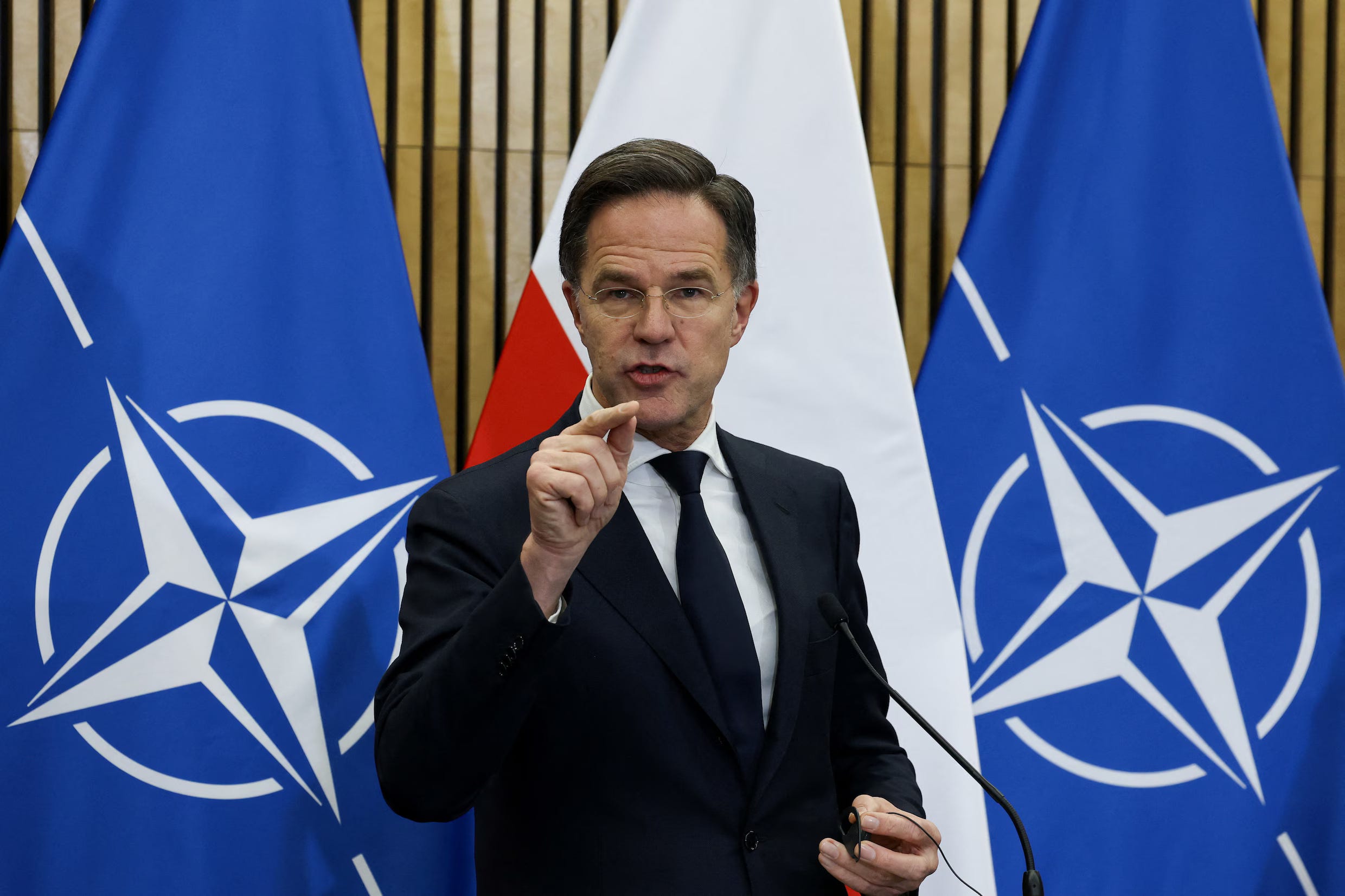
For years, people have warned that allowing incremental aggression to continue without meaningful consequences creates greater risks tomorrow.
That warning should no longer be dismissed as alarmism.
Every successful test encourages another test.
Every weakness discovered will eventually be exploited.
Every division will eventually be targeted.
And every government that assumes “it probably won’t happen here” is gambling with the security of its own population.
The West must finally understand that deterrence is not about demonstrating how badly we want peace.
It is about demonstrating that we are capable of defending it.
There is nothing weak about saying no.
There is nothing warmongering about preparing hospitals for emergencies, protecting infrastructure, strengthening air defence, securing borders and ensuring that NATO forces can respond immediately to threats.
There is nothing reckless about building resilience.
The reckless choice is doing nothing and hoping that the Kremlin eventually decides to stop.
That is not strategy.
That is surrender by increments.
And we should have the courage to say it plainly.
Putin and the Kremlin leadership must understand that Europe will not be intimidated into paralysis. Russia must understand that every attempt to probe NATO’s defences will encounter a stronger, faster and more coordinated response. The West does not need to become reckless. It needs to become serious.
Because the objective is not to destroy Russia.
The objective is to prevent Russia or any other authoritarian power , from believing that aggression against democratic Europe can succeed.
We should want peace.
But peace must have a backbone.
We should pursue diplomacy.
But diplomacy works best when backed by credible deterrence.
We should avoid war.
But avoiding war cannot mean refusing to prepare for it.
And we should never allow fear of escalation to become the mechanism through which escalation is rewarded.
The Kremlin has spent years testing the limits.
Now Europe needs to test its own resolve.
The choice is not between weakness and war.
The choice is between credible deterrence today and potentially catastrophic escalation tomorrow.
We still have the opportunity to choose deterrence.
We still have the opportunity to build the layered defensive architecture Europe desperately needs.
We still have the opportunity to make our borders, infrastructure, institutions and societies resilient enough that hostile actors cannot fracture us from within.
But the window is not infinite.
So stop waiting.
Stop treating every warning as hysteria.
Stop confusing caution with paralysis.
Stop allowing the Kremlin to write the timetable.
Build the defences.
Strengthen the alliances.
Protect the civilians.
Support Ukraine.
Integrate intelligence.
Prepare the infrastructure.
Coordinate the institutions.
And make it unmistakably clear that the democratic world will defend itself.
Because the greatest danger is not that we prepare too much for the next crisis.
The greatest danger is that we prepare too little , and discover, when the crisis finally arrives, that the aggressor prepared while we were still debating.
That is the lesson.
That is the warning.
And if Europe refuses to learn it now, history may force us to learn it later at a price that nobody should be willing to pay.
Deterrence is not provocation. Preparedness is not warmongering. Defence is not aggression.
But weakness invites testing.
And the time to build the wall is before the wave arrives.
Comments
Nothing yet. Say the first thing.
Sign in to join the conversation.