
There is a moment in every crisis when ignorance stops being an excuse.
Europe has reached it.
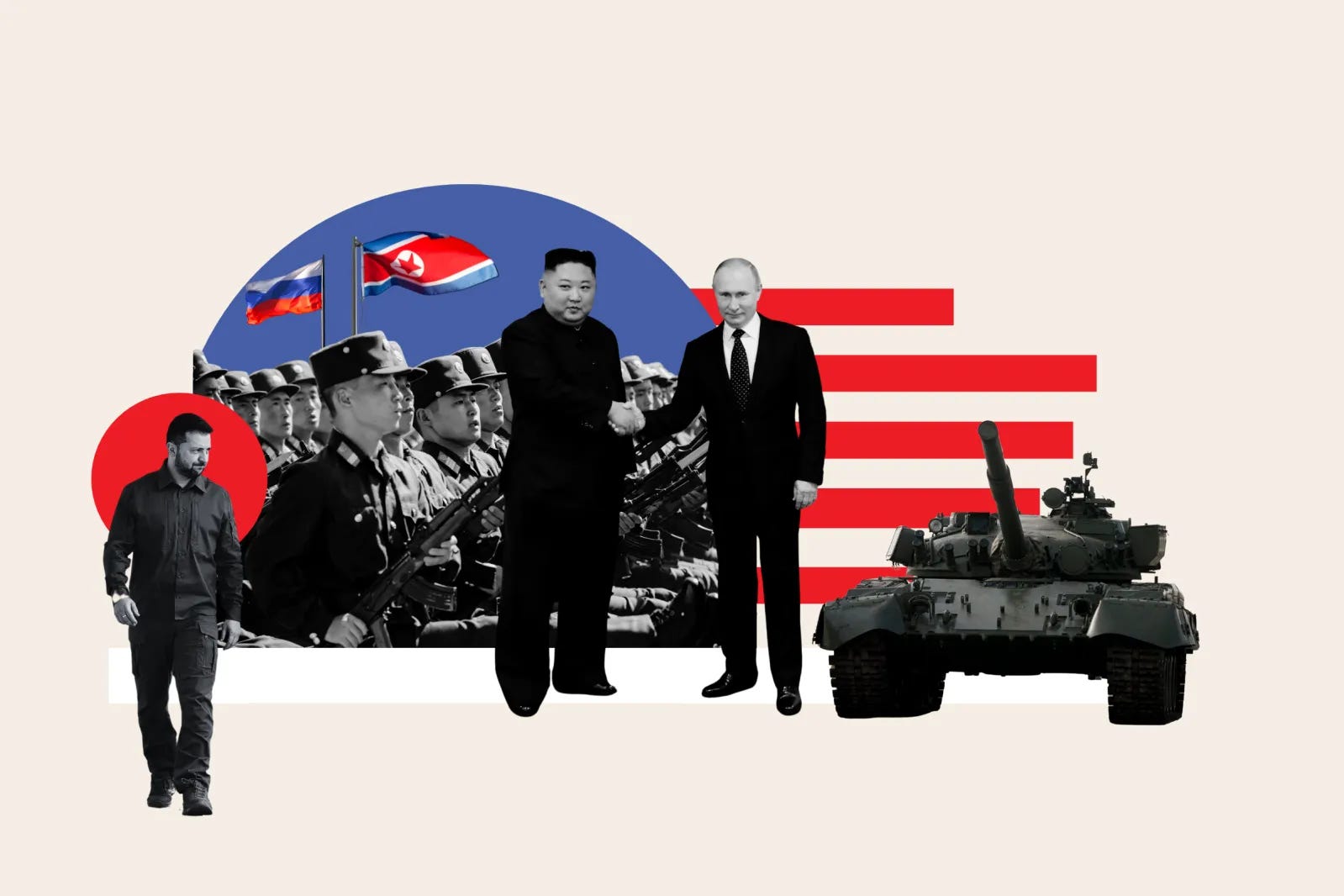
While politicians debate budgets, committees debate mandates and governments debate who should pay for what, Russia continues to wage its war against Ukraine and North Korea continues to deepen its military partnership with Vladimir Putin.
This is no longer simply a European war happening somewhere else.
It is a warning.
A warning written in missiles, drones, artillery shells, cyberattacks, sabotage, destroyed infrastructure and the bodies of civilians.
And if Europe continues to answer that warning with another statement, another summit and another parliamentary hearing, then we should stop pretending that we are surprised when the next crisis arrives.
The uncomfortable truth is this:
Our enemies are studying our hesitation.
Vladimir Putin is studying it.
Kim Jong-un is studying it.
Iran is studying it.
China is studying it.
Every government contemplating confrontation with the West is studying the same thing: how much pressure can be applied before democratic societies lose their political will?
That is the question Europe must answer.
Not next year.
Not after the next election.
Not after the next missile strikes a European city.
Now.
Ukraine is no longer fighting Russia alone
North Korea’s expanding military relationship with Russia should have destroyed one of the most comforting assumptions surrounding this war: that Russia’s military machine would eventually run out of weapons, manpower or options.
Perhaps it will.
But hoping that happens is not a strategy.
Pyongyang has become an increasingly important military supplier to Moscow, reportedly providing vast quantities of artillery ammunition and other equipment. North Korean personnel have also been involved alongside Russian forces, giving Pyongyang something that money cannot easily buy: battlefield experience in a modern high-intensity war.
And that experience matters.
Ukraine is one of the most technologically dynamic battlefields in the world.
Drones are everywhere.
Electronic warfare is everywhere.
Satellite communications matter.
Electronic intelligence matters.
Air defence matters.
Counter-drone warfare matters.
Precision strike matters.
Rapid battlefield adaptation matters.
For North Korea, participation in this conflict offers an opportunity to observe, test and learn.
That should concern every European defence planner.
Because a weapon used in Ukraine today can become a better weapon tomorrow.
A tactic tested against Ukrainian forces can eventually be incorporated into another military’s doctrine.
A weakness discovered in Western air defence can become a future adversary’s targeting priority.
This is why the relationship between Moscow and Pyongyang should not be dismissed as a transactional arrangement between two isolated regimes.
It is becoming a military learning ecosystem.
And Europe is sitting directly beside it.
Putin understands one thing very well: hesitation works
Vladimir Putin has spent years testing Western resolve.
Georgia.
Crimea.
The Donbas.
The full-scale invasion of Ukraine.
Each stage has been accompanied by calculations about what the West would tolerate, how quickly it would respond and where its political limits lay.
That does not mean Putin believes NATO is weak militarily.
He understands something more sophisticated.
He understands that democracies possess enormous military and economic power but can struggle to translate that power into political action.
That distinction is critical.
A country can possess aircraft, tanks, missiles, satellites and advanced technology and still be strategically vulnerable if its political leadership cannot agree on when and how those capabilities should be used.
Deterrence therefore requires more than hardware.
It requires credibility.
And credibility comes from preparation.
Europe cannot simply tell Moscow that NATO is united.
We must make that unity visible.
We cannot simply tell our populations that they are protected.
We must build the systems that protect them.
We cannot simply promise resilience.
We must construct it.
And Donald Trump needs to understand the stakes
Donald Trump has repeatedly questioned America’s traditional approach to European security and demanded that European allies carry more of the burden.
On one point, that argument deserves serious attention.
Europe does need to do more.
Much more.
But there is a profound difference between demanding greater European responsibility and allowing uncertainty over American commitment to become a strategic gift to Moscow.
The answer to Europe’s defence weakness is not American withdrawal.
The answer is a stronger Europe inside a stronger NATO.
Europe should be capable of defending itself.
Europe should possess sufficient industrial capacity to sustain a major conflict.
Europe should have deep ammunition reserves.
Europe should have modern air and missile defence.
Europe should have resilient infrastructure.
Europe should have trained civil protection systems.
Europe should have the ability to mobilise quickly.
And Europe should be able to continue supporting Ukraine without discovering, six months into a crisis, that its own warehouses are empty.
That is not anti-American.
It is exactly what a mature alliance should look like.
America should want capable European allies.
Europe should want a strong American partner.
And NATO should remain the framework that binds those capabilities together.
The alternative is precisely what Putin would like to see:
A frightened, divided and politically paralysed West.
We should not give him that victory for free.
“Never Again” cannot become a decorative phrase
Europe has built an entire moral vocabulary around the words “Never Again.”
We put them on memorials.
We speak them at commemorations.
We teach them to our children.
And rightly so.
But there is a danger.
A phrase repeated often enough can become ritual instead of responsibility.
“Never Again” does not mean remembering history.
It means learning from it.
It means recognising threats before they become catastrophes.
It means protecting civilians before the bombs fall.
It means refusing to allow authoritarian aggression to become normal.
It means building institutions capable of defending democracy when democracy is under pressure.
If “Never Again” means anything, then it must include preparedness.
Because history does not reward societies simply for understanding what happened last time.
It rewards societies that act before it happens again.
Today, Ukraine is fighting precisely that battle.
And every European government should be asking one question:
What are we doing to ensure the lessons being paid for in Ukrainian blood do not have to be learned again on European soil?
The answer is layered defence
Europe needs to stop thinking about defence as something that belongs exclusively to armies.
That model is obsolete.
The modern battlefield does not stop at the border.
It enters the power grid.
The telecommunications network.
The railway system.
The port.
The airport.
The hospital.
The water supply.
The data centre.
The satellite network.
The financial system.
The information environment.
And eventually, the civilian population.
That means European security must become layered.
Air and missile defence is one layer.
Counter-drone systems are another.
Cybersecurity is another.
Critical infrastructure protection is another.
Civil protection is another.
Medical resilience is another.
Emergency communications are another.
Energy redundancy is another.
Industrial capacity is another.
Intelligence sharing is another.
Local government preparedness is another.
None of these layers is sufficient by itself.
Together, however, they create something much more difficult to defeat.
Resilience.
That is the objective.
Not invulnerability.
No serious defence planner should promise that.
The objective is to make an attack difficult, expensive, slow and ultimately unsuccessful.
The mayor must be part of the defence plan
This is where Europe needs to think differently.
If a major European city comes under sustained drone attack tomorrow, the response will not belong solely to a defence ministry.
The mayor will have responsibilities.
Firefighters will have responsibilities.
Police will have responsibilities.
Hospitals will have responsibilities.
Electricity operators will have responsibilities.
Transport authorities will have responsibilities.
Telecommunications companies will have responsibilities.
Military commanders will have responsibilities.
Emergency planners will have responsibilities.
The civilian population will have responsibilities.
So why do we still organise so much of our preparedness as though these systems exist in separate universes?
They do not.
The threat does not respect departmental boundaries.
A cyberattack against a power company can affect hospitals.
A strike against a railway can affect military logistics.
A drone attack against an airport can disrupt civilian transportation.
A damaged communications network can affect emergency services.
A prolonged electricity outage can become a humanitarian emergency.
Modern defence is therefore a network.
And networks survive through redundancy, coordination and preparation.
Stop holding hearings after the damage is done
Europe has become extraordinarily good at investigating failure.
After something happens, we ask questions.
Why wasn’t the infrastructure protected?
Why wasn’t the intelligence shared?
Why were the stocks insufficient?
Why were emergency services overwhelmed?
Why did the procurement process take so long?
Why wasn’t anyone prepared?
Those questions matter.
But they are infinitely less useful when asked after the building is already burning.
We need to move from reaction to anticipation.
That means exercises.
Real exercises.
Civilian-military exercises.
Municipal resilience exercises.
Mass-casualty exercises.
Cyber disruption exercises.
Blackout exercises.
Communications-loss exercises.
Drone attack exercises.
Infrastructure recovery exercises.
And they must involve the people who will actually have to perform these tasks.
Not just generals.
Not just ministers.
Not just consultants.
The people on the ground.
Because resilience is not created in a conference room.
It is created through repetition.
Europe should learn from Ukraine and urgently
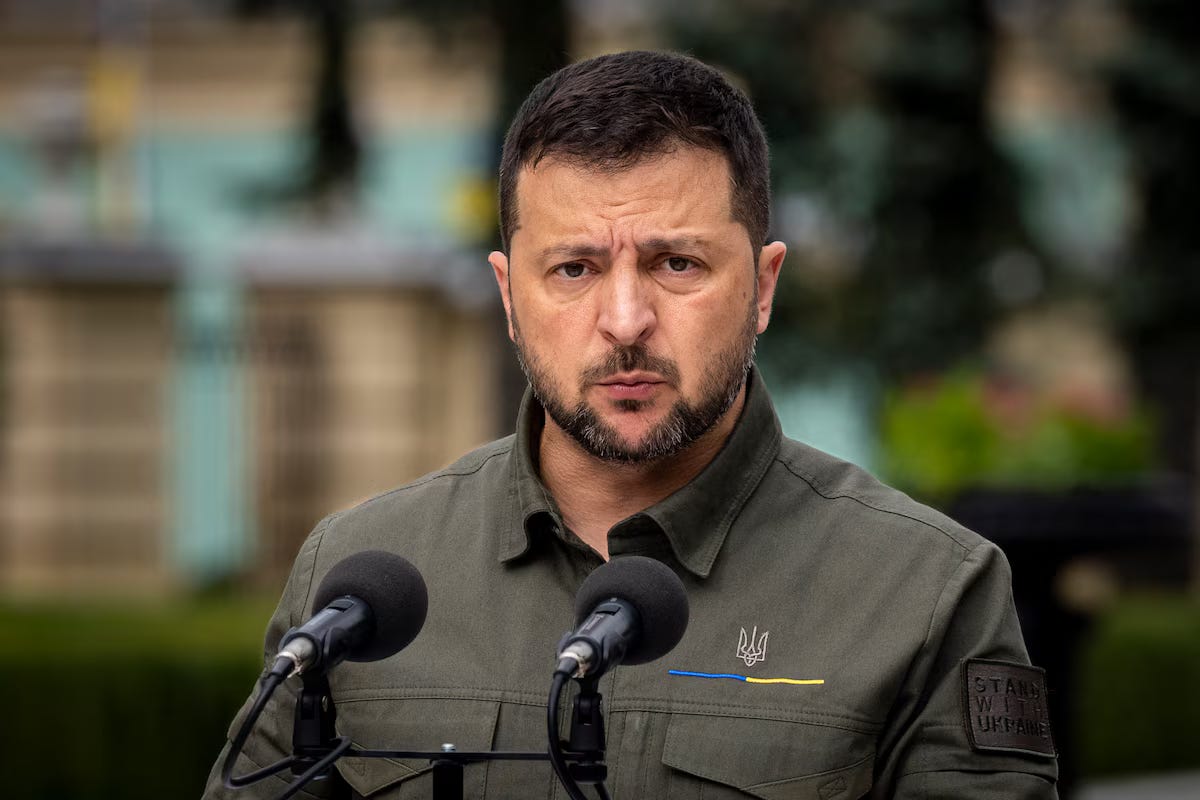
Ukraine has paid an enormous price for lessons that Europe desperately needs.
Ukrainians have learned how to operate under sustained missile and drone attacks.
They have learned how to protect critical infrastructure.
They have learned how to adapt rapidly.
They have learned how to integrate civilian and military capabilities.
They have learned how to repair systems under attack.
They have learned how quickly an inexpensive drone can create disproportionate strategic effects.
They have learned how important decentralisation can be.
And they have learned that technology changes faster than bureaucracy.
Europe should be absorbing those lessons at extraordinary speed.
Not someday.
Now.
Ukraine is not merely a country Europe supports.
It is also Europe’s most important contemporary source of battlefield lessons.
The knowledge being generated there has enormous implications for NATO’s future.
Europe should listen.
And then it should build.
AEGIS and the missing middle
There is another lesson Europe should take seriously.
Security and humanitarian response cannot always operate in completely separate worlds.
Traditional military organisations have capabilities civilians sometimes need but are not always structured to provide in humanitarian environments.
Humanitarian organisations have extraordinary expertise but may lack the security capabilities required in high-risk environments.
Between those two worlds is a gap.
That gap deserves serious attention.
This is where initiatives such as the AEGIS Guardian Initiative fit into the wider discussion.
The concept is not to create another private army.
It is not to replace national armed forces.
It is not to operate above democratic institutions.
The purpose should be precisely the opposite: a legally governed, accountable framework that can bring together defensive security, civilian protection, medical capabilities, logistics, infrastructure resilience, investigation and humanitarian support when conventional structures cannot respond quickly enough.
That model deserves examination.
If Europe is serious about resilience, it should examine every credible model capable of improving civilian protection.
But the principle must remain absolute:
Law first. Humanity first. Accountability first.
The objective is not to militarise society.
The objective is to make society harder to break.
We cannot keep fighting each other
This may be Europe’s greatest vulnerability.
Not Russian missiles.
Not North Korean rockets.
Not drones.
Fragmentation.
Governments fight over responsibilities.
Institutions fight over budgets.
Political parties fight over narratives.
Organisations compete for influence.
Private companies protect their commercial interests.
Everyone has a reason.
The adversary has only one objective.
Exploit the division.
Russia does not care which European ministry controls an emergency plan.
North Korea does not care which parliamentary committee oversees procurement.
A drone does not stop because a government contract has been delayed.
A missile does not wait for an election.
And a cyberattack does not respect national borders.
So why should our response?
Europe needs a culture of cooperation that is far more aggressive than its culture of bureaucracy.
Military and civilian.
Local and national.
Public and private.
European and transatlantic.
Humanitarian and security.
Intelligence and infrastructure.
Everyone has a role.
Everyone has responsibilities.
And everyone needs to understand the same objective:
Protect the population.
Protect democracy.
Protect the alliance.
Prevent war.

This is not warmongering. It is deterrence.
There will always be people who accuse anyone demanding stronger defence of wanting conflict.
That argument needs to be rejected.
Building a fire brigade does not mean you want a fire.
Building hospitals does not mean you want disease.
Building flood defences does not mean you want a flood.
And building credible defence does not mean you want war.
It means you understand risk.
The strongest argument for preparing for war is precisely that preparation can prevent war.
An adversary must believe that aggression will fail.
That is deterrence.
And deterrence is ultimately an investment in peace.
Europe has choices
We can continue doing what we have done.
Hold meetings.
Issue statements.
Debate budgets.
Commission studies.
Hold parliamentary hearings.
Wait for consensus.
Then respond after something happens.
Or we can choose something harder.
We can build.
Build air defence.
Build missile defence.
Build ammunition production.
Build counter-drone capacity.
Build civil protection.
Build hardened infrastructure.
Build resilient communications.
Build energy redundancy.
Build cyber resilience.
Build industrial capacity.
Build municipal preparedness.
Build intelligence networks.
Build partnerships.
Build trust.
Build the ability to respond before a crisis becomes a catastrophe.
And build them together.
That is the choice.
Putin should understand this.
Kim Jong-un should understand this.
And Washington should understand this.
Europe is not asking for war.
Europe is refusing to be defenceless.
There is a difference.
We do not need to become Russia.
We do not need to become North Korea.
We do not need to abandon our democratic principles to protect them.
Quite the opposite.
We must defend those principles precisely because they are worth defending.
Ukraine understands this.
Ukrainians have demonstrated it every day since Russia launched its full-scale invasion.
They have demonstrated that a democracy under attack does not have to surrender its identity to survive.
Europe must demonstrate the same determination.
The clock is running
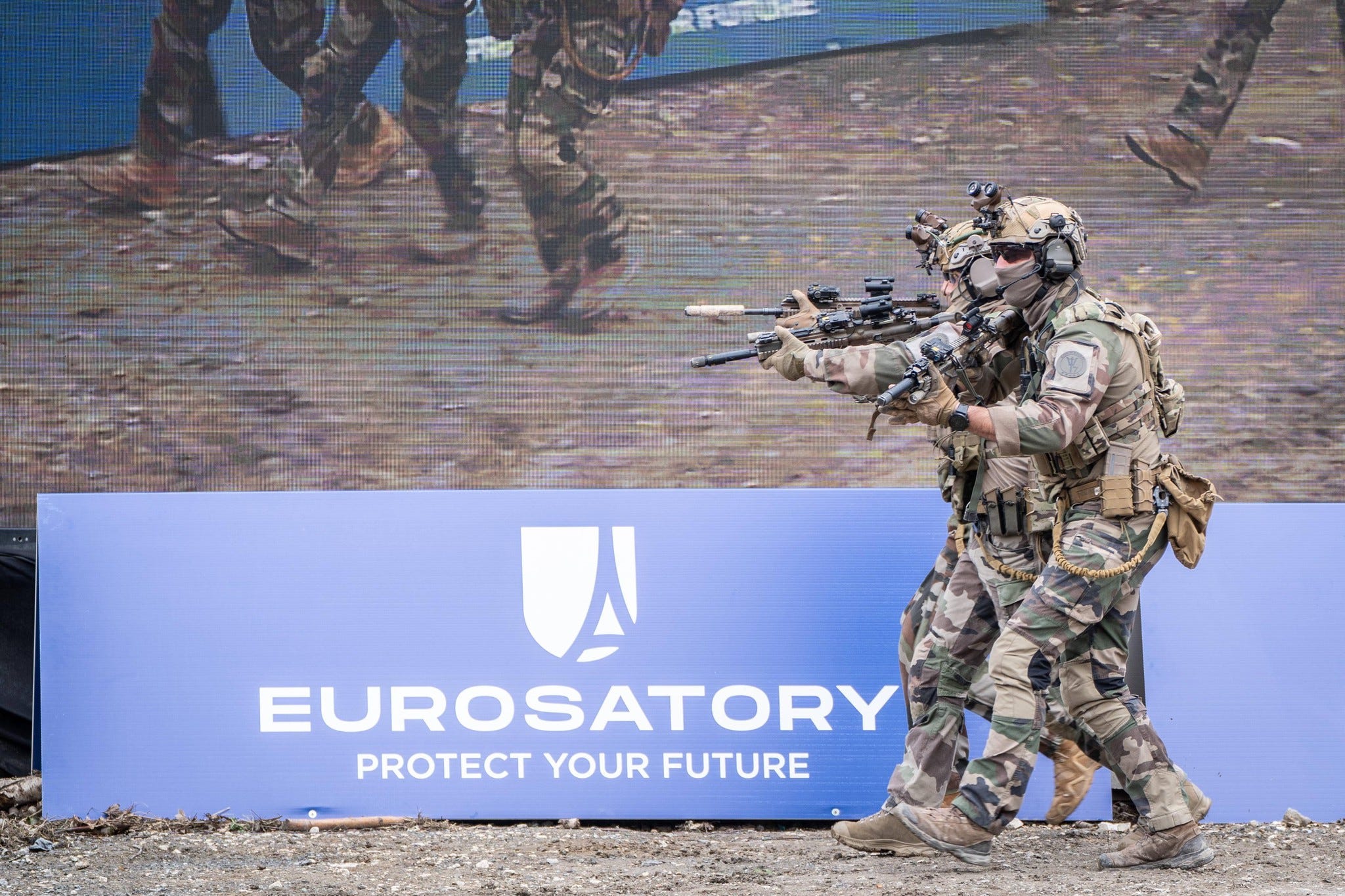
There is still time.
But there is less time than there was yesterday.
Every month Russia gains experience.
Every month North Korea gains experience.
Every month hostile actors study our vulnerabilities.
Every month our political systems either demonstrate resolve or demonstrate hesitation.
The choice is ours.
We can wait for history to make the decision for us.
Or we can make the decision ourselves.
I know which one I prefer.
Because “Never Again” was never supposed to be a memorial inscription.
It was supposed to be a promise.
And promises mean nothing when they are not backed by action.
Europe does not need another warning.
Europe needs a shield.
A layered shield.
A democratic shield.
A civilian shield.
A military shield.
A resilient shield.
And above all, a united shield.
The men and women of Ukraine are already standing on the front line of Europe’s security. They should not have to teach us the same lesson twice.
So stop waiting.
Stop hiding behind procedure.
Stop treating preparedness as tomorrow’s problem.
Build the defences.
Train the civilians.
Protect the cities.
Strengthen NATO.
Support Ukraine.
Work across borders.
Work across political divisions.
Work with the people who actually have to respond when the sirens sound.
And remember this:
The greatest mistake Europe could make now is believing that because the missile has not yet crossed our border, the war is not our security problem.
It is.
The red wave is already moving.
We can either build the wall now , together, intelligently and democratically or we can wait until the water is at the door and discover that courage without preparation is simply another word for regret.
Never Again must mean something.
Make it mean action.
Comments
Nothing yet. Say the first thing.
Sign in to join the conversation.