
There is a moment in every crisis when rhetoric stops being rhetoric.
When words become policy.
When threats become strategic signals.
And when responsible governments must stop pretending that what they are witnessing is simply another outrageous political statement.
That moment has arrived.
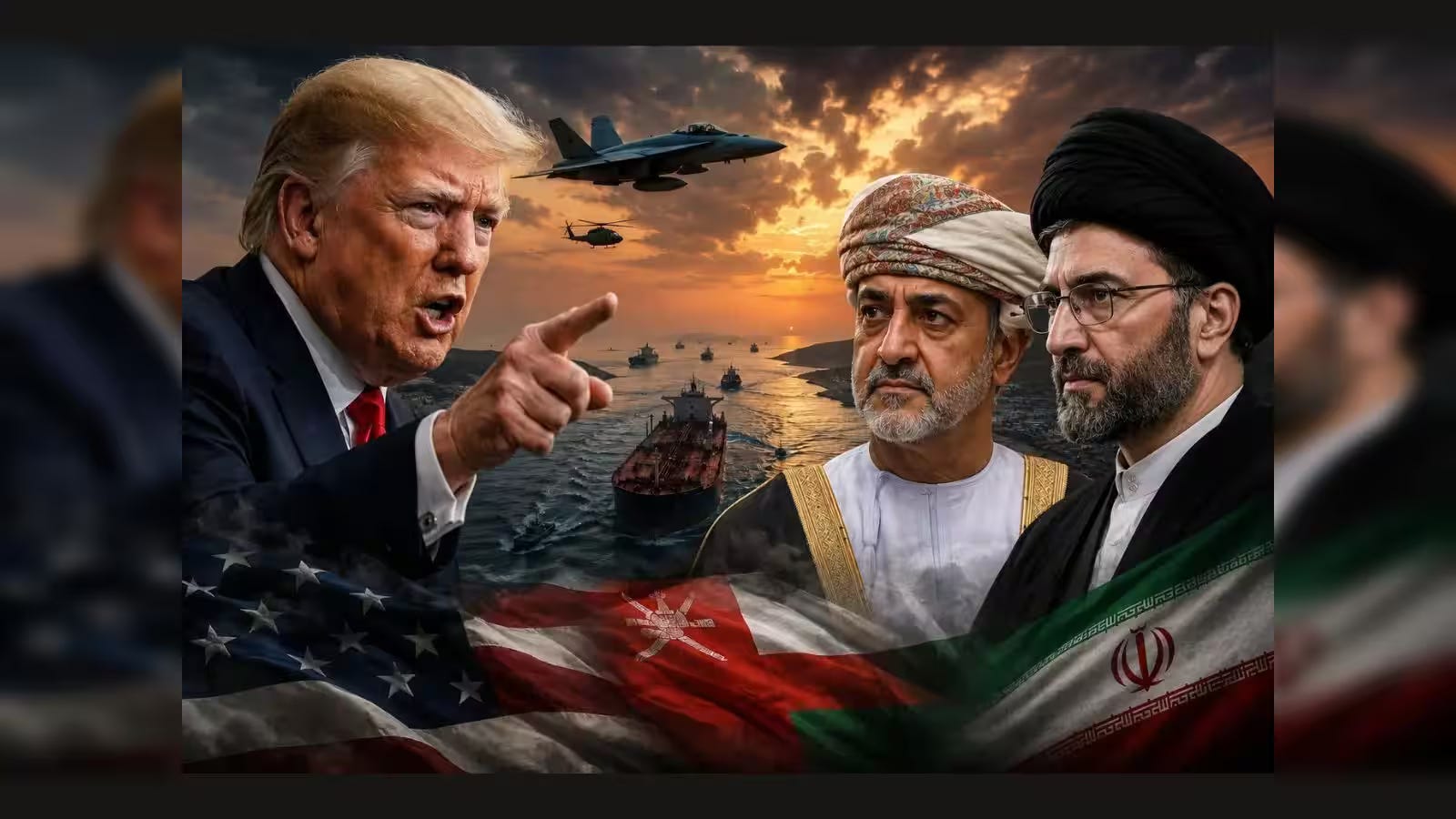
On August 17, U.S. President Donald Trump threatened military action against Oman if Muscat interfered with American objectives surrounding the Strait of Hormuz. His remarks came as Oman was involved in efforts concerning the reopening of commercial shipping through one of the world’s most strategically important waterways. Reuters reported that Trump also insisted Iran must surrender and rejected an extension of the interim arrangement that had been intended to lead toward a broader settlement.
Let us understand what this means.
Oman is not an enemy state.
Oman has historically served as a diplomatic intermediary in the Middle East.
And yet the American president is publicly threatening to bomb it if it obstructs Washington’s objectives.
That is not responsible statesmanship.
That is not strategic patience.
That is not the language of diplomacy.
It is coercion.
And when the president making that threat controls the most powerful military alliance and one of the most powerful armed forces on Earth, the rest of the world has a responsibility to take the threat seriously.
Not because war is inevitable.
Because escalation is.
The most dangerous thing we can do now is become accustomed to this.
“That’s just Trump.”
We heard it before.
We hear it again.
And every time we say it, the political and strategic boundary moves a little further.
Threats become normal.
Ultimatums become normal.
Public humiliation becomes normal.
Military force becomes another negotiating instrument.
And eventually, people stop asking whether something is acceptable and start asking only whether it is Trumpian.
That is an extremely dangerous standard.
The president of the United States is not a television personality whose statements disappear when the broadcast ends.
His words are received by governments, generals, intelligence services, markets and armed groups.
They influence calculations.
They alter risk assessments.
They can trigger preparations for retaliation.
And when those calculations are taking place during an active war between Washington and Tehran, every reckless statement carries consequences.
Reuters reported on August 17 that Iran was threatening to move toward a “fully offensive” military posture as attempts to negotiate an end to the war stalled.
That should be enough to make every serious policymaker in Europe sit up.
Because wars do not remain neatly inside the boundaries politicians draw on maps.
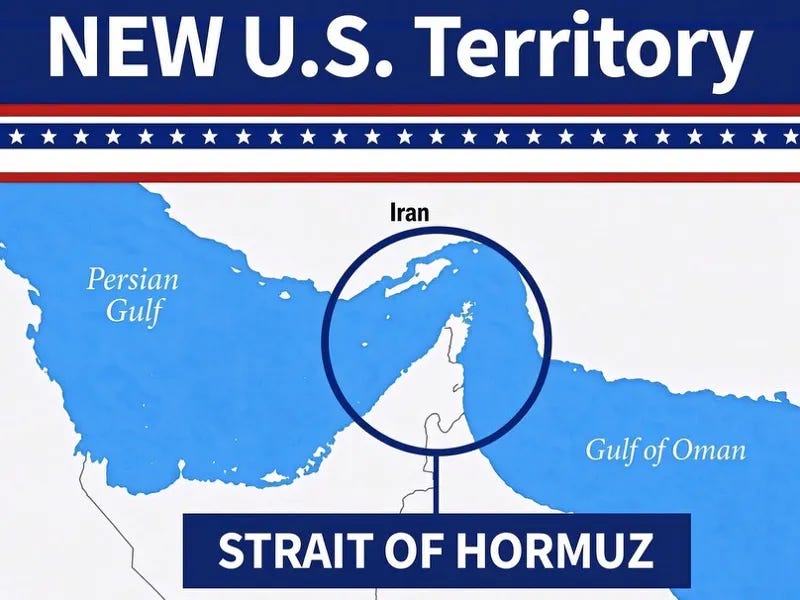
The Strait of Hormuz is not some distant American battlefield.
It is a critical artery of the global economy.
On August 19, Reuters reported that traffic through the strait had slowed dramatically, with only a handful of commodity vessels transiting amid continuing uncertainty over whether the waterway is effectively open or blocked. The strait historically carried roughly 20 percent of global crude oil and liquefied natural gas shipments.
That means Europe is already exposed.
Energy prices.
Shipping.
Insurance.
Industrial production.
Supply chains.
Food prices.
Transportation.
Inflation.
Every European government should be asking what happens if the disruption becomes permanent.
But the danger is far greater than economics.
When a conflict involving the United States and Iran expands, American military assets outside the Middle East can become targets.
And Europe hosts American military infrastructure.
That matters.
A great deal.
The Financial Times reported on August 19 that Iranian strategists were considering possible attacks against U.S. military targets in southeastern Europe, including assets in Bulgaria and Cyprus, if Washington escalates the conflict further. The report also described concerns around possible attacks against critical infrastructure.
Think about that for a moment.
A decision made in Washington can produce a target in Europe.
A retaliatory calculation made in Tehran can create a threat to European infrastructure.
And European citizens can be placed directly in the line of fire without ever having had a meaningful say in the decision that created the confrontation.
This is precisely why Europe can no longer afford to outsource its strategic security.
We need America.
We need NATO.
We need the transatlantic alliance.
But Europe also needs itself.
That distinction is absolutely fucking critical.
There is nothing anti-American about demanding European strategic responsibility.
Quite the opposite.
A strong alliance requires strong partners.
Europe cannot indefinitely expect the United States to provide the overwhelming share of hard-power security while European governments remain politically reluctant to build the capabilities necessary to protect their own populations.
The world has changed.
Russia’s war against Ukraine changed it.
Drone warfare changed it.
Cyberwarfare changed it.
The weaponisation of infrastructure changed it.
The Middle East has changed it.
And American politics has changed it.
Europe must adapt.
Not tomorrow.
Now.
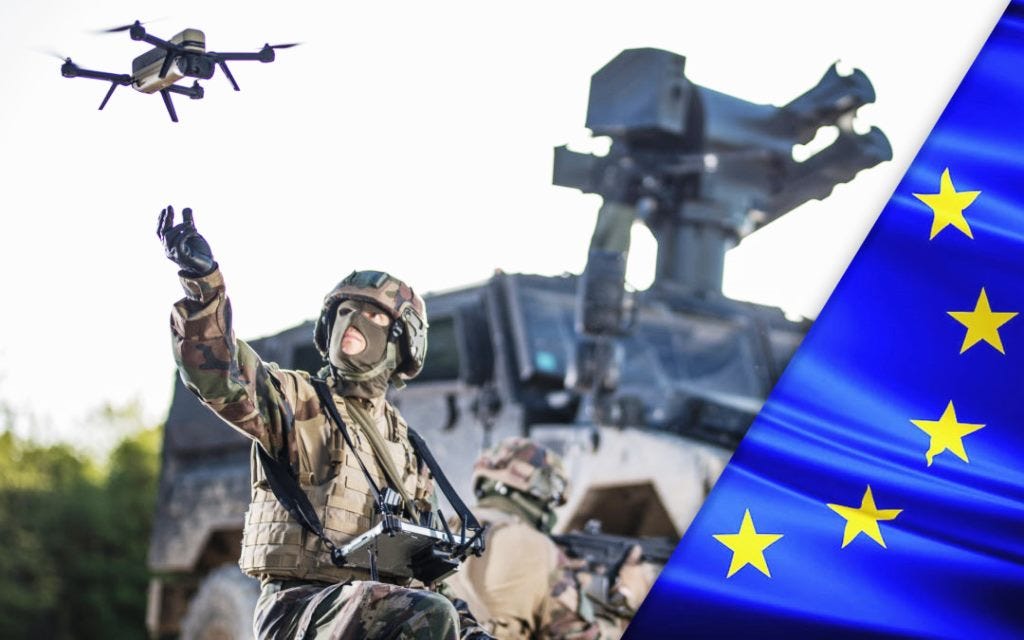
Europe needs layered defence.
And by layered defence I do not mean simply purchasing more fighter jets and calling the problem solved.
We need a complete security architecture.
Air and missile defence.
Counter-drone capabilities.
Maritime surveillance.
Protection of ports.
Protection of energy infrastructure.
Protection of undersea cables.
Cyber defence.
Secure communications.
Strategic reserves.
Military mobility.
Intelligence sharing.
Civil protection.
Emergency medical capacity.
Critical infrastructure redundancy.
Counter-sabotage capabilities.
Rapid crisis response.
And, above all, the ability to coordinate these capabilities across borders.
Because the next major European security crisis will not necessarily announce itself as a conventional invasion.
It may begin with a cyberattack.
A drone.
A sabotage operation.
A damaged submarine cable.
An attack on a port.
A missile fired at a military facility.
A terrorist attack.
A disinformation campaign.
Or several of those things happening simultaneously.
Modern warfare is increasingly hybrid.
Our defence must be hybrid too.
There will always be people who accuse anyone advocating stronger European defence of wanting war.
That argument is intellectually bankrupt.
Preparedness does not cause war.
Weakness does not guarantee peace.
Deterrence is precisely the mechanism designed to convince an adversary that attacking you will cost more than it can possibly gain.
We should not want World War III.
That is exactly why we must prepare to prevent it.
The objective of European defence must be brutally simple:
Make Europe too resilient to intimidate, too capable to blackmail and too unified to fracture.
That is deterrence.
That is peace through preparedness.
The problem with Trump’s approach is not merely that he speaks aggressively.
Presidents can speak aggressively.
The United States has every right to defend itself.
Iran must be prevented from threatening international security.
Shipping through Hormuz must be protected.
American forces have legitimate security interests.
None of that is controversial.
The problem is the apparent belief that coercion is itself a substitute for strategy.
Threatening countries.
Demanding surrender.
Applying maximum pressure.
Increasing military pressure.
Then expecting diplomacy to somehow emerge afterward.
That is an extremely dangerous game.
Diplomacy works best when there is a way for an opponent to step back without being completely humiliated.
You cannot permanently build a diplomatic solution out of ultimatums alone.
At some point, somebody has to leave the table without believing that surrender is the only alternative.
Otherwise the political incentive becomes simple:
Escalate.
Escalate again.
Never concede.
Never back down.
And eventually the military machine starts driving the politics.
Reuters’ August 19 assessment is particularly disturbing for exactly this reason, describing the conflict as increasingly appearing to operate on “autopilot,” with diplomacy struggling to regain control.
That is how wars become dangerous beyond the intentions of their leaders.
This is the part people continually misunderstand.
World War III does not require every government to consciously decide that it wants one.
It can emerge through escalation.
One strike.
One retaliation.
One mistake.
One miscalculation.
One attack on a military base.
One civilian mass-casualty event.
One missile launched at the wrong target.
One intelligence failure.
One political leader who believes the other side will back down.
Then another government is forced to respond.
Then another.
Then alliances activate.
And suddenly the conflict has expanded beyond the ability of its original participants to contain it.
That is how great-power wars become catastrophic.
Not because everyone wants the catastrophe.
Because everyone believes they can control the next step.
Until they cannot.
This is why Europe needs to stop thinking about security as something that begins when the shooting starts.
It begins before.
Before the missile.
Before the drone.
Before the cyberattack.
Before the sabotage.
Before the evacuation.
Before the panic.
We need the infrastructure now.
We need the command structures now.
We need the stockpiles now.
We need the intelligence-sharing mechanisms now.
We need civil protection now.
We need the training now.
Because once the first missile is flying over a European city, the debate about whether we should have prepared is already fucking irrelevant.
European security must also involve society as a whole.
Military personnel.
Police.
Firefighters.
Medical services.
Intelligence analysts.
Engineers.
Cybersecurity specialists.
Investigators.
Legal experts.
Humanitarian organisations.
Infrastructure operators.
Private-sector specialists.
And civilians.
Everyone has a role in national resilience.
This is why properly regulated initiatives designed to bridge military, humanitarian and civilian protection capabilities deserve serious consideration.
The AEGIS Guardian Initiative is one example of the type of concept that could contribute to that broader architecture, provided that such structures remain strictly defensive, professionally managed, legally compliant and subject to democratic oversight.
The objective should never be to create private armies operating outside the law.
It should be the opposite.
The objective should be to create additional resilience between military defence, humanitarian protection, law enforcement and civilian crisis response.
Because that gap is where modern threats increasingly operate.
This must also be said clearly.
Trump is not the United States.
The American people are not Donald Trump.
The United States military is not Donald Trump.
The American Constitution is not Donald Trump.
And the transatlantic alliance is bigger than one president.
Europe must not make the mistake of turning legitimate criticism of Trump’s actions into hatred of America itself.
That would be precisely the division our adversaries would love to see.
The United States remains one of Europe’s most important allies.
But friendship does not require silence.
An alliance does not require obedience.
And loyalty does not mean pretending that dangerous behaviour is responsible behaviour.
Europe can stand with America while also demanding accountability from American leadership.
That is what allies do.
Trump must be held accountable wherever his actions cross legal, constitutional or democratic boundaries.
But that accountability must come through institutions.
Courts.
Congress.
Elections.
Independent journalism.
Investigations.
International law.
Parliamentary oversight.
Democratic pressure.
Not violence.
Not political extremism.
Not revenge.
If we believe in the free world, then we must defend the mechanisms that make it free.
That is how democracies defeat authoritarian political logic.
We do not become stronger by becoming the thing we claim to oppose.
Europe also needs something it has historically struggled to articulate:
a clear conception of its own strategic interests.
What happens when an American conflict creates risks for European territory?
What happens when an American base in Europe becomes a target?
What happens when an attack on Hormuz causes an economic shock across Europe?
What happens when Iran threatens European infrastructure?
What happens when Russia simultaneously exploits the distraction?
These questions cannot be answered after the crisis begins.
They must be answered now.
And Europe should make something very clear:
European territory is not disposable.
European citizens are not collateral damage.
European infrastructure is not an afterthought.
And European security cannot be treated as a secondary consideration in decisions made somewhere else.
We are standing in front of a rapidly changing security environment.
The Strait of Hormuz remains dangerously unstable.
Iran and the United States remain locked in confrontation.
Diplomatic efforts have repeatedly struggled.
Shipping remains severely disrupted.
Iran is threatening further escalation.
There are growing concerns about the conflict reaching European territory.
And the political language being used by the leader of the United States is becoming increasingly confrontational.
We would have to be fucking blind not to recognize the danger.
But recognizing the danger does not mean predicting that World War III is inevitable.
It means refusing to gamble with the possibility.
That is the difference.
Europe has a choice.
We can remain divided.
We can remain dependent.
We can continue producing carefully worded statements every time another crisis erupts.
Or we can build.
Build the air defences.
Build the maritime capabilities.
Build resilient infrastructure.
Build intelligence networks.
Build civil protection.
Build strategic reserves.
Build cyber resilience.
Build military mobility.
Build cooperation.
Build democratic oversight.
Build the ability to respond.
And build it together.
Not nation against nation.
Not political party against political party.
Not civilians against soldiers.
Not Europe against America.
Together.
Because the goal is not war.
The goal is to make war harder to start.
The goal is to make coercion fail.
The goal is to make aggression unattractive.
The goal is to ensure that when some dictator, president, general or regime decides that Europe is weak, reality proves them wrong.
The free world cannot be governed by fear of one man’s anger.
It cannot be governed by television soundbites.
It cannot be governed by threats.
And it certainly cannot be governed by the assumption that everyone else will simply fall into line.
The presidency of the United States carries enormous power.
That power demands enormous responsibility.
A president is not a mob boss.
The Oval Office is not a protection racket.
Allies are not hostages.
And international relations are not a gangster movie where the loudest threat automatically wins.
The world deserves better.
America deserves better.
Europe deserves better.
And the people living under the shadow of this conflict certainly fucking deserve better.
Trump can threaten.
Iran can threaten.
Russia can threaten.
Any government can threaten.
But Europe has to decide what it will do about those threats.
My answer is simple:
Stand together.
Build together.
Defend together.
Prepare together.
And make it absolutely clear that the free world will not surrender its security to chaos, coercion or political recklessness.
Because the objective is not to prepare for World War III.
The objective is to make damn sure we never have to fight it.
And if we wait until the first missiles are flying, we will have waited too long.
Wake the hell up, Europe.
Build the shield now.
Before the next threat becomes the next war.
Comments
Nothing yet. Say the first thing.
Sign in to join the conversation.