
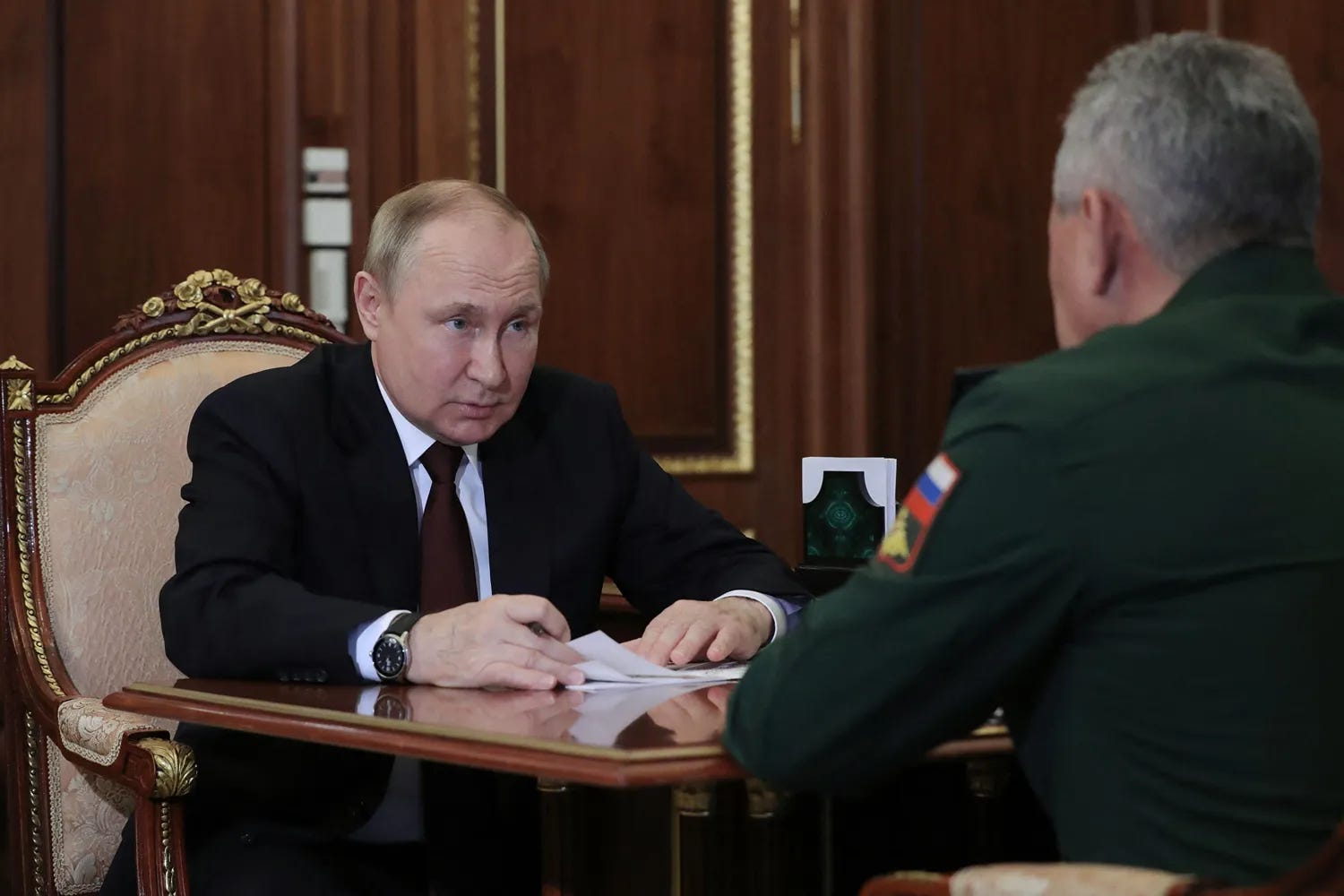
There is a dangerous mistake being made across Europe: confusing the absence of a direct Russian attack on NATO with the absence of a Russian intention to test NATO.
Those are not the same thing.
According to reporting based on recent U.S. intelligence assessments, American officials are increasingly concerned that Vladimir Putin could, under certain circumstances, attempt to test the credibility and cohesion of the North Atlantic Alliance through a limited confrontation with a NATO member. The potential window discussed in those assessments extends from this autumn into the coming years.
That warning must not be dismissed as another exercise in alarmism.
Nor should it be interpreted as proof that Putin has already decided to attack NATO.
It should be understood for what it is: a warning about strategic intent, opportunity and vulnerability.
And Europe would be dangerously irresponsible to ignore it.
Because the fundamental question is no longer simply whether Russia could defeat NATO militarily.
The question is whether Moscow believes NATO has the political courage, military readiness and societal resilience to respond decisively when confronted with a carefully calibrated crisis.
That is the test Putin would seek.
And if he believes that our political divisions are greater than our determination, he may eventually decide to conduct that test.
We must make damn sure he reaches the opposite conclusion.
The West has spent years measuring Russian power primarily through conventional military capabilities: tanks, missiles, aircraft, ships, artillery and manpower.
Those things matter.
But they are not the entire battlefield.
Putin understands something that democratic societies sometimes struggle to accept: modern conflict does not begin when the first tank crosses a border.
It begins much earlier.
It begins with disinformation.
Cyberattacks.
Sabotage.
Political interference.
Economic coercion.
Infrastructure disruption.
GPS interference.
Undersea cable threats.
Drone incursions.
Border provocations.
Manipulation of migration.
Attempts to destabilise elections.
Pressure against critical infrastructure.
Intelligence operations.
And the deliberate creation of uncertainty.
The objective is not necessarily to destroy an adversary immediately.
It is to make the adversary doubt itself.
That is where the danger lies.
A limited Russian provocation against NATO would therefore not necessarily resemble the opening scenes of the Second World War. It could be deliberately ambiguous, limited and deniable.
A cyberattack.
A sabotage operation.
A drone incident.
A maritime confrontation.
A border intrusion.
A manufactured crisis.
A temporary seizure of strategically important territory.
Something designed specifically to force NATO governments into a terrible question:
“How far are we prepared to go?”
That question is precisely what Moscow would want us to ask.
Because every moment of hesitation becomes information.
Every disagreement becomes information.
Every political argument becomes information.
Every delay becomes information.
And an adversary who studies our hesitation will eventually learn how to exploit it.
The foundation of NATO is simple.
An attack against one ally is treated as an attack against all.
That principle is more than legal language.
It is deterrence.
Article 5 works because an adversary must believe that attacking one member means confronting the collective strength of the Alliance.
But deterrence depends upon credibility.
If an adversary begins believing that Article 5 applies only after lengthy political negotiations, complicated definitions, endless investigations and weeks of debate, then Article 5 becomes weaker.
That is precisely why NATO must prepare for grey-zone warfare.
Cyberattacks present one of the most complicated examples.
What happens if a Russian cyber operation cripples a NATO country’s energy grid?
What happens if hospitals are paralysed?
What happens if banking systems collapse?
What happens if military communications are disrupted?
What happens if satellites are attacked indirectly?
What happens if undersea infrastructure is sabotaged?
What happens if the perpetrator deliberately leaves enough ambiguity to make attribution politically uncomfortable?
These are not science-fiction scenarios.
They are precisely the kinds of problems modern security planners must anticipate.
The answer cannot always be to wait until the distinction between peace and war becomes obvious.
By then, the strategic initiative may already have been lost.
Putin’s objective would not necessarily be to conquer Europe.
It would be far more sophisticated than that.
He would seek to demonstrate that Europe cannot act together.
That NATO cannot agree.
That Washington and European capitals can be separated.
That eastern European states cannot trust western European states.
That European populations will reject sacrifice when confronted with serious risk.
That political divisions can be weaponised.
That economic pressure can produce paralysis.
That fear can accomplish what military force cannot.
This is psychological warfare at strategic scale.
And Europe must understand the game.
The Kremlin does not need to occupy Berlin to damage NATO.
It does not need to march into Warsaw.
It does not need to destroy Paris.
It only needs to convince enough people that defending another member is “not worth the risk.”
That is the battlefield.
And therefore the most dangerous response would be internal fragmentation.
We cannot afford to spend our time attacking one another while an adversary studies every fracture in our societies.
Europe’s fight is outside our political houses, not inside them.
We can debate policy.
We can disagree.
We can challenge governments.
We can hold leaders accountable.
That is democracy.
But when it comes to defending the fundamental security of our societies, disagreement must never become paralysis.
We must work together.
Not against each other.
There is no single weapon, institution or alliance capable of solving the security problem we now face.
Europe needs layered defence.
Military defence.
Civil defence.
Cyber defence.
Infrastructure protection.
Intelligence cooperation.
Emergency medical capacity.
Strategic communications.
Border resilience.
Humanitarian preparedness.
Reserve capabilities.
Private-sector resilience.
Community preparedness.
And professionally organised hybrid-response capacity.
This is not militarising society.
It is recognising reality.
A modern European security architecture must be capable of responding to the full spectrum of threats between peace and conventional war.
The military must remain the backbone of deterrence.
NATO must remain the central collective-defence framework.
European nations must rebuild ammunition stocks, air-defence capacity, logistics, strategic mobility and industrial production.
Critical infrastructure must be hardened.
Cybersecurity must be treated as national security.
Civilian populations must have realistic emergency plans.
Hospitals and emergency services must be prepared for mass-casualty scenarios.
Energy systems must have redundancy.
Communications must have alternatives.
And governments must be capable of continuing to function under sustained attack.
That is layered defence.
It is not one shield.
It is many shields working together.
Because if the first layer fails, the second must still stand.
If the second fails, the third must still hold.
That is how resilience is built.
There is another gap that Europe must address.
Between conventional military forces and civilian humanitarian organisations exists a dangerous space.
Military forces are designed primarily for defence and warfare.
Humanitarian organisations are designed to protect and assist civilians.
But modern crises frequently demand capabilities that sit between those two worlds.
Who protects humanitarian corridors when conventional military forces are unavailable?
Who secures critical humanitarian infrastructure?
Who protects medical teams operating in unstable environments?
Who assists vulnerable populations when state capacity collapses?
Who helps maintain the security of aid distribution without transforming humanitarian assistance into a military operation?
Who provides trained personnel capable of operating in dangerous environments while remaining bound by humanitarian principles, legal oversight and strict defensive mandates?
This is precisely the strategic space in which initiatives such as the AEGIS Guardian Initiative can have relevance.
AEGIS must not be understood as a replacement for NATO.
It must not become a substitute for national armed forces.
And it must never become an excuse for uncontrolled private militarisation.
Its value lies elsewhere.
A properly governed AEGIS Guardian Initiative can contribute to the missing layer between civilian humanitarian response, emergency security and broader national resilience.
The principle should be simple:
Humanity first.
Defence when necessary.
Law always.
Accountability without exception.
That means bringing together experienced military and law-enforcement personnel, medical specialists, investigators, legal professionals, logistics experts and humanitarian practitioners under strict governance and clearly defined rules.
The objective is not offensive warfare.
The objective is protecting people.
Protecting humanitarian operations.
Protecting critical infrastructure.
Protecting aid.
Protecting those who cannot protect themselves.
And helping prevent a humanitarian crisis from becoming a strategic catastrophe.
That capability matters because the next European crisis may not arrive as a declaration of war.
It may arrive as darkness across a city.
A communications blackout.
A collapsed bridge.
A sabotaged power station.
A hospital under cyberattack.
A humanitarian corridor under threat.
A border overwhelmed by engineered instability.
Or a combination of all of them.
We must be prepared before that happens.
Not afterwards.
Europe has repeatedly demonstrated a dangerous habit.
We wait.
We wait until the threat becomes undeniable.
We wait until the intelligence is overwhelming.
We wait until the missiles are already flying.
Then we announce that we “could never have imagined” such an escalation.
That is unacceptable.
The purpose of intelligence is to provide warning before catastrophe.
The purpose of defence planning is to prepare before the attack.
The purpose of deterrence is to prevent the attack altogether.
If Putin believes that Europe will only mobilise after the first NATO city is attacked, then we have already failed at deterrence.
Our objective must be to ensure that he never believes that.
We need strength visible enough that the calculation becomes obvious.
We need readiness.
We need ammunition.
We need air defence.
We need cyber resilience.
We need intelligence-sharing.
We need rapid-response capabilities.
We need protected infrastructure.
We need resilient civilian systems.
We need trained reserves.
We need industrial capacity.
And we need political leadership willing to explain to citizens that security is not free.
Freedom has always carried a price.
The question is whether we pay that price voluntarily through preparedness or whether we pay it later through destruction.
There is nothing wrong with seeking peace.
In fact, peace should be the objective.
But peace without deterrence is not peace.
It is merely a pause in which one side prepares while the other hopes.
Putin should never be given the impression that European restraint means European weakness.
He should never confuse diplomacy with surrender.
He should never confuse political disagreement with strategic division.
And he should never believe that NATO’s commitment to collective defence is negotiable.
The message must be unmistakable:
Europe does not seek war.
But Europe will not be intimidated by the threat of war.
Europe does not seek confrontation.
But Europe will not abandon its citizens when confronted with aggression.
Europe does not want to destroy Russia.
But Europe will defend itself against Russian aggression.
That is not warmongering.
That is deterrence.
Perhaps the greatest danger is not Russian military power.
It is our own complacency.
We have become accustomed to believing that the peace we inherited is permanent.
It is not.
Every generation must decide whether it is prepared to defend the freedoms handed down to it.
Our grandparents understood this.
They knew that democracy could disappear.
They knew that civilisation could collapse.
They knew that freedom could be lost.
And they understood something that modern Europe sometimes forgets:
Peace is not maintained by wishing for peace.
It is maintained by having the strength, unity and determination to defend it.
That does not mean becoming militaristic.
It means becoming resilient.
It means building societies that cannot be easily paralysed.
It means creating institutions capable of surviving crisis.
It means ensuring that military power, civilian protection, humanitarian capacity and democratic governance reinforce one another.
And it means rejecting the poisonous idea that Europeans must destroy one another politically while our adversaries watch from outside.
We have enough enemies without manufacturing more among ourselves.
The fight is out there.
Not here.
This is why the AEGIS Guardian Initiative deserves to be brought back into the conversation.
Not as another political faction.
Not as another private army.
Not as another organisation competing for attention.
But as part of a broader European resilience architecture.
If Europe is serious about protecting civilians, humanitarian operations and critical infrastructure in an increasingly unstable security environment, then we need organisations capable of operating where conventional structures cannot always respond quickly enough.
AEGIS can become part of that answer.
But it must be built correctly.
Legally.
Transparently.
Professionally.
With independent oversight.
With strict rules of engagement.
With humanitarian principles at its core.
And with cooperation rather than competition at every level.
AEGIS should work alongside governments, NATO structures, civil-protection authorities, humanitarian organisations, medical services and legitimate international institutions , not against them.
Because the objective is not institutional glory.
The objective is survival.
The objective is protecting human life.
The objective is ensuring that when the next crisis arrives, somebody is ready.
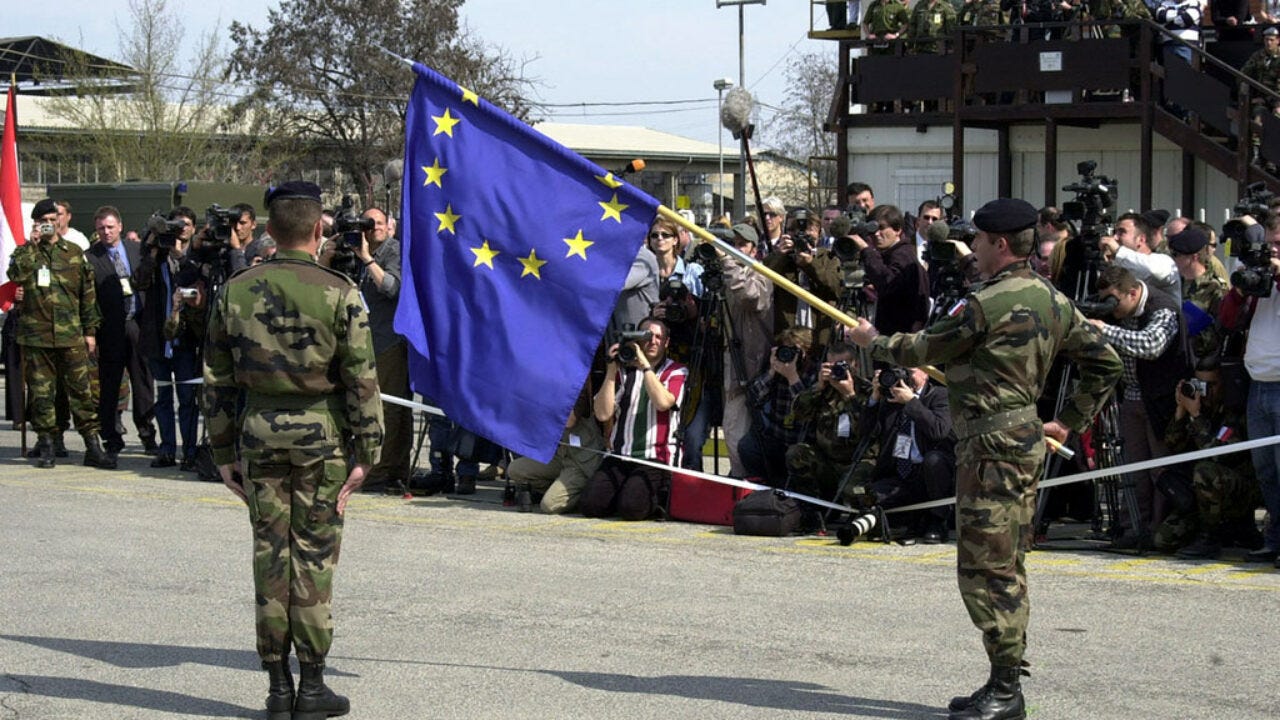
The intelligence assessments being reported should therefore be treated neither as prophecy nor as something to laugh away.
They are a warning.
And warnings are valuable only if someone listens.
Perhaps Putin will never attack NATO.
Perhaps deterrence will work.
Perhaps the Kremlin will conclude that the risks are too great.
That is exactly what we should want.
But the only way to maximise that possibility is to make the cost of aggression unmistakably high.
We should not prepare because we want war.
We should prepare precisely because we want to prevent it.
The strongest fortress is the one nobody is foolish enough to attack.
The strongest alliance is the one nobody doubts will respond.
And the strongest society is the one that refuses to collapse when tested.
Europe therefore has a choice.
We can continue arguing about whether the threat is real enough.
We can continue waiting for another warning.
We can continue allowing critical vulnerabilities to accumulate.
We can continue fighting among ourselves.
Or we can stand together and build the layered defence that the new security environment demands.
Military power.
Civil resilience.
Hybrid protection.
Humanitarian security.
Cyber defence.
Intelligence.
Infrastructure protection.
And above all, political unity.
Because Putin will test weakness if he sees it.
He will exploit division if it exists.
He will probe uncertainty.
He will push against hesitation.
That is how power operates.
And the only reliable answer to coercive power is credible resistance.
So let the message from Europe be clear.
We do not want your war.
We do not seek your territory.
We do not seek your destruction.
But we will defend our people.
We will defend our allies.
We will defend our democracies.
We will defend humanitarian operations.
We will defend our infrastructure.
And we will defend the principle that sovereign nations have the right to determine their own future without being threatened, intimidated or invaded by a foreign power.
We should seek peace with everything we have.
But we must prepare for war with everything necessary.
Because Putin will not stop simply because we ask him to.
He will stop when the strategic calculation tells him that continuing is no longer possible.
That is the lesson Europe must finally understand.
Deterrence is not hatred.
Strength is not aggression.
Preparedness is not warmongering.
And unity is not optional.
The time to build the shield is before the missile is launched.
The time to strengthen NATO is before Article 5 is tested.
The time to protect civilians is before the infrastructure collapses.
The time to rebuild hybrid humanitarian capacity is before humanitarian workers are trapped in another crisis.
And the time to bring initiatives such as AEGIS Guardian back into the wider European resilience conversation is now.
Because history is not impressed by excuses.
History remembers who saw the storm coming and who decided to keep arguing about whether it was raining.
We have been warned.
Now we must act.
Together.
Not against each other.
The battlefield of tomorrow will not be limited to trenches and front lines. It will run through networks, infrastructure, institutions, information systems, communities and human lives.
Our defence must therefore exist everywhere the threat exists.
Layer upon layer.
Shield upon shield.
Nation beside nation.
Citizen beside citizen.
Military beside civilian.
Humanitarian beside security professional.
One Europe.
One commitment.
One unmistakable message:
We want peace.
But we will never again mistake peace for helplessness.
And if anyone believes that Europe can be intimidated into surrendering its security, its sovereignty or its freedom, they should remember one simple truth:
We are not here to be conquered.
We are here to ensure that conquest fails.
Comments
Nothing yet. Say the first thing.
Sign in to join the conversation.