
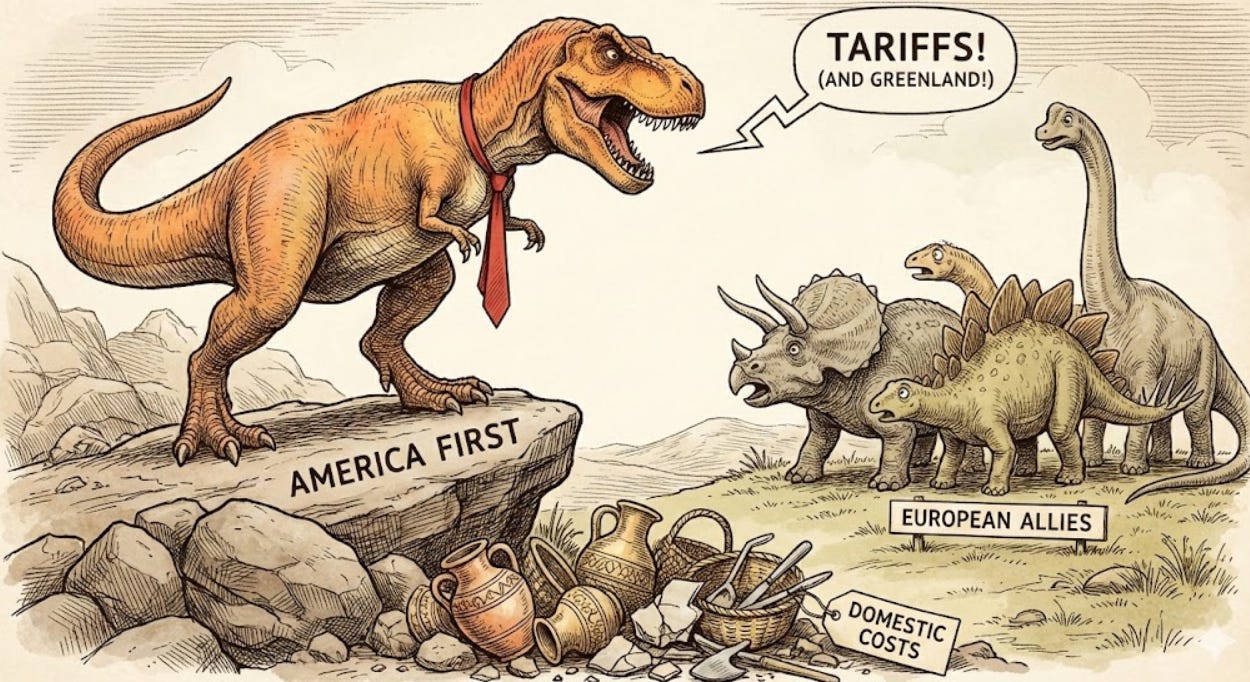
The instinctive response to Trump’s tariff wars (including the most recent ‘If you don’t hand me Greenland, I will raise your tariffs even more’) is outrage. That instinct is understandable. But it is most likely counterproductive. Populist leaders play by different rules.
Trump thrives on visible conflict. Anger among European leaders signals to his supporters that Trump must be doing something right. Foreign governments shouting back only confirm the story Trump wants to tell: that the world has been taking advantage of America and is now furious that the party is over.
Retaliatory tariffs might be even worse, because they hand Trump a convenient villain. When American voters notice that groceries, cars, or building materials cost more, he can point abroad and say, “See? Their fault!” Whether such a statement is factually correct or not is irrelevant to his supporters.
Simply put: Getting angry will tell his supporters he must be doing something right. Revenge-tariffs will give him something to blame when US-voters complain about rising costs of living.
The most effective response may therefore be the least satisfying one: restraint. Do not escalate. Let the costs of protectionism remain clearly visible and clearly domestic. When the bill arrives, it should arrive without foreign fingerprints.
No posts
Comments
Nothing yet. Say the first thing.
Sign in to join the conversation.