
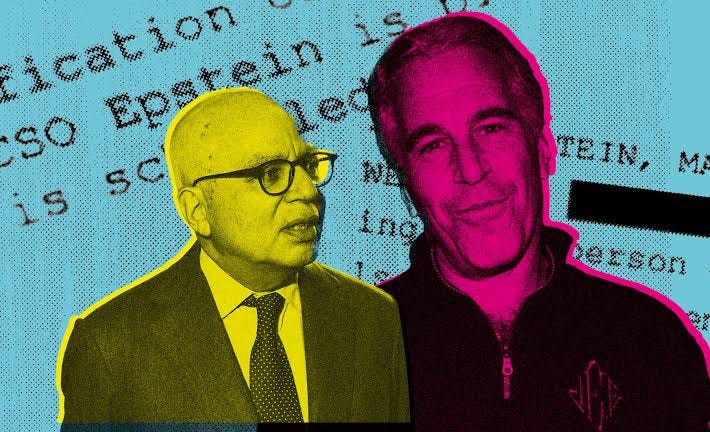
A decade of emails between a celebrated journalist and the West’s most protected predator reveals the oldest function of the press: not to watch power, but to dress it for the ball
In Rome there was a figure that history barely records because it preferred not to be recorded: the nomenclator, the cultured slave who walked half a step behind the senator and whispered in his ear the name, genealogy, and weakness of every citizen who approached him in the Forum. He was neither servant nor advisor; he was an instrument of memory and calculation, an appendage of other people’s vanity who knew more about the city than the city knew about itself. Twenty centuries later, the nomenclator swapped the toga for a rumpled blazer, learned to write elegant English, won two National Magazine Awards, and began presenting himself as a journalist. His name, in the case that concerns us, is Michael Wolff.
I say this without indignation, because indignation, dear reader, is the luxury of those who have not yet understood the mechanism. What the documents reveal is not a scandal in the cheap sense of the word, the kind that exhausts itself in a headline and a resignation demand. It is something colder and more enduring: the documentary demonstration that the press, at its highest and most celebrated level, has long functioned as a reputation laundry, and that the access journalist (the man who dines with the powerful and then narrates them (is less the watchdog than the butler.
The Archive
Let us recap the essentials, since the froth of news has already covered the facts. In November 2025, Democrats on the U.S. House Oversight Committee released a first batch of emails obtained from Jeffrey Epstein’s estate, and Republicans on the same committee then made public more than twenty thousand additional pages received from the estate, a collection that, combined, reached about 23,000 documents. Among thousands of messages exchanged with bankers, academics, politicians, and philanthropists, a nearly decade-long correspondence between Epstein and Wolff emerged, catalogued in documents that author Ellie Leonard reproduced in full on her Substack, preserving the original typing errors like fingerprints at a crime scene.
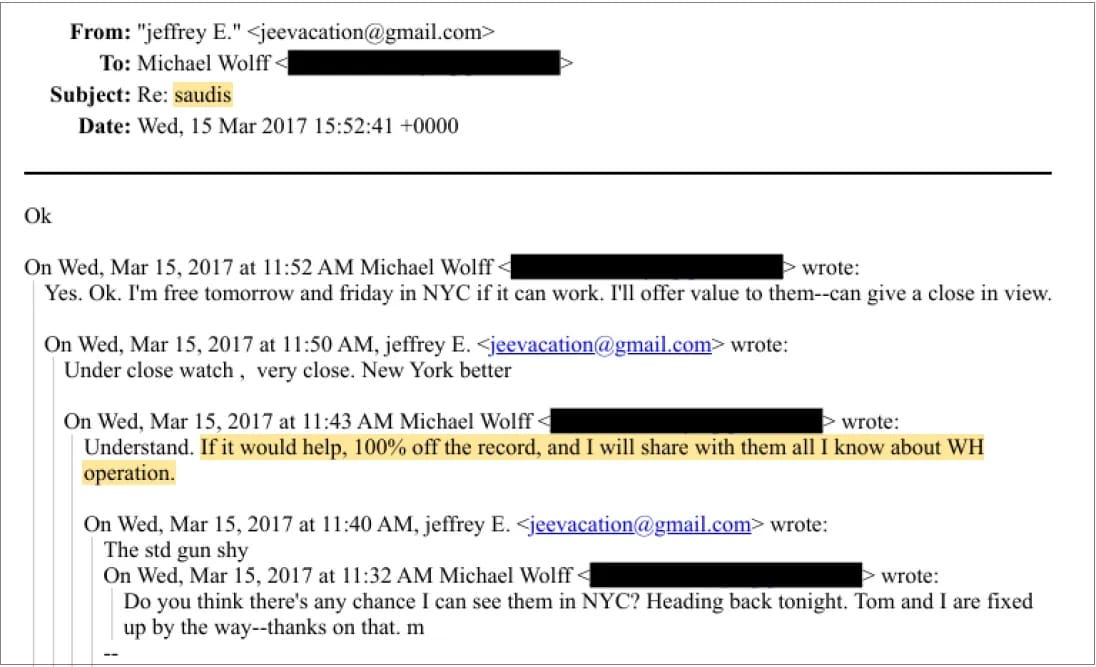
The relationship began around 2003, when Wolff unsuccessfully tried to broker the sale of New York magazine to a consortium that included Epstein and Harvey Weinstein himself, and continued until 2019. In between, a menu of intimacy that would be comical were it not what it is: tennis shoes sent by messenger to Paris, dinners on Avenue Foch, invitations to the Caribbean island, introductions to young assistants, meetings with the president of the Maldives and with Ehud Barak. But what turns the social gossip correspondence into a historical document is something else. It is the moment when the journalist stops observing and begins to operate.
The Plan
In June 2011, Wolff wrote Epstein a message that is, strictly speaking, a campaign plan. He proposed a disciplined approach divided into phases: in the short term, deal with the British tabloids and clean up the internet profile through search result manipulation; in the medium term, identify a set of business journalists with whom to build a friendly relationship, turning Epstein into a source, first off the record, then on; and, in the end, produce one or two press pieces that would introduce a new narrative and confront the old one. He himself named the operation with a frankness that requires no comment: he wrote that it was a kind of reverse journalistic effort.
Reverse, indeed. Because journalism, in the definition still taught in schools before students discover how things really work, exists to reveal what the powerful want to hide. What Wolff offered Epstein was the machine in reverse: a device to hide what the public would be interested in knowing, operated by someone whose professional credibility depended precisely on pretending to do the opposite. In July of that year, when Epstein asked what to do about an investigative journalist preparing a story, Wolff replied that there were many ways to neutralize her. Neutralize. The verb is his.
There was, it is true, a financial counterpart under discussion. In November 2011, Epstein requested a financial proposal, and Wolff described a plan that, rolled out over eighteen to twenty-four months, would have a transformative effect, allowing the financier to be as public as he wished and, in the chilling phrase, immunize him against opprobrium, as well as the people who associated with him. Note the elegance of the engineering: it was not just about protecting Epstein, but extending the varnish of respectability to the entire court that approached him. Reputation as a service, with a subscription plan.
The Gullible Press
The most revealing passage, however, is not the one about money, but the diagnosis. In January 2015, when court documents reignited accusations against Epstein, Wolff advised the client to attack the media’s willingness to hide behind court documents to repeat defamatory allegations without verifying them. And he went further, in a message describing the situation as an extortion aided by a gullible press. The original expression, gullible press, deserves to be savored with the calm of someone who understands that a man only calls the press gullible when he knows exactly how to deceive it, because that is what he himself does for a living.
Here it is worth a note of factual discipline, dear reader, so that no one accuses me of doing what I accuse. Wolff was not indicted for any crime. He maintains that he approached Epstein for journalistic reasons, and there is indeed an article that he spent months trying to publish in New York Magazine that never ran. The most generous reading of his own defense is that he feigned complicity to extract material. The issue (and it is one that ethics manuals cannot circumvent) is that the line between pretending to help and actually helping, at a certain point, ceases to exist for all practical purposes, especially when the supposed disguise lasts eight years and includes introducing the target to a new young assistant.
The Bullet
It was during the 2016 election season, however, that the correspondence reached its darkest note, and it is here that the case ceases to be a curiosity about the decay of elite journalism and touches American politics directly. On December 15, 2015, on the night of a Republican debate, Wolff warned Epstein, under the subject Heads Up, that CNN planned to ask Trump about the relationship between the two. Epstein asked what response to prepare, and Wolff advised letting Trump hang himself, because a denial would generate political and public relations capital, or, alternatively, if Trump seemed capable of winning, they could save him, creating a debt.
Translation, for those who still hesitate before the euphemism: a journalist was suggesting to a convicted sex criminal that he use his knowledge of a presidential candidate either to destroy him or to put him in debt. On January 21, 2016, Wolff wrote that the more Trump seemed real, or, God forbid, inevitable, the more reporters would turn to the subject, so Epstein would need a strategy. On February 19, the phrase that sums it all up: You are the bullet against Trump. And, a few days before the election, under the subject Now could be the time, the final offer: that there was an opportunity to talk about Trump in a way that would generate great sympathy and help finish him off. Interested?
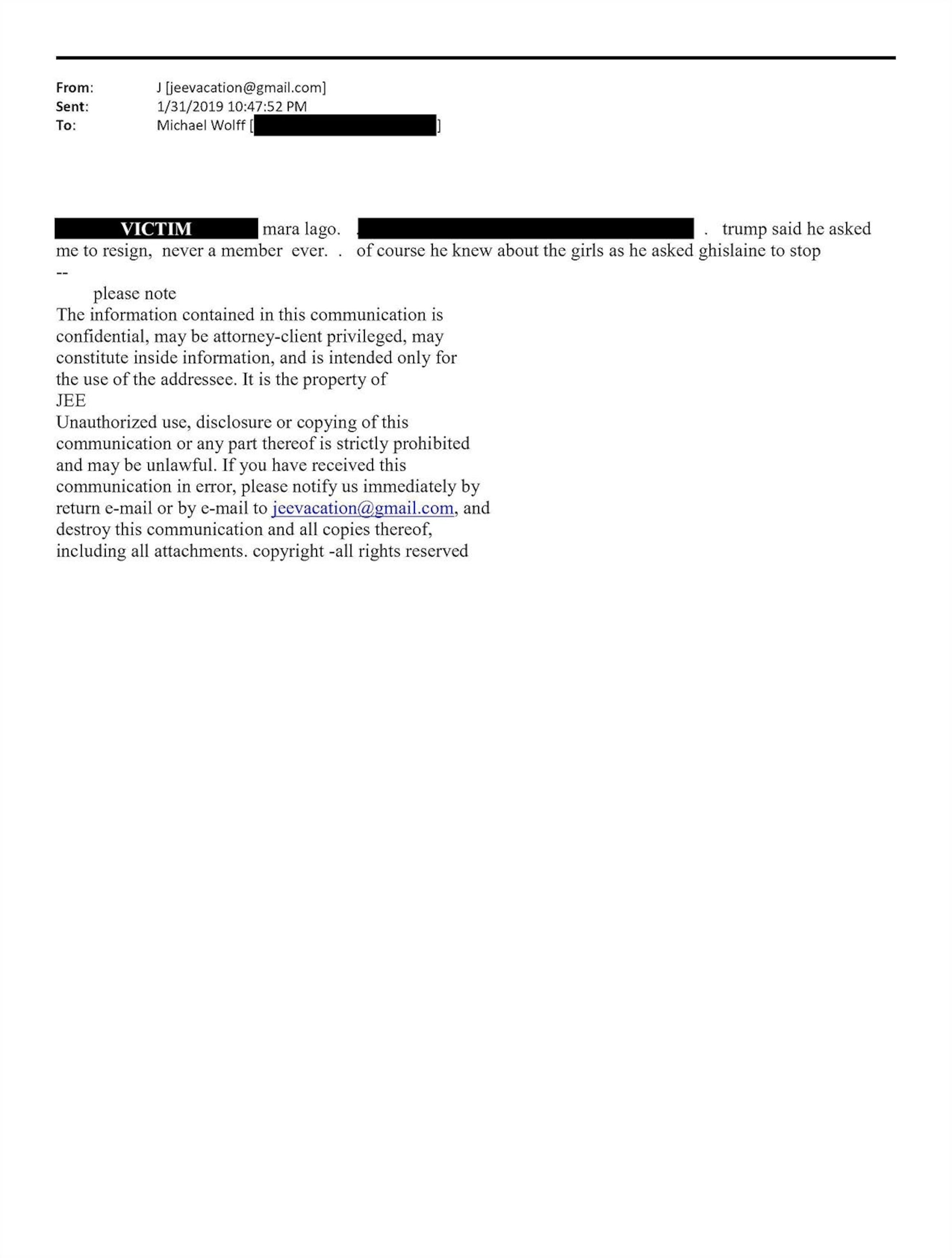
Broadly speaking, it is the portrait of two men calculating, at the table, the market price of a future president. That nothing came of this transaction, that Epstein never went public, and that Trump was never asked about it in that debate, does not diminish what the emails show: the raw material of the next decade of American politics being negotiated like haggling over real estate. Years later, in January 2019, it was Epstein himself writing to Wolff, about Trump and Mar-a-Lago, the line that Democrats would highlight from the paperwork: of course he knew about the girls, because he asked Ghislaine to stop. A phrase that Trump denies, that does not legally incriminate him, and that nevertheless echoes like a door slamming in an empty corridor.
The Defense
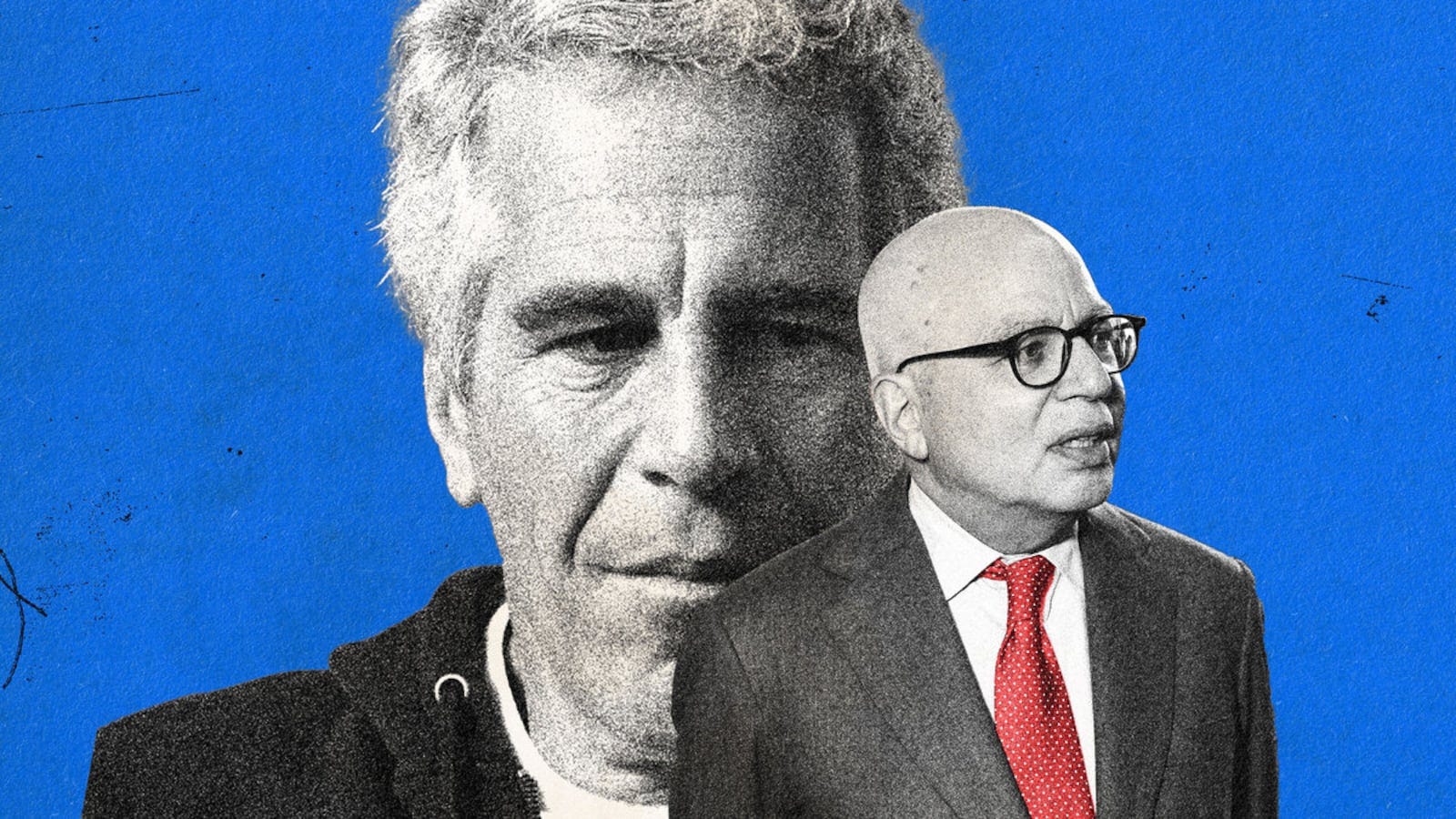
When the emails came to light, Wolff did not retreat; he advanced. In an Instagram video, he declared that we might be getting close to the smoking gun on the Trump-Epstein relationship, and stated that the two had the closest of relationships for more than a decade and shared everything. On a Daily Beast podcast, he offered the line that will stick: as my mother would say, you catch more with a little honey. He acknowledged having done play-acting to ingratiate himself with sources, and admitted that, in retrospect, he would have rewritten the messages, which are embarrassing, although he insisted: remember what’s happening here. I’m inside. I’m where no one else is.
It is a defense that deserves respect for its audacity, if not for its logic. Because being where no one else is is precisely the description of the work of the informant, the courtier, and the spy (and not necessarily that of the journalist, whose public utility is measured not by proximity to power, but by the critical distance he manages to maintain from it. Wolff, whose career was built precisely on that promise of access) access to Rupert Murdoch in The Man Who Owns the News, access to the White House in Fire and Fury, a book that publisher Henry Holt told the Associated Press sold more than 1.7 million copies in less than three weeks and whose factual accuracy was contested from day one, never hid, it is fair to say, his method. As early as 1998, in a book about his failed internet venture, Brill’s Content pointed out alleged factual errors and quoted people complaining of invented or altered quotes. The man always said who he was. We are the ones who preferred the awards.
The Entire Court
It would be comforting to treat Wolff as an anomaly, the corrupted scribe in the midst of a clean profession. The documents, however, do not allow that consolation. The same estate confirmed that Landon Thomas Jr., a New York Times financial reporter, maintained a closeness with Epstein that cost him his job in early 2019, having gone so far as to request a $30,000 donation from the financier for a Harlem preschool, which the newspaper classified as a violation of its ethical standards. It revealed that Epstein’s team worked to remove his mugshot from digital vehicles and to downgrade negative stories in search results, and that editors and newsrooms of publications producing hundreds of texts a day barely blinked when a flattering article about the financier appeared. And it confirmed, before all this, what had been known since 2003, when Vanity Fair reporter Vicky Ward investigated the Farmer sisters’ allegations and saw the story gutted; as she later told NPR, then-editor Graydon Carter found a bullet at the door of his Manhattan apartment and a decapitated cat’s head in the garden of his Connecticut home, a message whose grammar required no translation.
The genealogy here is long and unflattering. The journalist as fixer for the powerful is not an invention of Substack or the digital age. Balzac had already dissected it in Lost Illusions, when he threw young Lucien de Rubempré into the Paris of newspapers, where the pen was sold by the line and the favorable or destructive review obeyed less the merit of the work than the envelope that accompanied it. Karl Kraus, in Vienna, spent decades demonstrating that the press did not describe the world’s corruption but produced it, and that the feuilletonist was the true architect of bought opinion. And among us, Nelson Rodrigues, who knew the fauna from the inside, coined the definitive definition of the category when he spoke of the idiot who confuses his own vanity with professional duty. What changed from Balzac to Wolff was not the nature of the transaction, but the quality of the lighting: today the scribe receives awards, gives motivational lectures, and writes bestsellers about the very powerful he served.
The King Who Was Not Laundered
There is one detail, however, that elevates the Epstein case above mere sociology of venal journalism, and it is the asymmetry of fates. Once the files became public, the court paid varying prices. Peter Mandelson, British ambassador to Washington, was fired by Keir Starmer on September 11, 2025, after emails surfaced in which he called Epstein his best friend and encouraged him, on the eve of his 2008 arrest, to fight for early release, telling him he held him in the highest regard; the Foreign Office justified the dismissal by saying the depth of the relationship was materially different from what was known at the time of the appointment. Larry Summers, former Treasury Secretary and former president of Harvard, announced on November 17 that he was stepping back from his public commitments, saying he was deeply ashamed and taking full responsibility for his misguided decision to continue communicating with Mr. Epstein, and two days later resigned from the OpenAI board, while the New York Times, the Center for American Progress, and the Yale Budget Lab ended their ties with him. Kathryn Ruemmler, former Obama White House counsel and now at Goldman Sachs, said she regretted knowing Jeffrey Epstein. Even Steve Bannon appears in the emails acting as a kind of crisis manager for the financier.
And yet, dear reader, the person to whom Epstein was, according to Wolff himself, closest (the only one not held accountable) is precisely the one who now occupies the Oval Office. Trump denies any knowledge of Epstein’s crimes, threatened to sue Wolff, called everything a hoax, and signed, on November 19, 2025, the Epstein Files Transparency Act, the law that forced the Department of Justice to release the files the same Department that, under his command, published in July a memo stating, there was no client list or evidence of blackmail, and that dragged its feet on disclosure until dumping millions of pages, still redacted, throughout the end of the year. The irony is worthy of Tacitus: the instrument built to launder reputations ultimately produced a stain that no SEO can downgrade, and the only client who escaped unscathed was the most powerful of all.
Coda
What remains is the lesson, which is not about Epstein, a man dead in 2019 in a Manhattan cell under circumstances an official memo declares suicide and much of the country refuses to believe, nor about Trump, whose name the files cite without, so far, legally incriminating him. The lesson is about us, the readers, and about the machine we consume as if it were information when it is often its perfectly packaged opposite. We discovered, with these emails, that some of the texts we read as journalism were pieces of an image operation, and that the prestige of a byline is exactly the asset that makes it sellable.
The Roman nomenclator at least did not pretend to be anything else. He knew he was an instrument and died anonymous. The modern tragedy, if the word still serves, is that the instrument learned to sign his own name, collect awards, and sell us, bound and polished, the version of the facts he helped manufacture. Power has always had those who whispered names in its ear. The novelty is that now the whisper comes with a byline, an editorial lens, and a seal of credibility. Broadly speaking, we traded the cultured slave for the award-winning columnist, and called it progress. The king, that one, continues to be dressed for the ball by the very people who swear they are only describing him.
Comments
Nothing yet. Say the first thing.
Sign in to join the conversation.