
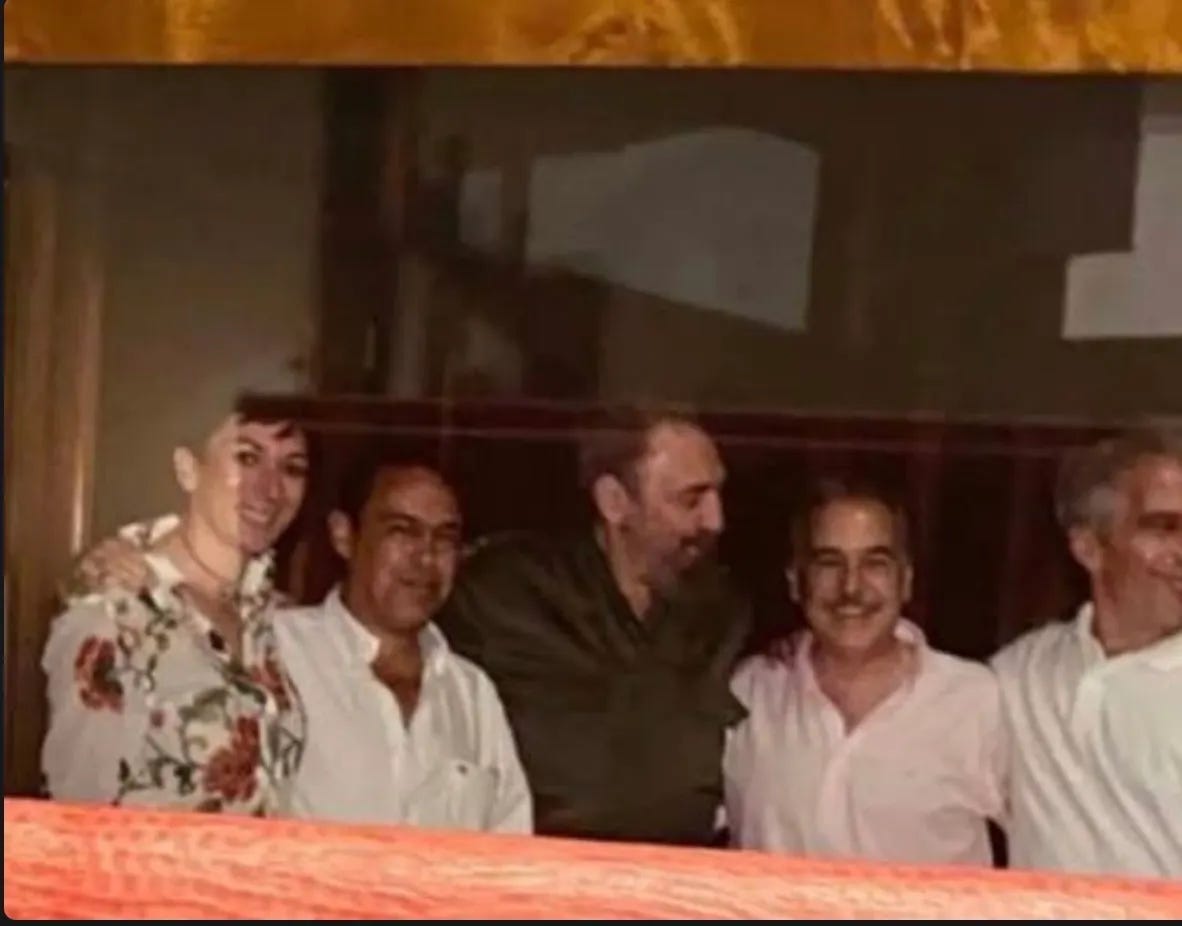
Every age produces its own scandal, and every scandal, whether it intends to or not, teaches something about the civilization that gave birth to it. The Belle Époque had the Dreyfus Affair, which exposed the anti-Semitism embedded within the French state. The Cold War had Kim Philby, who demonstrated just how high treason could climb inside the British Empire. Our own age has Jeffrey Epstein, and it persists, with an obstinacy bordering on pathology, in treating him as tabloid gossip, as the story of a wealthy sexual predator and his private depravity, when the millions of pages released by the U.S. Department of Justice since December 2025 tell a far older, far less photogenic story. They tell the story of an infrastructure.
For that is precisely what this is, dear reader. We are not looking merely at a wealthy degenerate with a private jet, although he was wealthy, degenerate, and owned several aircraft. We are looking at what the ancient Greeks might have called a ponerocracy, government exercised by the morally corrupt from within the formal structures of power. Epstein's network operated simultaneously as an investment fund, a modeling agency, a geopolitical consultancy, an informal diplomatic courier, and, according to documents produced by the Drug Enforcement Administration, possibly something else besides. Its tentacles stretched, with the patience of someone planting citrus groves, from post-Soviet Havana to luxury apartments in São Paulo's Vila Olímpia district.
It would be comforting to dismiss all of this as a statistical coincidence. A financier knows a former president, who knows a port executive, who knows a cabinet minister, who knows an investor. The problem with that explanation is that chronology steadily destroys it. The documents place Epstein inside discussions concerning Cuban port infrastructure, diplomatic rapprochement between Havana and Abu Dhabi, investment opportunities in Chávez's Venezuela, the recruitment of models on the island, and continuous interaction with figures drawn from politics, business, diplomacy, and finance. None of these activities, taken individually, constitutes a crime. Taken together, however, they reveal a pattern whose internal coherence is difficult to ignore.
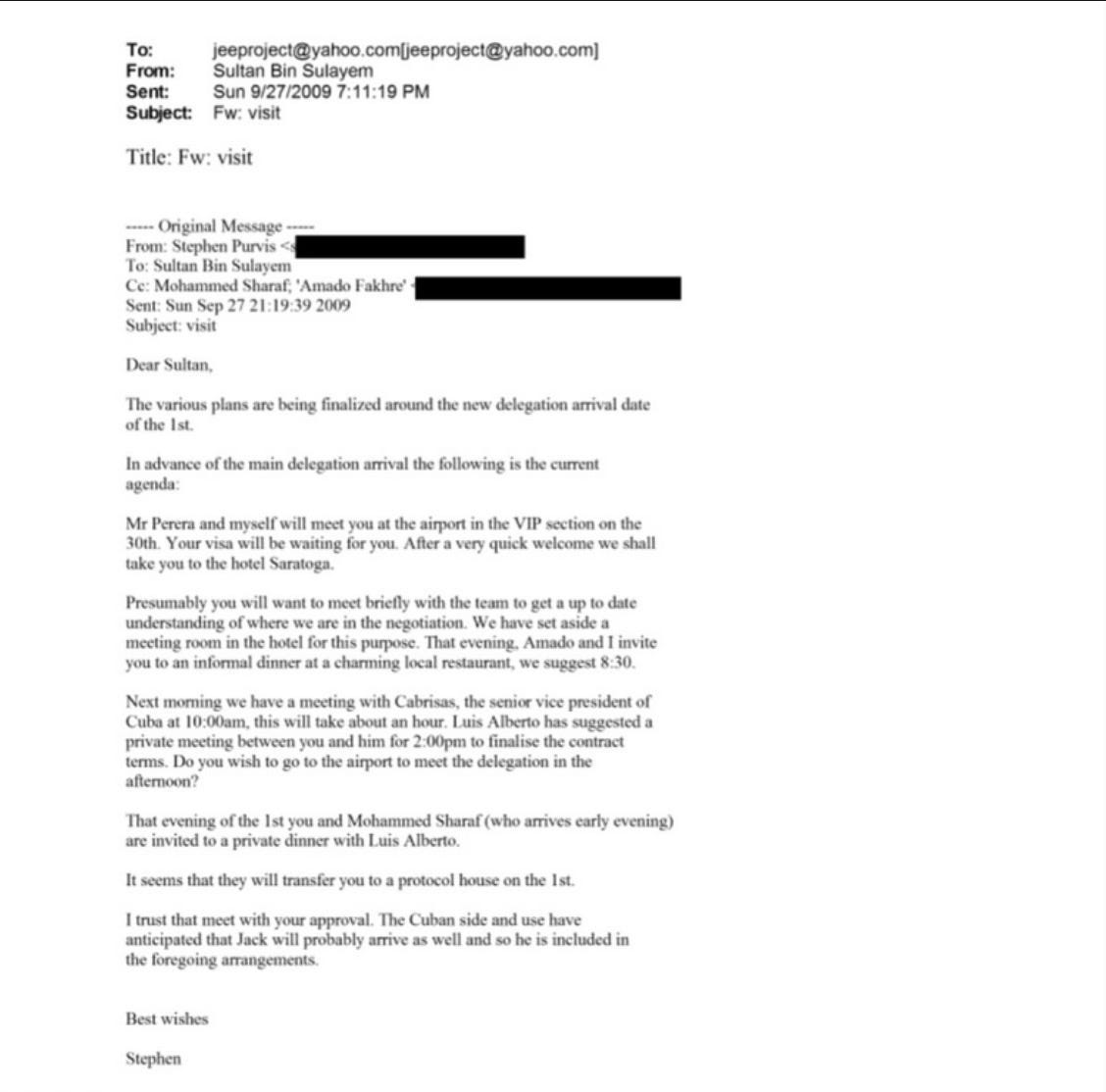
The correspondence involving Sultan bin Sulayem is particularly revealing. Epstein does not merely introduce people to one another. He recommends strategies, identifies intermediaries, comments on Cuba's political climate, evaluates regulatory obstacles, and even discusses which American public figures might lend institutional legitimacy to ongoing negotiations. He behaves less like a financial adviser than an unofficial foreign policy operator. His fees become almost secondary beside the real asset he controlled. His decisive capital was never financial. It was relational. Traditional businessmen trade goods. Epstein traded access. Banks finance projects. He financed meetings. Diplomats officially represent states. Epstein quietly brought states together while representing none of them.
Perhaps this is the defining transformation of global elites over the past several decades. Classical theories of power, from Pareto to Burnham, imagined national elites competing within their own institutional structures. The twenty-first century appears instead to have produced an entirely different functional aristocracy composed of individuals whose true citizenship resides inside their contact lists. They move effortlessly from intelligence services into finance, from finance into international organizations, from those organizations into multinational corporations, and eventually back into politics as independent consultants. The credentials change. The network remains. Offices come and go. Circulation endures. Power increasingly resides not inside states themselves but within the intermediaries capable of speaking to everyone, serving everyone, compromising everyone, while remaining accountable to no one.
Rafi Eitan's career illustrates this phenomenon almost perfectly. Within a relatively brief period he reorganized Colombia's intelligence services, brokered hundreds of millions of dollars in Israeli military equipment sales, developed agricultural ventures in Cuba, built the Miramar Trade Center (the island's principal commercial hub, in partnership with Fidel Castro's government, and became a regular interlocutor with Cuban authorities. None of these activities displaced the others. They all coexisted. Espionage ceased to be his specialty. Agriculture was not his specialty either. Neither was international commerce. His true specialization became moving effortlessly between spheres that ordinary citizens believe remain rigidly separated. The modern intermediary no longer chooses between the uniform and the business suit, between the embassy and the investment bank, between state security and commercial enterprise. He inhabits them all simultaneously. That fusion is precisely what makes him indispensable.
It is within this environment that Jeffrey Epstein flourished. His greatest talent was never extraordinary financial management. Plenty of fund managers consistently outperformed him. Nor did he possess exceptional technical expertise in logistics, diplomacy, or intelligence. His real gift was considerably rarer. He knew how to place billionaires, academics, bankers, politicians, state-owned enterprise executives, port authorities, retired intelligence officers, and young women recruited through Jean-Luc Brunel's modeling agencies around the same table while persuading each participant that they were involved only with the respectable side of the enterprise. Fragmentation of knowledge became a collective security mechanism. Every participant saw only the hallway through which he walked, never the entire building. Nobody needed to understand the whole operation. They only needed enough information to remain inside it.
The predecessors illuminate the landscape. Before Jeffrey Epstein there was Robert Maxwell, the British media tycoon who looted pension funds, maintained relationships with more intelligence services than he could comfortably acknowledge, and drowned under circumstances that remain unexplained off the Canary Islands in 1991, only days before the Soviet Union whose institutions he had helped infiltrate finally dissolved. Maxwell, the father of Ghislaine Maxwell, liked to boast at dinner parties that his Cuban cigars were rolled by Fidel Castro's personal order, an anecdote recorded by his biographer Gordon Thomas and one that may well have been the invention of a compulsive fabulist. What is not invention, because it appears in the memoirs of the principal actor himself, is the career of Rafi Eitan, the legendary Israeli intelligence officer who directed the bureau responsible for the Jonathan Pollard operation and whom specialized literature frequently identifies as one of the mentors of the young Robert Maxwell.
After falling into disgrace following the Pollard affair, Eitan reinvented himself as national security adviser to Colombian President Virgilio Barco beginning in 1986. There he reorganized Colombia's intelligence apparatus while brokering a package worth approximately 230 million dollars in Israeli fighter aircraft, patrol boats, and electronic surveillance equipment. The chronology deserves careful attention. Those same years coincided with the systematic extermination of the Patriotic Union, the legal political arm of the Colombian left, whose members were murdered by right-wing paramilitary organizations in the thousands over the following decade. Carlos Castaño, co-founder of the United Self-Defense Forces of Colombia and self-confessed architect of much of that slaughter, later recounted in his autobiography the year and a half of military training he received in Israel. Armed with Colombian commissions, Eitan established the BM Group in Panama before relocating to Cuba during the desperate years that followed the collapse of Soviet subsidies. There he revived forty thousand hectares of neglected citrus plantations, built the Miramar Trade Center in partnership with Castro's government (a complex that remains the principal commercial center for foreign corporations operating on the island) and dined with Fidel Castro himself on at least two occasions, according to his own account, while Cuban intelligence monitored every telephone call he placed. A retired intelligence officer selling tractors to the last communist government in the Americas is the sort of plot that even John le Carré might have considered implausible.
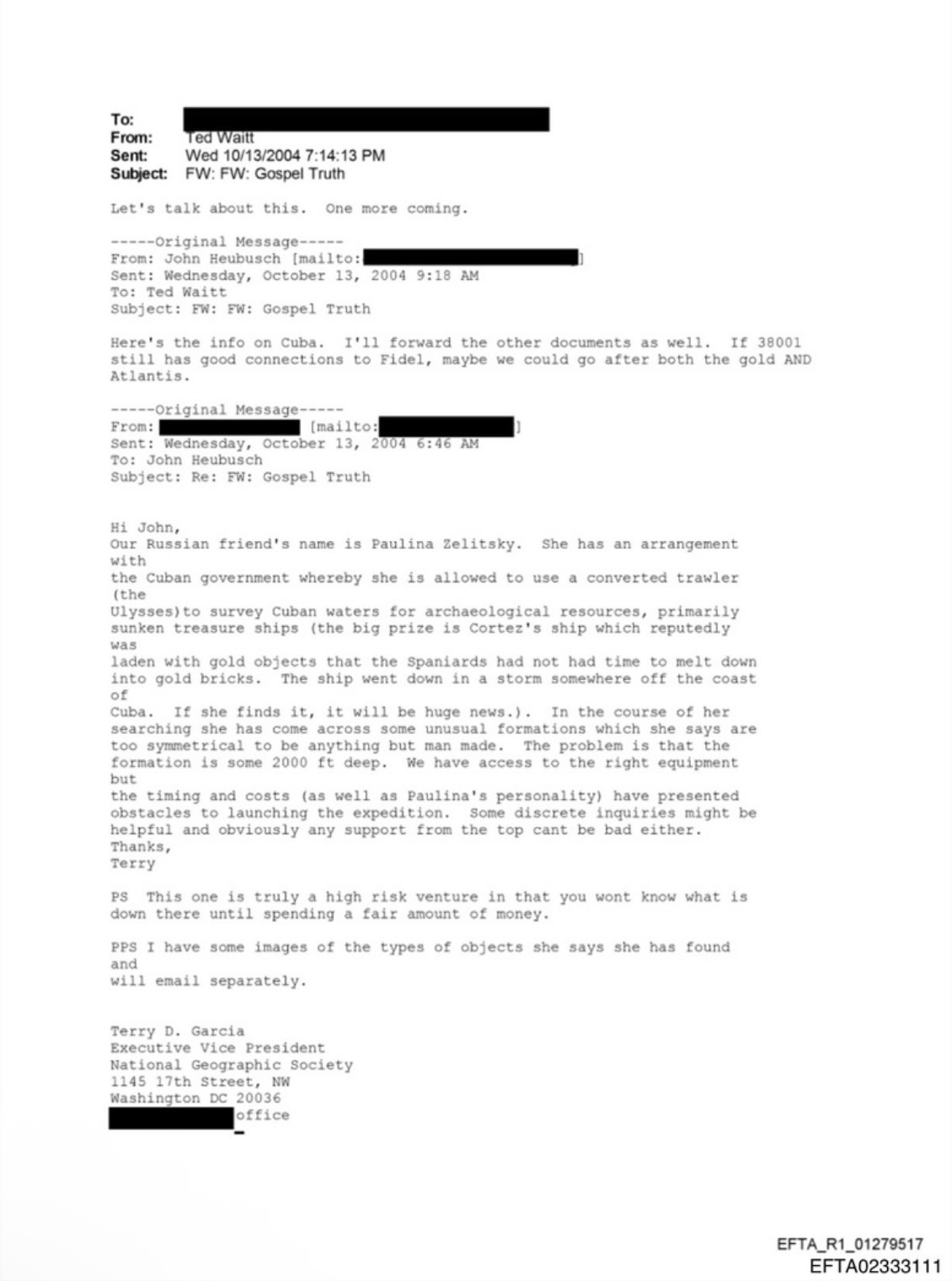
It is precisely upon this chessboard that the second generation enters the story. Flight manifests place Jean-Luc Brunel, the French modeling agent introduced to Epstein by Ghislaine Maxwell, aboard Epstein's aircraft beginning in 1998. At the same time, investigative material contained in the Department of Justice files documents Brunel's recruitment expeditions to Cuba during the same period, when post-Soviet poverty transformed adolescent girls into an abundant raw material. Years later, in March 2009, emails show Epstein writing to Brunel to inform him that a former Sony executive would become Cuba's new entertainment czar, instructing him explicitly to relay the information to Andrés Pastrana. The Pastrana in question is the former Colombian president, whose name appears roughly thirty times throughout the released files and who acknowledged flying aboard Epstein's aircraft in 2003 on a journey that official records describe as traveling from Venezuela toward the Bahamas but which Pastrana insists concluded in Havana during what he characterizes as a humanitarian mission. Readers may choose whichever verb they consider appropriate to describe a former head of state serving as intermediary between a convicted sexual offender and a government operating under an American embargo. The larger pattern is what matters. Foreign policy, private philanthropy, commercial logistics, and the international movement of vulnerable young women gradually become impossible to distinguish from one another.
During that same year, 2009, emails reveal Epstein advising Sultan bin Sulayem, then the powerful chairman of DP World, the Emirati logistics giant, on a strategy aimed at securing operational control over the ports of Cuba and Chávez's Venezuela. He arranged meetings between the Emirati foreign minister and Cuban officials while proposing former New Mexico governor Bill Richardson as a figure capable of lending institutional respectability to the negotiations. The project ultimately failed after Venezuela nationalized its port terminals, yet it produced consequences of a different nature years later. In February 2026, only weeks after congressional investigators publicly identified his previously redacted name inside the Epstein files, bin Sulayem resigned from the leadership of DP World. Epstein's Cuban agenda also included Pepe Fanjul, the Cuban-American sugar magnate, longtime financier of anti-Castro lobbying efforts, supporter of the Helms-Burton Act, and, more recently, a significant donor to Donald Trump's presidential campaigns. The evidence invites the reader to decide whether these are isolated cocktail-party acquaintances or the visible contours of a durable structure. At this stage, the latter interpretation appears considerably more persuasive.
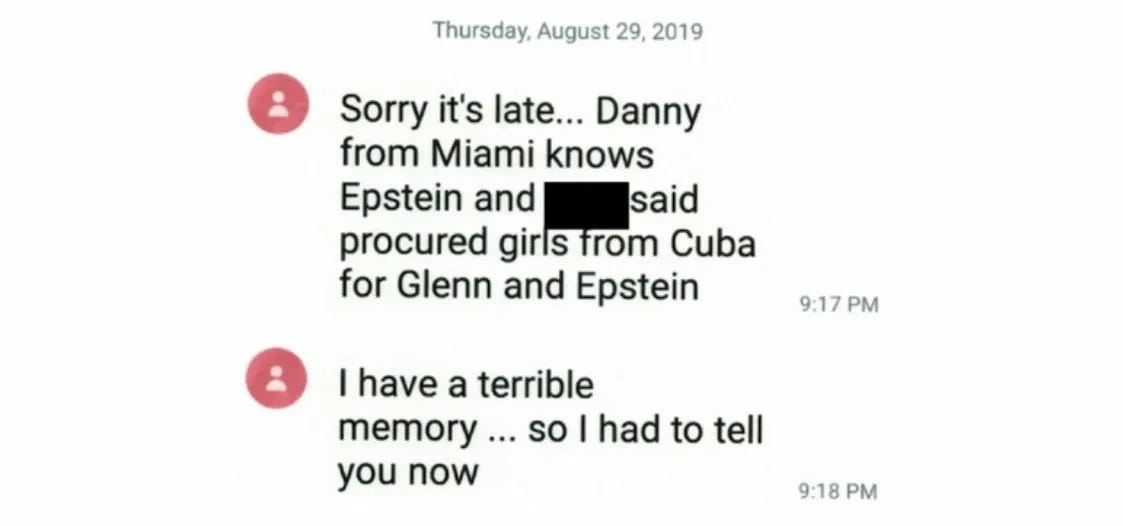
There is also the chemical chapter of this story, and it deserves to be treated with appropriate rigor. Publicly released documents reveal that the Drug Enforcement Administration opened an investigation in December 2010 into Epstein and fourteen additional individuals following approximately fifty million dollars in suspicious transfers moving between Switzerland, France, the Cayman Islands, and New York. According to Bloomberg's reporting, investigators suspected the transactions were connected to financing and distributing synthetic narcotics. That much is documented fact. The realm of inference begins elsewhere. In March 2012 Epstein's company, Hyperion Air, purchased a Bell 430 helicopter that had previously been registered through Aircraft Guaranty Corporation, a fiduciary company responsible for maintaining registrations for more than one thousand aircraft through post office boxes located in Onalaska, Texas, a town of barely three thousand residents without even an airport runway. The same Aircraft Guaranty whose owner, Debra Mercer-Erwin, would later receive a sixteen-year prison sentence for facilitating aircraft registrations connected to drug trafficking organizations. The same registry whose client and operator Fred Machado, the Argentine businessman implicated in illegal campaign financing involving José Luis Espert, pleaded guilty in May 2026 to fraud and money laundering. The fact that Epstein's helicopter passed through the same registration mechanism used by aircraft linked to narcotics trafficking does not prove criminal collaboration, and intellectual honesty requires saying so explicitly. What it does demonstrate is that predatory finance and organized crime frequently rely upon identical logistical infrastructure. Few people appeared to consider that worthy of attention. The proximity between those worlds seems less accidental than structural.
Comments
Nothing yet. Say the first thing.
Sign in to join the conversation.