
There’s a story being told about teenagers today. Maybe you’ve heard it before. They don’t want to get off the couch. They’ve traded real life for digital life. They’re addicted to their phones and social media.
But teens across California are telling a different story, and it goes something like this:
Young people want to connect with each other in real life. But where can they go?
In partnership with Aura, the California Alliance of Boys & Girls Clubs, the Family Online Safety Institute, and the Stanford Social Media Lab, we launched a research initiative to better understand this question. “Belonging in a Digital Age: Teens, Tech, & Third Places” draws on a statewide survey of over 1,000 teens ages 13–18 and focus groups with parents and caregivers. Today we’re sharing the findings for the first time.
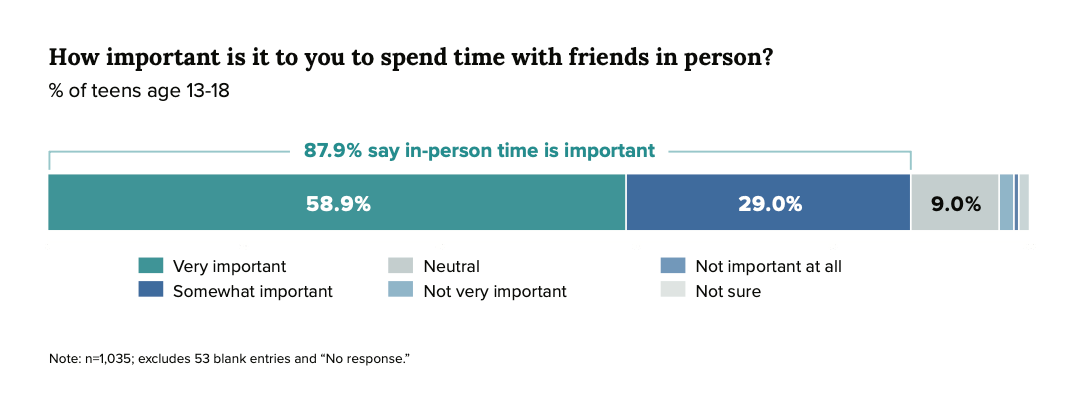
More than half of the teens surveyed said they wish they connected more with people in person. Nearly 9 in 10 said spending time with friends face-to-face is important to them. And when asked how they actually prefer to spend time with friends, 70% chose something surprisingly simple: unstructured in-person hangouts.
So much of the conversation around teens and technology assumes young people prefer connecting online instead of offline. But what our study found is that many teens are not choosing screens over real life so much as adapting to a world where in-person connection has become harder to find.
The biggest barrier of all? Belonging.
What surprised us most was that physical access alone wasn’t the determining factor. Teens who reported feeling unwelcome or unsafe in social spaces were substantially more likely to use AI chatbots than teens who simply lacked places nearby. The findings suggest that belonging may matter more than buildings.
Or as First Partner Jennifer Siebel Newsom put it in her introduction to the report: “Our kids don’t just need protection from harm. They need meaningful places to belong.”
Regulating the platforms shaping young people’s lives matters. These findings make the case for a second priority that deserves equal weight: treating third places as essential civic and social infrastructure for youth well-being.
As one 15-year old boy said:
“I think it’s really important to have more safe and welcoming spaces where teens can connect in person. Many of us spend a lot of time online, so having real-life places to hang out, talk, and build friendships would help us feel more connected and supported.”
And as First Partner Jennifer Siebel Newsom writes, “Our children have a right to a childhood that belongs to them—not to the platforms competing for their time.”
The question raised by this research isn’t whether teens want connection. They clearly do. The question is whether communities are creating enough opportunities for them to choose it.
You can read the whole report here.
Next week, we’ll explore one of the report’s most surprising findings: why loneliness among teens is often invisible to their parents — even for highly social youth.
This article is part of our new series on teens, technology, and belonging, based on findings from Belonging in a Digital Age: Teens, Tech, & Third Places.
No posts
Comments
Nothing yet. Say the first thing.
Sign in to join the conversation.