
In a hyperconnected world, places that offer real opportunities to relax and let your guard down are more important than ever. For young people, this social infrastructure of “third places”—places beyond home and school where teens go to find belonging and connection—has been disappearing. Again and again we hear teens asking: “Where can we go?”
At the California Partners Project, we set out to understand the changing nature of third places for teens, collaborating along the way with 25 youth co-designers from across the state. What we heard from teens—and caregivers—was sobering, yet hopeful.
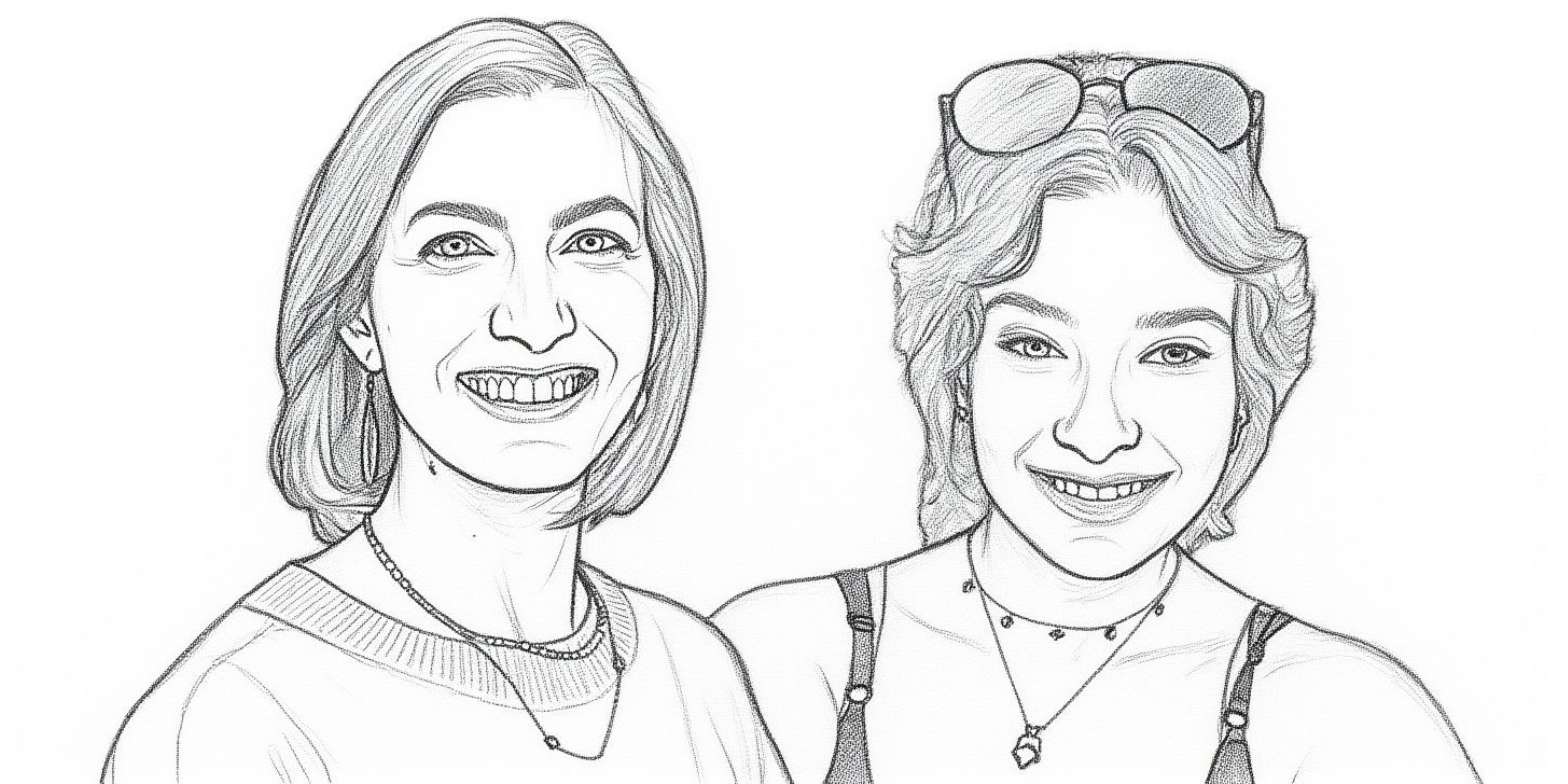
Teens want time together. They want places to go, but not just any place. In this conversation between Program Director Jennifer Heifferon and youth co-designer Jess Assaad, they discuss what it means to find genuine connection and what it takes for spaces to feel welcoming, flexible, affordable, safe, and trusted enough for real independence.
Jennifer Heifferon: I’m so excited to talk to you today. Can you tell us a little bit about yourself?
Jess Assaad: Thank you for having me. My name is Jess. I’m from the Los Angeles area. I am 16 years old, and I’m going into my senior year of high school.
JH: When you hear the phrase “third place,” what comes to mind from your own life? Is there a place that has felt like it was made or meant for you?
JA: The biggest thing that comes to mind is where I volunteer, and my yearbook classroom. I am an editor in yearbook, and I spend so much time there… maybe a little too much time there.
I’ve been volunteering for the past four years [at the Boys & Girls Club], but before that I was a member. They’ve become a huge part of my life, and I feel like that’s really my third place.
JH: What do you do as a volunteer at the Boys & Girls Club now?
JA: I used to teach [cheer] and dance, and since then I’ve started my own [initiative] called Next Gen Unfiltered. I help tutor kids, and I help with any STEM or art projects they have going on.
JH: Where do you and your friends hang out now, and has that changed over the last few years?
JA: It’s changed a lot. My friends and I used to hang out a lot on campus, like during lunch. Outside of school, we went to the mall. Now we mostly hang out in each other’s cars. Sometimes we’ll go to the park or a boba shop, but it’s very different from the mall.
JH: Why did it shift from the mall as the place to be to your cars? What does it look like when you’re using cars as a third place?
JA: I think it changed because we got our licenses. When our parents drove us around, the mall was the most convenient place because everything was there and accessible.
Now that we have cars, we have a private place to hang out: no parents, no adults, nothing like that. It’s private, but we can also go around and go to multiple places at once. The big transition was everyone getting their license.
JH: So the introduction of more independence and autonomy really helped shift that third place for you.
That connects to the next question. From our research and in our report, nearly 70% of teens shared that they preferred unstructured hangouts—no plan, no agenda—over organized activities or being online. Does that match your experience? What does a no-plan hangout actually look like for you?
JA: That definitely matches my experience. I have some friends who like to say, “Let’s go here,” and then we’ll differ from that a little bit. But I also have friends who are like, “We’re picking you up in two minutes, and we don’t know where we’re going.” It’s very spontaneous.
Recently, I went out with a couple of friends, and we went to Dairy Queen, Barnes & Noble, Target, sushi, an escape room, the park, La La Land, and a Taco Bell drive-thru—all in the same hangout, in the span of a few hours. We just did that randomly: “Okay, we’re done with this. What do we do now?”
I think it’s a lot of fun to have no idea where you’re going, as long as we know we’re not going past a certain distance because of gas. It’s fun to have unstructured hangouts and go with the flow sometimes.
JH: I love that; going with the flow in terms of your interests and where your driver’s license is taking you. I noticed that when you listed the places you visited with your friends, many of them required money or were places where you could buy things. What is the expectation when you go to all those different places? Are you spending money at every one, or is it more like a little stop along the way?
JA: Some of them we bought things, and some of them were little stops along the way. The park was free. At the Taco Bell drive-thru, I personally didn’t get something, but they [friends] were getting drinks. We went to sushi for dinner.
A lot of it did require money, but for a lot of hangouts with teens—because we’re all broke—we might say, “Let’s go to the beach,” or “Let’s go on a hike.” For this specific hangout and a lot of random hangouts, yes, they require money, but I don’t think we spend money everywhere. It depends on where everyone’s bank account lands.
The first thing we do is open up our mobile banking apps and ask, “How much money do I have?”
JH: Is there a third place you wish you had? Something that doesn’t really exist for you right now?
JA: I wish there were more local mom-and-pop shops. My favorite café of all time is a mom-and-pop shop, a small business in Boise. It is the most random and queer-friendly place I’ve ever been.
They have pamphlets on abortion clinics and Planned Parenthood. They have birth control and things like that accessible for everyone to take for free. They have pride flags everywhere. I think it’s the most accepting place I’ve ever been to.
I wish there were more mom-and-pop shops and small businesses that very obviously had a voice like that, and that were very clear: “We do have an opinion on where the world is.”
JH: Let’s jump into the findings. One finding that stood out to me was that more than half of California teens (54%) reported feeling some degree of loneliness in the past month. But the part that surprised me even more was that even among teens who reported the most loneliness, more than half had still hung out with friends in person in the past week.
From your perspective, why do you think that is?
JA: I think a lot of mental health things—anxiety, self-harm, depression, all these different things—are very stigmatized in the media [and teen culture]. It has gotten to a point where other teens are saying, “It’s for attention,” or, “I’m here for you,” but then the minute you actually start to rely on your friends, they’re like, “Wait, never mind. I have my own stuff too. It’s not just about you. It’s not just your show.”
“Even when you’re hanging out with friends, you can still feel this sense of disconnect because you’re not really able to be honest with them about what you’re going through.” — Jess Assaad
Another thing that has been stigmatized in social media is comparison. Everyone is like, “Whatever I’m going through, they’re going through it worse,” or, “They have it worse,” or, “They’ve been through worse.” So it’s like, “I don’t have a right to complain about it,” even though you do.
JH: So feeling like your experiences aren’t valid, or worrying that others won’t really be able to hold them, can create a barrier to authentic connection, even when you’re surrounded by people.
Nearly one in three teens reported that they had stopped going somewhere because it didn’t feel safe or welcoming. Did that finding from the research match what you’re seeing in your own community in California or hearing from other teens?
JA: Yeah. I think a lot of people don’t always feel like they fit in the right group.
For example, if three people have been friends for a really long time, and you’re friends with all of them individually, the minute you enter that group, they all have this bond that you don’t share because they’ve known each other a lot longer. That can be a barrier, where you just don’t connect with them in the same way. You can feel like you aren’t welcome, and it’s not necessarily a place where you can really be there.
I think there are teens who are trying to be cool and edgy and aren’t accepting because that’s what’s in. That can also be an obstacle. You don’t necessarily feel like your peers are the safest place.
A lot of people who are queer, people of color, children of immigrants, or even just girls in general are worried about places where they can really fit in. A lot of groups can be cliquey, or sometimes you’re just afraid of them being cliquey. You have these assumptions ahead of time that cloud your judgment of how the situation really is, so you feel like they’re cliquey even if they’re not.
JH: One of the disconnects we found through our research between parents and teens is about safety. A number of teens reported that asking, “Do I feel accepted here?” is more top of mind [when thinking about a third place], while caregivers are asking, “Is this place physically safe and supervised?”
Does that gap feel real to you? Have you seen a version of that in your own life?
JA: I think so. When I would ask my dad, “Can I go here? Can I hang out with so-and-so?” his mindset was very different from my mindset when we were asking the question, “Is this a good place for me to go?”
For me, it was more, “These are my friends, and I feel connected to them.” I have friends who do some crazy things that I don’t necessarily do, but you do you. Whatever floats your boat. For me, it’s like, these are my friends, and they care about me, and I love them regardless of whatever maybe-not-so-great things they’re doing.
My dad would be like, “But they’re doing these not-so-great things, therefore they’re not a good influence.” I think parents are so concerned that you’re going to be influenced to do dangerous things or things you shouldn’t be doing. For teens, it’s very much like, “No, you can do you, and I can do me, and we can still hang out and be friends.”
The big gap is that the expectation of what teens would do is different from what they actually would do.
JH: What I hear underlying that is trust: you trust that your friends will honor your individual choice to engage or not engage in a specific activity or behavior, and your parents may not be as trusting that you will make the right choice for yourself in those scenarios. So trust is really at the forefront.
JA: Yeah. And I think it’s also funny because peer pressure is such a thing that everyone talks about. I think I’ve received more peer pressure about watching certain TV shows than I have about anything dangerous. I’ve received more peer pressure about watching a movie than drinking.
JH: Shifting gears a little bit: almost half of teens who self-reported using AI chatbots for friendship or social advice said that talking to an AI chatbot or companion feels emotionally safer than talking to a real person. At the same time, nearly half of teens who use AI chatbots and companions said they would use them less if there were more real places to connect and more opportunities for in-person connection. What is your reaction to those findings?
JA: I agree that talking to a chatbot is emotionally safer than talking to a person, because the chatbot will agree with you no matter what you say. A person is going to have a response, and that response is not always going to line up with what you want.
I love my best friend, and my best friend is like an older brother to me. But sometimes it’s scary to talk to him because he’s a person and he has his own opinions. A chatbot is designed to agree with you more than anything else. Talking to a person has a lot of emotional depth, and there’s something to grow from the conversation.
“I think people would not resort to chatbots in the first place if there were more places to connect.” — Jess Assaad
It’s this trade-off: if you’re already doing it [using chatbots], you’re kind of already stuck there, unless you really want to take the risk. But if there were more places to connect, teens might not turn to chatbots in the first place.
JH: If you could change one thing—whether in your school, your community, or at a policy level—based on this project and what you learned, what would it be?
JA: I think there should be more restrictions on how AI can be used, because using AI as emotional support can do more harm than good. Beyond the fact that AI is not good for anybody ever, or the planet, I think it creates this lack of really knowing how to cope. It is a coping mechanism, but it’s not sustainable. People need to learn how to process their own emotions or how to use tools to process their emotions.
I also think that in schools, at a very young age—kindergarten through second [grade]—there should be mental health classes where they teach coping skills, because that’s when you have the biggest emotions and you don’t know what to do with them. That’s the easiest time to teach it to a kid.
When I was that age, my mom had just died, and I was in the counseling office all the time. That’s how I learned all of the coping mechanisms I know now, and I think that was super beneficial. For all kids to learn that over the course of three or four years would be the best for them.
JH: What does the future look like for you? What are you hoping to study or do as you continue into adulthood?
JA: I am starting my own mini non-profit for domestic violence. It sells informational hoodie merch, and all of the proceeds go to domestic violence [organizations]. I’m really excited to start that, because I just ordered [the first items].
My dream school is Emerson [College]. Most of my schools are on the East Coast, and I hope to study journalism and women, gender, and sexuality studies. My life goal is to continue working with non-profits, start my own non-profits, and help where I can.
JH: Very active and mission-driven. I love it. Thank you, Jess. I appreciate you.
JA: Thank you so much.
Jess’s reflections remind us that connection is not only about whether or not teens have people around them. It is also about whether they have places where they feel welcome, relationships where they feel safe being honest, and enough trust and independence to practice becoming themselves.
Here are a few questions to ask the young people in your life:
Where do you feel most like yourself?
What makes a place feel welcoming or unwelcoming to you?
When you say a place feels “safe,” what does that mean?
Who can you be honest with when something is hard?
What would help you feel more trusted by the adults in your life?
Are there low-cost or no-cost places you wish you could access more often?
To learn more about what California teens told us about connection in a digital world, and how adults can help create places where young people feel they belong, read our full report, Belonging in a Digital Age: Teens, Tech, & Third Places.
No posts
Comments
Nothing yet. Say the first thing.
Sign in to join the conversation.