
Storytellers.
There is a version of you that only cares about one thing: making the most creatively ambitious project possible.
You know this version well. It’s the one that sees a location and immediately understands the shot. That wakes up at 3am with the line that fixes the second act. That can hold an entire emotional arc in your head like a piece of music … the texture, the rhythm, the feeling it leaves behind.
This is your creative mind. And it is extraordinary.
There is also another version of you. The one that has to answer the email about the budget and find a line producer in a city you’ve never worked in. That has to build a pitch deck, manage a collaboration, track who has seen the project and what they thought, figure out whether it’s ready to go to market and if it is, who to send it to and what to say.
This is your execution mind.
Producers.
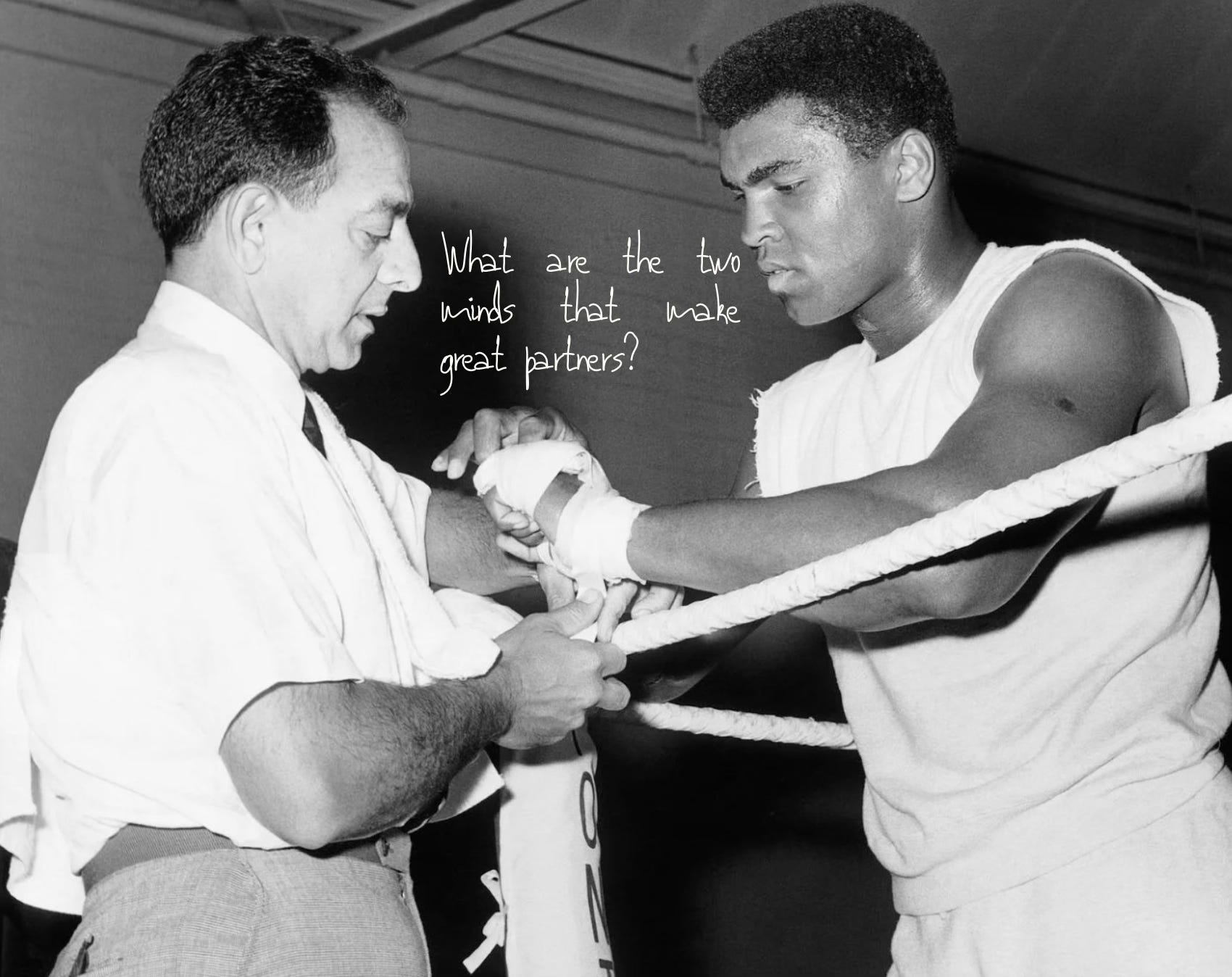
If the storyteller is living between two minds, the producer has made the execution mind their entire profession. They are the ones who hold the whole thing together: the budget, the timeline, the team, the conversations with financiers, the relationship with the distributor, the hundred things that need to happen before the first day of shooting and until the project is released.
It is one of the hardest jobs in independent media and there are not enough them. Not because people don’t want to be producers or do this work, but because the work is genuinely brutal without the right infrastructure underneath it. Most independent producers are running multiple projects simultaneously across a combination of spreadsheets, email threads, shared drives, and memory. Every project is its own improvised system, built from scratch each time.
Both the storyteller and the producer need support. But they need it for different reasons, from different sides of the same bridge.
This connection is ancient.
It’s the artist and the operator. The director and the producer. The author and the publisher. The musician and the tour manager. The designer and the account director. The chef and the restaurateur. It’s every creative industry that has ever existed.
Two minds. Always present. But, rare to find effectively in the same person.
And the greatest work, the work that actually gets made and actually reaches people has almost always required both.
In independent filmmaking, this split is felt more acutely than almost anywhere else. Because unlike a major studio, or a publishing house, or a record label, independent teams rarely have the infrastructure or resources that lets both minds do their best work efficiently. The creative mind is expected to carry the execution too. And the producers who specialize in execution are stretched thin across too many projects with too few tools. Both sides of the partnership are working harder and longer than they should have to.
We’ve known this from the beginning. But knowing something and understanding it precisely are different things.
When we launched Callo, we had a thesis: independent storytellers and producers need an operating system, a single place to develop work, find collaborators, and take projects to market. Our four modules: Home, Discover, Studio, and Market that make up the platform is our answer to solve this issue.
When we went into developing our platform, what we didn’t fully know yet was exactly where the friction lived. Where things were breaking down in the real world. Where people were losing time, losing momentum, losing confidence in the middle of their creative process.
So we went looking. Not through surveys, but through real conversations and asked what was working and what wasn’t. We sat with what came back until we understood not just what people needed, but why they needed it and what it cost them not to have it.
What we heard was different depending on which side of the bridge someone was standing on.
Two worlds, one system.
Storytellers told us they needed to know who was looking at their project, not just that a pitch had been sent, but whether it had been opened, how many times, where the interest was concentrated. They were operating blind, sending work into silence and waiting.
They told us they needed to find a collaborator a producer, a co-writer, a financier and not by scrolling through a database, but by describing what they needed the way they’d say it to a person: find me a producer in London who works in documentaries.
They told us they needed to know, at any given moment, whether their project was truly market-ready. Not as a feeling, but as a fact.
Producers told us that most of the projects that came to them weren’t ready and they had no fast way to assess that before investing time in a conversation.
They told us they were managing too many things across too many places. Scripts in one folder, contracts in another, payment records in a spreadsheet, task lists in a notes app. Every project was its own improvised system.
They told us that finding the right creative partners was as hard for them as it was for the creatives they worked with.
These weren’t feature requests. They were descriptions of gaps between the work both groups were doing and the infrastructure they needed to do it sustainably.
Hemispheres.
Corpus callosum is the structure in the brain that connects our two hemispheres, the creative and the analytical, the intuitive and the precise. Without it, neither side can do its best work. With it, they become something more than the sum of their parts.
Callo takes its name from this structure. Not as a metaphor, but as a mission statement.
And so the next chapter of Callo is called Hemispheres. 25+ new features built from everything we heard, designed to give both minds what they’ve always needed.
For storytellers, this means never sending work into silence again. It means being able to search for a collaborator the way you’d describe what you need out loud, and having the platform understand you. It means a showcase that does the pitching work for you and a readiness tracker that tells you precisely what’s missing before you go out, so that when you do, you go out ready.
For producers, this means one place where everything lives. Scripts, decks, contracts, tasks, payments, all inside the project itself rather than scattered across tools that don’t talk to each other. It means knowing which projects in your slate have real momentum and which don’t, before you’ve spent weeks finding out the hard way. It means finding creative collaborators with the same precision you bring to everything else.
For the people who are both, which is also many of us, this is the moment Callo becomes your studio.
These features don’t change what Callo is. They complete it.
If you’re a storyteller or producer reading this for the first time, we built Callo for you. Join us here. And, if someone in your world should be reading Move, send it to them.
Comments
Nothing yet. Say the first thing.
Sign in to join the conversation.